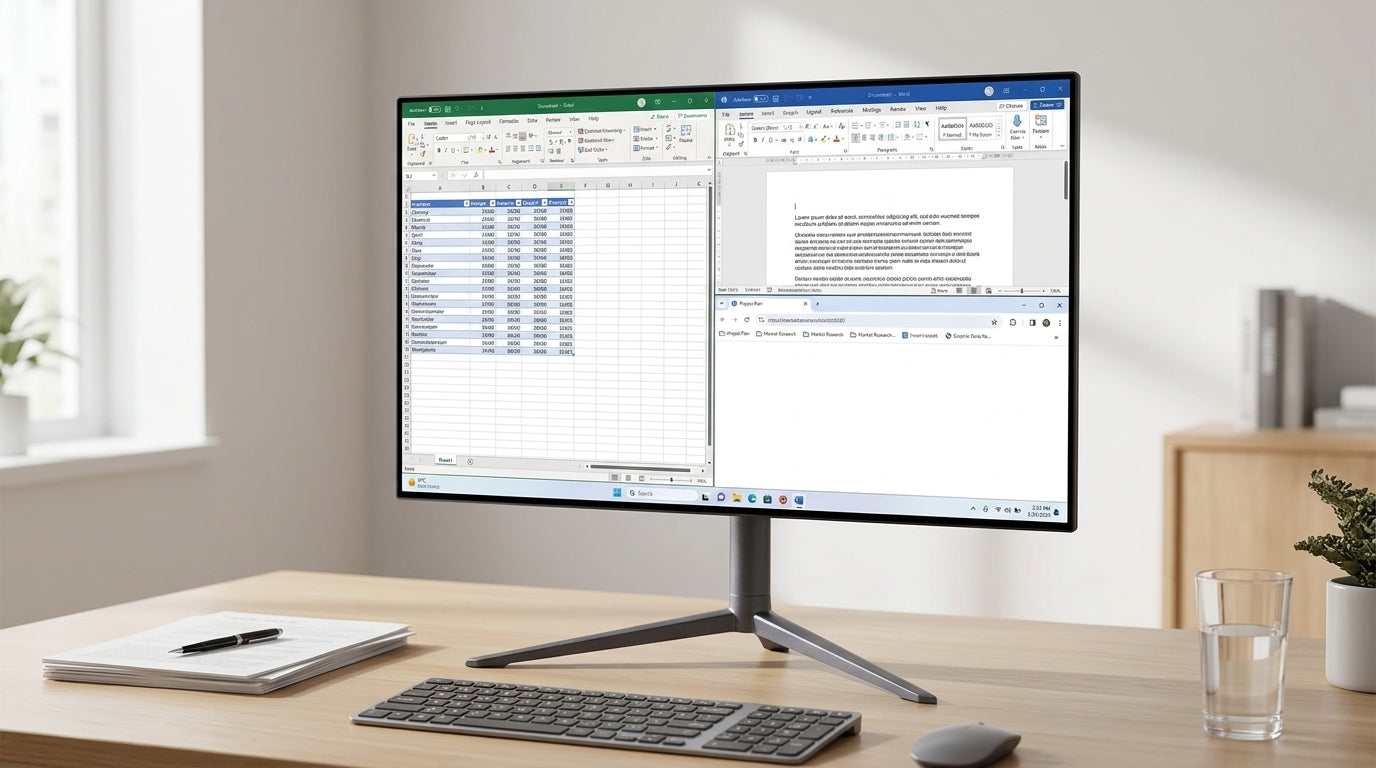
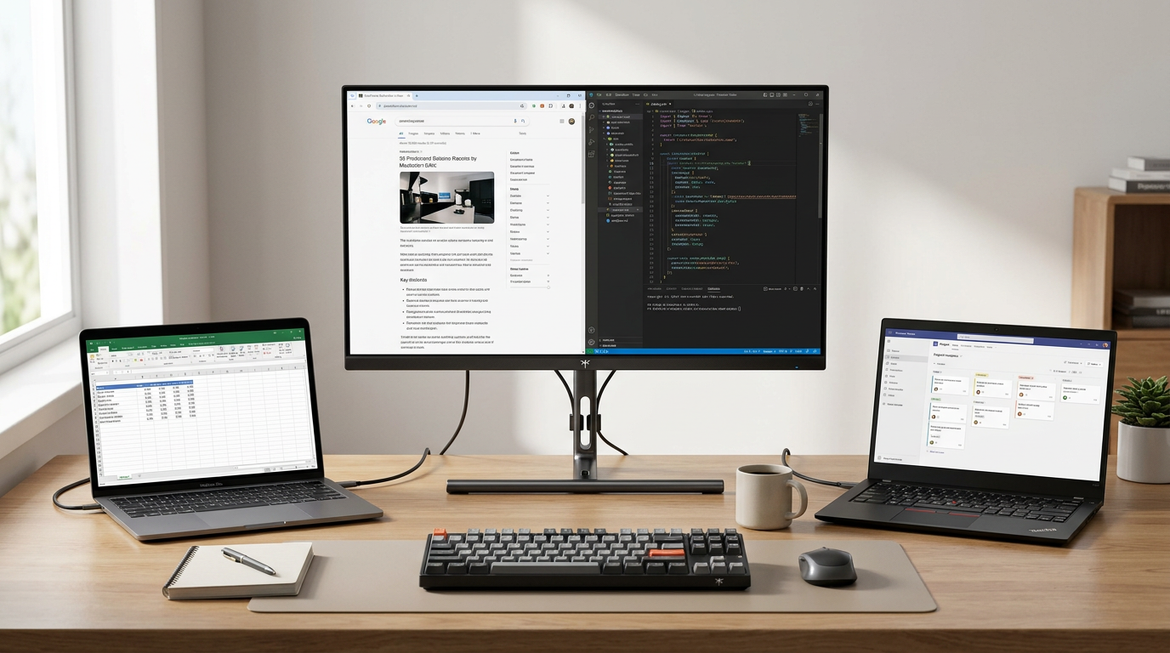
A student monitor with USB-C and speakers is usually the right call when your laptop setup needs to stay simple, your desk is small, and you want basic audio without adding extra clutter. The key is to separate display support, charging, and speaker convenience before you buy, because USB-C does not always mean the same thing on every laptop or monitor.
What Students Need From a Desk Monitor
For most students, the best monitor is the one that makes laptop life easier without taking over the desk. That usually means fewer cables, a footprint that fits a dorm or shared study space, and audio that is good enough for class videos, calls, and quick playback. If you are comparing options, the right question is not "What has the most features?" It is "What reduces friction during daily study?"
A good dorm room monitor setup should solve three problems at once: space, convenience, and compatibility. A monitor that looks appealing on paper can still be a poor fit if it needs extra adapters or a bulky stand.
Decision sentence: If your desk is tight, prioritize a compact screen and simple cable routing first; if your desk is wide and fixed, a larger monitor can make split-screen work easier, but only if you will actually use the extra space.
Why USB-C Matters on a Student Desk
USB-C is valuable on a student desk because it can reduce charger clutter and make move-in or move-out easier. But the connector itself does not guarantee video, charging, or hub behavior. Before buying a USB-C monitor compatibility checklist, verify that your laptop port supports video output and then confirm what the monitor's USB-C port actually does.
A USB-C Alt Mode check matters because the display signal has to be supported on the laptop side. For a lot of students, that is the first place returns happen: the port fits, but it does not send video.
Which Screen Sizes Fit Dorms and Classrooms
Smaller portable screens are easier to carry, store, and fit on narrow desks. Larger desk monitors are better when you want more room for documents, lecture slides, and browser tabs side by side. A 15.6-inch screen is often the easiest to place in a dorm or classroom setup, while a 27-inch monitor is closer to the standard office-size middle ground, and 32-inch models make more sense when multitasking matters more than footprint.
For students, desk depth matters as much as diagonal size. A screen that is technically "compact" can still feel too large if it crowds a keyboard, notebook, or laptop stand. That is why a space-saving dorm monitor guide can be more useful than chasing a generic "best monitor" list.

USB-C Compatibility Checks
The safest way to buy a USB-C monitor is to treat the laptop and the monitor as two separate compatibility checks. First, confirm that the laptop can send video over USB-C. Second, confirm whether the monitor's USB-C port can also deliver power. Third, decide whether you need any hub features at all.

The most common mistake is assuming that any USB-C port will do everything. It will not. A laptop may charge over USB-C but still fail to send display output. A monitor may support USB-C video but not provide enough charging power for heavier schoolwork. The DP Alt Mode explanation is useful because it makes this distinction clear before you spend money.
Decision sentence: If the laptop manual does not mention video over USB-C, do not assume a USB-C monitor will work as a display; if the monitor's power delivery is too weak for the laptop, one-cable convenience can turn into slow charging or battery drain.
Check Your Laptop Port Before You Buy
Start with the laptop's manual or manufacturer spec sheet. You are looking for video support over USB-C, often called DisplayPort Alt Mode, not just the shape of the port. That matters for MacBooks, Chromebooks, and Windows laptops alike, because the port label alone does not tell you enough.
If the laptop only supports data or charging, you may still use the monitor through another input, but the setup will no longer be the clean one-cable desk people expect. For students, that difference usually decides whether the monitor feels simple or annoying.
Confirm Power Delivery Needs
USB-C Power Delivery can be great for a dorm desk because it may let one cable handle both video and charging. The catch is that the monitor's output has to match the laptop's needs. The practical rule is simple: a monitor that charges lightly is not the same as a monitor that keeps a laptop powered through long class sessions or heavier multitasking. Power mismatch guidance is worth reading before you buy.
If you are a student who mostly writes, browses, and joins video calls, modest charging may be enough. If you often keep many tabs open, run long lectures, or use your laptop all day, underpowered charging can become a real annoyance.
Know the Limits of USB-C Hubs
Some USB-C monitors also act like light hubs, but that is not automatic. Keyboard, mouse, and flash drive support may still require extra ports or a separate dock. Students who want a truly minimal setup should check whether the monitor is meant for simple display use or for more complete docking behavior.
If you only need a second screen plus occasional charging, hub extras may not matter. If you want the monitor to replace a dock, verify those functions model by model before checkout.
Best Sizes and Budgets for Students
The best size is usually the one that matches your desk and your study habits, not the one with the largest number on the box. Portable 15.6-inch monitors are easiest to move and store, 27-inch monitors are the most balanced for regular desk use, and 32-inch screens are better when you care more about keeping multiple apps visible at once.
The table below shows the practical trade-off without pretending there is one perfect answer for every student. A budget monitor range can cover a lot of student use cases, including 1080p and 2K options, and many of those models also support VESA mounting.
| Student scenario | Best size band | Why it fits | Audio convenience | USB-C priority | Mount or stand check |
|---|---|---|---|---|---|
| Tight dorm desk or frequent carry | 15.6-inch portable | Easiest to move and store | Helpful for quick class audio | High if you want one-cable simplicity | Verify the included support style |
| Regular study desk | 27-inch | Balanced for notes, slides, and browser tabs | Nice to have, but not essential | High if you want fewer cables | Check whether the stand or VESA setup fits |
| Multi-app homework and split-screen use | 32-inch | Best when screen space matters more than footprint | Convenience only | Useful, but not the main reason to buy | Confirm the desk depth and support type |
| Value-focused student budget | 1080p to 2K in the $100 to $200 band | Covers most study and general-use needs | Often useful but model-specific | Compare ports carefully | VESA support can help long-term flexibility |
For students who want a more traditional desk display, browse the office monitor range and compare the stand and size before you decide. If the monitor will live on a fixed desk, the bigger size can be worth it. If it has to move often, portability matters more than raw screen area.
Best monitor sizes for student laptop setups
A compact guide to the size band that best balances portability, desk footprint, and study productivity for students.
View chart data
| Scenario | Portable student setup | General desk fit | Multi-app productivity |
|---|---|---|---|
| 15.6-inch | 2 | 1 | 0 |
| 27-inch | 1 | 2 | 2 |
| 32-inch | 0 | 2 | 3 |
| Budget 1080p–2K | 2 | 2 | 2 |
Neutral Product Fit for Student Desks
The KTC 15.6" FHD HDMI Portable Travel Monitor with Built-in Speakers丨H15F9, available at this portable student monitor, is a practical example of the laptop-first path. It is a 15.6-inch portable monitor with a 1080p IPS panel, two full-featured USB-C ports, a Mini HDMI input, built-in speakers, and a rotating support stand. That makes it easy to imagine on a dorm desk or in a classroom bag.
The useful part is not that it tries to do everything. It is that it keeps the setup small. The built-in speakers are convenient when you want quick audio for class clips or casual video, and the portable stand helps with simple second-screen positioning. For a student who wants a cleaner desk, those are real benefits.
For basic audio expectations, the key is restraint. Integrated monitor speakers are a convenient all-in-one option for lectures and video calls, but many students in shared rooms still prefer headphones for privacy and better fidelity. Tom's Hardware's speaker roundups are a useful reminder that monitor speakers are about convenience first.
Decision sentence: If you want a light, laptop-friendly second screen and you are fine treating the speakers as convenience audio, the H15F9 is a sensible fit; if you need stronger sound, more ergonomic adjustment, or dock-like USB-C behavior, look elsewhere or verify those details first.
Why the H15F9 Fits Laptop-First Students
The H15F9 works best as a compact second screen for students who move between a dorm room, study lounge, and class. Its 15.6-inch size is small enough to travel well, and its two USB-C ports make it easier to keep the desk uncluttered when the laptop supports the right video path. The portable design keeps the focus on study use, not on gaming extras you may never use.
What Its Built-In Speakers Do Well
The built-in speakers are mainly about convenience. They are enough for quick class audio, casual streaming, and the kind of short sessions where you do not want to plug in another device. That helps in a small room, where every extra cable adds friction.
Where It Still Has Limits
Do not assume the H15F9 is one-cable ready for every laptop. You still need to confirm that your device supports video over USB-C before relying on that setup. Also, if you care about desk ergonomics or mount flexibility, check the product page for the exact stand details before buying.
Final Checks Before You Buy
Before checkout, use this short filter to avoid regret. First, confirm that your laptop can send video over USB-C. Second, check whether the monitor's USB-C port also delivers charging power that is useful for your class-day routine. Third, decide whether the built-in speakers are enough for your use or whether you already plan to use headphones. Then check the stand type, desk space, and return policy.
If you want a compact student monitor with USB-C and speakers, the safest purchase is the one that matches your laptop first and your room second. If you are unsure about USB-C video, PD, or VESA support, verify it before adding the monitor to cart. That takes less time than dealing with an avoidable return.
Related Resources
FAQs
How Do I Know If My Laptop Supports USB-C Display Output?
Check the laptop's manual or spec sheet for video over USB-C, often called DisplayPort Alt Mode. The connector shape alone is not enough. If the documentation is unclear, look for a DisplayPort logo or Thunderbolt icon near the port, or confirm with the manufacturer before buying.
Can Built-In Speakers Replace Headphones for Student Use?
Usually not. Built-in speakers are fine for quick lectures, short calls, and casual videos, but headphones are still better when you need privacy or clearer sound in a shared dorm or apartment. Think of monitor speakers as convenience audio, not your main audio system.
What USB-C Features Should I Compare Before I Buy?
Separate the feature into three parts: display signal, charging, and hub functions. A model may support one or two of those without supporting all three. That is why the fine print matters more than the connector shape when you compare student monitors.
Why Does VESA Mounting Matter for a Dorm Monitor?
VESA support gives you more desk flexibility when space is tight, especially if you want to use an arm or wall mount later. But it is not guaranteed on every monitor, so check the exact model page instead of assuming the stand can be swapped out.
Can a Portable Monitor Be Better Than a Full-Size Desk Monitor?
Yes, if your desk is small, you move often, or you want a clean laptop-first setup. A full-size desk monitor is usually better when you want more room for side-by-side work. The better choice depends on whether portability or screen space matters more to you.
Final Takeaway
A student monitor with USB-C and speakers makes the most sense when it cuts cable clutter, fits a small desk, and gives you enough audio for class without extra gear. The biggest mistake is treating USB-C as an all-in-one promise. Check video support, charging needs, and the stand details first, then buy the size that matches your room and study routine.