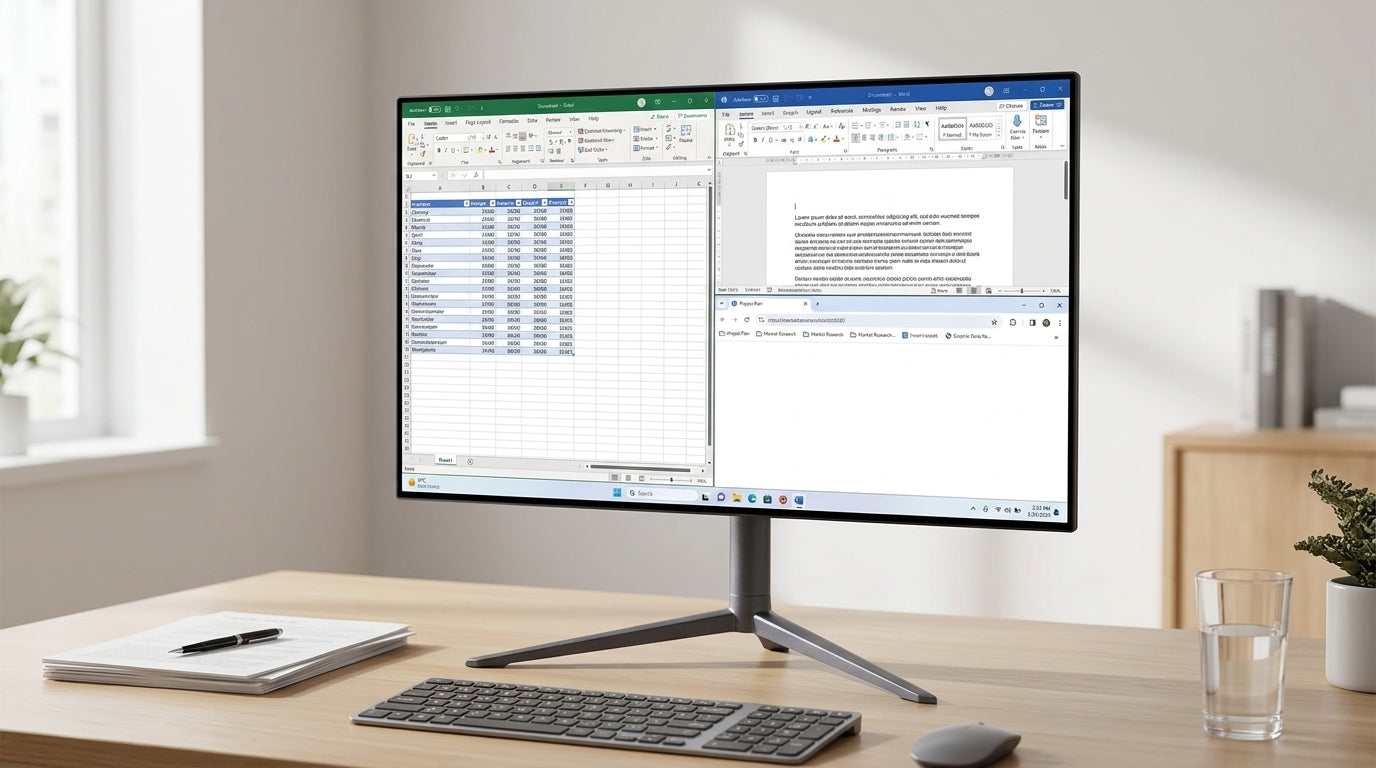
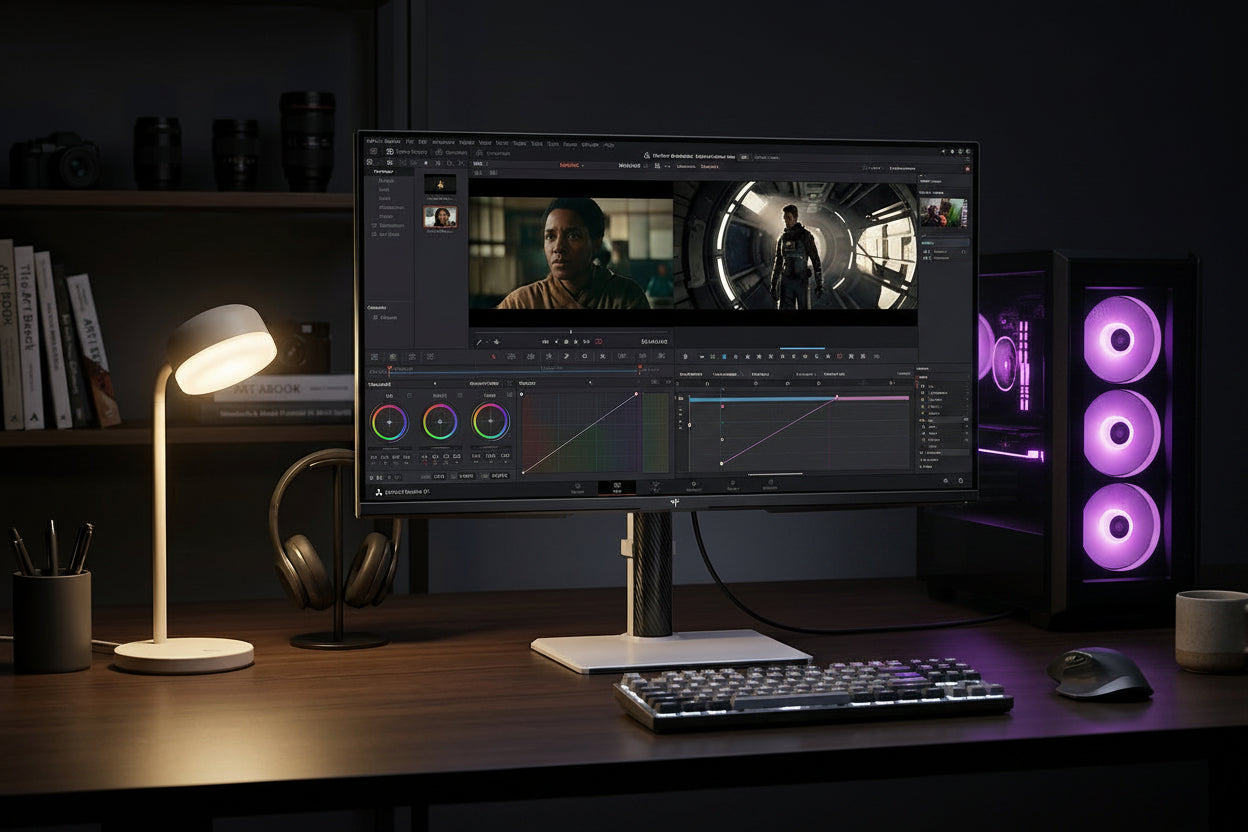
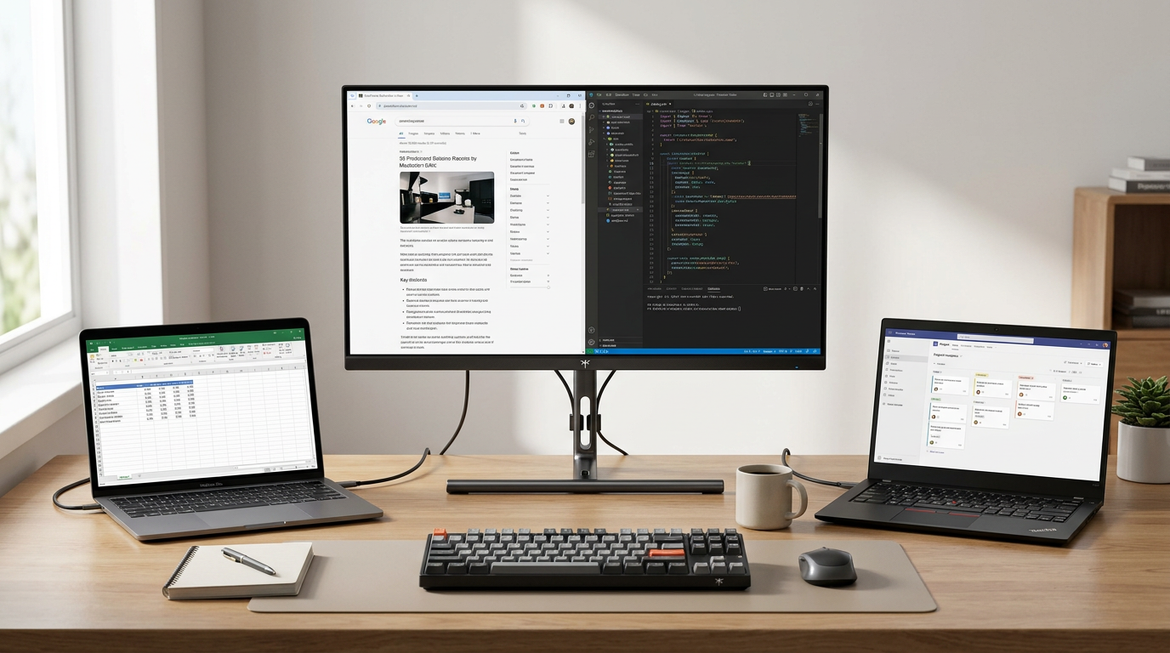
Grand strategy games like Crusader Kings III and Hearts of Iron IV turn your screen into a living battlefield of tiny province labels, intricate borders, resource counters, and dense tooltips. For players who spend hours or even entire evenings zoomed out to manage vast empires, low pixel density quickly turns crisp text into a fuzzy strain that slows decisions and tires your eyes. High pixel density (PPI) is the most direct fix because it makes every label and icon sharp at typical viewing distances, letting you zoom out further and play longer without constant squinting. While game UI scaling and OS tweaks help, they cannot overcome a fundamentally low-PPI panel; prioritize monitors that deliver at least 140 PPI for this genre before chasing refresh rate or contrast.

The Map Readability Crisis: Why Your Strategy Game Looks Blurry
Many grand strategy players first notice the problem during long campaigns: province names and army strength numbers blur into the map texture when you zoom out, tooltips become hard to parse, and hours of focus on small text lead to headaches and slower play. This is not simply a matter of game design. Low-resolution or low-density displays cannot render the fine edges of fonts clearly, especially when the UI occupies only a small fraction of the screen real estate.
According to the American Optometric Association, prolonged screen time with poor visual ergonomics contributes to computer vision syndrome, with symptoms including eye strain, blurred vision, and fatigue. In map-heavy titles the static nature of the interface makes the issue worse because your eyes stay locked on the same small details for extended periods. Players often regret choosing a large low-PPI screen expecting immersion, only to find the practical cost is reduced session length and more frequent breaks.
The good news is that once you understand the core display factors, you can filter monitors effectively before purchase. The first question to ask yourself is how many hours per week you expect to spend reading the map. If the answer exceeds four or five, a high-PPI panel becomes a practical necessity rather than a luxury.
The PPI Factor: Finding the Sharpness Sweet Spot for Map Labels
Pixel density matters more than raw screen size or resolution alone for reading map text. PPI tells you how tightly pixels are packed; higher values make small fonts and icons appear crisp rather than jagged or soft. A common rule of thumb for desktop text clarity is 110–160 PPI. Below that range labels start to require heavy scaling that can look blurry; above it, text often feels effortless.
For grand strategy specifically, the transition point where labels and borders become reliably sharp without constant UI adjustment sits around 140 PPI. At this level you can comfortably zoom the map out to see an entire kingdom or front line while still reading province names and troop counts at a normal 2–3 foot viewing distance. Lower densities force you to either lean in, enlarge the UI (which reduces map space), or accept fatigue.

PPI Across Common Monitor Sizes and Resolutions
This heatmap shows calculated pixel density for 24-, 27-, and 32-inch monitors at standard resolutions. The 'Effortless Readability' zone starts around 140 PPI, where small map labels in grand strategy games typically become sharp without aggressive UI scaling. Values are derived from the standard formula and rounded for clarity.
Show PPI Table
| Resolution | 24 inch | 27 inch | 32 inch |
|---|---|---|---|
| 1080p | 91.8 PPI | 122.4 PPI | 68.9 PPI |
| 1440p | 108.8 PPI | 163.2 PPI | 81.6 PPI |
| 4K | 183.6 PPI | 137.8 PPI | 91.8 PPI |
As the chart clarifies, 27-inch 4K reaches approximately 163 PPI, placing it comfortably in the effortless zone for most players. In contrast, 27-inch 1440p sits at roughly 109 PPI, which many describe as the functional baseline but noticeably softer for tiny map labels. A 32-inch 4K panel offers about 138 PPI, still strong but slightly less dense than the 27-inch 4K option at normal desk distances. If your desk space or budget favors a larger screen, the 32-inch model remains viable provided you accept modest scaling or sit a bit closer.
This threshold helps set realistic expectations: 1440p is not bad for casual play, but enthusiasts who run marathon sessions in Crusader Kings or Hearts of Iron usually notice a meaningful reduction in eye strain and faster decision-making once they cross into the 140+ PPI range. Viewing distance matters; the numbers above assume typical desk use of 2–3 feet.
Mini-LED vs. OLED: Choosing the Right Panel for the 'One More Turn' Marathon
Grand strategy games keep the same UI elements on screen for many consecutive hours, creating a challenging environment for certain panel technologies. OLED delivers excellent contrast and deep blacks that can make night maps and borders pop, yet the risk of burn-in rises when bright resource bars, minimaps, or parchment-style interfaces remain static for 8–12 hour campaigns. Newer OLED panels include improved heat management and pixel-shift features, yet the cumulative stress of marathon sessions still makes the technology higher risk compared with alternatives.
Mini-LED panels, particularly those with hundreds of local dimming zones, provide high peak brightness and strong contrast without the same long-term static-image concerns. In well-lit home offices or daytime play the extra brightness helps map details and tooltips stand out against ambient light. Light-colored interfaces common in many strategy titles also mask any minor blooming that might appear around bright UI elements on darker scenes. For players whose primary use case is map-heavy grand strategy rather than dark-room cinematic games, Mini-LED typically offers a better balance of durability, clarity, and comfort.
Subpixel layout adds another practical layer. Standard RGB arrangements generally deliver cleaner font rendering in Windows than BGR or non-standard layouts, which can reduce fringing around small text. This technical detail becomes noticeable when you spend dozens of hours reading province names and event text. Our guide to subpixel layout explains the differences and simple ClearType adjustments that can further sharpen Windows fonts.
If your sessions regularly exceed six hours with static UI visible, treat OLED as a secondary choice unless you are prepared to run regular pixel-refresh cycles and accept a modest long-term risk. Mini-LED or or high-quality IPS panels avoid that trade-off while still delivering the high PPI needed for text sharpness.
Optimizing Your Interface: UI Scaling and Technical Fixes for 4K Strategy
Even the sharpest monitor benefits from proper software settings. Modern Paradox titles such as Crusader Kings III and Hearts of Iron IV include native UI scaling options that let you enlarge interface elements without losing the base resolution advantage. As the official Hearts of Iron IV wiki explains, these sliders adjust text and panel sizes directly in-game, making 4K far more usable than older titles that lacked such support.
For games that still render tiny or blurry text at high resolutions, Windows offers a practical workaround. Right-click the game executable, select Properties → Compatibility → Change high DPI settings, and choose “Override high DPI scaling behavior” with “Application” or “System (Enhanced).” This often resolves fuzzy UI in older strategy games or poorly optimized ports. Community reports on Steam forums confirm this fix helps many players move from frustratingly small text to comfortable readability.
Beyond software, physical habits matter. The 20-20-20 rule remains one of the simplest ways to reduce digital eye strain: every 20 minutes, look at an object 20 feet away for 20 seconds. Our article on remedying digital eye strain covers additional monitor-side features such as flicker-free backlights and low blue light modes that complement high-PPI panels during long campaigns.
Combining high PPI hardware with these adjustments typically eliminates the majority of “fuzzy map” complaints while preserving the strategic overview that makes the genre rewarding.
The Armchair General’s Checklist: Best Monitors for Map-Heavy Gaming
Use this checklist to compare options quickly before buying:
- Resolution and PPI: Target 4K on 27- or 32-inch screens for 138–163 PPI. Confirm the calculated density falls in or above the 140 PPI effortless zone for your preferred viewing distance.
- Panel Type: Prefer Mini-LED or high-quality IPS for marathon sessions to minimize burn-in risk with static UI. Avoid OLED as the primary choice unless your play style includes frequent dark-room cinematic breaks.
- Subpixel Layout: Look for RGB stripe panels for the cleanest Windows font rendering on map labels and tooltips.
- Ergonomics: Full height, tilt, and swivel adjustment helps maintain the ideal 2–3 foot distance and reduces neck strain during long evenings.
- Brightness and Contrast: At least 350–400 nits peak helps text pop in typical room lighting; strong local dimming improves UI legibility without excessive blooming on light maps.
- Connectivity: HDMI 2.1 and DisplayPort 1.4 ensure you can run 4K at 120 Hz+ if your GPU supports it, though 60–160 Hz is usually sufficient for strategy pacing.
Applying these criteria usually narrows the field to a handful of practical choices. For most grand strategy players a 27-inch 4K panel strikes the best balance of sharpness, desk footprint, and cost. Larger 32-inch 4K options suit those who want more map real estate and can accept a slightly lower PPI or sit a bit farther back.
Among current options, the KTC H27P22S and H27P6 deliver 4K resolution with strong color accuracy and full ergonomic stands, making them solid all-rounders for both strategy campaigns and lighter gaming. Players who want higher contrast and brighter highlights for detailed maps may prefer the M27P6 Mini-LED model, whose 1152 dimming zones and 1400-nit HDR capability help UI elements stand out while its IPS panel avoids the burn-in concerns of OLED during extended sessions. Those with larger desks or who enjoy a bigger strategic overview can consider the H32P22P 32-inch 4K, which still lands near the practical PPI threshold and includes height adjustment.
If your budget or current GPU cannot support 4K, a well-tuned 27-inch 1440p monitor with RGB subpixels and good ergonomics remains usable, especially when paired with generous in-game scaling. The key is matching the display to your actual session length and map-reading demands rather than chasing headline specifications.
Choosing the Right Display for Your Campaign
The decision ultimately comes down to three practical questions: how many hours per week will you spend reading tiny map labels, how far is your typical viewing distance, and whether your play style involves mostly static bright interfaces or varied lighting. If long campaigns dominate your schedule, a 27-inch or 32-inch 4K Mini-LED or IPS panel in the 140+ PPI range will reduce fatigue and improve decision speed more than any other single upgrade. OLED can work for shorter, varied sessions but carries higher risk for the classic “one more turn” marathon.
Start by measuring your desk distance and calculating the PPI of any monitor you are considering. Combine that with native UI scaling, proper DPI overrides, and the 20-20-20 rule, and even the most text-dense grand strategy title becomes far more comfortable. The monitors listed above are not the only options, but they illustrate the current balance of sharpness, durability, and features that serious strategy players actually use for hundreds of hours of empire building.
Do I need 4K to enjoy Crusader Kings or Hearts of Iron?
Not strictly, but 4K on a 27-inch screen (163 PPI) noticeably reduces the need for aggressive scaling and makes zoomed-out maps easier to read compared with 1440p at the same size. Many players manage well on high-quality 1440p panels with careful UI settings, yet the jump to 4K is one of the upgrades that tends to eliminate rather than merely reduce complaints about fuzzy text.
How important is subpixel layout for strategy games?
It is a secondary but real factor. RGB layouts usually produce the cleanest font edges in Windows ClearType, which helps when reading event pop-ups and tooltip-heavy interfaces. BGR or unusual arrangements can introduce slight color fringing that becomes noticeable after several hours. Checking a monitor’s subpixel layout before purchase is worthwhile if text clarity is your top priority.
Can a high-refresh-rate monitor compensate for lower PPI?
Refresh rate improves motion smoothness but does little for static text sharpness. In grand strategy the majority of your time is spent reading rather than moving the camera quickly, so PPI and panel type deliver more practical benefit than chasing 240 Hz or higher. A 60–160 Hz 4K panel is typically a better fit than a 360 Hz 1080p display for this genre.
Is Mini-LED worth the extra cost over standard IPS for map games?
For players who keep the screen on for very long sessions in mixed lighting, the higher brightness, better local contrast, and reduced burn-in risk often justify the step up. Standard IPS panels remain excellent and more affordable; choose Mini-LED if you want the map and UI to pop more vividly while minimizing long-term concerns with static elements.
What viewing distance should I use with a 27-inch 4K monitor?
Most users sit 2–3 feet away, which aligns well with the 163 PPI of a 27-inch 4K panel. At this distance individual pixels become difficult to discern, producing the “retina-like” sharpness that makes small labels effortless. Sitting significantly closer can make pixels visible again; farther away reduces the effective benefit of the density.