A smart display for business is worth considering when the same screen has to move between reception, meetings, and training without looking improvised. If it mostly stays in one place, a fixed monitor or TV is usually simpler. The real buying question is whether mobility, setup speed, and cleaner handoff between users matter enough to justify the extra complexity.

What Shared-Space Buyers Need First
Portable smart displays sit between personal devices and fixed conference-room screens. In practice, that makes them useful when a small business needs one screen to cover check-in, short presentations, and staff sessions without a lot of re-cabling or setup drama, as Ars Technica's look at giant tablets on wheels suggests.
The first filter is still mobility. If the display will be rolled, parked, and reused across different rooms, a portable smart display can make the workflow easier. If it will mostly sit behind a desk or in one meeting room, the simpler choice is usually a fixed screen.
Two decision points matter here. If the screen only moves occasionally, buy for the fixed room and skip the extra mobility cost. If the same display must serve reception in the morning and training in the afternoon, mobility becomes part of the job, not a bonus feature.
For small businesses, that means checking size, stand stability, power access, cable routing, and where the screen will live when it is not in use before comparing app lists or extra features. A smart display for business should reduce repeated setup, not add a new routine every time staff borrow it.
Browse smart monitors if you want a broader category view before narrowing to portable options.
Match the Screen to the Space
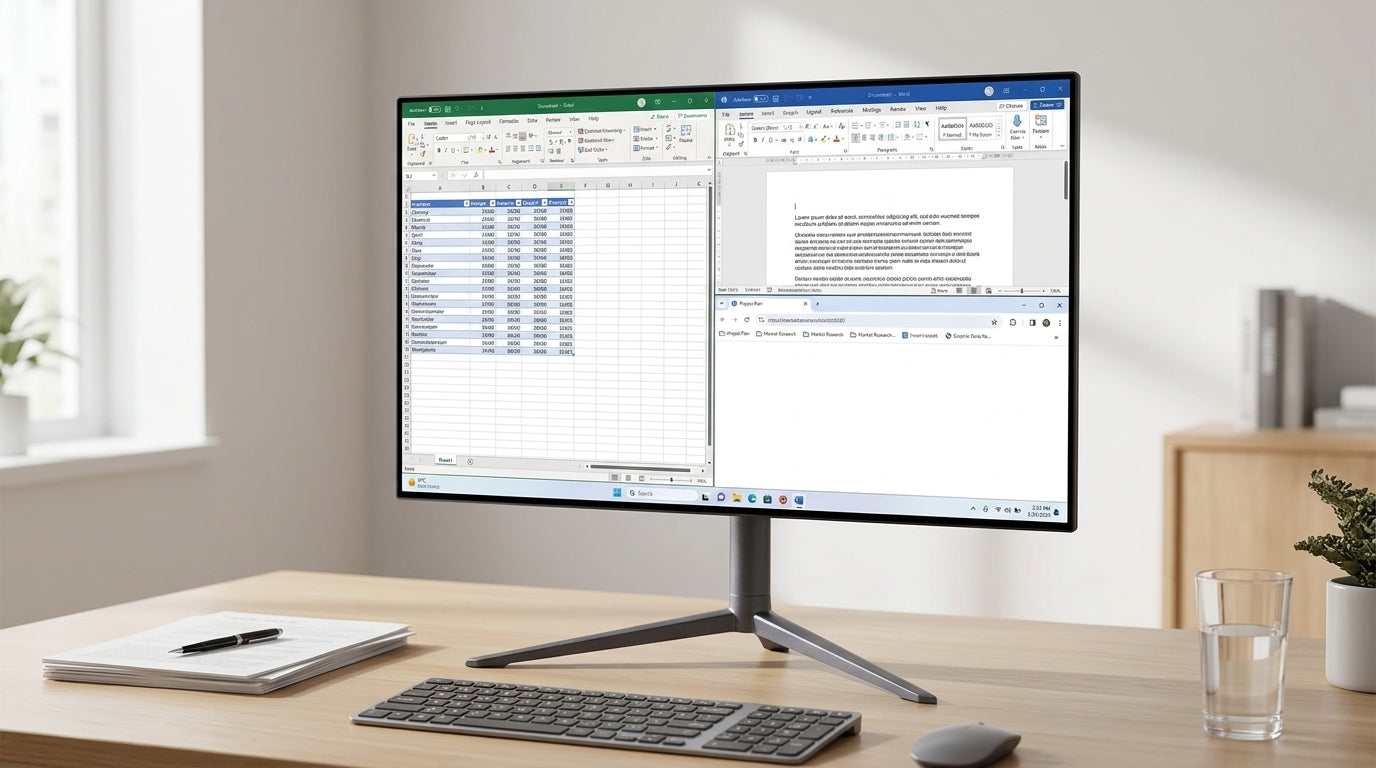
For reception areas, the screen has to look intentional, not temporary. That usually favors a size and stand that fit the room without crowding the desk or blocking traffic. A 27-inch mobile model can feel easier to place in tighter spaces, while a 32-inch class display gives more screen presence in lobbies, shared rooms, and training corners.
The more important split is mobility versus fixed placement. A wheeled or rolling unit makes sense when staff need to move the screen room to room. A tilt-only or elevation-adjustable model makes more sense when the display stays in one room but still needs better viewing angles for different users.
Choose the more movable setup when room-to-room handoff is routine. Choose the more stationary setup when the display stays near one power source and one traffic pattern.
For this article's featured mobile option, the 27-inch MEGAPAD fits the stronger-mobility side of that split, while the 32-inch MEGAPAD fits a more anchored, screen-forward setup. Those are not interchangeable, because room use and storage habits change the real fit.

A portable smart display also has to share space with furniture, signage, and people. Bigger is not automatically better if the stand footprint makes a reception area feel cramped or if cable routing becomes messy every time someone moves it.
Choose Features That Reduce Setup Friction
For shared business use, the features that matter most are the ones that save staff time. That usually means easy source switching, familiar inputs, touch support when people will actually interact with the screen, and enough built-in audio or camera capability to avoid extra accessories for quick sessions.
If your team mainly shares a display for short presentations or check-in content, the goal is a fast handoff. A display that connects cleanly to common office devices is often more valuable than one with a long feature list that nobody uses. That is especially true when different staff members borrow the screen on different days.
Touch is helpful when the screen doubles as a front-desk or training tool. It matters much less if the display simply plays slides, forms, or signage and nobody needs to manipulate it directly. A smart display for business should match the workflow, not just the spec sheet.
Battery power should be treated as a planning input, not a single buying rule. A daily-use battery guide is useful here because runtime changes with brightness and workload, so a portable screen can still behave like a mostly plugged-in device in real use.
That is the hidden trade-off. Battery freedom helps most when the screen really does move. If the display will sit near power most of the time, then battery becomes a convenience buffer rather than the reason to buy.
The mobile touch screens collection is the natural browsing path if you want to compare portable options after narrowing the fit.
Place the Display for Use and Safety
Placement is not an afterthought. In shared spaces, it is a go-or-no-go check. The screen should sit on a stable, level base, with a clear cable path and a parking spot that does not make the room feel cluttered when the display is idle.
The accessibility reference point for touch or check-in elements is clear: the ADA accessibility standards place interactive elements in a reach range that shared-space buyers should check before final placement. For general office ergonomics, the CCOHS monitor positioning guidance says the top of the screen should be at or slightly below eye level, with the screen tilted about 15 degrees below the line of sight.
Those references are useful because they turn placement into a practical test. If the display forces awkward looking up, down, or across a traffic path, it is not a good fit yet. If staff must step around cables or constantly move the unit to make the room usable, the setup is too fragile for shared use.
For a portable smart display, the safest planning habit is simple: decide where it parks, how it rolls or gets moved, and who is responsible for putting it back. In shared rooms, the screen needs a routine as much as it needs a spec sheet.
Decide Between a Smart Display, Monitor, or TV
A smart display fits best when one screen has to do several jobs. That usually means reception content, internal meetings, and training sessions all share the same device. In that case, the extra flexibility can outweigh the higher setup complexity.
A standard monitor is often the better buy when the use case is fixed. If the screen stays at one desk or in one room, a normal monitor usually gives you a simpler path with fewer moving parts. A TV can also make sense when the task is mainly passive viewing and no one needs touch, app handling, or frequent relocation.
The comparison is easier if you ask one question: does movement change the workflow enough to matter? If yes, the smart display earns its place. If no, the lower-friction monitor or TV is usually the better fit.
For a fixed, app-forward option, the smart monitor category is a reasonable place to compare non-mobile alternatives. If you want a more office-style baseline, office monitors are the simpler category to review.
The featured mobile model makes the most sense when a screen must travel between roles during the day. The 27-inch MEGAPAD is the more mobile choice, while the 32-inch MEGAPAD is the more anchored option for spaces that want a larger presence without a rolling workflow.
Final Buying Checklist
Before you order a portable smart display for shared use, check five things: room size, mobility level, power access, source devices, and where the screen will park between uses. Then confirm stand stability, cable routing, and who will move the unit.
If the display will support client-facing work, also verify the return window, warranty terms, and support contact before checkout. A portable smart display for business is only a good buy when it fits the room, the workflow, and the storage routine you will actually keep.
FAQs
How Do I Choose a Portable Smart Display for a Reception Area?
Start with the front-desk workflow. A reception screen usually needs clean placement, readable text, simple source switching, and a cable path that does not look temporary. If guests will touch it, check that the interactive area can be placed at a workable reach height before you focus on app features.
What Makes a Rolling Display Better for Training Sessions?
Rolling displays help most when multiple rooms share the same screen and staff need to move it quickly. The trade-off is that you still need a parking spot, a power plan, and stable handling. If the room already has a fixed screen and the layout rarely changes, wheels may add more cost than value.
Can a Smart Display Replace a TV in a Small Business Lounge?
Sometimes, but only when the screen needs to do more than show video. A smart display is the better fit if the lounge also doubles as a meeting or client-presentation space. If the room is just for passive viewing, a TV is often the simpler choice.
Why Does Stand Adjustment Matter in Shared Office Spaces?
Shared rooms are used by different people at different times, so stand adjustment helps the same screen work in more than one setup. Tilt, height, and pivot changes can improve viewing comfort and reduce awkward positions. If the display never moves, basic adjustability may be enough.
Can I Use the Same Display for Client Presentations and Staff Training?
Yes, if the screen size, mobility, and setup flow work for the more demanding use case. The display has to be easy to move, easy to connect, and easy to park again. If one of those steps feels clumsy, separate devices may be easier to live with.
What Should I Check Before I Buy for a Shared Workplace?
Check the room path first, then the power source, then the stand or cart stability. After that, verify that the screen can be placed at a comfortable viewing height and that cables can stay out of traffic. Shared workspaces punish sloppy setup more than private desks do.