Switching a startup display fleet to OEM-direct hardware in 2026 can deliver meaningful capital savings by eliminating the 25-40% brand tax that legacy vendors typically charge for identical panel technology. For a 50-monitor rollout, this often translates into $10,000–$15,000 freed up over three years—capital that can fund additional developer workstations or core infrastructure instead of redundant support contracts. The decision hinges on shifting from brand-based “peace of mind” to certification-based reliability and a simple self-insured spare-pool strategy.

The High Cost of Legacy Loyalty: Defining the 2026 Brand Tax
The “brand tax” refers to the premium Tier-1 legacy brands add to displays that often use the same underlying LG, Samsung, or BOE panels found in factory-direct OEM models. Market data indicates that these brands typically command a 25–40% price premium for comparable specifications, a margin frequently described as the brand tax. For standard office workloads—spreadsheets, video calls, document editing, and light multitasking—this premium primarily purchases perceived reliability rather than measurable performance gains.
Beyond the sticker price, legacy purchases introduce soft costs that further inflate total cost of ownership (TCO). Procurement portals, vendor-specific support contracts, and duplicated warranty coverage can add an estimated $60–$150 per unit over a multi-year lifecycle. These fees rarely deliver proportional hardware improvements; instead, they represent overhead that can be redirected when a startup maintains its own modest spare inventory.
For most growing teams, the first check is whether your current fleet refresh budget assumes legacy pricing. If your per-monitor spend sits 30% or more above comparable OEM street prices, the brand tax is actively limiting how many desks you can equip or how much you can invest elsewhere.
The 2026 ROI Model: Converting Price Differences into Fleet Savings
A three-year technology refresh cycle serves as a practical financial sweet spot for office displays. After roughly 36 months, out-of-warranty repair costs and performance degradation tend to rise sharply, making earlier replacement more capital-efficient than prolonged maintenance.
Consider a 50-unit fleet. At a conservative 30% brand-tax differential, switching to OEM equivalents can save $200–$300 per monitor. Scaled across the fleet, that produces $10,000–$15,000 in immediate capital relief. This liquidity can fully specify three to four additional high-end developer workstations—directly supporting growth rather than vendor margins.
Startups can further amplify first-year returns by leveraging Section 179 of the U.S. tax code. The provision allows immediate deduction of the full purchase price of qualifying equipment, including monitors, in the year they are placed in service. Because the OEM purchase price is lower, the same deduction percentage delivers greater net cash retention compared with higher-priced legacy alternatives.
What this means in practice: A lower unit cost does not merely reduce the invoice—it maximizes the immediate tax shield and leaves more budget for revenue-generating hires or infrastructure. When your projected three-year TCO per desk exceeds $450–$550 under legacy pricing, the OEM path typically improves ROI noticeably.
The 'Self-Insured' Fleet: Why Hot-Swaps Beat Next-Day Support
The most common objection to OEM procurement is fear of downtime without premium enterprise support. Legacy “Next Business Day” contracts still leave teams waiting 24 hours or longer for replacement hardware, during which productivity is lost. An on-site spare pool changes that equation.
By reallocating a portion of the brand-tax savings, most fleets can maintain a 5–10% buffer of identical OEM monitors. A failed unit is swapped in minutes rather than days. The same capital that would have purchased legacy support contracts now funds physical redundancy that delivers faster recovery and eliminates recurring portal or contract fees.
Legacy soft costs—estimated at $60–$150 per unit over five years—often pay for administrative access rather than superior hardware longevity. An OEM spare-pool strategy converts those dollars into tangible assets that remain under your direct control. For a 50-person team, the cost of five spare monitors is typically lower than the cumulative support overhead on the full legacy fleet.

This approach works best when your deployment is standardized. Uniform models simplify spares management and training. When your environment already mixes three or more monitor SKUs, the hot-swap advantage shrinks and the case for legacy contracts grows stronger.
Mitigating Operational Risks: Quality and Compliance Parity
Reliability concerns are valid, but certifications provide a clearer filter than brand logos. ENERGY STAR certified displays and monitors demonstrate that power-consumption standards apply across OEM and legacy hardware alike; there is no inherent utility penalty for choosing factory-direct models that carry the certification.
Independent programs such as TCO Certified further verify ergonomics, sustainability, and performance benchmarks without reference to vendor reputation. Many OEM units use the same panel families found in Tier-1 business lines, so core image quality, color accuracy for office work, and longevity characteristics remain comparable when specifications are matched.
The practical self-check is simple: confirm that candidate OEM monitors carry current ENERGY STAR and, where relevant, TCO Certified status. If they do, the primary remaining variable is your team’s ability to manage a standardized spare pool rather than relying on vendor dispatch. When that operational preference aligns with your budget constraints, the risk profile of OEM hardware is typically acceptable for startup environments.
Standardizing Your Fleet: Choosing the Right OEM Displays
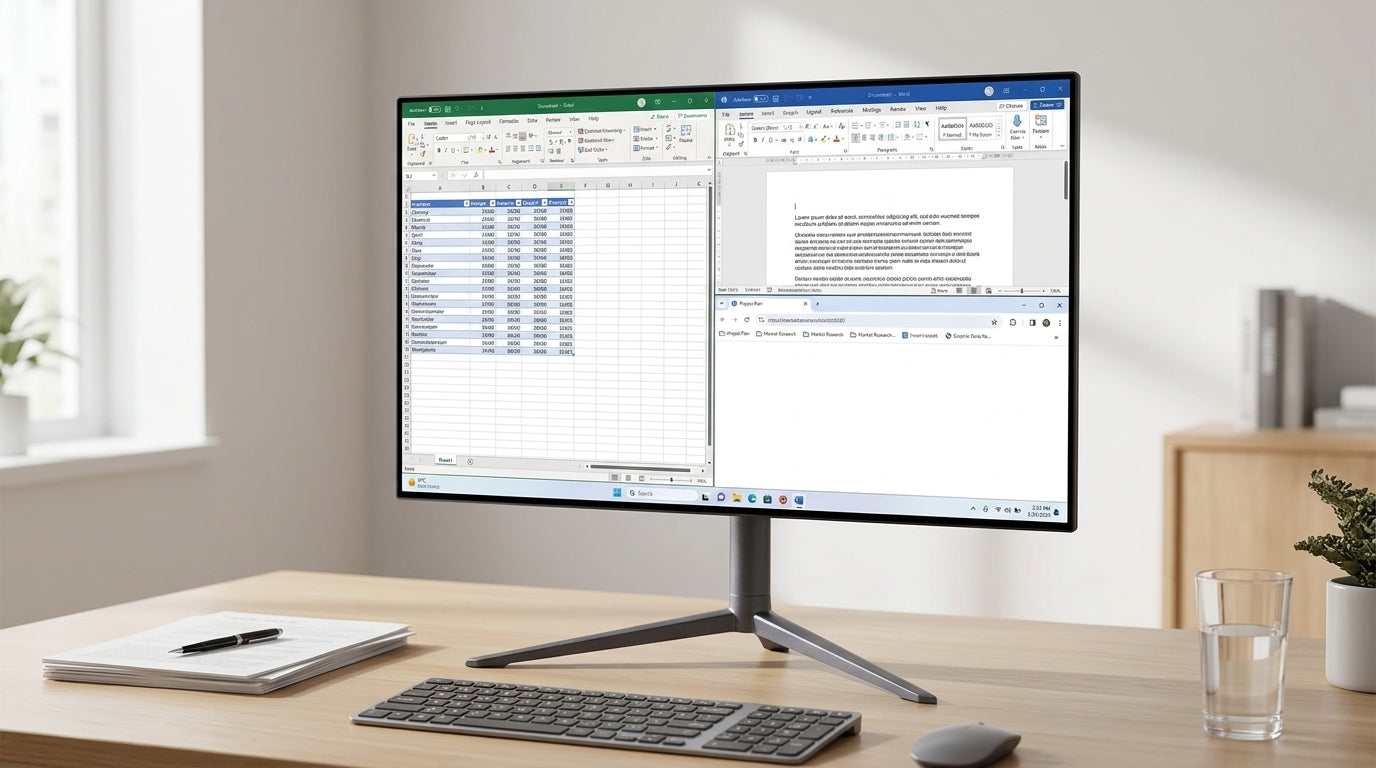
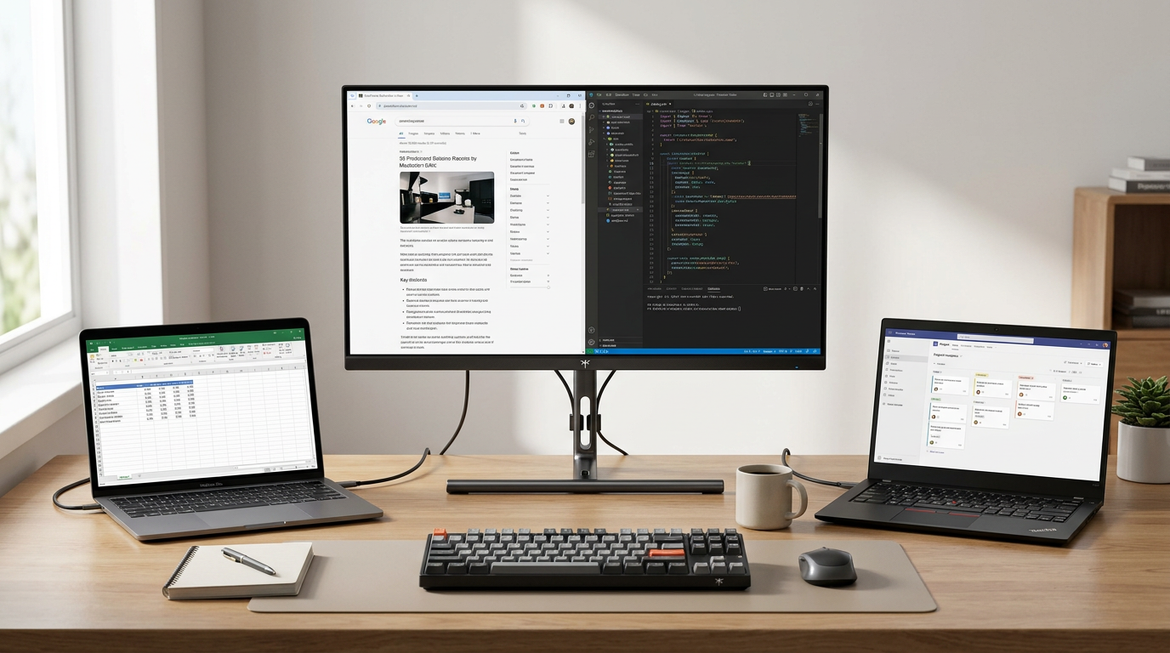
Fleet standardization reduces support complexity and makes hot-swapping viable. For most 2026 startup offices, a 27-inch QHD or 4K IPS panel strikes the best balance of pixel density, desk footprint, and cost. USB-C connectivity simplifies hybrid-work hot-desking by carrying video, power, and data in one cable.
Recommended profiles include models with at least 99% sRGB coverage, 100 Hz or higher refresh for reduced eye strain during long sessions, and tilt or full ergonomic stands depending on user needs. The Office Monitor collection contains multiple options that meet these criteria while remaining price-competitive.
Practical checklist for standardization:
- Match resolution and panel type across all desks to simplify spares.
- Require ENERGY STAR certification and, ideally, TCO Certified status.
- Prioritize USB-C with adequate power delivery (65 W+) for laptop users.
- Verify VESA compatibility for future arm or wall mounting.
- Budget 5–10% extra units as on-site spares rather than service contracts.
Specific models that frequently fit these parameters include the H27P27 27" 4K office monitor, the H27T27 27" 100 Hz QHD monitor, and the H32T13 32" 100 Hz QHD monitor. Each supports the connectivity and certification needs of hybrid teams while keeping per-unit cost well below legacy equivalents. Cross-reference current specs and pricing before finalizing volume orders, as availability and exact feature sets can vary.
For deeper guidance on ergonomic and productivity considerations, review the complete monitor buying guide for productivity workspaces or the home-office ergonomic monitor guide.
How to Calculate Your Own 3-Year Brand-Tax Savings
Begin with your current average landed cost per legacy monitor, including any support add-ons. Subtract the street price of a specification-matched OEM unit to isolate the brand-tax delta. Multiply by fleet size, then add estimated soft-cost avoidance ($60–$150 per unit) and the first-year Section 179 tax benefit on the lower purchase price.
Subtract the cost of your planned spare pool (typically 5–10% of fleet size). The net figure represents capital available for reallocation. When this number exceeds your threshold for additional hires or infrastructure—commonly $8,000–$12,000 for a 30- to 60-person startup—the switch usually justifies the operational discipline of standardization and on-site spares.
Teams with fewer than 20 monitors or highly variable user requirements may find the standardization overhead outweighs the savings. In those cases, selective legacy purchases for specialized roles can coexist with OEM standardization for the majority of the fleet.
FAQs
How is the brand tax percentage calculated for monitors in 2026?
The 25–40% range reflects street-price comparisons between Tier-1 legacy business monitors and OEM-direct equivalents sharing the same panel resolution, refresh rate, and certification level. It is a market-observed average, not a fixed manufacturer margin, and actual differentials vary by model and volume commitment. Always validate with current quotes rather than relying on the planning range alone.
What fleet size makes the OEM hot-swap model worthwhile?
Most procurement teams see clear advantages once they reach 25–30 monitors. At that scale, the absolute savings comfortably cover a 5% spare pool while still delivering net capital relief. Smaller teams can still benefit but should model the exact spare-unit cost against their expected failure rate and tolerance for occasional vendor support.
Does choosing OEM monitors reduce Section 179 tax benefits?
No. Section 179 allows full deduction of the purchase price regardless of brand. Because the OEM price is lower, the same deduction percentage preserves more cash in the business, effectively increasing the net first-year benefit per dollar spent. Confirm eligibility with your tax advisor, as limits and qualifying criteria can change annually.
How do you maintain standardization without vendor management tools?
Standardization itself reduces the need for complex management utilities. When every desk runs the same model with identical firmware and USB-C behavior, imaging, troubleshooting, and hot-swapping become simpler. Most teams supplement with basic inventory spreadsheets or open-source device-management platforms rather than proprietary vendor dashboards.
What hidden risks remain when dropping legacy support contracts?
The primary residual risk is slower recovery if your spare pool is depleted during an unusually high failure window. Mitigate this by sizing the buffer conservatively for your environment, maintaining a small vendor relationship for emergency bulk replacement, and tracking actual failure rates during the first 12 months. Most startups find the risk manageable once standardization is achieved.
Can OEM monitors meet corporate compliance and sustainability standards?
Yes, when they carry current ENERGY STAR and TCO Certified marks. These independent certifications verify energy consumption, ergonomics, and material standards without regard to brand. Include certification verification in your procurement checklist to ensure parity with legacy alternatives on compliance reporting.