OEM monitor value is the balance between what you pay, what the panel and electronics actually deliver, and how much risk you accept on support, consistency, and features. The practical question is not whether an OEM monitor is "good" in the abstract, but whether it gives you the right mix of performance, warranty confidence, and total cost for your use case.

A simple rule helps: if you need predictable support, color consistency, or a low-hassle purchase, paying more for a well-documented retail model can make sense; if you mainly want strong specs for the dollar and can verify the panel class, ports, and warranty terms, OEM can be the better value. In other words, value is not just the sticker price, it is price plus confidence.
What OEM Value Really Means
OEM usually means a monitor sold through original equipment channels, private-label programs, or system-integrator supply lines rather than a heavily marketed retail box. That often changes the economics. Packaging, advertising, and channel markup may be lower, so the buyer may see stronger specs at a given price point. But the trade-off is that documentation, firmware updates, and after-sales service can vary more than with mainstream retail brands.
For a buyer, value should be measured across four questions:
- Does the monitor meet the performance target for the job?
- Is the panel type, resolution, refresh rate, and connectivity clearly stated?
- Is the warranty easy to use if something is wrong?
- Is there enough consistency in build and panel quality to reduce return risk?
If the answer to all four is reasonably strong, OEM value can be excellent. If one or more is weak, a lower upfront price may not translate into real savings.
A useful external benchmark is the way a monitor buying guide frames the decision: buyers should compare resolution, refresh rate, panel type, color gamut, ports, and ergonomics rather than assuming a lower price means lower quality.
Where the Savings Usually Come From
OEM pricing can look attractive because the product is often sold with less consumer-facing overhead. That may mean fewer marketing costs, simpler packaging, and tighter distribution. For buyers focused on the spec sheet, this can create a straightforward value proposition, more refresh rate, higher resolution, or a larger panel for the same budget.
That said, lower price does not automatically mean better value. Some buyers end up paying indirectly through unclear support terms, slower replacements, or inconsistent panel tuning. Before treating a low price as a win, check whether the product has the basics covered: usable stand ergonomics, standard video inputs, VESA compatibility if needed, and a warranty that matches the purchase channel.
A related factor is vertical integration. When a manufacturer controls more of the design, assembly, and component flow, it can sometimes improve cost control and consistency. That does not guarantee quality, but it can help explain why some OEM offerings are competitive on price without looking obviously stripped down. For a broader look at that business structure, see vertical integration for startups.
A second way to judge savings is to compare the visible spec to the actual support package. The FTC's warranty guidance is a reminder that warranty length and support access are part of total value, because a cheap purchase can become expensive if replacement or repair is hard to use.
Compare Specs, Support, and Use Case
For most buyers, OEM monitor value is not decided by one number. It comes from matching the display to the job and then checking whether the support terms are good enough to make the savings real.
Panel Type and Resolution
Panel type affects contrast, viewing angles, and color behavior. Resolution affects sharpness and how much desktop space you get. A high resolution only adds value if your graphics card, cable, and workspace can support it well.
Refresh Rate and Motion Behavior
Refresh rate matters for gaming and general smoothness, but only when the rest of the chain can keep up. A monitor that advertises a high refresh number but feels sluggish or poorly tuned may not be a good value. Check whether motion clarity and overdrive behavior are consistent, not just the headline spec. If you want a plain-language breakdown of monitor delay, input lag vs. response time is the right lens, because those terms affect different parts of the experience.
Ports and Compatibility
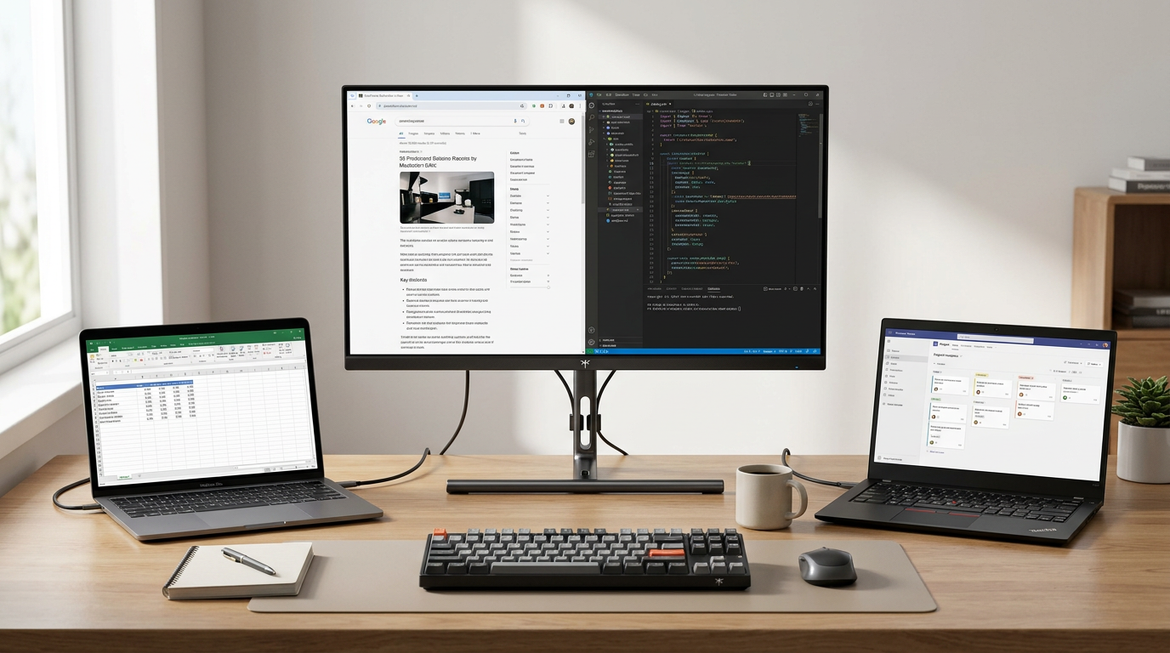
A good value monitor should support the connections you actually need. HDMI and DisplayPort are the most common expectations, but buyers should also check audio pass-through, USB hubs, KVM features, and console compatibility where relevant.
Ergonomics and Mounting
A cheaper monitor can become less valuable if the stand is poor and the display cannot be adjusted to a comfortable angle. If you plan to use an arm or wall mount, VESA support matters.
Warranty and Support
Warranty language is often where OEM value rises or falls. Make sure you know who handles support, how dead pixels or backlight issues are treated, and whether replacement requires shipping the unit back first.
That last point matters more for consistency-sensitive buyers. If your work depends on stable grayscale, accurate color, or unit-to-unit uniformity, review how display panel variation affects professional work before assuming two similar-looking monitors will feel the same in daily use.
When OEM Monitors Make the Most Sense
OEM monitor value is usually strongest in buyer categories that care about measurable specs more than premium branding.
Value-Focused PC Gaming
For gaming, OEM value can be compelling when the monitor offers a high refresh rate and acceptable motion performance at a lower price than mainstream alternatives. Buyers should still verify whether the advertised refresh rate is native, whether variable refresh support is present, and whether response times are realistic. If you are trying to separate marketing claims from useful speed, the response-time article above is the better sanity check than the brand name alone.
Home Office and Productivity
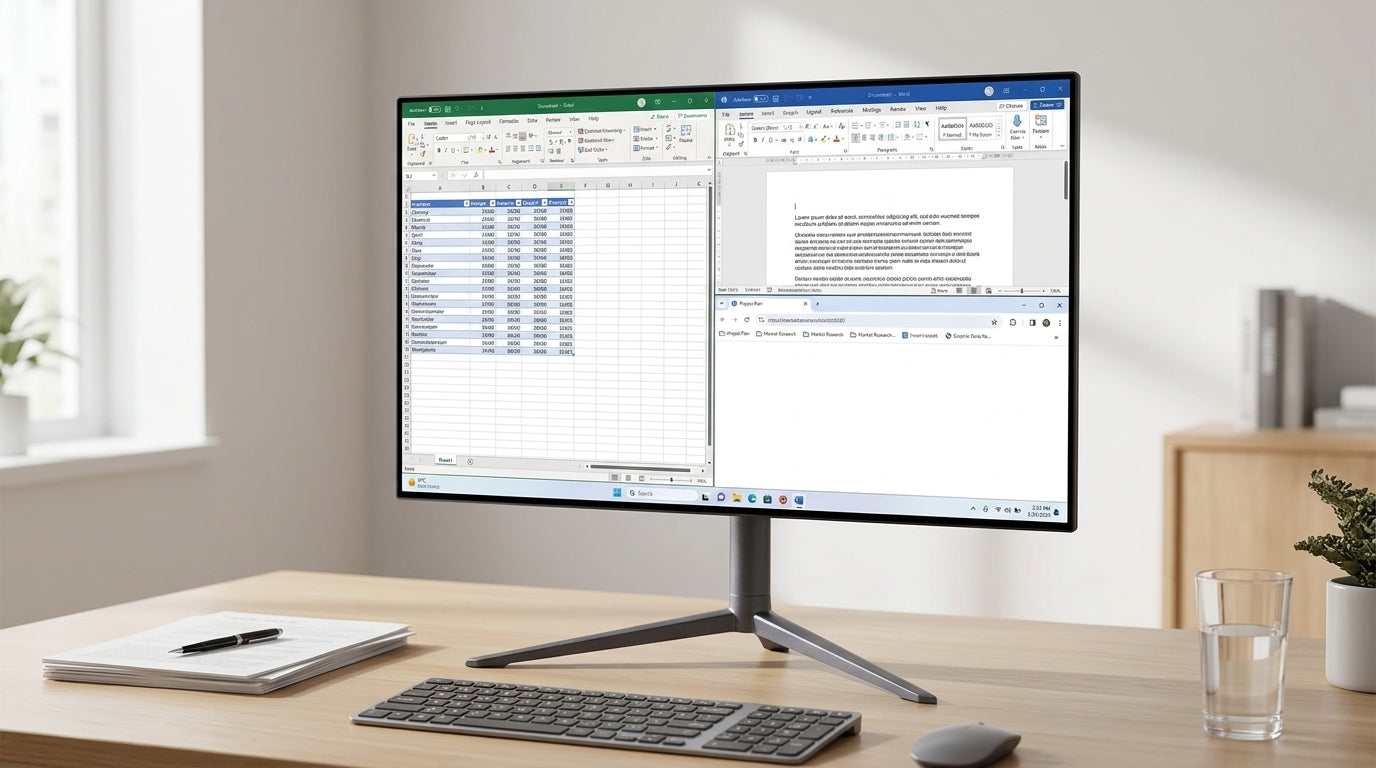
For office work, the main value drivers are screen size, sharpness, eye comfort, and reliability. Many buyers do not need flagship calibration or ultra-fast response. A well-priced OEM office monitor can be a strong value if it delivers a stable panel, sensible ergonomics, and enough resolution for text clarity.
Creator and Mixed-Use Setups
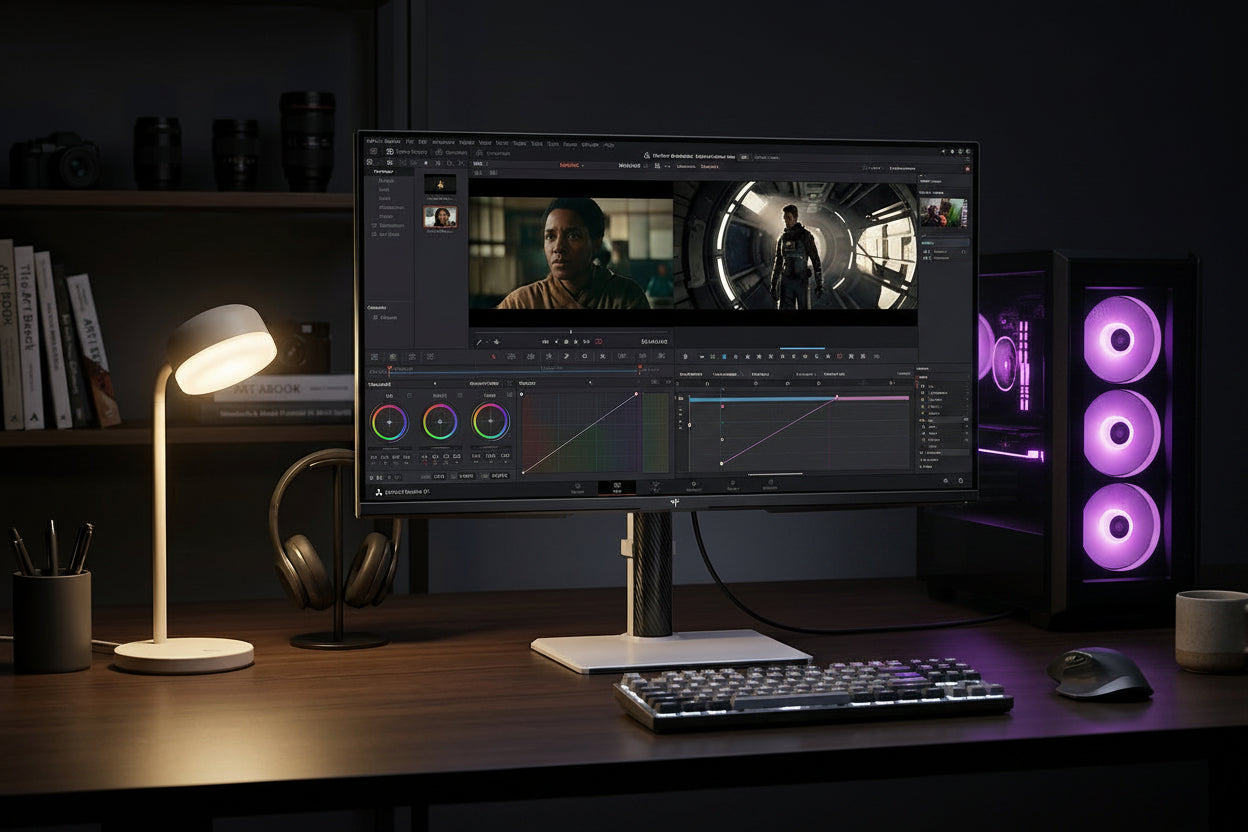
For mixed use, OEM value depends on whether the display covers enough color accuracy and uniformity for light creative work while still being practical for everyday use. If your workload depends on consistent grayscale, panel uniformity, or wide color coverage, the savings may not be worth the uncertainty unless the product is well documented.
Good Fit, Bad Fit, and Flip Point
A useful decision sentence is this: if your main goal is more specs per dollar and you can live with a little more homework before checkout, OEM is often a good fit; if you want the easiest support path and the least ambiguity, retail is usually the safer buy.
A Practical Buying Framework
Use a simple three-step filter:
- Choose the job first. Office, gaming, and creator use each reward different specs.
- Set a minimum acceptable spec. For example, size, resolution, refresh rate, and ports.
- Compare risk-adjusted price. The better deal is the one that meets your needs with the least downside.
This is why a conservative buyer often ignores the absolute lowest price. If two monitors are close in price, the one with better support, clearer documentation, and stronger consistency is frequently the better value.
Here is a quick decision sentence you can reuse: if the monitor meets your workload and the warranty path is clear, OEM can be a smart buy; if the spec sheet is strong but support is vague, the discount may not be enough.
Example Value Scenarios
If you want large-screen productivity, a 32-inch 4K monitor can be excellent value when it improves text clarity and multitasking enough to reduce workflow friction. If you prioritize competitive gaming, a smaller high-refresh display may deliver more value because motion performance matters more than sheer size. If your budget is tight, a carefully chosen OEM 2K model may offer a better balance than stretching for 4K without the GPU headroom to drive it smoothly.
For buyers comparing current options, these product pages can help anchor the discussion. The KTC 27" 4K 160Hz/320Hz 90W Gaming Monitor | H27P6 is a useful example of an OEM-style monitor that pairs dual-mode speed with a 4K option, while the KTC 32" 4K 165Hz Gaming Monitor with Vesa Mount | H32P22P shows how a larger 4K gaming screen can fit work and play. The KTC 27" 4K 160Hz/1ms HDR400 Gaming Monitor | H27P22S offers another strong 4K high-refresh alternative for mixed gaming and content work.
If you prefer browsing by use case, the gaming monitor collection, office monitor collection, 2K monitor collection, 4K and 5K high-refresh monitors collection, and all monitors collection are useful starting points.

Here is the practical takeaway: if you are comparing two monitors with similar specs, the one with better ergonomics, cleaner support terms, and a more realistic return path often wins on value, even if it costs a little more.
What Shapes OEM Monitor Value Most
A simple buyer-priority view of the factors that usually matter before price alone.
Show data
| Factor | Relative importance |
|---|---|
| Price | 5 |
| Spec clarity | 5 |
| Warranty confidence | 4 |
| Panel consistency | 4 |
| Ergonomics | 3 |
When OEM Is Not the Best Value
OEM is not always the right answer. It may be a weaker buy when you need dependable uniformity for color-sensitive work, when warranty terms are vague or difficult to use, when advertised features are not clearly documented, or when the price difference versus retail is too small to justify the added risk. In those cases, paying more for a familiar retail model can be the better decision because it reduces uncertainty.
A good not-a-fit filter is simple: if you would be frustrated by extra troubleshooting, slower support, or a bit of unit variation, OEM is probably not the best value even when the spec sheet looks strong. Compare the monitor against your workload first; if consistency or fast support is non-negotiable, the retail route usually preserves more long-term value.
Buyer Checks Before You Add to Cart
Use this checklist before checkout:
- Confirm the resolution, refresh rate, and panel type match your main use case.
- Check whether the listed ports and cable types work with your PC, console, or laptop.
- Review warranty length, support contact options, and any return window before checkout.
- Look at stand adjustment, VESA support, and desk depth so you do not need a surprise accessory.
- Compare the final delivered price, including shipping and any add-ons, against retail alternatives.
- Save the product page and order details in case you need support later.
If you plan to use a monitor arm, do not treat VESA support as optional. A monitor can be a strong value on paper and still be inconvenient on your desk.
What to Remember Before You Buy
OEM monitor value comes from the intersection of specs, price, and confidence. The best deal is not simply the cheapest one; it is the monitor that gives you the performance you need with acceptable risk. If a monitor clearly states its panel, refresh rate, connectivity, and warranty, and the price is meaningfully lower than comparable retail alternatives, it can be a strong value. If those details are unclear, the discount may not be enough. Always weigh support access and return policy alongside the headline specs.
FAQs
Q1. How Do I Know If an OEM Monitor Is Worth Buying?
An OEM monitor is worth buying when the savings still leave you with the right resolution, refresh rate, ports, stand, warranty, and return policy for your intended use. If any of those pieces are vague or missing, the price advantage can disappear quickly.
Q2. What Is the Main Difference Between OEM and Brand-Name Monitor Value?
Brand-name monitors often bundle more marketing overhead, wider retail visibility, or a more familiar support path, while OEM models may put more of the budget into specs and direct pricing. The better value depends on whether you care more about certainty or price efficiency.
Q3. Can a Factory-Direct Monitor Still Be Reliable?
Yes, but reliability should be judged by the specific product's warranty, support path, and user feedback where available, not by the OEM label alone. A strong spec sheet is helpful, but it does not replace a usable service process.
Q4. Why Does Warranty Matter So Much on Cheaper Monitors?
A lower upfront price can disappear if repair, replacement, or support friction becomes expensive or time-consuming. That is why support terms belong in the value calculation, especially when the monitor is being sold direct rather than through a large retail network.
Q5. What Specs Matter Most When Comparing OEM Monitors?
The most useful comparison points are resolution, refresh rate, panel type, color gamut, ports, stand options, and return terms. Those factors tell you whether the monitor fits the job, while the brand name mostly tells you how the product is packaged and supported.