Firmware support matters in the OEM monitor firmware support checklist because a monitor can look great on paper and still age badly if updates are unclear, rare, or hard to install. For most buyers, it is one longevity signal alongside panel type, refresh rate, and ports, not a replacement for them. If you care about long-term reliability, check support quality before the spec sheet wins the sale.

Why Firmware Support Changes the Buying Decision
Firmware problems usually show up after launch, when a new GPU, console, cable, or operating system changes how a monitor behaves. That is why a monitor can seem fine on day one and still become annoying later if it never gets meaningful fixes.
What this means is simple: if you expect to keep the monitor for years, support quality affects more than convenience. It can shape whether sleep and wake work smoothly, whether input switching stays reliable, and whether HDR or refresh behavior stays stable enough for daily use.
A useful way to think about it is this: panel specs tell you what the monitor can do on a good day, while firmware support tells you how well it may keep doing it after the setup changes around it. For a broader long-term-value angle, the Firmware-First buying strategy walks through why monitor control matters over time.
Check the Support Signal First
The quickest way to judge how to check monitor firmware support before buying is to look for evidence that the brand treats firmware like a real support process, not a marketing bullet. Public release notes, model-specific files, and dated version history are stronger than vague claims because they show what changed and when.
A good sign is a download page that names the exact model and version. Another good sign is a changelog that describes fixes in plain language, such as input stability, compatibility, or wake behavior. If the page only says a firmware file exists, but does not say what it changes, that is a weaker support signal.
If the update path uses USB or a manual flash process, read the instructions as if you were doing the update for the first time. If the steps rely on guesswork, missing steps, or a vague file name, that is a friction point worth taking seriously.
Support access matters too. A visible help center or contact path does not guarantee fast answers, but it does tell you where the problem goes if the firmware update fails or the monitor starts acting oddly later. That is the kind of practical support path buyers often want before checkout, not after a return window closes.
For shoppers who want a broader pre-buy reference, the 2026 monitor buying checklist is a useful place to compare firmware support against the rest of the spec list.
What Good Firmware Cadence Looks Like
A healthy OEM display firmware update reliability 2026 pattern usually shows up as an observable cadence, not a score. That means the page has version history, the fixes sound like real user issues, and the support team seems to update the model when something meaningful changes.
A slow cadence is not automatically bad. Older monitors, simpler panels, or models with fewer smart features may not need constant updates. But if a monitor has smart software layers, recent feature launches, or lots of compatibility-sensitive behavior, long silence becomes harder to interpret.
The key distinction is between slow and silent. Slow can still be understandable. Silent makes it harder to know whether the brand has no new issues to solve or simply does not communicate them publicly.
| Signal To Look For | What It Suggests | What Is Missing When It Is Weak | How Much Weight To Give It |
|---|---|---|---|
| Public release notes | The brand explains changes in plain terms | Harder to tell whether fixes are real or cosmetic | High |
| Version history | There is a visible support trail | Hard to judge whether firmware is maintained | High |
| Update frequency | The model receives attention over time | Support may be stale, or updates may be hidden | Medium |
| Clear contact path | You know where to ask for help | More friction if an update fails later | Medium |
If you want a support-side context check, the Monitor Support ROI guide is a good companion read for judging whether the help path is worth trusting.
Match Firmware Risk to Your Use Case
For gaming, firmware support matters most when the monitor has high refresh rates, HDR, or dual-mode behavior. Those features are where flicker, no-signal problems, or odd timing behavior can become noticeable fast, especially after a GPU driver update or console setting change. Models such as the KTC OLED 27" 2K 240Hz Gaming Monitor illustrate how firmware stability protects high-refresh performance.
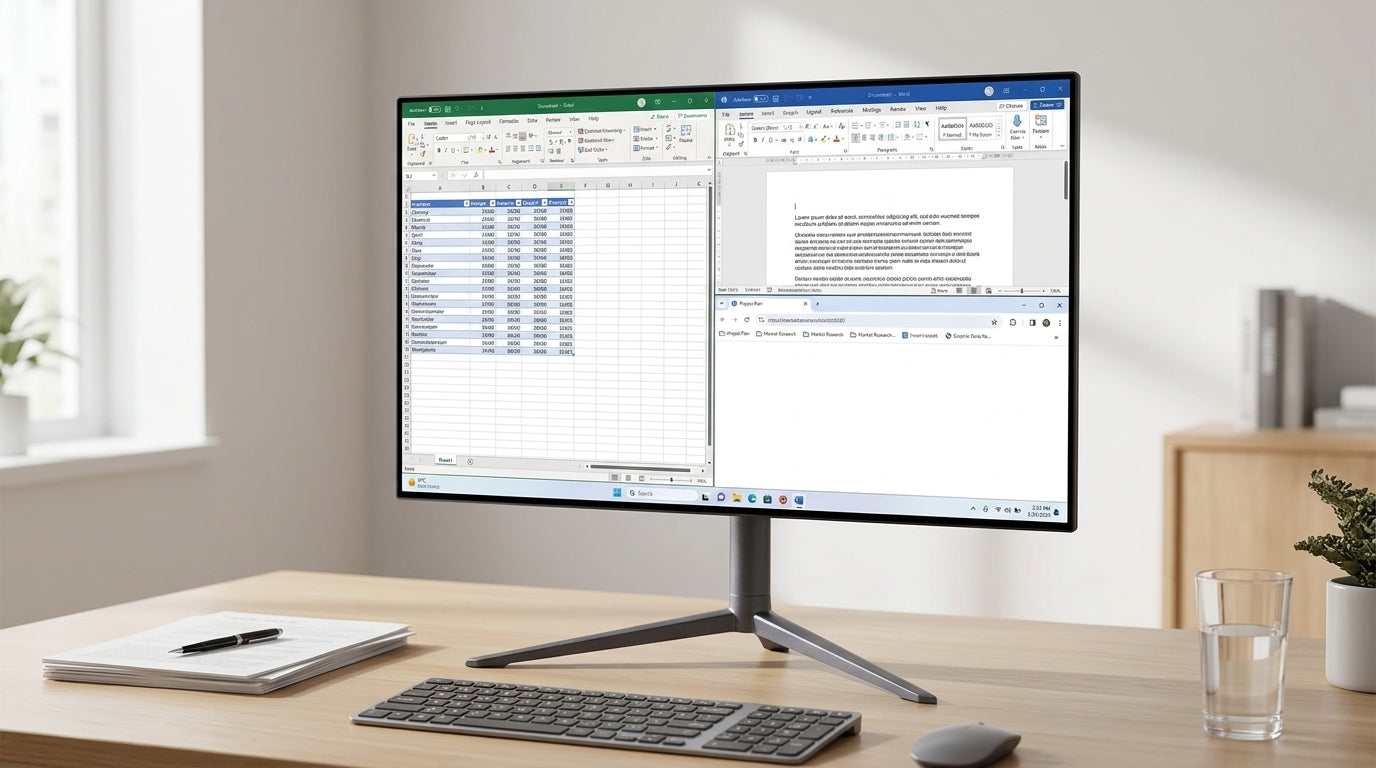
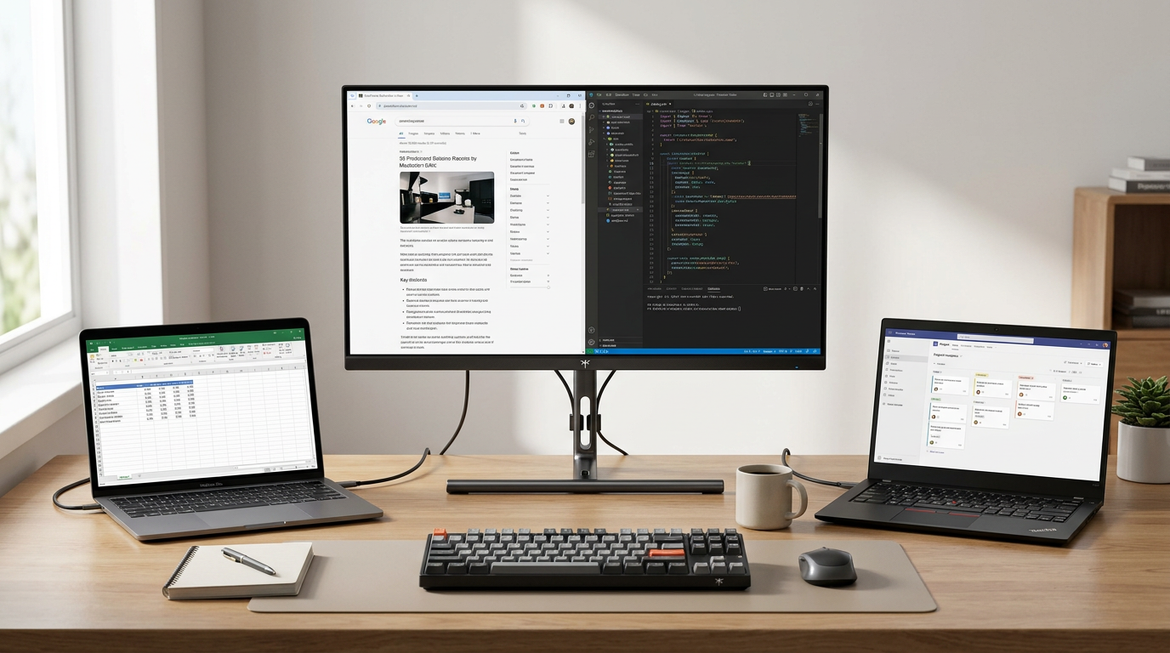
For home-office buyers, the places to watch are sleep, wake, input switching, and multi-device handoff. Those are everyday friction points, so even a small glitch can feel worse than a spec shortfall you rarely notice.
Smart monitors deserve extra caution because they can carry display firmware plus app or OS layers. That does not make them a bad fit, but it does mean you should check whether updates are handled together or separately, and whether the support page actually reflects that extra software layer.
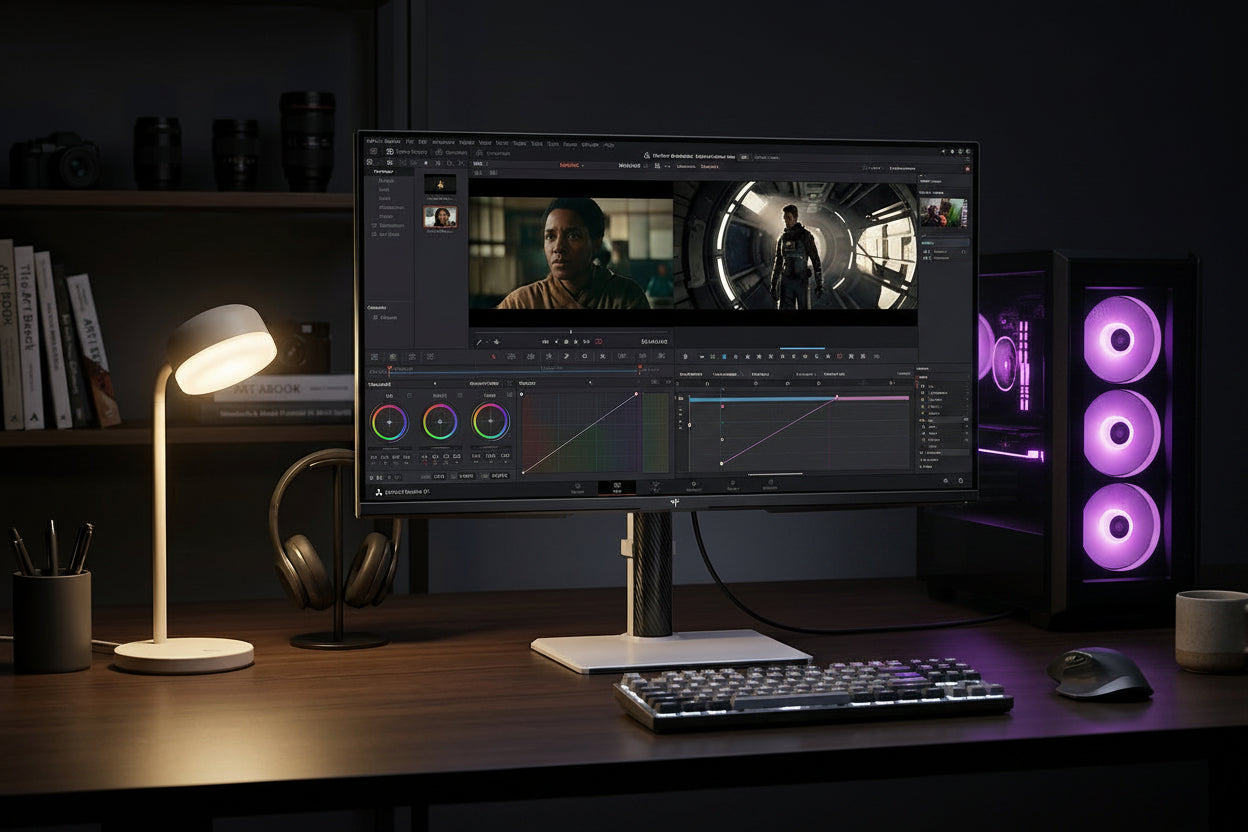
Creator workflows tend to reward predictability more than flashy headline features. If your work depends on stable color, stable inputs, and fewer surprises, a visible firmware history may matter more than one more port or a slightly higher peak brightness number. The KTC Mini LED 27" 4K HDR1400 Gaming Monitor shows how firmware can preserve HDR consistency over time.
Decision sentence: if the monitor has advanced gaming or smart features, weak firmware documentation is a real warning sign; if it is a simple office display with clear support pages, a slower cadence is easier to accept.
Decision sentence: if the product page cannot show a model-specific firmware path, treat that as a reason to keep shopping; if it can show dated fixes and a clear help route, the support signal is stronger.
For readers comparing categories rather than single models, the Gaming Monitor collection and the Office Monitor collection make it easier to separate gaming features from work-focused setups.

Final Checks Before You Buy
Before you place the order, run this monitor firmware quality checklist once more.
- Confirm the support page names the exact model, not just the product family.
- Look for a dated firmware file or changelog that shows actual fixes.
- Read the update steps and decide whether the process feels manageable for a first-time buyer.
- Save screenshots or PDFs of the support page, because documentation can change later.
- Check the warranty and return window separately, since those solve different problems.
If you are still comparing broad options, the All Monitors collection is the best navigation point for browsing by size, refresh rate, and panel family before you commit. If support details are thin and the monitor leans on advanced features, that is usually enough reason to slow down.
FAQs
Q1. How Can I Tell If a Monitor Has Real Firmware Support?
Look for a model-specific download page, version numbers, and dated release notes. If the page only repeats marketing phrases or hides the exact model name, the support signal is weak and harder to trust.
Q2. What Are the Biggest Red Flags in Firmware Documentation?
Broken links, vague update steps, and changelogs that never say what changed are the biggest warning signs. Another red flag is a support page that lists firmware in general but never shows the file for your exact model.
Q3. Why Do Smart Monitors Need a Stricter Support Check?
Smart monitors can have display firmware plus app or OS updates, so there are more layers that can go stale. If those layers are updated separately, you want to know that before buying, because one layer may be maintained while another is not.
Q4. Can a Monitor Be Fine at Launch and Still Become a Problem Later?
Yes, because firmware issues often appear when software or connected devices change around the monitor. A setup that is stable today can still show sleep, input, or HDR problems months later if the support path is weak.
Q5. What Should I Save Before I Buy a Monitor?
Save screenshots of the firmware page, warranty details, return policy, and support contact info. That gives you a quick reference if the page changes later or if you need to prove what support was visible at purchase time.
What to Trust Most When Support Is Unclear
If support pages are vague, trust the clearest signals first: a named model, a dated firmware note, a believable update path, and an actual contact route. When those are missing, treat the monitor as a fit only if the rest of the setup is simple and your return window gives you room to recover. That is usually the safest way to shop firmware-sensitive displays. In practice, compare the listed firmware history against your expected GPU or console refresh cycle; if the monitor uses dual-mode or HDR features, require at least one dated changelog entry before purchase.