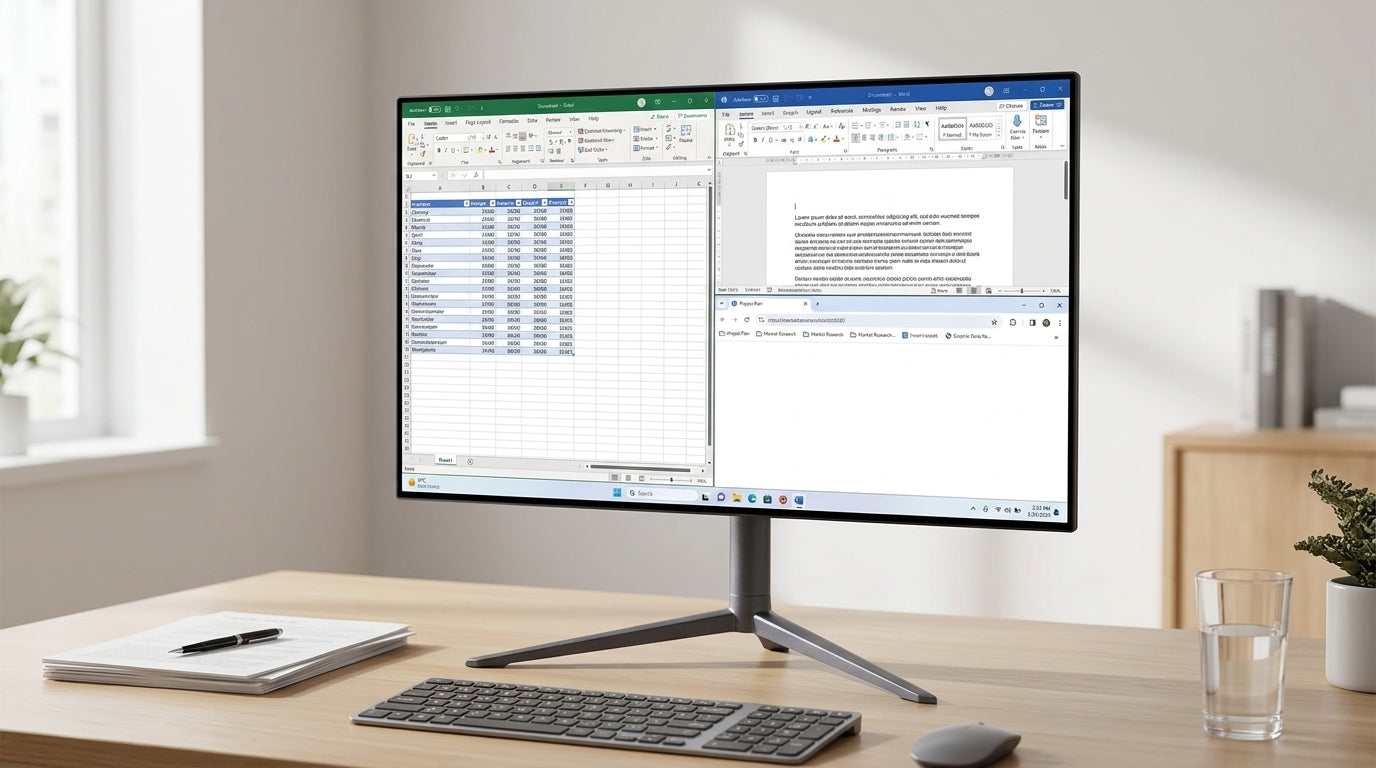
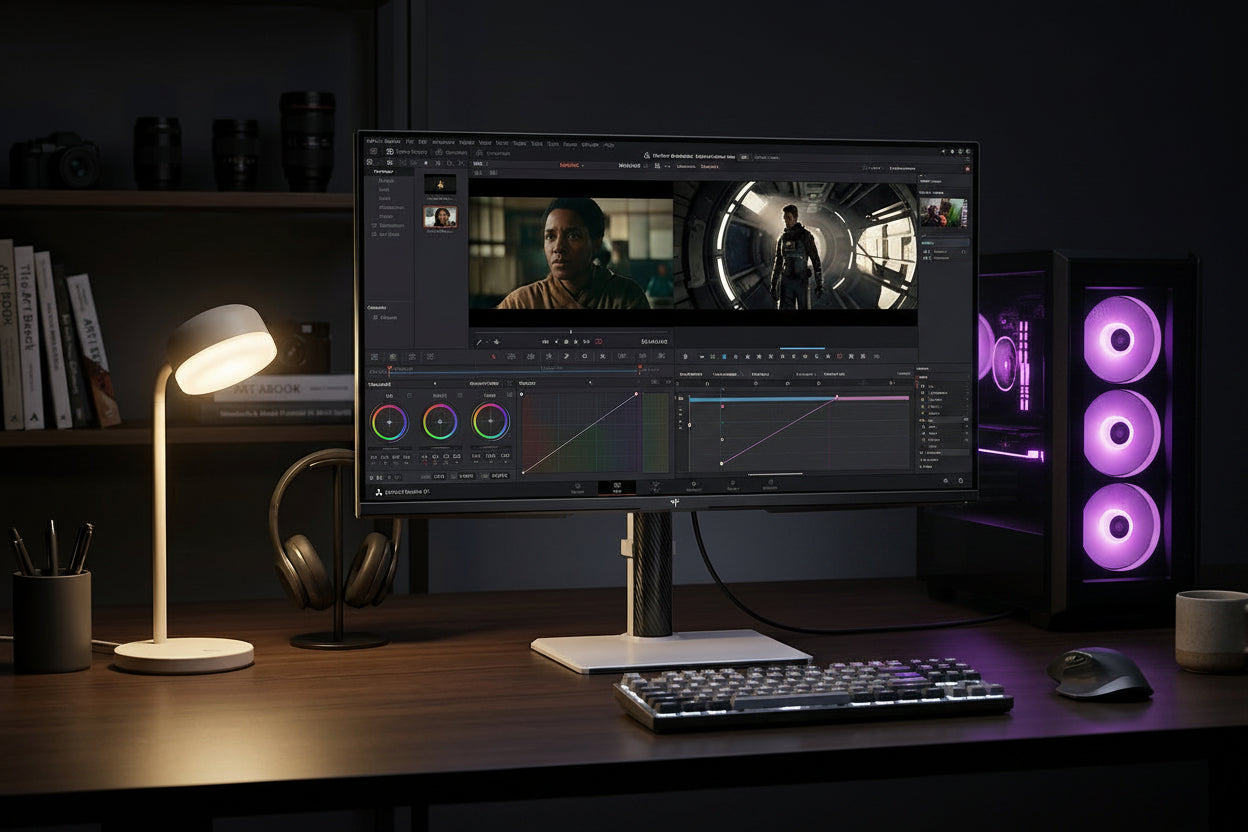
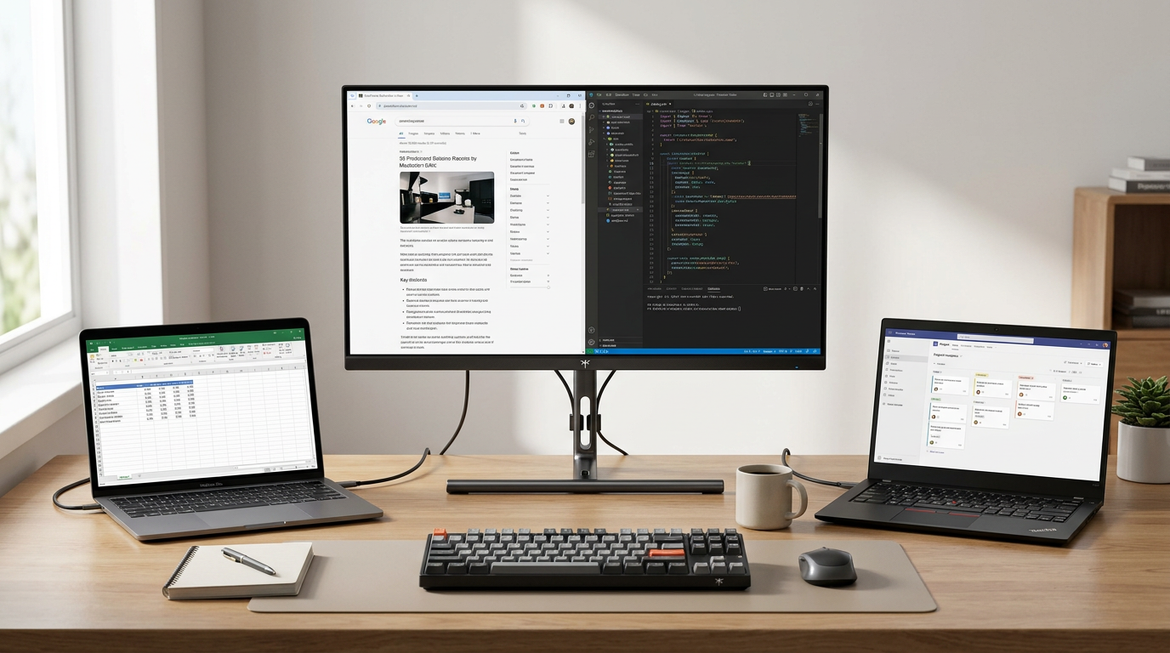
OEM direct-to-consumer creator monitor 2026 makes sense when you care more about panel fit, color, and workflow than retail branding. It is a weaker choice if you need premium white-glove support, advanced replacement, or a hands-off procurement experience. The real question is whether your workflow actually needs the premium layer that often sits on top of the panel.

What the Brand Tax Actually Covers
In this market, brand tax is the price gap between the monitor’s visible hardware value and the final retail sticker price. Some of that gap funds marketing, channel margin, bundled support, and warranty logistics; some of it also pays for software features and ecosystem polish. The Apple Studio Display specs are a useful reference point for how much a premium brand can charge before you even compare panel class or workflow fit.
That does not mean the premium is fake. It means buyers should separate hardware needs from service expectations. If your team values easy returns, advanced replacement, or a familiar enterprise buying process, that cost can be rational. If your priority is panel value per dollar, the premium often looks very different once you isolate what you are actually paying for.
A practical way to read OEM direct-to-consumer creator monitor 2026 offers is to ask one question first: what would still justify the markup if the panel spec were already close? If the answer is mostly support, retail convenience, or brand confidence, you have found the real cost center.
For a broader shopping framework, the filter-first monitor guide is a useful next step when you want to compare displays by requirement instead of by logo.
Where the $1,000 Gap Comes From
The biggest part of the gap usually comes from channel structure, not raw glass alone. Industry reporting on display margins shows how profits can pool unevenly across the chain (Display Dynamics – March 2026), which is why a monitor can feel expensive long before its panel and backlight reach the shelf. In simple terms, more middle layers usually means more margin layers, and those layers add up fast in premium categories.

KTC’s factory-direct pricing illustrates the other side of that structure. The H27P3 listing has been seen at a far lower price band than many premium 5K studio displays, which is exactly why the brand-tax argument gets attention in procurement conversations. The point is not that cheaper always wins. The point is that the buyer should know whether the premium is being spent on hardware, service, or brand positioning.
Hardware Specs Versus Retail Packaging
If two monitors land in the same resolution class, the hardware difference may be smaller than the retail difference suggests. That does not automatically make them equal products. It does mean buyers should check whether they are paying for a better panel, better backlight, better calibration consistency, or simply a fuller retail package.
For creator work, the hardware questions that matter most are straightforward: Is the panel sharp enough for your desk distance, is the color coverage good enough for your content, and does the stand or port set fit your setup? If those answers are yes, the rest of the premium becomes a service decision rather than a visual one.
Factory Direct Pricing and Channel Margin
The simplest reading of factory-direct pricing is that it removes layers that do not change the panel itself. That can be a real advantage when the buyer already knows what spec tier they need. It is less compelling when the team is still deciding between 5K sharpness, 4K high refresh, or HDR-focused brightness.
That is why OEM direct-to-consumer creator monitor 2026 pages work best as procurement tools, not as identity statements. They are strongest when the buyer already has a spec target and wants to avoid paying for distribution theater.
Warranty, Support, and Return Trade-Offs
Savings are only savings if the support model fits the buyer’s risk tolerance. KTC’s direct offers include a 3-year warranty and 30-day return window on the product pages, which narrows the gap versus pure no-name imports. Still, factory-direct support is not the same thing as enterprise on-site service, and that distinction matters if downtime costs your team real money.
For agencies, one practical filter is simple: if a monitor failure would stop work and you do not keep spares, the cheapest sticker price may not be the cheapest total cost. If you do have backup units, the OEM route becomes easier to justify.
How KTC Positions Value Without Inflating the Price
The strongest case for OEM direct-to-consumer creator monitor 2026 shopping is not that every model is identical to a premium counterpart. It is that some models land in the same practical spec class while asking for less money up front. The H27P3, H27P6, and M27P6 show three different ways to do that without forcing one universal winner.
The H27P3 is the clearest 5K-first option. It is a 27-inch 5K display with 5K/2K dual mode, factory calibration, 65W USB-C, and a tilt-only stand. That combination makes sense if your desk work is text-heavy, your Mac workflow benefits from Retina-style density, and you want color coverage without paying for a retail brand name.
The H27P6 sits in the middle. It keeps 4K sharpness, adds 160Hz at 4K and 320Hz at 1080p, and includes a fully adjustable stand plus KVM. That makes it the more natural choice when one desk has to cover creator tasks, gaming, and cable cleanup. It is less persuasive if motion speed is irrelevant and 5K clarity matters more.
The M27P6 is the HDR-heavy outlier. Mini-LED, 1152 zones, HDR1400, and 600 nits SDR brightness make it the better fit when brightness and contrast matter more than pure text density. It is stronger for mixed creative work than for buyers who only want office clarity and do not care about HDR at all.
The right way to read these products is not “which one is best?” It is “which one gives me the fewest compromises for my actual workflow?”
Which Setup Fits Your Workflow
The table below shows the best fit for each creator workflow and the main trade-off each buyer accepts: H27P3 is the stronger fit for color-first editing, H27P6 is the stronger fit when motion and ergonomics matter most, and M27P6 is the stronger fit for mixed creator work that also benefits from HDR and higher brightness.
| Monitor | Color-first editing | Motion-heavy work | Mixed creator workflow |
|---|---|---|---|
| H27P3 | Strongest | Weakest | Moderate |
| H27P6 | Moderate | Strongest | Strongest |
| M27P6 | Moderate | Moderate | Strongest |
For most Mac designers, the H27P3 is the strongest fit when 5K sharpness is non-negotiable and the stand can stay fixed. For hybrid creator-gaming desks, the H27P6 is often the safer middle ground because motion and ergonomics matter more. For bright-room editors who care about HDR impact, the M27P6 is usually the better choice, but only if the higher brightness is something you will actually use.
Decision Checks That Flip the Choice
If you are choosing between these options, three checks usually matter most:
- Choose H27P3 if your work is text-first, you care about Retina-like scaling, and 5K matters more than refresh rate.
- Choose H27P6 if you want one monitor for creator work and faster gaming, and you value the full ergonomic stand.
- Choose M27P6 if you edit in bright rooms, work with HDR, or want the strongest contrast and brightness package.
A cheaper model is not a bargain if it forces the wrong workflow later. The best value is the one that avoids a second purchase.
The Final Procurement Checklist
Before approving an OEM direct creator monitor purchase, verify the work mode first, then the ports, then the support terms. If the desk needs height, swivel, or portrait rotation, do not ignore the stand spec. If the team cannot afford downtime, do not treat warranty wording as a footnote. If you want one cable for laptop charging, confirm USB-C power delivery before ordering.
For teams comparing the 4K Monitor collection, the 4K & 5K High-Refresh Monitors collection, or the Above $400 Monitors collection, the useful question is not which page looks premium. It is which page matches the actual desk, budget, and failure tolerance.
FAQs
Q1. How Do You Tell If a Creator Monitor Premium Is Just Branding?
Check whether the premium buys a better panel, better backlight, better calibration consistency, or better support. If the answer is mostly packaging, channel margin, and a familiar logo, you are probably looking at branding overhead rather than a hard performance step-up.
Q2. What Matters More for Creator ROI: 5K Sharpness or 4K High Refresh?
5K sharpness usually wins for text-heavy macOS work, while 4K high refresh is better when creator tasks share the desk with gaming or motion-heavy work. The choice flips when a smoother motion workflow matters more than Retina-like scaling.
Q3. Why Can a Cheaper OEM Monitor Still Cost More Overall?
A lower sticker price can be offset by weaker support, shorter practical uptime, extra accessories, or a return policy that is less forgiving. If you do not have backup hardware or a flexible procurement process, the cheaper unit can become the costlier one.
Q4. Can Factory Calibration Replace Color-Managed Workflow Checks?
No. Factory calibration is a useful starting point, especially on models that ship with Delta E claims, but it does not replace your own workflow checks, device settings, or content-specific verification. For color-critical work, treat it as a head start, not a finish line.
Q5. What Should a Small Agency Verify Before Buying Multiple Units?
Check consistency across units, the real support response path, desk adjustability, and whether the model fits every role on the team. If one desk is editor-heavy and another is motion-heavy, a single monitor model may be a false economy.
The Bottom Line on Brand Tax
The brand-tax debate is useful only if it changes the buying decision. If you need premium support, easy replacement, or a brand your procurement team already trusts, the markup can be justified. If you mainly need the right panel, the right ports, and the right workflow fit, OEM direct-to-consumer creator monitor 2026 options can make the retail premium look harder to defend. In practice, compare your actual desk distance, color requirements, and downtime tolerance against the three models above before committing; the lowest sticker price rarely wins when the wrong panel forces a second purchase within a year.