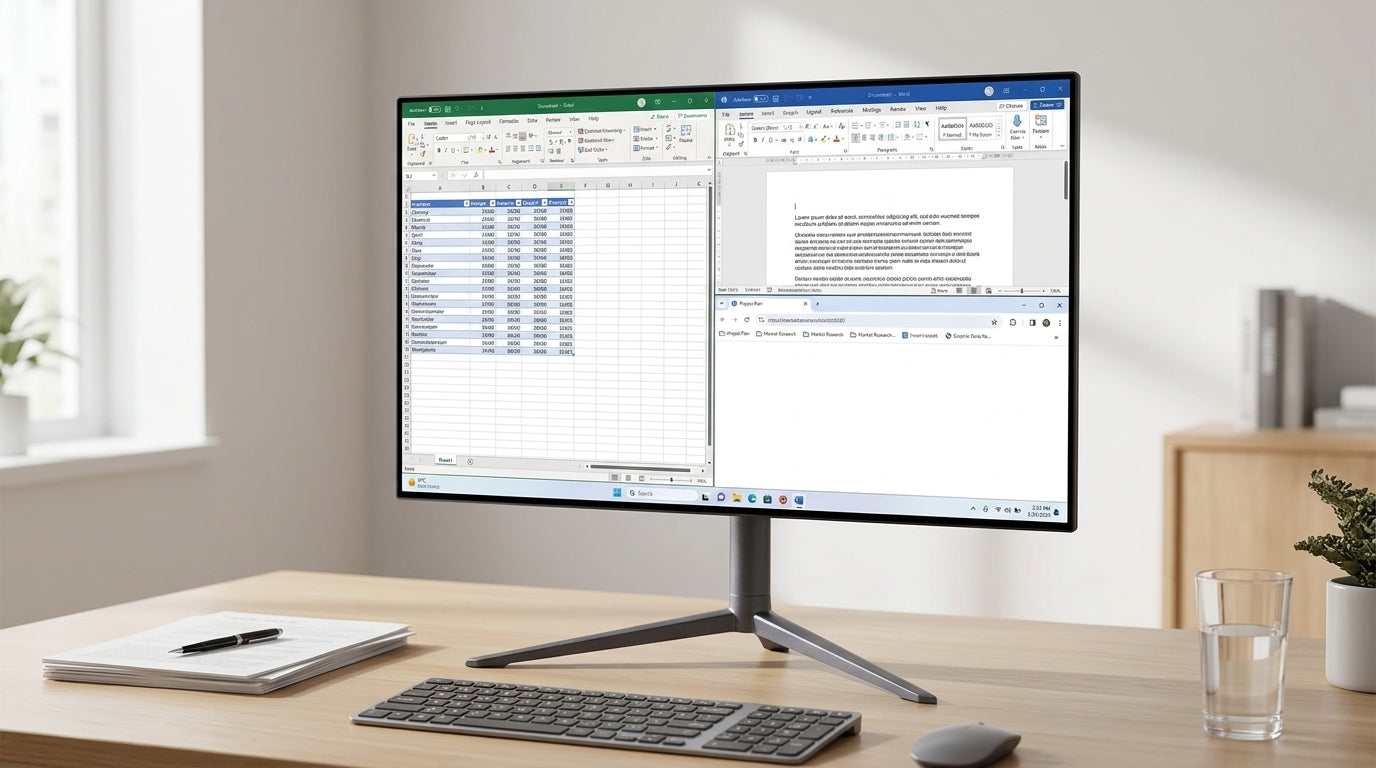
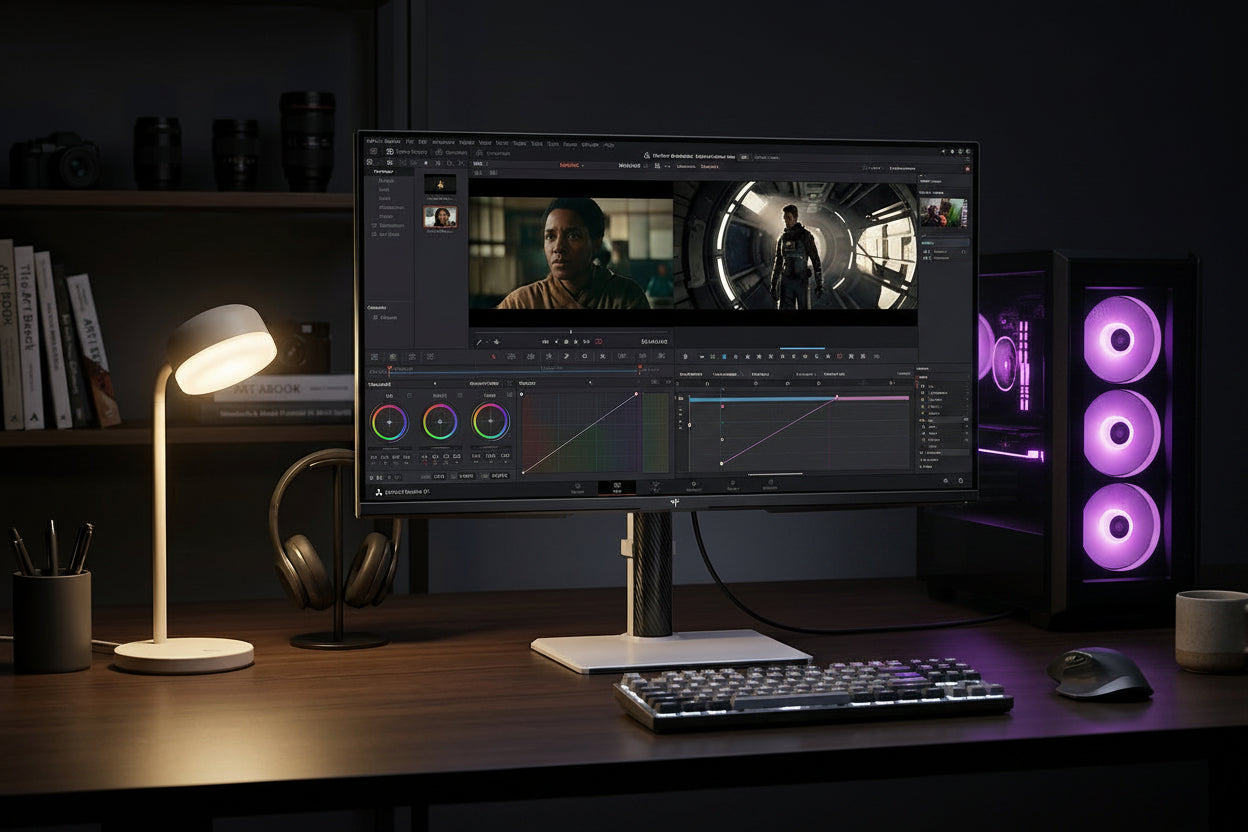
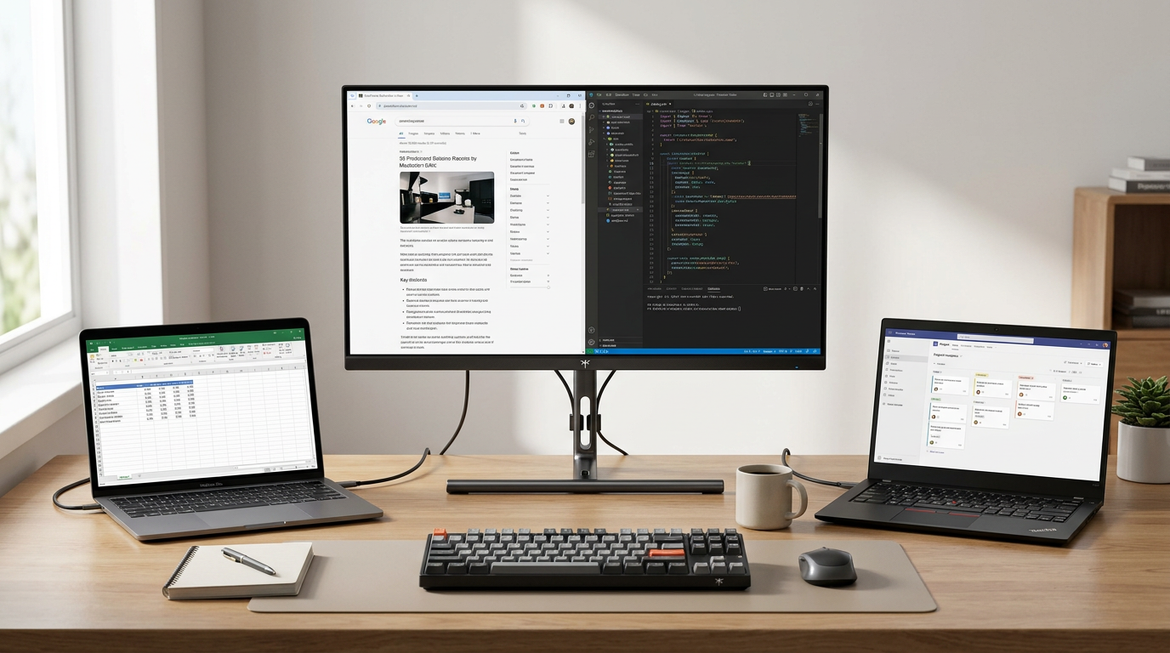
Buying a monitor in 2026 based only on peak nits or zone counts can backfire if the manufacturer stops supporting the firmware. The real long-term value comes from OSD flexibility, local dimming algorithm quality, and reliable firmware updates that fix issues over time. For hybrid users switching between productivity work and gaming, this "firmware-first" approach helps avoid the Support Paradox where impressive hardware becomes frustrating in daily use.

The Support Paradox: When High-Spec Hardware Becomes Obsolete
Many buyers chase headline hardware specs such as high peak brightness or hundreds of local dimming zones, only to discover that launch-day problems persist. The Support Paradox occurs when a monitor's hardware looks strong on paper but its real-world performance suffers because the manufacturer rarely or never releases firmware updates to address bugs. These can include inaccurate EOTF tracking, which affects how brightness levels map across the image, or missing features like an sRGB clamp that keeps colors accurate for professional work instead of appearing oversaturated.
Newer standards such as the VESA DisplayHDR 1.2 tier place greater emphasis on firmware-tuned accuracy for EOTF tracking and black levels rather than hardware alone. As this VESA DisplayHDR 1.2 announcement explains, tighter requirements mean monitors without ongoing firmware support risk falling short of expected HDR quality over time. Similarly, reviews have shown that firmware updates can resolve major HDR inaccuracies that existed at launch, such as washed-out highlights or poor transitions.
Direct-to-consumer OEM brands often hold an advantage here by providing straightforward firmware updates directly to users, in contrast to legacy brands that may abandon older flagship models. This makes firmware support a stronger indicator of long-term satisfaction than static specs. For deeper context on related HDR challenges, see our guide on How HDR Content Mastering Inconsistency Should Shape Your Display Calibration Decisions.
The 'Zone Count' Trap: Why Firmware Drives Real HDR Quality
Buyers frequently compare raw local dimming zone counts, such as 576 versus 1152, assuming more zones automatically deliver better HDR contrast. In reality, the quality of the local dimming algorithm often matters more than the sheer number of zones. As the VESA explanation of LCD dimming in HDR displays details, effective control of LED groups to reduce blooming while preserving detail depends heavily on the algorithm, not just hardware density.
Poor algorithms can produce noticeable artifacts. "Black crush" happens when small bright highlights get dimmed excessively, losing visible detail. "Backlight breathing" or pulsing appears as the background intensity fluctuates during mouse movement or UI changes. In lower-quality implementations, you may even see rectangular blocks where the grid of Mini-LEDs activates abruptly instead of creating smooth gradients.
Firmware updates frequently refine these behaviors post-launch by improving EOTF tracking and adding temporal filtering to smooth transitions. This means a monitor that received negative early reviews for HDR may perform significantly better after updates. The key decision shift is to read recent reviews for mentions of algorithm behavior rather than fixating on zone counts alone. While higher zone counts raise the theoretical ceiling for contrast, firmware determines how much of that potential you actually experience day to day. For background on the technology, explore What “Local Dimming Zones” Mean in Monitor Backlight Technology.
The 'Toggle Tax' Audit: Evaluating OSD Friction Before You Buy
Hybrid users who split time between text-heavy productivity and HDR gaming often encounter the Toggle Tax—the repeated hassle of switching local dimming or HDR modes because automatic detection proves unreliable. Local dimming that stays enabled during desktop use can create distracting blooming or halos around cursors and text in dark interfaces, while leaving it off sacrifices the contrast you paid for. This daily friction leads many to simply leave features disabled, undermining the hardware investment.
OSD navigation depth plays a central role. If accessing local dimming or HDR settings requires more than a couple of clicks or menu dives with no shortcut, the monitor fails the productivity test. Software control through DDC/CI offers a better path by letting tools adjust brightness, contrast, or modes directly from the desktop, bypassing physical buttons. However, implementations vary widely; many monitors advertise DDC/CI support yet respond inconsistently to commands, especially in budget or older OEM models. As discussions on optimal OSD settings note, reliable software control improves ergonomics and reduces fatigue for frequent tuners.
Firmware update safety also factors in. Avoid models that demand risky processes, such as specific USB formatting or file renaming, which can deter updates and leave bugs unfixed. The chart below visualizes typical friction patterns across these factors for hybrid setups.
Toggle Tax for Hybrid SDR and HDR Monitor Use
This chart shows the likely friction level of three common pain points when a hybrid user switches between SDR work and HDR gaming. Use it to spot monitors that are likely to feel easy day to day versus models that may be left in one mode because switching is too annoying.
View chart data
| Scenario | OSD Navigation Depth | DDC/CI Software Control | Firmware Update Complexity |
|---|---|---|---|
| Low Friction | 1.0 | 2.0 | 3.0 |
| Medium Friction | 1.0 | 3.0 | 3.0 |
| High Friction | 1.0 | 2.0 | 3.0 |
Monitors with low friction typically offer shallow OSD menus or strong DDC/CI compatibility, allowing seamless mode changes. High friction setups bury controls and have complex or risky update paths, making them poor fits for hybrid desks. Check recent user reports for real-world DDC/CI behavior rather than relying on spec sheets. Our guide on How to Verify Your Display Calibration Is Actually Working offers related tips for ensuring consistent performance.
The 2026 Buyer's Checklist for Firmware and OSD Value
Use this checklist to evaluate monitors before purchase and prioritize long-term usability over initial specs.
- Verify active firmware support: Seek brands with a documented history of updates that address launch issues such as EOTF errors or missing color modes, rather than a static support page. Prioritize those offering simple USB or app-based update utilities over complex procedures.
- Confirm DDC/CI reliability: Test or research whether the monitor responds consistently to software commands for brightness, volume, or mode switching. Inconsistent implementations turn software control into another source of frustration.
- Assess local dimming behavior in reviews: Look specifically for comments on EOTF tracking accuracy, black crush on small highlights, cursor blooming in dark interfaces, or pulsing during navigation. These reveal algorithm quality more than zone counts do.
- Check update process simplicity: Avoid monitors requiring specialized tools, specific file names, or high-risk steps that discourage regular updates. Simple processes encourage keeping the monitor current.
KTC's Mini-LED models, such as the M27P6 with its 1152 zones and strong HDR1400 performance or the M27T6S offering balanced 200Hz speed with vibrant colors, illustrate how direct firmware support can enhance these features over time. For broader options, browse the All-Mini-LED Monitors collection or check the Office Monitor lineup for productivity-focused choices. Additional perspective appears in our article on Why Does My 240Hz Monitor Feel Slower Than My Friend’s 165Hz Display?, which touches on related performance consistency factors.
This framework shifts the decision from chasing peak numbers to confirming that the monitor will remain useful and tunable for years. When firmware and OSD flexibility align with your workflow, the hardware investment delivers sustained value instead of early regret.
How Do Firmware Updates Improve HDR Performance Over Time?
Firmware updates can refine local dimming logic and correct EOTF tracking curves that were suboptimal at launch. For instance, early versions of some monitors exhibited crushed highlights or inaccurate brightness ramps; later patches improved gradient smoothness and small-element visibility without changing the physical panel. Always check release notes for specific fixes rather than assuming every update brings major gains, as improvements depend on the original algorithm quality.
Why Is OSD Flexibility More Important Than Peak Brightness for Productivity Users?
Peak brightness delivers impact in HDR content but matters less during long desktop sessions if you cannot easily adjust modes or settings. Flexible OSDs or reliable DDC/CI let you toggle local dimming or color spaces quickly, preventing eye strain from blooming around text or washed-out SDR colors. Users who frequently switch tasks benefit most, as clunky controls often lead to leaving premium features disabled.
What Red Flags Indicate Poor Local Dimming Algorithm Quality?
Watch for reviewer mentions of pulsing backgrounds during cursor movement, rectangular halo patterns around bright objects, or excessive dimming of small white UI elements against dark backgrounds. These suggest the algorithm lacks sophisticated temporal smoothing or zone prioritization. Firmware can mitigate some issues, but severe cases tied to limited zones or basic logic may remain noticeable.
Can DDC/CI Software Control Eliminate All OSD Navigation Problems?
DDC/CI enables desktop-based adjustments and can greatly reduce physical button use, but compatibility varies. Some monitors respond well to tools for brightness or input changes yet fail on HDR or dimming toggles. Test with your specific operating system and software before relying on it as a complete replacement; inconsistent support remains a common limitation across many OEM panels.
How Should I Compare Firmware Support Between Brands Before Buying?
Review each brand's support portal for update frequency, clarity of instructions, and whether patches have addressed known issues in similar models. Brands offering user-friendly utilities score higher for long-term value than those with infrequent or complicated processes. Cross-reference with recent community reports to see whether updates actually resolved reported problems like color accuracy or dimming behavior.
When Does High Zone Count Fail to Deliver Expected HDR Benefits?
High zone counts set a strong contrast ceiling, yet a weak algorithm can still produce blooming, black crush, or pulsing that negates the advantage. This occurs most in hybrid use where constant mode switching exposes algorithm shortcomings. Prioritize monitors with evidence of mature firmware tuning or positive post-update reviews over raw zone specifications alone.