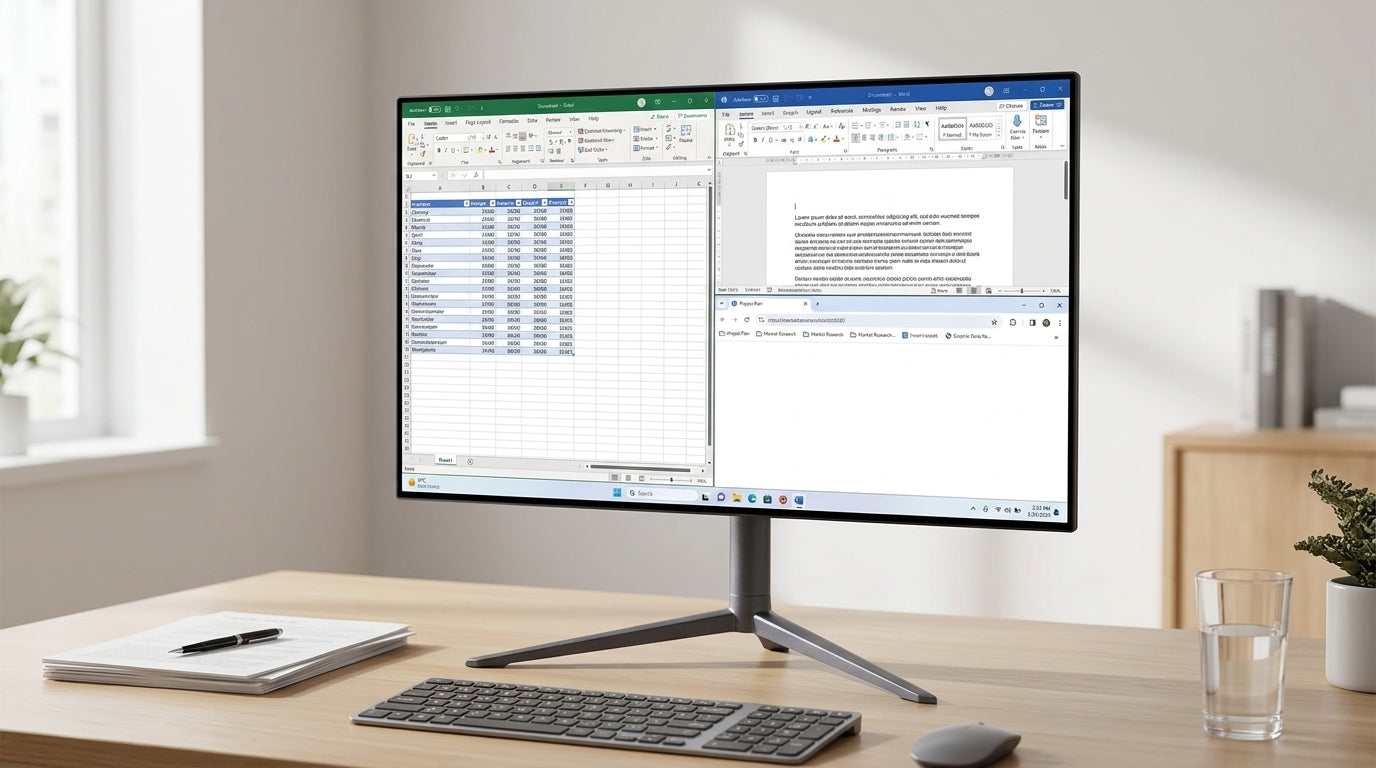
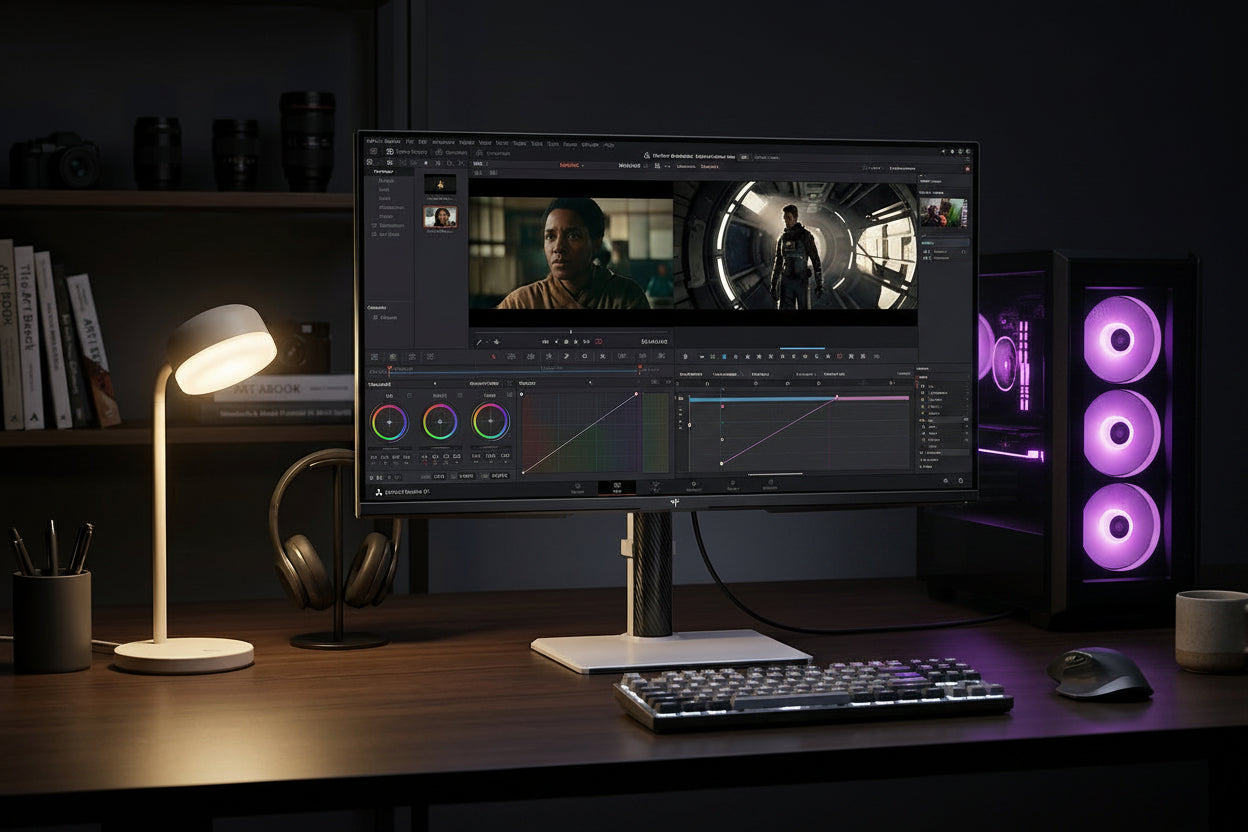
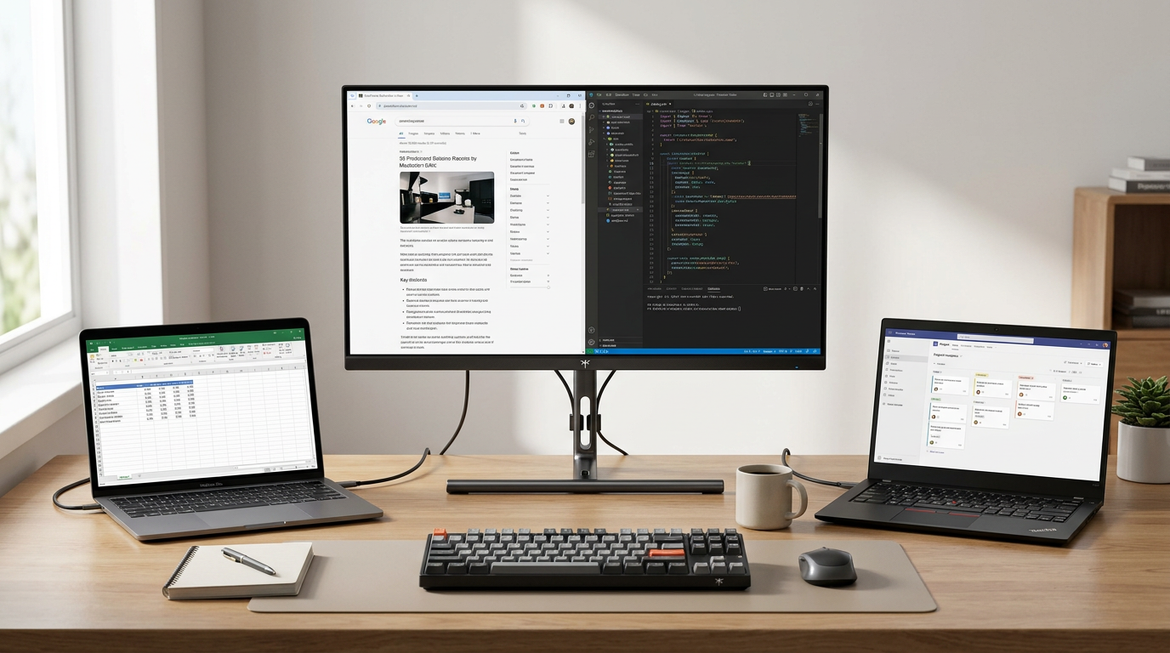
Mini-LED monitor color accuracy can be good enough for hybrid creator work, but only if you treat Mini-LED as a backlight choice, not a shortcut to reference-grade color. For editors, designers, and streamers who want one desk screen for work and play, the real question is whether you value HDR contrast more than the most predictable SDR desktop behavior.

What Mini-LED Changes for Creator Displays
Mini-LED changes the way the backlight behaves. It can deliver stronger HDR contrast than a standard edge-lit monitor, and it also removes the burn-in anxiety that many people associate with OLED. That matters on hybrid desks where timelines, toolbars, chat windows, and browser tabs stay open for hours.
The catch is that Mini-LED does not make a panel automatically color accurate. Factory tuning, picture mode, room light, and your own calibration still matter. In practice, that means Mini-LED is often a better fit for creators who split time between editing and entertainment than for users who want the most stable SDR desktop image all day. If you want a deeper look at the setup side, our Mini-LED calibration guide is the right follow-up.
For long editing sessions, the burn-in conversation usually points people away from OLED and toward Mini-LED or IPS. That does not make Mini-LED the universal winner. It just makes it a sensible middle ground for people who want brighter HDR without giving up static UI comfort. If you are still weighing panel tradeoffs, OLED burn-in risk for monitors is a useful contrast read.

When Mini-LED Is Accurate Enough
For most creators, the first number to check is Delta E. Datacolor's color tolerance guidance treats Delta E under 2 as a practical professional target for color work, which is a useful starting point when you are comparing creator monitors. Below that level, differences are generally small enough that many workflows can live with the result after a proper setup.
That does not mean every Mini-LED monitor with a low Delta E is automatically creator-ready in every mode. A bright HDR preset, a gaming preset, or a local dimming mode can still change how the image behaves. The useful question is simpler: does the monitor stay believable in the mode you will actually use for editing?
Coverage matters more than volume for creator fit. Color-gamut coverage versus volume is an important distinction, because volume can go above 100% without meaning the monitor covers more of the reference gamut. In plain English, a large-looking color range is not the same thing as accurate, usable coverage.
That is why a mini-LED monitor color accurate setup usually depends on three things working together: decent gamut coverage, a low-Delta E starting point, and a stable picture mode. If one of those is weak, the monitor may still be fine for mixed use, but it becomes a less reliable choice for grading or careful design work.
Coverage also matters differently by workflow. Photo editors and motion designers usually benefit from stronger sRGB or DCI-P3 coverage because they need color ranges that hold up across content types. SDR-heavy users who mostly work in documents, web assets, or everyday office apps can often tolerate a simpler display, but they may not need Mini-LED's extra HDR layer at all.
The biggest mistake is assuming a glossy HDR headline means the display is creator-grade. HDR peak brightness helps you judge highlights, but it does not prove color accuracy by itself. If the image shifts when you turn local dimming on, the monitor may still be useful, just not as predictable as a more conventional creator monitor.
A good rule of thumb is this: if you want a mini-LED monitor for creators, look for strong coverage, a believable factory tune, and a mode you can leave on without constant second-guessing. If you need the image to stay simple and consistent all day, a standard IPS creator display is often the safer path.
HDR and Local Dimming Tradeoffs
Mini-LED's biggest advantage is also its main compromise. Local dimming can make HDR highlights look more convincing, but it can also create halos, blooming, or slight shifts around text and small bright objects. That tradeoff shows up fastest in dark interfaces, subtitles, timelines, and spreadsheet-heavy work.
| Creator need | Mini-LED advantage | Possible tradeoff | Best use guidance |
|---|---|---|---|
| HDR preview | Brighter highlights and stronger contrast | Bright zones can influence nearby dark areas | Best when you preview HDR often and can live with some mode tuning |
| SDR editing | More punchy image and better brightness headroom | Picture can feel less stable than a simple IPS panel | Good for mixed desks, not the cleanest SDR-only choice |
| Dark UI work | Better shadow separation in some scenes | Halos, blooming, or cursor glow may be visible | Check it carefully if you edit at night or use dark themes |
| Text-heavy apps | Strong overall contrast | Thin lines and subtitles can shift with dimming zones | Prefer a more predictable panel if you live in documents and timelines |
That is why HDR monitor for editing is a nuanced phrase. HDR preview can be helpful, especially in content that actually uses highlight detail, but everyday desktop work does not always want the same settings. Some people end up switching HDR or local dimming on and off often enough that the convenience starts to wear thin.
If you want to compare the creative side of HDR more deeply, tone mapping and creative intent is worth reading next. Tone mapping affects how highlight and shadow detail land on screen, so it changes the feel of HDR preview even when the panel specs look strong.
If your desk use is mostly SDR editing, browsing, and text work, the more predictable choice is usually a creator-first IPS monitor. Mini-LED still works there, but it is less likely to feel effortless. If your desk mixes HDR preview, gaming, and editing, Mini-LED becomes easier to justify.
Pick the Right Mini-LED for Your Setup
If you want a featured model to compare against the rest, the KTC Mini LED 27" 4K 160Hz HDR1400 Gaming Monitor | M27P6 is the sharpest starting point in this group. It pairs 27-inch 4K density with Mini-LED backlighting, 99.5% sRGB coverage, 98% DCI-P3 coverage, and ΔE<2 color accuracy. That makes it the easiest fit for creators who care about text clarity and want strong HDR capability in one display.
The M27P6 also has a full ergonomic stand, which matters more than people expect once the monitor becomes a daily work screen. Height, swivel, pivot, and tilt all help when you alternate between editing, grading, and gaming.
If you want the value-first path, the KTC Mini LED 27" 180Hz 2K HDR1400 Gaming Monitor | M27T6 is the more budget-friendly hybrid pick. It gives you 1440p sharpness, 96% DCI-P3 coverage, 99% sRGB coverage, and a full adjustable stand. For many hybrid creators, that is the better compromise if 4K is nice to have but not necessary.
The M27T6 makes the most sense when you want HDR contrast and creator-friendly color without pushing your setup into the higher-cost 4K tier. It is the kind of choice that fits mixed desks well, especially if you game often and still need a monitor that feels usable for editing sessions.
The KTC Mini LED 27" 200Hz 2K HDR1000 Gaming Monitor | M27T6S leans a little more toward speed while still keeping strong creator color coverage. It is factory-calibrated to ΔE<2, covers 100% sRGB and 98% DCI-P3, and uses a fast IPS panel. If you stream, play fast games, and still want a good-looking editing display, this is the easiest balanced pick.
The simple split is this: choose M27P6 if you want the sharpest creator-first Mini-LED desk, choose M27T6 if you want value and HDR impact, and choose M27T6S if you care most about higher refresh comfort while still keeping creator coverage strong. None of them is a universal best. The right one depends on whether your desk is more about text clarity, value, or speed. For a broader browse, the All-Mini-LED Monitors collection is a helpful starting point.
Before You Buy: Creator Fit Checklist
- Define your main workflow first. If you spend more time in SDR editing, documents, or design tools than in HDR preview, a standard IPS creator monitor may feel easier to live with.
- Check color targets next. Delta E under 2 is the practical professional benchmark, but you still want good gamut coverage in the mode you will actually use.
- Decide how much local dimming tradeoff you can accept. If halos, dark-scene shifts, or occasional text changes would bother you, Mini-LED may not be the smoothest fit.
- Verify the stand and connections. A monitor that can tilt, swivel, and rise cleanly is more comfortable on a hybrid desk than a spec sheet suggests.
- Then pick the family that matches your work split. For sharper work, browse the 4K Monitor options. For the more value-oriented path, the 2K Monitor range is easier to balance against budget.
Mini-LED monitor color accuracy is real enough for many hybrid creators, but only when calibration, coverage, and workflow fit line up. If you want the most predictable SDR desktop image, standard IPS still has an edge. If you want one screen for creator work and HDR-heavy play, Mini-LED is often the smarter compromise.
FAQs
How Do I Know If a Mini-LED Monitor Is Color Accurate Enough for Editing?
Start with Delta E, gamut coverage, and the picture mode you will actually use. If the monitor can stay near a professional color target after calibration and does not shift badly in your normal mode, it is usually more credible for editing than a spec sheet alone suggests.
What Is the Main Tradeoff Between Mini-LED and Standard IPS for Creators?
Mini-LED usually gives you more HDR contrast and less worry about static UI burn-in, while standard IPS often feels more predictable for SDR desktop work. If your day is mostly editing, spreadsheets, and browser tabs, IPS can still be the calmer choice.
Can Mini-LED Work for HDR Video Editing on a Home Office Desk?
Yes, but the result depends on how stable the monitor feels in HDR mode and how much local dimming changes the image. In a mixed-lighting home office, it is worth checking the setup in the same room conditions you will use for actual work.
Why Does Local Dimming Sometimes Make Text or Shadows Look Worse?
Local dimming changes the backlight in zones, so small bright objects, thin UI elements, and dark backgrounds can interact in odd ways. That is why halos or subtle shadow shifts can show up more easily in desktop apps than in full-screen video.
Which Mini-LED Size and Resolution Make Sense for Hybrid Creators?
A 27-inch 1440p model is often the most flexible value choice, while 27-inch 4K is better if text clarity and workspace density matter more. If you edit often and also game, choose the resolution your GPU and desk distance can support comfortably.