For a color accurate monitor, start with your workflow, not the spec sheet. If you split time between photo editing, short-form video, laptop docking, and gaming, the right display is usually a balanced compromise, not a perfect studio panel or an esports-only screen. The best fit depends on what you edit, how much you game, and whether USB-C convenience or stronger HDR matters more than chasing every headline number.

What Matters Before You Compare Monitors
Hybrid buyers usually get into trouble by leading with refresh rate or HDR branding. Those features matter for motion and contrast, but they do not automatically make images more accurate. For most creators, the first decision is whether the monitor needs to feel right for web content, wider-gamut video work, or a mix of both.
A practical color accurate monitor should fit your desk and your output. If most of your work lives on the web, sRGB is the normal starting point. If you often deliver wider-gamut photo or video work, then Adobe RGB or DCI-P3 becomes more relevant, but only if you actually need that space. For a quick browse path, compare the broader hybrid work and gaming monitor guide after you decide whether you want creator-first, gaming-first, or balanced behavior.
Two useful decision sentences apply here. If your workflow is mostly web, social, and SDR video, prioritize a monitor that behaves predictably in sRGB; if your work regularly targets print or wider-gamut delivery, widen the search. If your room is bright or your desk is shallow, ergonomics and glare control can matter more than another step up in refresh rate.
Read the Specs That Actually Affect Color Work
Factory Calibration and Delta E
Factory calibration is best treated as a starting point, not a guarantee. In color measurement, a Delta E value under 2 is a widely used benchmark for small, hard-to-notice differences, and that is a useful reference when a monitor claims creator-friendly tuning. HunterLab's color tolerance guidance is a good reminder that color targets are about tolerance, not perfection.

What this means in shopping terms is simple: a good factory preset can save time, but it does not replace your own setup. Room light, preset mode, and source-device color settings still affect how the image looks. If a listing says factory calibrated, treat it as a helpful baseline, not proof that every unit will match your room or your software the same way.
Coverage Versus Gamut Volume
This is the spec pair buyers mix up most often. Gamut coverage tells you how much of a reference space a display can reproduce. Gamut volume describes the total range of colors it can produce, and that range can exceed 100% without meaning it covers the target space any better.
Adobe's sRGB vs. Adobe RGB guide is a useful reference for deciding which space matches your output. sRGB remains the normal default for web-first content, while Adobe RGB and DCI-P3 matter more when print or wider-gamut video is the goal. The practical rule is this: choose gamut to match output, then use coverage to judge fit, not bragging rights.
If a product lists high gamut volume, do not assume that means better accuracy. In many setups, a display with strong coverage and a sensible preset is easier to live with than one that simply posts a bigger range number. That distinction is the difference between a useful creator monitor with USB-C and wide color gamut and a panel that looks impressive on paper but needs more correction.
Panel Type, Bit Depth, and Brightness
For mixed creator use, IPS and Fast IPS are still the easiest panel families to justify because they tend to keep color and viewing angles more consistent than many alternatives. RTINGS' IPS versus VA versus TN comparison is a solid neutral reference for that tradeoff. That does not mean every IPS panel is accurate, only that the panel family is usually a safer starting point for a desk where you edit, then game.
Bit depth and brightness matter, but mostly as supporting factors. Bit depth affects how smoothly tones transition, and brightness affects comfort in brighter rooms. HDR labels are worth treating carefully because they can describe very different backlight designs and local-dimming behavior. A mini-LED monitor for photo editing can be a strong option for contrast and HDR impact, but it is not automatic proof of creator-grade color accuracy.
USB-C and Desk Simplicity
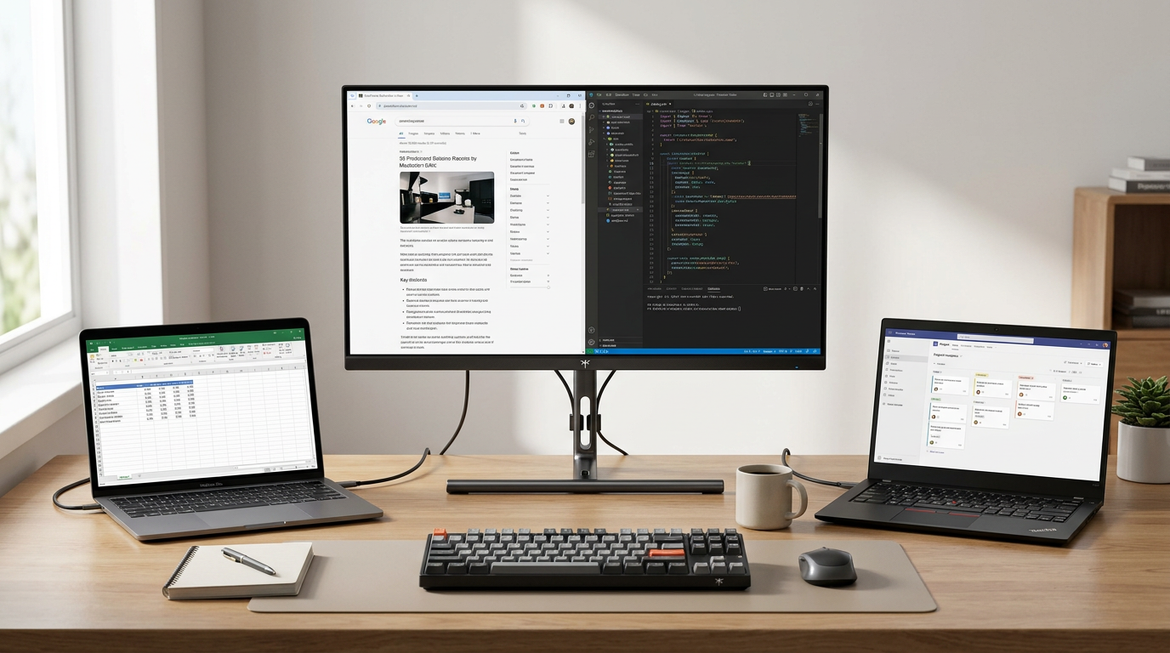
USB-C is a workflow feature, not a color feature. It can make a laptop desk setup cleaner if the port carries video, data, and power delivery, but it does not improve color fidelity by itself. If you dock a laptop often, USB-C is worth checking early because it can reduce cable clutter and make switching between work and play less annoying.
That is why a creator monitor with USB-C and wide color gamut can be appealing even when the color specs are the real reason to buy. The port makes the desk easier to live with; the gamut and preset path determine whether the image is actually useful for editing.
Which Display Families Fit Hybrid Creators
| Buyer scenario | Best-fit family | Why it fits | Watchout |
|---|---|---|---|
| Web editing plus light gaming | Creator-leaning 4K IPS | Good starting point for sRGB work, sharp text, and predictable viewing angles | Usually not the best choice if you want strong HDR impact |
| Photo and short-form video with some gaming | Mini-LED 4K | Good when you want wider gamut support, stronger contrast, and richer HDR behavior | Check preset behavior and color management before trusting the panel out of the box |
| Budget gaming-first but occasional editing | Faster gaming-oriented IPS or VA | Good if motion matters more than creator precision | May be a poor fit if you expect a studio-like editing experience |
| Laptop-dock hybrid desk | USB-C creator monitor | Good for a cleaner desk and simpler switching | Verify video, data, and power delivery before relying on it |
If you want a category starting point, browse IPS monitor options for creator-friendly viewing angles, or compare 4K monitor choices if sharpness is the first priority. Mini-LED also belongs in the conversation when HDR and contrast matter, so all Mini-LED models are worth a look when that tradeoff fits your workflow.
The main filter is simple: do not pay extra for a gaming feature unless it changes your actual use. Higher refresh rates help motion, but they do not improve color fidelity. If your work is mostly editing and browsing, a well-tuned creator monitor usually makes more sense than a fast panel that only looks exciting on a spec card.
Match the Monitor to Your Workflow
For Laptop-First Desk Setups
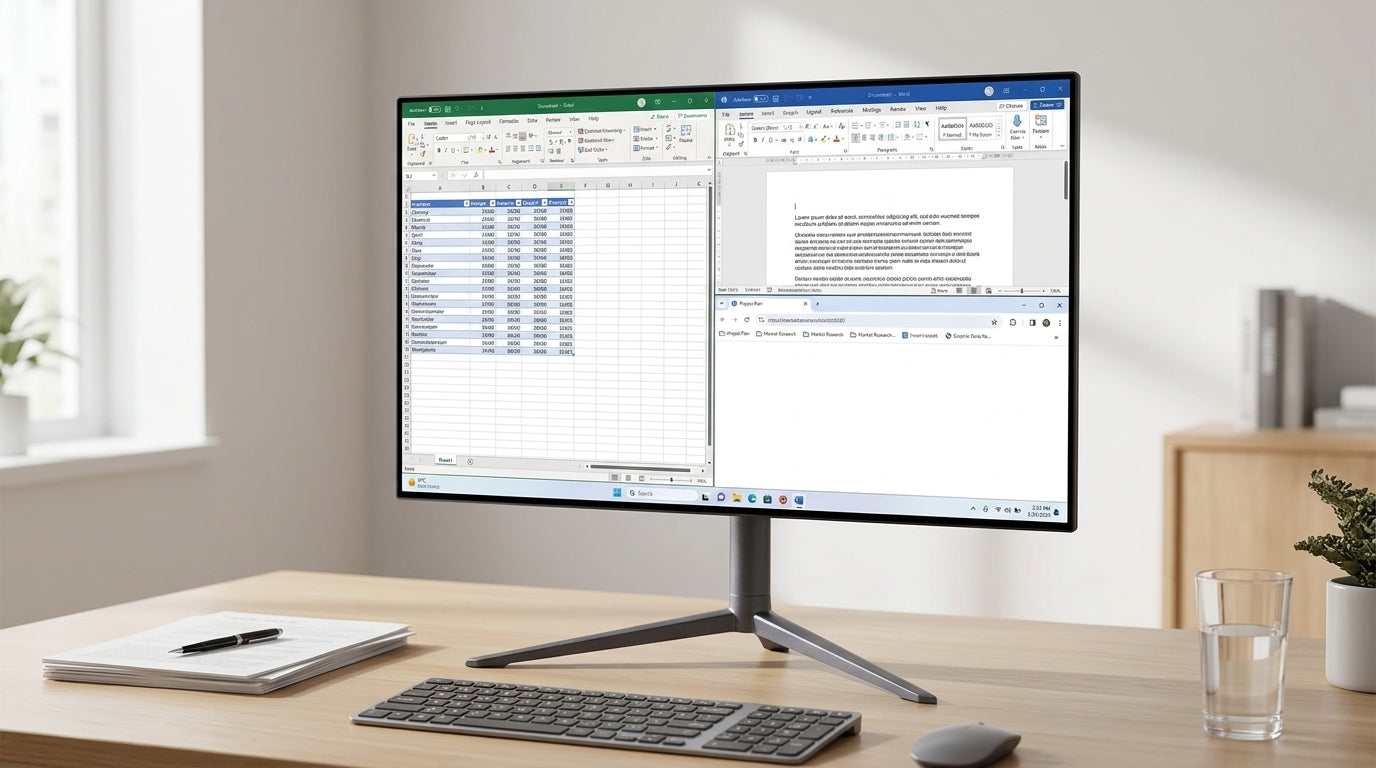
If your day starts on a laptop, prioritize USB-C behavior, easy input switching, and an ergonomic stand. The goal is a desk that works fast enough that you do not avoid plugging in the monitor. A clean one-cable path can be more valuable than a few extra gaming features, especially when your workflow changes several times a day.
That is one reason the M27P6 27-inch 4K Mini-LED monitor is a reasonable reference point for this kind of buyer. Its fact set supports a practical docking-style setup with USB-C power delivery, a full ergonomic stand, 4K resolution, and creator-relevant color coverage. It is still a hybrid display, so the right question is whether those features fit your room and device mix, not whether the model is universally ideal.
For Photo and Short-Form Video Editing
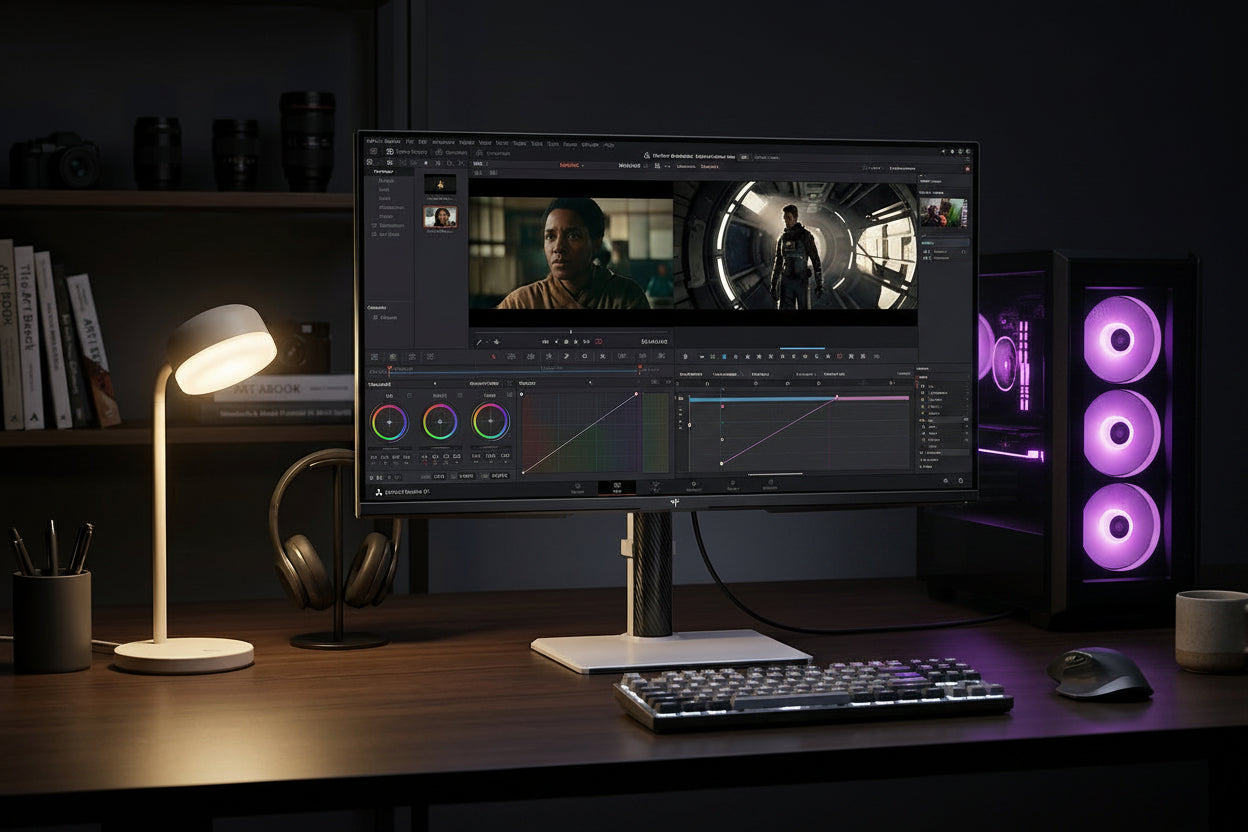
If your work leans toward editing, prioritize color behavior first and gaming speed second. A monitor that covers the right gamut and ships with a usable preset is more helpful than one that simply advertises a higher refresh rate. This is also where 4K can matter, because the sharper canvas makes timelines, UI, and fine image work easier to manage.
For buyers who want one screen that can still game well, the KTC M27P6 Mini LED Gaming Monitor | M27P6 is the featured option worth checking. Its published specs point to 4K resolution, Fast IPS, 99.5% sRGB coverage, 98% DCI-P3 coverage, and a Delta E under 2 claim, which is the kind of fact pattern you want to see before treating a monitor as a serious hybrid candidate. The Mini-LED backlight also makes HDR more compelling, but that is a contrast advantage, not a substitute for calibration.
For Mixed Work Plus Console Gaming
If you use one display for editing, console play, and everyday desk work, the best compromise is usually a 4K panel with solid ergonomics. That gives you sharp text and a cleaner desktop for work, while still leaving room for high-refresh gaming on supported devices. In this bucket, a full stand matters because the same screen may need to sit higher for work and lower for couch-style or controller-based gaming.
A 27-inch 4K Mini-LED display can fit this pattern well when the color specs are strong enough and the stand adjusts easily. That is why the M27P6 works as a useful example rather than a blanket recommendation. If you mainly want a balanced 4K mixed-use screen without stepping into specialist studio pricing, you should compare its feature set against other 4K monitor options and verify that the panel's preset behavior suits your apps.
For Faster PC Gaming With Creator Use
If gaming speed is the priority and editing is secondary, a 1440p high-refresh screen often makes more sense than pushing all the way to a premium 4K panel. The reason is simple: you get smoother motion and less GPU strain, while still keeping enough resolution for creative side work. That tradeoff is usually better for players who edit occasionally, not daily.
This is where the recommendation flips. If you spend more time in competitive PC games than in color-sensitive work, a faster 1440p monitor can be the better buy. If your editing time is higher, stay with a creator-leaning 4K display even if the refresh rate looks less exciting on paper.
Build Your Shortlist and Check the Details
- Match the monitor to your main workflow first, not the highest refresh rate on the page.
- Check whether your work is mostly sRGB web content or wider-gamut photo and video output.
- Treat factory calibration as a useful baseline, then plan to check presets and room lighting.
- Verify whether USB-C carries video, data, and power delivery if you want a dock-like laptop setup.
- Look at the stand before the panel spec if you sit long hours or share the desk with gaming and work.
- Compare return policy, warranty, and shipping terms before you buy, especially if you are choosing between two close finalists.
If you are close to buying, compare two or three finalists side by side rather than chasing every spec. A good color accurate monitor for hybrid creators is the one that matches your output, your desk, and your tolerance for setup work. If your needs lean mixed-use and budget-aware, the right 4K or Mini-LED option is usually the one that feels easy to keep using every day.
Related Resources
FAQs
How Much Color Gamut Do I Really Need for Hybrid Creator Work?
If most of your output is web, social, and SDR video, sRGB is usually enough. If you regularly deliver print or wider-gamut video work, look for strong DCI-P3 or Adobe RGB coverage. The bigger number is not automatically better; the right gamut is the one that matches your output.
Can a High-Refresh Gaming Monitor Still Be Good for Photo Editing?
Yes, if the panel family, gamut coverage, and preset behavior are sensible. Refresh rate helps motion, but it does not improve color fidelity. For editing, a well-tuned IPS or Fast IPS display is usually easier to trust than a speed-first panel with weak color management.
Does USB-C Matter If I Mainly Edit on a Laptop?
It can matter a lot for convenience if the port supports video, data, and power delivery. That said, USB-C is about desk simplicity, not color accuracy. If you already use a dock, the value may drop; if you want fewer cables, it becomes a bigger deal.
When Is Mini-LED Worth Paying More For?
Mini-LED makes the most sense when you want stronger HDR impact and contrast without giving up creator-friendly panel behavior. It is less compelling if you only need basic SDR editing or office work. In those cases, a good IPS monitor may be the smarter spend.
Can I Use One Monitor for Color Work and Console Gaming Without a Big Tradeoff?
Usually yes, but you need to accept a compromise. Focus on 4K sharpness, usable color coverage, decent calibration claims, and an ergonomic stand first. Then decide whether you care more about HDR impact, gaming speed, or lower cost, because you rarely get all three at once.