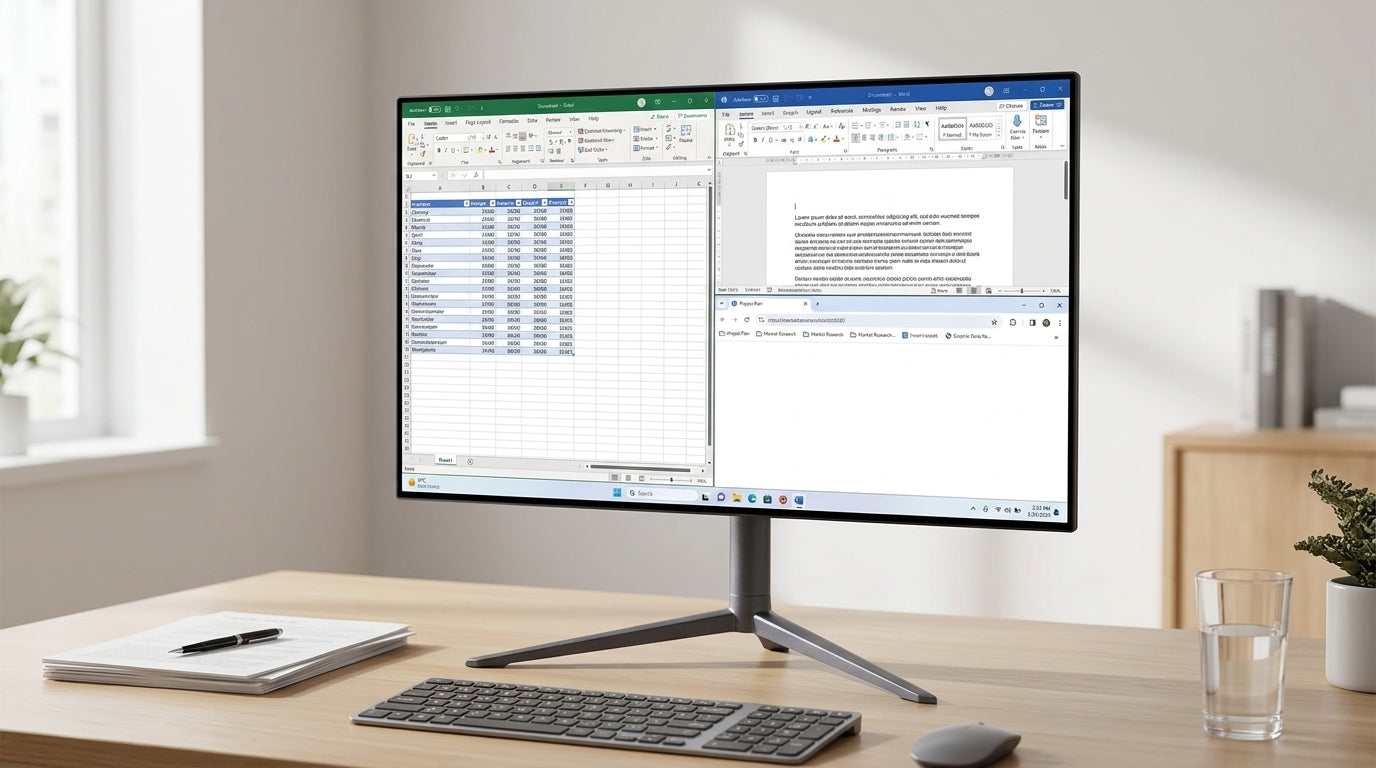
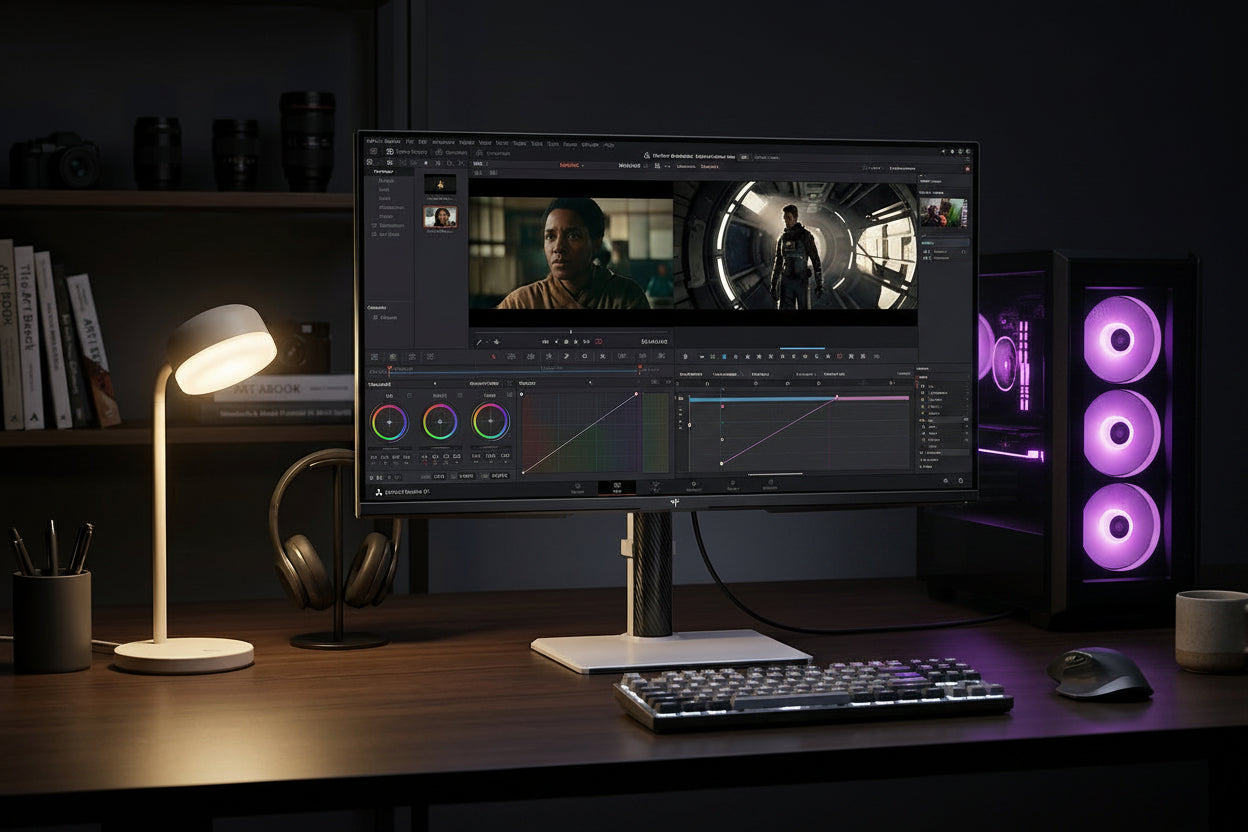
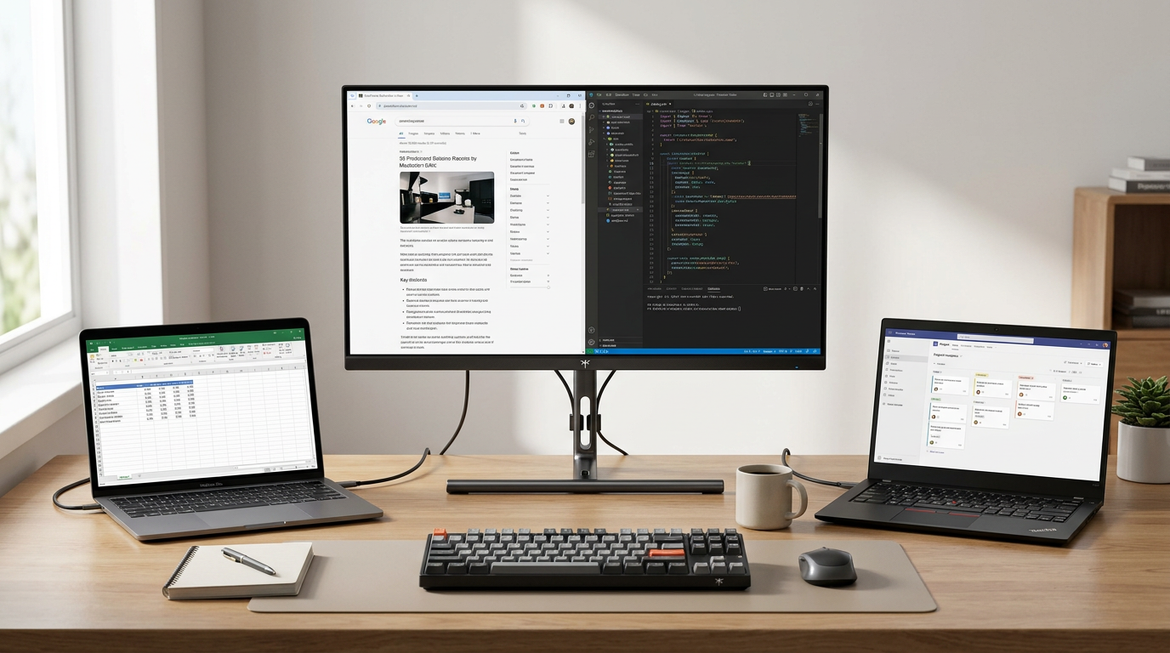
The best value gaming monitor is the one that fits your use case, device output, and desk setup before it fits a logo. If you are shopping OEM listings, start by deciding whether you need fast competitive play, mixed work and gaming, console use, or a compact desk fit, then verify the specs that actually change the experience.
Start With Your Use Case, Not the Logo
For most buyers, the first question is not which brand is biggest. It is whether the monitor needs to be fast, sharp, flexible, or simply affordable enough to make sense for the desk and devices you already own.
If you want the best value gaming monitor, define your floor first: resolution, refresh rate, screen size, and stand needs. That makes it much easier to spot fake upgrades, like a high refresh rate that only works at a lower resolution or a large screen that will not fit your desk. See the Ultimate Guide to Choosing a Gaming Monitor for deeper planning steps.
A useful rule is simple: competitive PC players can prioritize speed, mixed-use buyers should protect resolution and ergonomics, and console buyers should verify the exact HDMI mode they will actually use. Brand premium only matters after the monitor proves it can do the job.
What to Check First
- Set your minimum resolution before you look at marketing terms.
- Set your minimum refresh rate based on the games you play most.
- Decide whether the screen will be mostly for gaming, work, or both.
- Check whether your desk can handle the size and stand footprint.
One decision sentence worth keeping in mind: if you cannot name the device, room, and use case in one sentence, the listing is probably too early to judge.
Verify the Specs That Actually Matter
Start with resolution and refresh rate together, because they only matter as a pair. A monitor that looks fast on paper but runs at the wrong resolution for your GPU or console is usually a poor trade.
For buyers comparing the best value gaming monitor options, the next layer is panel type, HDR claims, mini-LED claims, local dimming, brightness, and color gamut. These are not interchangeable. VESA's DisplayHDR guidance separates real certification from vague HDR marketing.
In plain terms, HDR should not be treated like a yes-or-no sticker. It matters only when the monitor has enough peak brightness, color range, and backlight control to make bright highlights and dark scenes look meaningfully different.
Resolution, Refresh Rate, and Response Time
Resolution tells you how sharp the image looks. Refresh rate tells you how many times the screen can update each second, which mainly affects motion smoothness. Response time is the panel's speed in changing pixels, and it matters most when you notice ghosting or blur in fast movement.
A practical takeaway: 1440p is often the safer middle ground for value shoppers, while 4K starts to make sense when sharp text, larger desktops, or console/PC flexibility matter more than raw frame-rate headroom.
Panel Type and Local Dimming or HDR Claims
Panel type changes contrast, viewing behavior, and sometimes motion feel. Mini-LED can improve HDR-looking contrast when local dimming is implemented well, but the premium only makes sense if you actually care about HDR content or darker-room gaming.
If a page says "HDR" but does not show a recognized certification level, treat it as a claim, not proof.
Color Gamut, Brightness, and Real-World Use
Color gamut is how much of a reference color space the panel can cover, while brightness is how much light it can put out. That matters more for mixed-use desks, creator work, and rooms with daylight than for late-night gaming alone.
A simple filter helps here: if you mainly play in a dim room, contrast and motion usually matter more than a flashy brightness number; if you work in a bright room, usable brightness and color consistency matter more than a marketing headline.

Check Ports and Console Compatibility
The port version matters as much as the panel spec. Port mode tables can differ from the headline listing, so always verify the exact resolution and refresh-rate combination for the input you will use.
This is where many OEM shoppers get tripped up. A monitor can advertise 200Hz or 240Hz, but a specific HDMI port may only support that rate at a lower resolution, or only one input may reach the full spec.
If you use a console, laptop dock, or older graphics card, treat convenience features like USB-C, KVM, and audio passthrough as extra benefits, not as proof of full performance. The question is not whether the monitor has the port; it is whether that port supports your target mode.
A Quick Port Check
- Verify the exact HDMI or DisplayPort version for the port you will use.
- Match that port against the listed resolution and refresh-rate table.
- Confirm your source device can output that mode.
- Use a known-good cable before assuming the monitor is the problem.
If the product page gives different numbers in different places, use the most technical table and treat the conflict as a buying warning.
Compare Stand Flexibility and Desk Fit
Stand choice affects comfort more than many shoppers expect. VESA mount compatibility tells you a monitor can attach to a standard arm or wall mount, but it does not guarantee the included stand has the height, swivel, or pivot range you need.
That distinction matters for value buyers. A monitor can be a good hardware match and still be a bad desk fit if the stand is fixed, too low, or awkward for long sessions.
For mixed gaming and work, height adjustment is usually the first ergonomic feature to protect. Swivel and pivot are useful if you switch between portrait work, coding, and gaming, while quick-release and VESA support mainly make setup and future upgrades easier.
| Stand Feature | What It Changes | When It Matters Most | When It Matters Less |
|---|---|---|---|
| Height adjustment | Eye-level alignment and neck comfort | Long work sessions, dual-purpose desks | Fixed gaming-only setups |
| Swivel | Easier side-to-side repositioning | Shared desks and mixed-use layouts | Small, always-centered setups |
| Pivot | Portrait mode for work or reading | Coding, documents, vertical content | Pure gaming use |
| VESA support | Arm or wall mount flexibility | Tight desks and future upgrades | If the included stand already fits well |
| Quick release | Easier assembly and disassembly | Frequent moves or returns | Permanent installs |
One decision sentence: if the stand cannot get the screen to eye level without stacking books, the monitor is not a real fit, even if the panel spec looks great.
Map Verified Features to Specific Models
Only after the core checks are done should you map features to a specific model. That keeps the recommendation neutral and makes the product mention feel like a fit check, not a sales pitch.
If you want 4K high refresh with stronger desk ergonomics, the KTC 32-inch 4K monitor is a straightforward example of that setup. Its 4K, 165Hz, HDMI 2.1, DP 1.4, and height-adjustable stand make sense when you want both sharper desktop use and fast gaming.
If you want 1440p Mini-LED value with more HDR-oriented punch, the KTC 27-inch Mini-LED monitor is a closer fit. It is better suited to buyers who care about a brighter HDR target and fast QHD play than to buyers who only want the cheapest possible 1440p screen.
If your goal is lower-cost 1440p gaming without moving into Mini-LED pricing, the KTC 27-inch curved 1440p monitor is the simpler budget path. It makes more sense when you want immersion and speed, but do not need the extra cost of full ergonomic adjustability or stronger HDR hardware.

Best Fit for 4K Console and Mixed-Use Desks
Choose 4K if you care about sharp text, console clarity, or using the monitor as a work screen during the day. It becomes less compelling if your PC cannot push the frame rates you expect or if your desk is too small for the larger footprint.
Best Fit for 1440P Speed Without Overspending
Choose 1440p if you want a strong balance of price, image sharpness, and gaming performance. This is usually the easiest sweet spot for value shoppers because it leaves more budget for better ports, better ergonomics, or a stronger return policy.
Best Fit for Mini-LED HDR on a Mid-Budget
Choose Mini-LED when you actually want the HDR trade-off, not just the badge. It is most useful in darker-room gaming, cinematic content, or mixed work/play setups where contrast is more important than shaving every dollar from the purchase.
Weigh Warranty, Returns, and Support
Hardware specs do not end the buying decision. A clear warranty, a reasonable return window, and a visible support path reduce the risk of getting stuck with dead pixels, uneven backlight behavior, or a stand that does not work on your desk.
For online monitor buying, the safest return window is the one that gives you enough time to test the monitor in your actual setup. That means checking for dead pixels, input behavior, brightness uniformity, and whether the viewing height feels right after a few days of use.
Support contact details matter more than many shoppers expect. If you cannot quickly find an email or help center before checkout, the savings need to be very real to justify the added risk.
Support Checklist
- Warranty length is clearly stated.
- Return window is long enough to test the panel at home.
- Return condition rules are easy to understand.
- Support email or help center is visible.
- Shipping window is clear enough for your timeline.
- Replacement or price-protection language is written plainly.
A useful boundary: if the monitor is cheap but the return and support terms are unclear, the value case is weaker than the sticker price suggests.
Use This Final Buy or Pass Checklist
- Confirm the target resolution, refresh rate, and panel type match how you will actually use the monitor.
- Confirm the port version and the exact per-port mode support for your PC, console, or dock.
- Confirm the included stand fits your desk, eye level, and viewing-angle needs.
- Confirm the warranty, return window, and support path are easy to use.
- Confirm the final price still beats a similar name-brand alternative after you remove extras you do not need.
If any one of those checks fails, keep shopping. The best value gaming monitor is the one that passes the full checklist, not the one with the most impressive headline spec.
What to Do Before You Click Buy
Use the listing like a filter, not an ad. Check the exact port mode, the stand range, the return policy, and the real price after extras. If the monitor passes those four checks and still fits your room, it is probably worth moving forward.
FAQs
Q1. How Do I Tell If an OEM Monitor's HDR Claim Is Real?
Look for the exact HDR certification level, not just the word HDR in the title. Then check peak brightness, local dimming details, and whether the panel is being sold for gaming, work, or mixed use.
Q2. What Does VESA Compatibility Actually Tell Me?
It tells you the monitor should work with a standard arm or wall mount, but it does not say much about the included stand. If you need height or rotation, verify the stand specs separately before buying.
Q3. Can I Trust a 200Hz Monitor If My Console Tops Out Lower?
Yes, if the monitor supports the mode your console will actually use. The important check is whether the HDMI port supports your console's resolution and refresh-rate combination, not whether the panel can go higher on paper.
Q4. Why Does a Budget Mini-LED Monitor Cost More Than a Regular IPS Model?
Mini-LED pricing usually reflects backlight complexity, local dimming hardware, and brighter HDR targets. It is worth it when you want better contrast or HDR impact, but less useful if you only want a basic gaming panel.
Q5. How Long Should a Return Window Be for a Monitor Purchase?
Long enough to test dead pixels, brightness uniformity, port behavior, and desk ergonomics in your own setup. If you are buying online, a longer window is usually safer because the problems that matter often show up after a few days, not on day one.