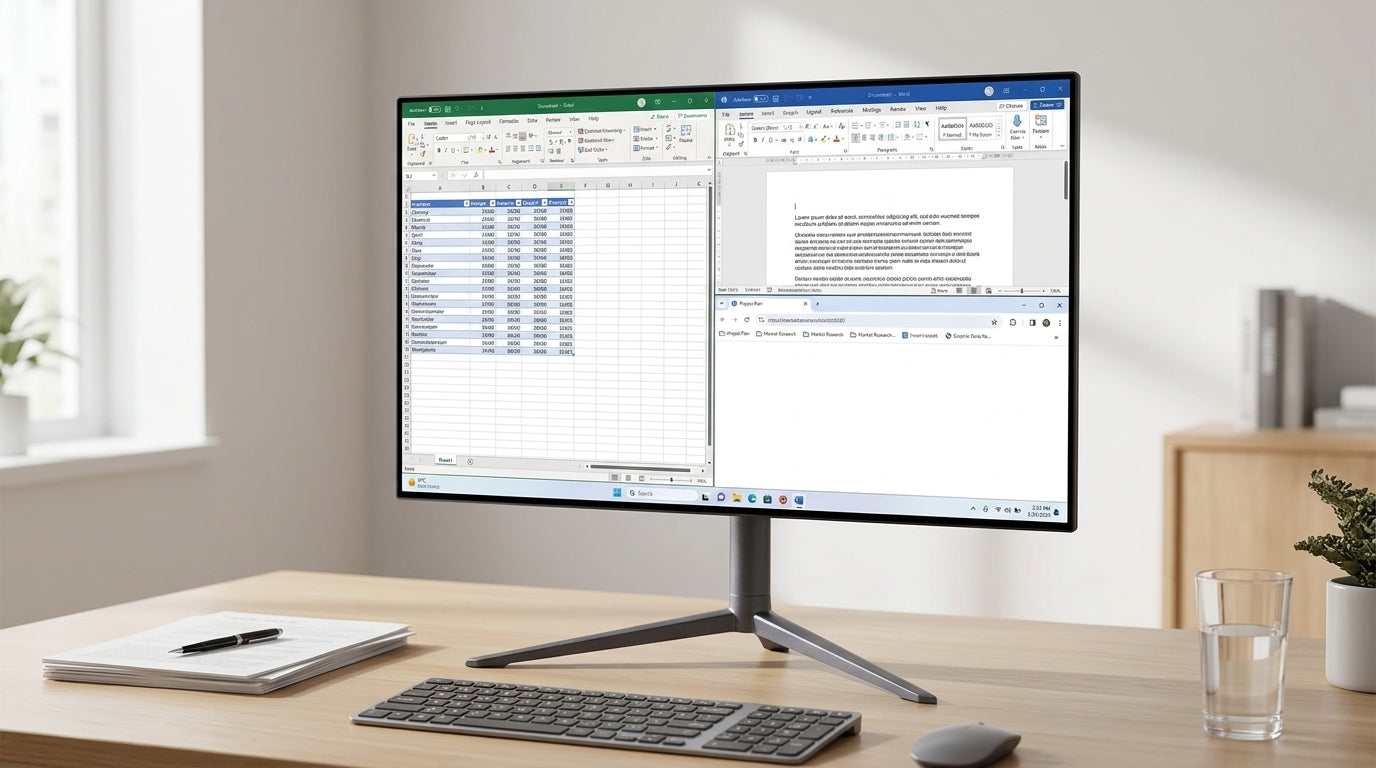
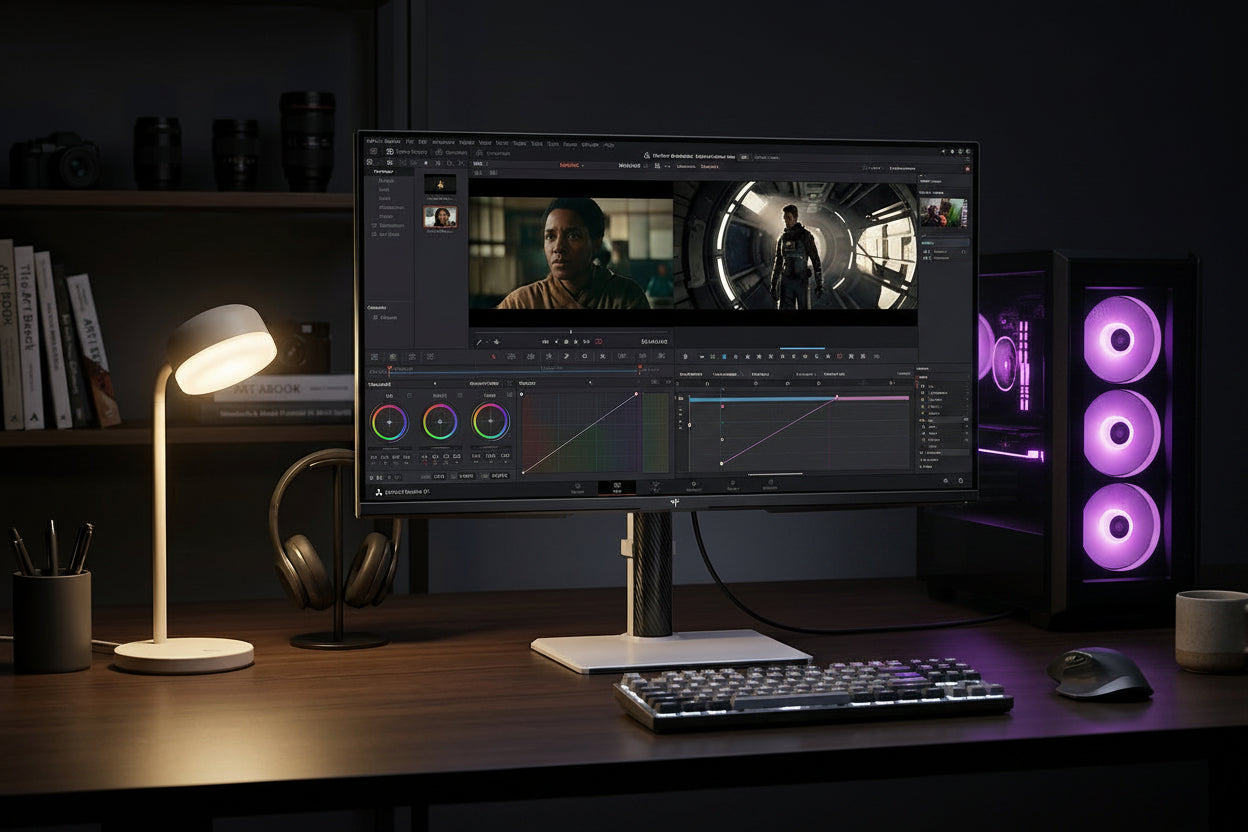
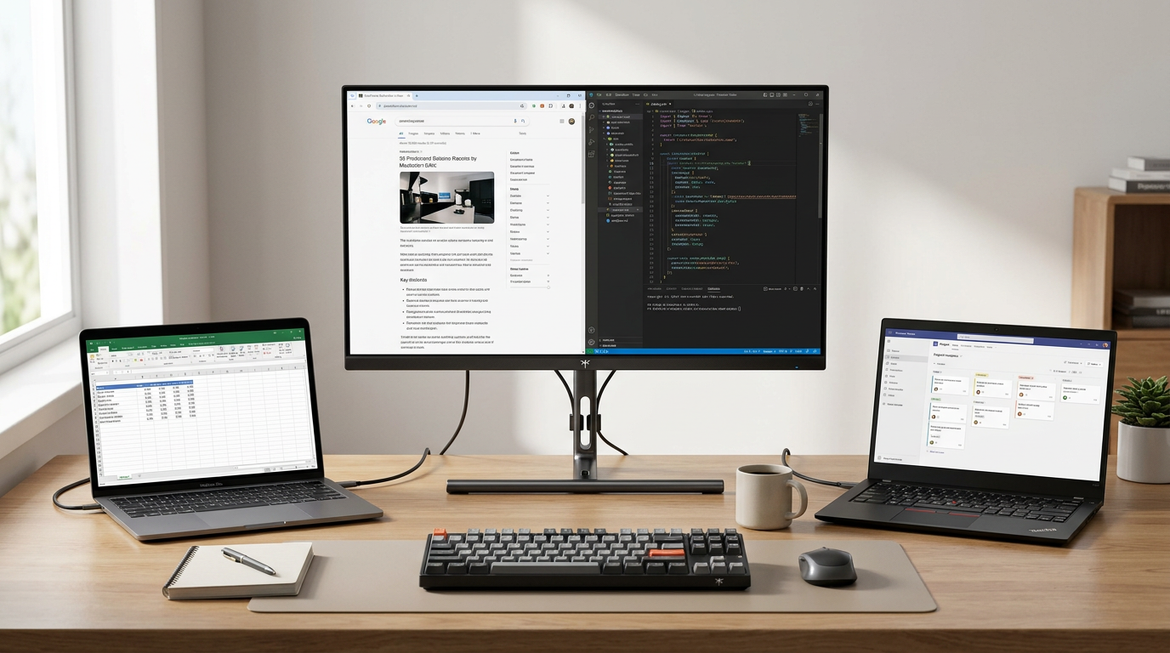
If you want the best value 4K monitor under $500, start by checking whether the rest of the monitor keeps up with the resolution. 4K only feels like a value win when size, refresh rate, ports, and ergonomics still fit your desk and devices. For mixed use, the right choice is usually the one that avoids obvious compromises, not the one with the longest spec sheet.

What Matters Most Under $500
Under $500, the smartest first filter is simple: decide whether you need sharper text, smoother motion, or broader convenience. That is the real value question behind the best value 4K monitor under $500, because a monitor that looks good on paper can still feel awkward if it skips the wrong basics.
For most shoppers, the must-check list is short. Size affects desk fit and perceived sharpness, refresh rate affects motion smoothness, panel type shapes contrast and viewing angles, and ports decide whether the monitor actually works for your PC or console. A useful pixel density guide can help if you are comparing 4K to 1440p and want a quick sharpness check.
A good rule of thumb is this: if you mainly work in text and browser windows, put sharpness and ergonomics first. If you game often, refresh rate and port support move up the list. If you split time between work and play, avoid paying extra for a feature you will not use every day. A monitor can be a bargain only when the trade-offs match your actual routine.
Choose the Right 4K Trade-Offs
The easiest mistake is shopping by spec in isolation. A 4K monitor under $500 can be excellent for one buyer and a poor value for another, depending on how much the buyer cares about sharpness, speed, or feature convenience.
Sharpness and Screen Size
For text-heavy work, 4K is most convincing when the panel size and scaling setup feel comfortable together. The 4K monitor buying guide under $500 usually starts with 27-inch because it is the safer balance of sharpness and desk fit, while 32-inch makes more sense when you want a larger canvas and can give up some density advantage. Our pixel density article is the right next stop if you are trying to judge whether 27-inch or 32-inch better matches your desk.
What this means in practice is that 27-inch often feels more crisp for office work, while 32-inch can feel more spacious without being the sharpest possible choice at the same price. If your apps scale well and you want more screen area, 32-inch can be the better comfort pick. If you want the least risk of soft text or awkward scaling, 27-inch is usually the safer default.
Refresh Rate and Motion Smoothness
Refresh rate matters when you move between desktop work and gaming, but only if your source device and cable path can actually support it. Wirecutter's 4K monitor guide makes the practical point clearly: 60Hz is fine for office use, while hybrid buyers benefit more from 120Hz or higher when they want smoother motion and menu animation.
That does not mean every shopper needs the highest number available. If you mostly browse, stream, or write, 60Hz can still be a smart value choice. If you split time between work and play, 160Hz-class or 165Hz-class models are easier to justify, because they reduce the "I paid for speed but never use it" problem. The key condition is compatibility. Higher refresh only helps when the GPU, console, cable, and input mode can sustain it.
Panel Type, Brightness, and Color
Panel type changes the kind of value you get. IPS-class panels usually make more sense for mixed desktop use because they keep colors and viewing angles steadier. Mini-LED can be stronger when you care about highlights and bright-room use, but it comes with a trade-off: real HDR behavior depends on effective local dimming, and that can add blooming or extra toggling for everyday desktop work. TFTCentral's HDR explanation is a useful sanity check here.
That is why HDR labels should be treated as context, not a promise. If you watch a lot of movies, game in darker scenes, or want stronger highlight pop, Mini-LED may be worth the extra money. If you mostly want a calm desktop and consistent day-to-day use, a good IPS panel often delivers better practical value. Color coverage matters most for creator-adjacent work, but it should still be checked alongside the rest of the monitor, not used as a stand-alone buying trigger.
Ports, USB-C, and Console Compatibility
Ports are where many good-looking deals break down. If you use a console, HDMI 2.1 is the key checkpoint for 4K/120Hz-class use, while older HDMI 2.0-class inputs typically cap the practical mode lower. The clearest technical walkthrough is the HDMI 2.0 vs 2.1 guide, and it is worth checking before you assume any 4K monitor will do console duty at the speed you want.
USB-C and KVM are convenience features, not automatic reasons to pay more. They can be helpful for laptop desks, but they deserve a compatibility check before you build around them. If your desk depends on one-cable charging and wake behavior, verify the port path, power delivery, and source-device support first. A monitor can look elegant on the product page and still be annoying in daily use if the cable workflow is fragile.

Match the Checklist to Real Buyers
The trade-offs become easier once you map them to actual use cases. In the comparison chart below, the goal is not to score monitors. It is to show which choice usually fits the situation better under a $500 ceiling.
Which 4K Monitor Tradeoff Matters Most by Use Case
Use this chart to match your main priority to the kind of 4K monitor that usually fits best under $500.
View chart data
| Scenario | Work | Mixed use | Console | Casual gaming | Sharpness | Refresh | Color/HDR | Connectivity |
|---|---|---|---|---|---|---|---|---|
| 27-inch | 3.0 | 2.0 | 1.0 | 1.0 | 3.0 | 2.0 | 2.0 | 2.0 |
| 32-inch | 2.0 | 3.0 | 2.0 | 1.0 | 2.0 | 2.0 | 3.0 | 1.0 |
For office-first buyers, 27-inch usually stays the better starting point because it protects clarity and fits more desks. For mixed-use buyers, 32-inch can make sense if you want a larger canvas and do not mind a bigger footprint. Console-first buyers should focus less on size and more on HDMI support, because the wrong input can quietly block the gaming mode you expected.
For casual gaming, refresh rate matters more than extra size unless you are also using the monitor for work. If your gaming is mostly single-player or relaxed play, the 4K value story often favors better image quality over the highest speed tier. If your gaming is competitive, you may be better off considering a 1440p option instead of forcing 4K into a budget that cannot support both sharpness and speed.
Where KTC Fits This Checklist
Once you know which trade-off matters most, the product choice gets easier. KTC's 4K lineup gives you different ways to stay under the budget ceiling without using the same compromise twice. The 4K monitor collection is the simplest place to compare the main shapes of the lineup in one spot.
If you want a 27-inch setup with 4K, high refresh, and USB-C support, the H27P6 is the clearest fit check. Its dual-mode layout makes sense for shoppers who want one monitor for work, console play, and faster PC sessions. If your desk needs a larger canvas, the H32P22P fits the 32-inch side of the checklist better, especially when screen space matters more than maximizing density.
If HDR is the main reason you are looking at this tier, the M27P6 is the strongest example to check. It makes the Mini-LED trade-off very visible: better highlight impact and bright-room potential, but a more specific use case than a plain IPS monitor. That is why it belongs in the decision path, not as a universal default.
Final Takeaway
The best value 4K monitor under $500 is the one that matches your real use, not the one with the longest feature list. Start with size, refresh, panel type, and ports, then decide whether 4K is truly the better buy than 1440p for your desk. If you want the easiest next step, compare the 27-inch and 32-inch 4K options first, then check whether a USB-C or Mini-LED feature is actually worth paying for.
Related Resources
FAQ
Is a 27-Inch or 32-Inch 4K Monitor Better Under $500?
Neither size wins every time. 27-inch is usually the safer choice for sharp text and easier desk fit, while 32-inch is better when you want more screen space and can accept a bigger footprint. The right answer depends on desk depth, scaling comfort, and whether you value density or workspace more.
Do I Need 160Hz or 165Hz for a 4K Monitor?
Not always. Higher refresh helps most when you split time between work and gaming, or when you notice motion smoothness in desktop use. If you mainly browse, stream, or write, 60Hz can still be the better value. The important part is whether your device can actually drive the mode.
Can USB-C Power Delivery Replace a Dock on a Budget 4K Monitor?
Sometimes, but only for the right laptop and cable setup. USB-C Power Delivery can reduce clutter, yet it still needs compatible video output, charging support, and reliable wake behavior. If your setup is sensitive to reconnect issues, treat it as a feature to verify rather than a guaranteed dock replacement.
What Is the Biggest Trade-Off With Budget 4K Monitors?
Most budget 4K monitors do not fail at basic sharpness. The usual compromises show up in brightness, ergonomics, input flexibility, or HDR behavior. That is why the checklist matters: it helps you spot which shortcut you can live with before you buy.
Can a 1440P Monitor Be Better Value Than 4K Under $500?
Yes, especially if you care more about higher refresh or a lower total price than extra text detail. 1440p often leaves more budget for speed and panel quality. If your use is mostly gaming and you do not need the sharpest desktop, it can be the smarter buy.
Related Resources
If you are still comparing display detail, start with true image detail on desktop monitors. If you want to sanity-check color claims, use the 10-bit color audit. For buyers who want a bigger 4K category view, browse the 4K monitor range.