Best monitor for RTX 6080 Ti 2026 is mostly a question of balance: resolution, refresh rate, panel type, and the games you actually play. In that frame, a 32-inch 4K 480Hz display is a premium scenario worth considering only if your setup and preferences match its trade-offs.
Why This Pairing Feels Like the Sweet Spot
A 32-inch 4K 480Hz OLED is attractive because it tries to solve two problems at once: keep the image sharp enough for desktop use, and keep motion fast enough for competitive play. That makes it a strong idea for 2026, but not a universal recommendation.
For most players, the real decision is not whether the spec stack sounds impressive. It is whether the monitor will improve the games you play most, and whether your system can actually use the refresh headroom without turning the whole setup into a compatibility project.
The best monitor for RTX 6080 Ti 2026 should be judged as a fit question, not a trophy question. If you want a clean all-around setup, the sweet spot may be closer to a balanced 4K high-refresh display. If you want the smallest possible motion advantage, a lower-resolution extreme-refresh panel can still make more sense.
What 32-Inch 4K Adds at This Size
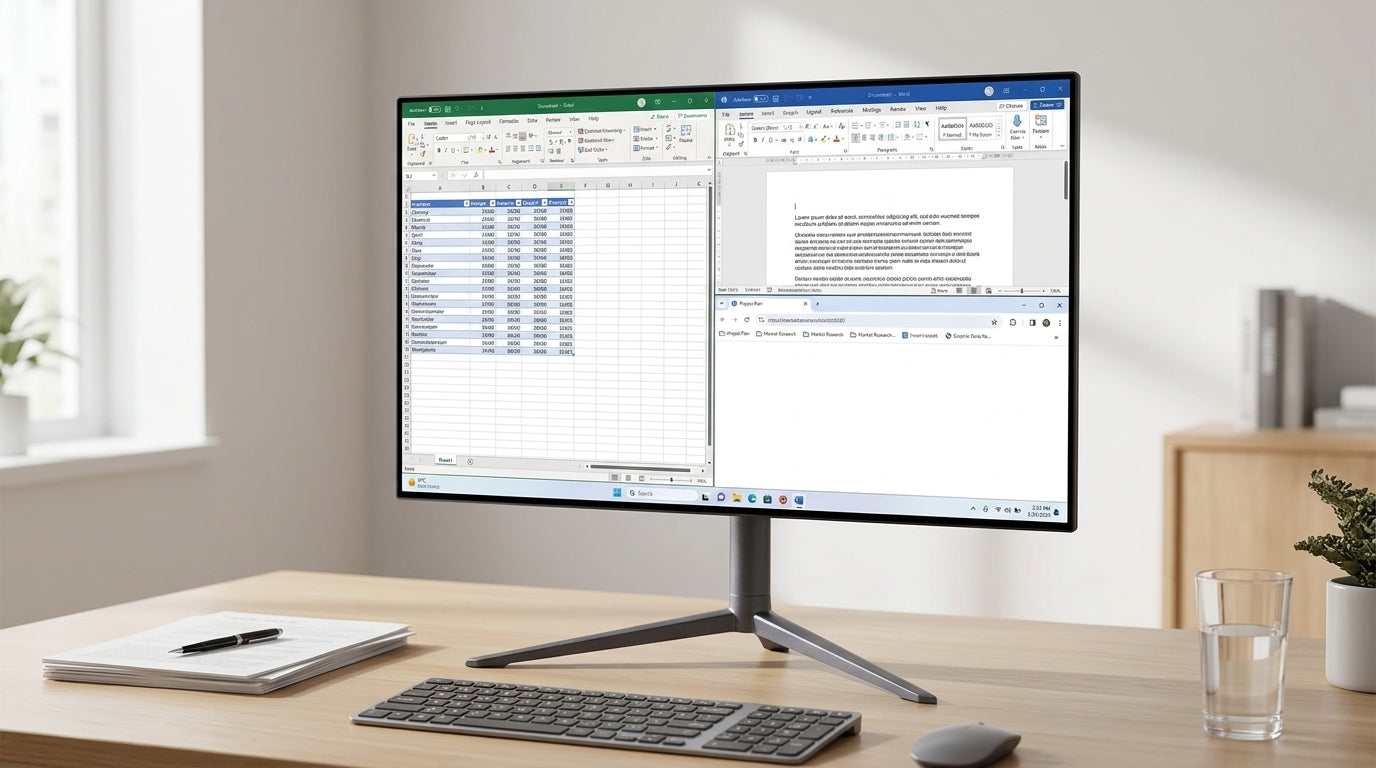
At 32 inches, 4K can be easier to use than it sounds on paper. The larger canvas gives you enough physical screen area that desktop text, map elements, and HUD details can feel less cramped than on a smaller 4K panel at the same desk distance.

That does not mean 32-inch 4K is automatically better. It means the size helps the resolution feel usable in a wider range of setups, especially if you also work, browse, or stream on the same display. The 4K Monitor collection is a useful browsing path if you want to compare that size class with other 4K options.
The main trade-off is GPU load. 4K asks more from the system than 1440p, so the value depends on the games you play and how consistently you can hold high frame rates. A monitor can be technically excellent and still be a poor fit if your frame delivery is unstable.
4K 480Hz vs 1440P 600Hz
If you are choosing between 4K 480Hz and 1440p 600Hz, the right answer depends on what you notice first: detail or motion.
| Dimension | 4K 480Hz | 1440p 600Hz | When It Makes More Sense |
|---|---|---|---|
| Motion clarity | Extremely strong | Even more speed-first | Pick 1440p 600Hz if your only goal is the lowest possible motion-delay feel. |
| Target detail | Strongest here | Good, but less fine detail | Pick 4K 480Hz if reading distant UI and spotting detail matter. |
| Desktop usability | Very strong at 32 inches | Good, but less crisp | Pick 4K 480Hz if the monitor doubles as a daily desktop screen. |
| GPU load | Higher | Lower | Pick 1440p 600Hz if frame-rate consistency is the main constraint. |
| Game-type fit | Premium all-rounder | Pure esports bias | Pick 4K 480Hz for mixed competitive and general use. |
| Diminishing returns | Still present | Still present | Pick neither if you are unlikely to notice the difference in real play. |
For competitive players, this is the key split: 1440p 600Hz can favor the smallest possible input-feel edge, while 4K 480Hz can preserve finer image detail and broader daily usability. The comparison is less about a winner and more about which compromise you want to live with. As RTINGS explains in its 1440p vs. 4K guide, the better choice depends on detail versus rendering load.
If you want a broader look at very high-refresh categories, the High-Refresh Monitors collection shows how the faster end of the market is usually organized.
DP 2.1 and Cable Checks
Before you care about image settings, verify the signal chain. For very high-bandwidth modes, the monitor input, GPU output, and cable all need to support the intended link, and each piece can become the weak point.
DisplayPort 2.1 UHBR20 supplies up to 80 Gbps of bandwidth headroom; full 4K 480 Hz still requires compatible GPU output, cable, and monitor input. Background on the standard appears in DisplayNinja’s overview. Cable quality also matters more as the bandwidth target rises. TFTCentral’s cable and certification guide is a good reminder that short, certified cables are usually the safer starting point when you are pushing high-refresh modes.
A practical setup sequence is simple:
- Confirm the monitor’s published input support.
- Confirm the GPU’s output support.
- Use a short, direct cable first.
- Start at a stable lower mode.
- Raise resolution and refresh only after the signal is clean.
If the connection is unstable at the target mode, the issue is often not the monitor idea itself. It is the weakest link in the signal path. The How Cable Gauge and Conductor Material Affect High-Bandwidth Display Signals article is a useful follow-up.
Which Monitors Fit Different Player Priorities
The sweet-spot idea only works if you place your own priorities first. The list below is about fit, not prestige.
For Pure Esports Speed
If you mainly play fast shooters and you care most about the smallest possible perceived delay, 1440p extreme-refresh monitors still make sense. They usually ask less of the GPU and can be easier to sustain at very high frame rates.
For Mixed Competitive and Creator Use
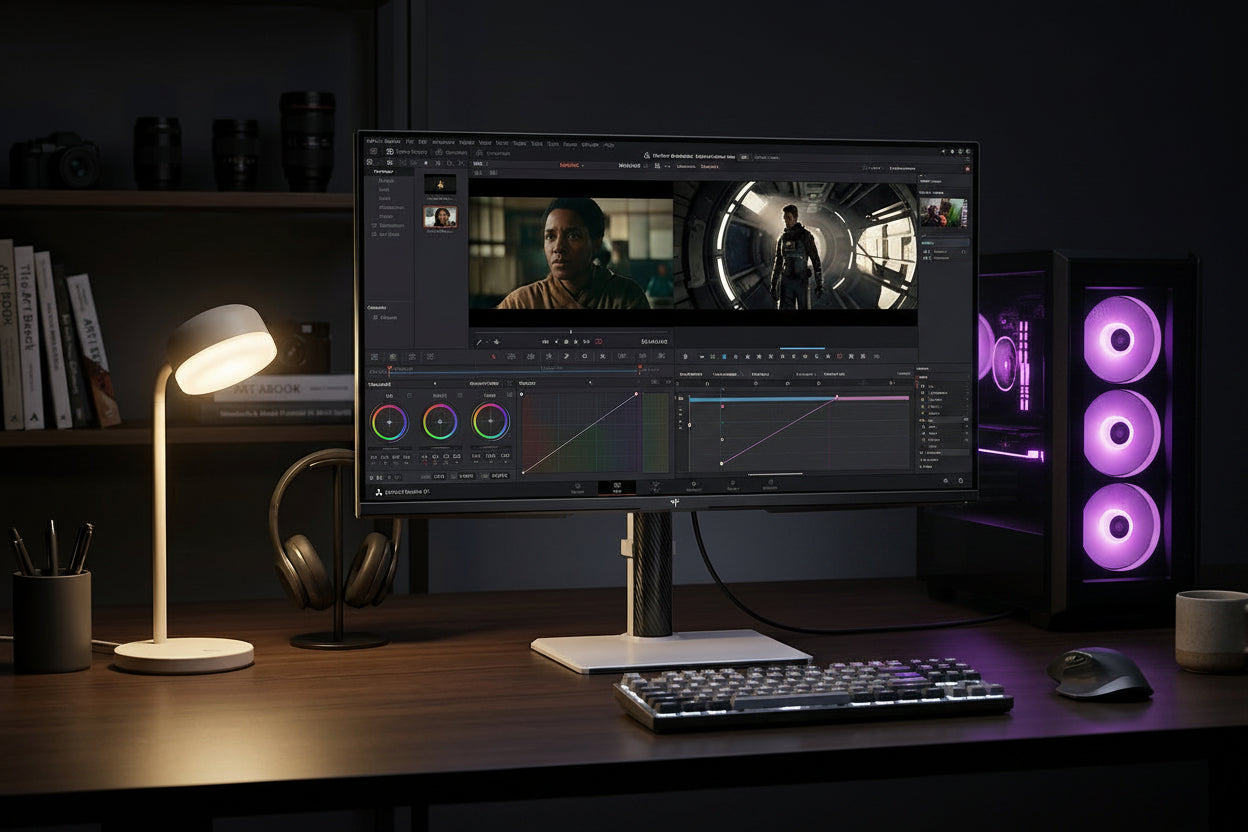
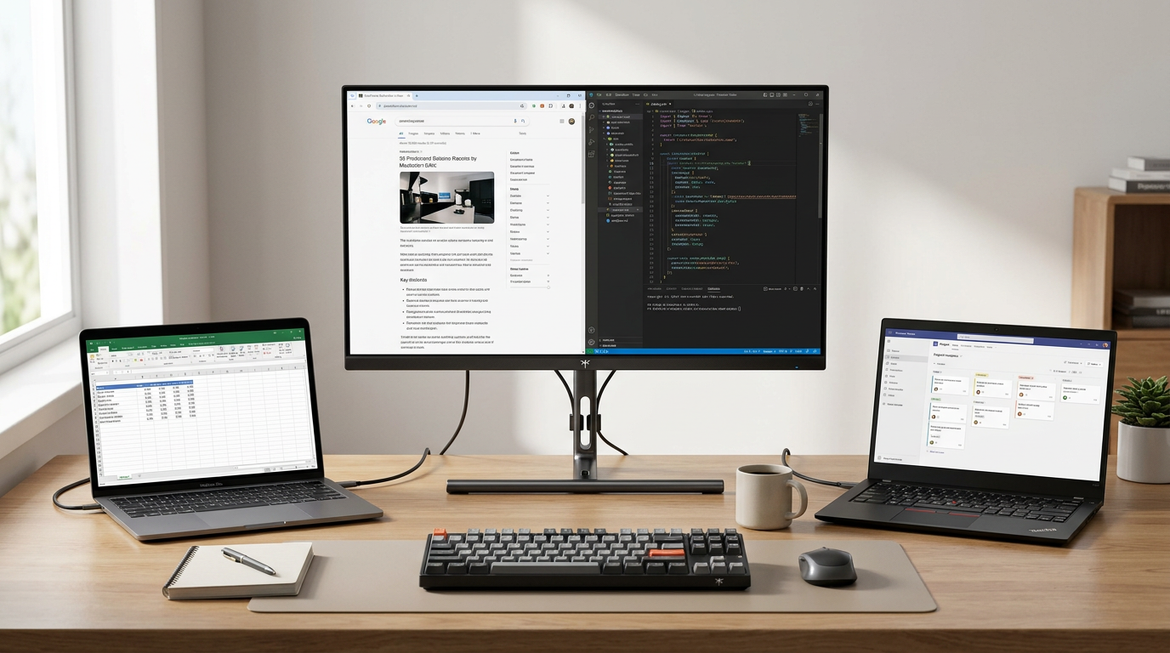
If you also edit, stream, or keep many desktop windows open, a 4K monitor often feels more balanced. In KTC’s current lineup, the KTC Mini LED 27" 4K 160Hz HDR1400 Gaming Monitor | M27P6 is a concrete example of a 4K gaming display that prioritizes mixed-use practicality.
For Future-Proof 4K Gaming
If your main goal is a large, sharp 4K gaming setup rather than the absolute fastest refresh rate, the KTC 32" 4K 165Hz Gaming Monitor with Vesa Mount | H32P22P is the closest current browsing reference in this size class.
For buyers who want a strong all-around gaming category path, the Gaming Monitor collection is a sensible place to compare 4K, OLED, Mini-LED, and high-refresh categories.
The best monitor for RTX 6080 Ti 2026 is therefore not a single panel type. It is a choice between motion-first, detail-first, and balanced-use setups.
Setup Checks Before You Commit
Before you buy, use a short filter instead of a spec wish list:
- Check the games you play most.
- Check whether you want detail, motion, or a mix of both.
- Check whether your desk depth suits a 32-inch screen.
- Check the exact input standard and the cable you will use.
- Check whether the refresh mode is stable at the resolution you want.
That last point matters more than many buyers expect. A monitor can look perfect on a product page and still be annoying if the connection path is fussy.
If you are comparing product categories rather than one exact model, the 4K Monitor and Gaming Monitor pages are better starting points.
What Current KTC Options Suggest
KTC does not currently list a 32-inch 4K OLED at 480Hz, so the exact setup in the headline should be read as a scenario, not a catalog item. That matters, because a good buying guide should separate a useful idea from a product that actually exists.
Within the current catalog, the closest practical references are not 480Hz OLEDs but real category options. The KTC OLED 27" 2K 240Hz/0.03ms USB-C Gaming Monitor | G27P6 is a smaller OLED gaming option, while the KTC 27" 4K 160Hz/320Hz 90W Gaming Monitor | H27P6 is a dual-mode 4K speed option for people who want a different balance.
Those models are useful not because they copy the hypothetical 32-inch 4K 480Hz formula, but because they show the real spectrum of compromises: size, resolution, refresh rate, and convenience features do not all peak at the same time.
A Better Way to Read the Sweet Spot in 2026
The most useful way to think about the best monitor for RTX 6080 Ti 2026 is this: the sweet spot is where your games, desk setup, and eye comfort line up with the panel’s strengths. That may be 32-inch 4K for one player and 1440p extreme refresh for another. The right choice is the one you can actually use well.
FAQs
Q1. What 32-Inch 4K Actually Changes for Competitive Gaming
A 32-inch 4K panel can make small details easier to read without feeling oversized for desktop use, especially on a deep enough desk. That is helpful if you split time between esports, browsing, and work.
Q2. What Should I Check Before Buying a High-Bandwidth Gaming Monitor in 2026?
Start with the GPU output, the monitor input, and the cable. Then verify the resolution and refresh mode you actually plan to use.
Q3. Why Might 4K 480Hz Be More Practical Than 8K for Competitive Gaming?
Because 8K usually increases complexity and rendering load faster than it improves day-to-day usefulness. A 32-inch 4K high-refresh setup can stay easier to manage.
Q4. How Do I Decide Between 4K 480Hz and 1440P 600Hz?
Choose 1440p 600Hz if pure speed and lower rendering load matter most. Choose 4K 480Hz if sharper detail, a larger 32-inch viewing area, and a more versatile desktop experience matter more.
Q5. Is There a Confirmed KTC 32-Inch 4K 480Hz OLED Monitor?
No confirmed product fact supports that claim. Treat 32-inch 4K 480Hz OLED as a planning scenario for 2026, not as a current KTC listing. If you want to browse current 4K gaming options instead, start with the 4K Monitor collection.