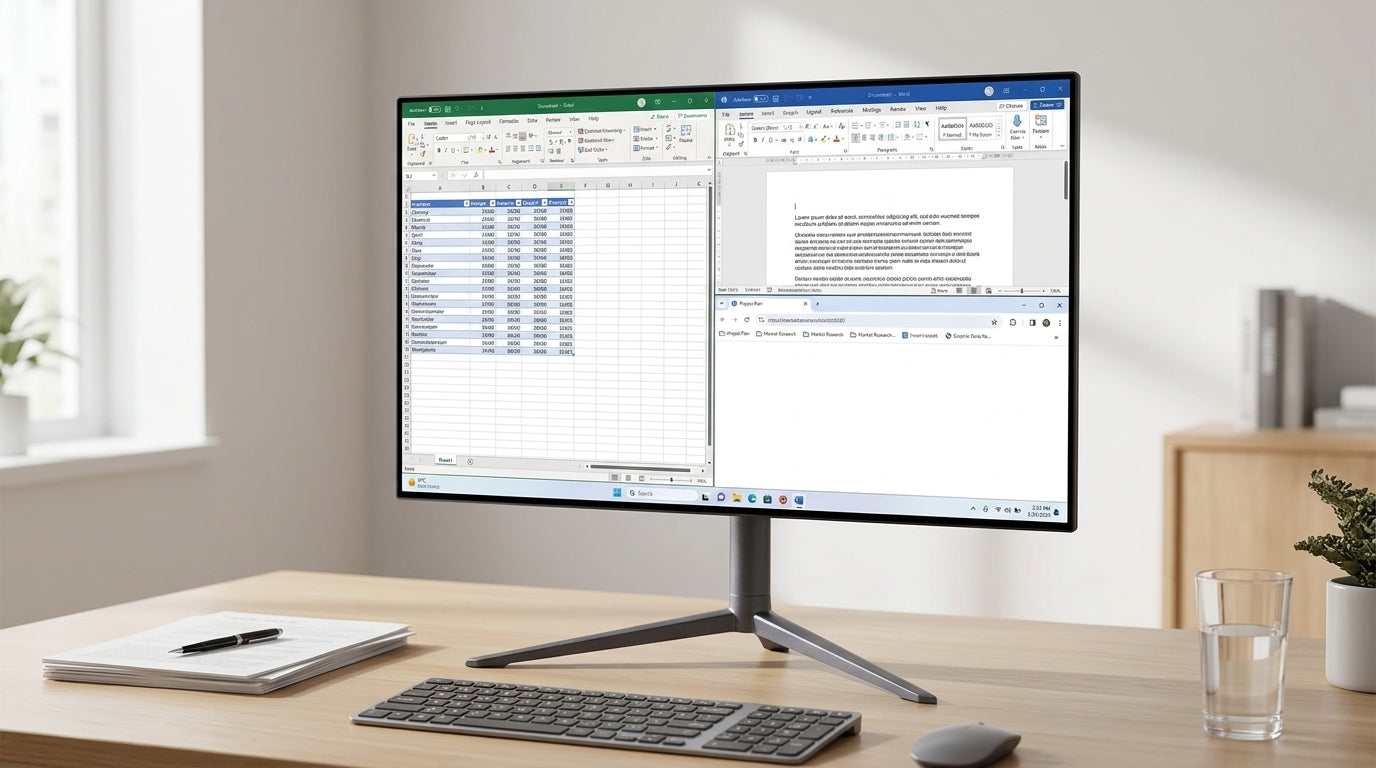
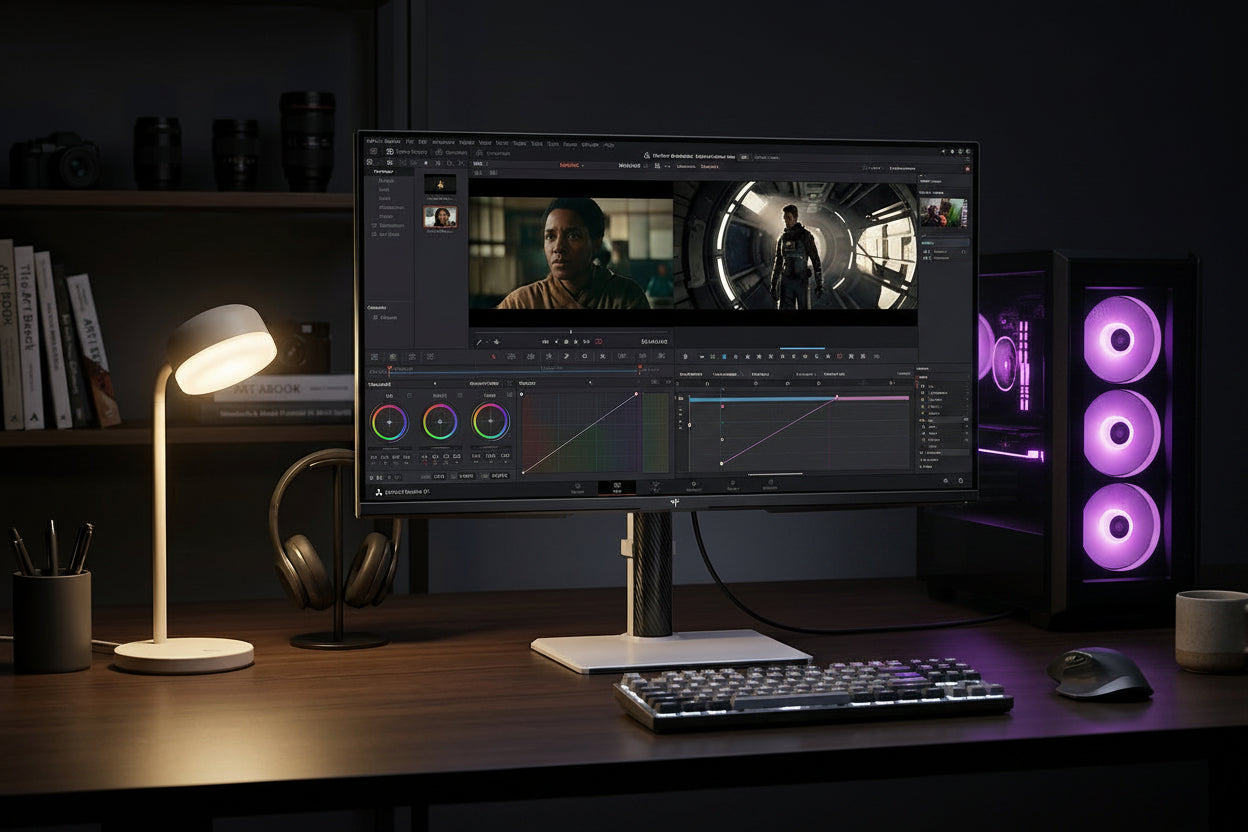
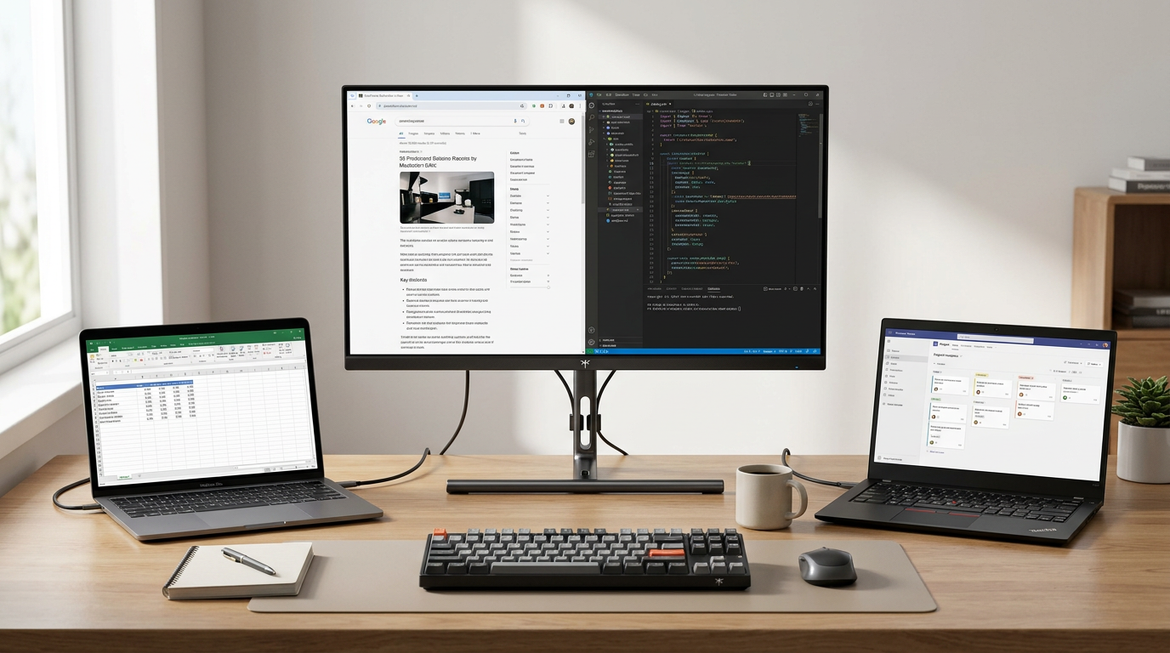
The best monitor for PS5 and PC is usually a balanced 27-inch 4K Fast IPS screen if you want one desk display that stays sharp for Windows work and still handles PS5 play well. If you care more about HDR punch, Mini-LED can be the better fork. The key is to check the console path, text clarity, and stand flexibility before you pay for extra features you may not use.

What a Hybrid PS5 and PC Monitor Needs
A hybrid monitor has to do two jobs at once, and those jobs do not always reward the same specs. PS5 use pushes you toward strong console image quality, stable 120Hz-class support, HDR behavior that actually works in the chosen mode, and enough HDMI capability to avoid bottlenecks. PC use cares more about text sharpness, refresh headroom, and a stand that lets the screen sit comfortably for long sessions.
That is why the best monitor for PS5 and PC is rarely the flashiest one on the shelf. It is the one that creates the fewest daily compromises.
For a balanced desk, the KTC 27" 4K 160Hz/1ms HDR400 Gaming Monitor | H27P22S is the neutral default in this guide because it pairs 27-inch 4K detail with a fully adjustable stand and the kind of port mix that suits a shared console-plus-PC setup. It is not the only good answer, but it is the cleanest starting point for readers who want one screen to do most things well.
PS5 and PC Priorities Do Not Match Exactly
PS5 buyers usually care most about 4K presentation, 120Hz support, and whether VRR and HDR behave the way the box suggests. PC buyers usually care more about desktop crispness, quick motion, and ergonomic comfort.
That means a good hybrid monitor is not trying to win one side by a mile. It is trying to avoid being awkward on either side. For shoppers who expect one screen to switch between evening console play and daytime work, that balance matters more than chasing the highest refresh number.
The Features That Actually Carry Over Between Devices
The same features that matter on PS5 also affect the PC side in some way. Resolution changes text clarity. Panel type changes contrast and motion feel. Stand adjustment affects neck comfort and how easy it is to reposition the display when the same desk is used for both play and work.
If you are comparing from the 4K Monitor collection, keep the question simple: does the screen stay useful across both devices, or does it only look impressive on one of them?
A Neutral Way to Read the Product Fit
Treat the featured monitor as a fit for specific conditions, not a universal best-in-class pick. It makes the most sense if you want a single monitor for a PS5 and a Windows gaming PC, prefer sharp desktop text, and still want high-refresh PC play without moving into a much more specialized display class.
If your desk is mostly console-first, or if HDR is the main reason you are upgrading, the recommendation can flip.

Console Support Comes First
For PS5 buyers, the first check is not the panel brand or the marketing badge. It is whether the monitor can hold the signal path you actually want to use. Tom's Hardware's best gaming monitor guidance is a good reminder that HDMI 2.1 is the safer path for 4K 120Hz-class console use, but that still does not turn every monitor into a guaranteed match. The exact port, cable, and mode matter.
That is the main reason a buyer can get frustrated after an otherwise smart purchase. The monitor may be capable on paper, then fall back to a less useful mode because the handshake, settings, or connection path was not right.
HDMI, 120Hz, and Console Signal Stability
If PS5 is a major use case, check the HDMI version and the number of usable high-bandwidth ports first. A monitor may support high refresh on the PC side while still being less straightforward on the console side. That is also why a 4K 120Hz-class monitor deserves a quick check of the exact supported mode instead of a quick assumption.
The featured H27P22S helps here because it includes dual HDMI 2.1 and dual DP 1.4 inputs, so it is built for mixed-device desks rather than console-only use. If you want a troubleshooting path for the kind of handshakes that can reset after an update, the article on getting 4K 120Hz back is worth bookmarking before you buy.
HDR and VRR: What to Verify, Not Assume
HDR should be judged by the whole implementation, not by the logo alone. Brightness, contrast, and how the monitor handles the mode all matter. VRR is similar: it can improve smoothness, but it should be treated as a model-specific compatibility check, not a universal promise.
Decision sentence: if you mostly want reliable PS5 play and easy PC switching, a monitor with verified HDMI 2.1 support is the safer buy. If you mainly want a cinematic console image and are willing to trade more on desktop comfort, Mini-LED becomes more attractive.
PC Clarity and Ergonomics Still Matter
The PC side is where many hybrid buyers notice the difference between a smart pick and a merely impressive spec sheet. For desk use, 27-inch 4K is generally a sharper text and UI choice than 32-inch 4K at the same resolution, which is why RTINGS' PS5 monitor picks are often used as a practical reference point for desktop clarity discussions. That difference is not about bragging rights. It is about how readable email, browser tabs, and game menus feel after a few hours.
The 27-inch 4K class also tends to fit more desks without pushing the screen too far away. A larger 32-inch screen can be more relaxed if you sit back a bit, but it is not automatically the better PC choice.
Text Clarity at 27 Inches Versus 32 Inches
For most shared desks, 27-inch 4K is the safer default because it keeps text denser and cleaner at normal monitor distance. A 32-inch 4K display can be appealing if you want a larger canvas, but it is easier for that size to feel best only when your seating distance and desk depth are already a good match.
Decision sentence: if you work close to the monitor and care about crisp desktop text, 27-inch 4K is usually the better fit. If you sit farther back or want a more spacious picture, 32-inch 4K can make more sense even though it is not as compact.
Why Full Ergonomics Helps a Shared Desk
A fully adjustable stand matters more in hybrid use than many buyers expect. Height, tilt, swivel, and pivot help when one monitor has to support seated PC work, couch-style console play, or a slightly different viewing angle depending on the game.
That is one reason the H27P22S reads as a sensible shared-desk choice. Its fully adjustable stand helps it adapt to the desk, instead of making the desk adapt to the monitor.
1440P Versus 4K for Mixed PC Use
A 1440p monitor can still be a smart choice if competitive PC play is the priority and you care more about speed or price than desktop sharpness. But if the same screen also needs to handle PS5 use and everyday productivity, 4K remains the easier all-around resolution to live with.
Decision sentence: choose 1440p when PC speed and budget matter more than desktop crispness. Choose 4K when you want the same monitor to look cleaner for work and more polished for console play.
Mini-LED and OLED Trade-Offs
Wirecutter's gaming monitor comparison captures the core hybrid trade-off well: OLED can look excellent for contrast and response, while Mini-LED often makes more sense when you want strong HDR impact without putting all your trust in a panel type that asks more caution on a desk with static UI. That does not make one universally better. It makes them better for different habits.
For hybrid buyers, the real question is how much weight you give HDR versus all-day desktop comfort. If HDR is the reason you are shopping, the more premium panel path starts to make sense. If the monitor will spend a lot of time on desktop windows, a simpler Fast IPS option is usually easier to live with.
Mini-LED: The HDR-Forward Alternative
Mini-LED is the stronger conditional choice when you want more dramatic HDR and brighter highlight impact. It is the option for readers who care about cinematic console games, darker scenes, and richer contrast more than they care about keeping the panel choice simple.
The M27P6 Mini-LED option fits that lane. It is not the automatic best pick for every PS5 and PC desk, but it is the one to look at when HDR is the feature that justifies moving up.
OLED: Excellent, but Not the Default for Every Desk
OLED can be a very strong choice for contrast and motion, but desktop-heavy use deserves caution because static UI elements are part of normal PC life. If your screen sits on taskbars, browser tabs, and work apps for long stretches, that trade-off matters more than it would on a pure console setup.
If you want to learn how people usually lower that risk in practice, the OLED longevity guide is the better follow-up than a spec sheet alone.
Fast IPS: The Safest All-Rounder
Fast IPS remains the least complicated hybrid choice for most buyers. It gives up some HDR drama compared with Mini-LED, but it usually stays easier to trust for text clarity, general brightness balance, and mixed-use comfort.
Decision sentence: if your desk is part game station and part work setup, Fast IPS is the balanced choice. If the room is dark, HDR matters more, and you are willing to accept a narrower use case, Mini-LED becomes the more interesting buy.
Pick the Monitor by Your Main Use Case
Use the four paths below as a decision filter, not a ranking. The goal is to match the monitor to the way you actually use the desk most days.
| Option | Best fit | Primary strength | Main trade-off | Typical use case |
|---|---|---|---|---|
| 27-inch 4K Fast IPS | Balanced default | Sharp 4K detail with broadly versatile mixed PS5 + PC use | Less HDR impact than Mini-LED | Most readers who want one safe all-rounder |
| 27-inch 4K Mini-LED | HDR-forward alternative | Stronger HDR impact and brighter highlights | More complexity than standard IPS | Buyers who care most about cinematic HDR and contrast |
| 27-inch 1440p | Speed/value option | Lower-cost, smoother-feeling compromise for PC-first or fast-play use | Less sharp than 4K | Readers prioritizing frame rate, value, or easier GPU load |
| 32-inch 4K | Larger-canvas option | Bigger image and immersive desk presence while keeping 4K sharpness | Needs more desk space and often a farther viewing distance | Readers who sit back a bit or want a more TV-like monitor feel |
If you want a bigger 4K browsing path, the 4K Monitor collection is the simplest place to compare similar options. If you know you want a sharper, balanced hybrid desk, the H27P22S sits in the middle of that decision path.
Decision sentence: choose the 27-inch 4K Fast IPS default when you want the safest all-around compromise. Choose Mini-LED when HDR is the point of the upgrade. Choose 1440p when PC speed and budget matter more than 4K crispness. Choose 32-inch 4K only if your desk space and viewing distance already support it.
What to Check Before You Buy
A good hybrid monitor purchase is mostly about avoiding mismatches. Before you order, check the PS5 connection path, the PC connection path, the panel size, and whether the stand gives you enough adjustment for the way you sit. The best desk setup for one monitor article is useful if you are still planning the physical layout.
Also check the return policy and warranty window before you treat any spec sheet as final. On the featured monitor, the 3-year warranty and 30-day returns add a useful safety net if the setup does not fit your desk the way you expected.
When the H27P22S is the right fit, it is because it solves the daily hybrid job simply: PS5 gaming, PC clarity, and an adjustable desk setup. When it is not the right fit, it is usually because the buyer really wanted a stronger HDR-first panel or a different size class.
Final Takeaway
The best monitor for PS5 and PC is the one that fits your desk rhythm, not just your spec target. For most readers, that means a 27-inch 4K Fast IPS screen as the balanced default, with Mini-LED reserved for HDR-first buyers and 1440p saved for speed-first PC use. If you want the safest starting point, compare the H27P22S against the rest of the 4K Monitor range, then verify your console setup before checkout.
Frequently Asked Questions
Is 4K or 1440P Better for a PS5 and PC Setup?
4K is usually the better fit if you care about sharper desktop text and cleaner console image quality. 1440p can make more sense if your PC use is more competitive or your budget matters more. The right answer depends on whether your desk is trying to favor console fidelity or PC speed.
Do I Need HDMI 2.1 for PS5 Gaming on a Monitor?
HDMI 2.1 is the safer path if you want the easiest shot at 4K 120Hz-class PS5 use. Even then, the cable, port, and mode still need to be verified on the exact monitor. Treat it as a compatibility check, not a promise.
How Important Is VRR for a Hybrid Monitor?
VRR can make both console and PC gaming feel smoother, but it should be treated as a model-specific feature rather than a universal win. If you play fast games and notice frame pacing, it is useful. If your use is mostly casual, it matters less than clear text and a comfortable stand.
Can OLED Be a Good Choice for Both PS5 and PC?
Yes, but it is best for buyers who put a lot of value on contrast and motion and are willing to be more careful with static desktop elements. On a desk that stays in browser windows, taskbars, and work apps for long sessions, Mini-LED or Fast IPS is usually the simpler fit.
What Size Monitor Works Best for a PS5 and PC Desk?
For most desks, 27 inches is the easiest starting point because it balances sharpness, comfort, and space. A 32-inch screen can feel more immersive if you sit back farther or want a larger canvas. The best size depends on your desk depth and how close you sit.