The best monitor for work and gaming depends on which part of the day matters most. If you spend more time in documents, spreadsheets, and calls, lean toward sharper text and easier device switching. If gaming is the priority, higher refresh matters more. For many hybrid desks, the right answer is a balanced 27-inch 4K or 1440p screen with the right ports, not the fastest panel on the shelf.

Why a Hybrid Desk Needs Different Monitor Priorities
A hybrid desk has a real tradeoff: crisp text helps all-day work, while higher refresh makes motion look smoother in games. Those are different goals, so the best monitor for work and gaming is not the same for everyone.
Think of resolution, refresh rate, and convenience features as separate filters. 4K usually helps text and desktop density. 1440p often feels easier to balance on price and GPU load. USB-C and KVM matter most when you switch between a laptop, desktop, or console often.
That is why a good monitor with KVM for Mac and PC is helpful, but it does not replace the need to choose the right resolution first. If you pick the wrong base spec, the desk can still feel compromised even with nicer ports.
Specs That Matter Most for Both Work and Play
Start with text clarity, then refresh rate, then the desk features that reduce friction. That order matters because a monitor that is comfortable for reading and writing usually earns more daily use than one with flashy gaming specs you rarely notice outside a match.
Text Clarity and Screen Size
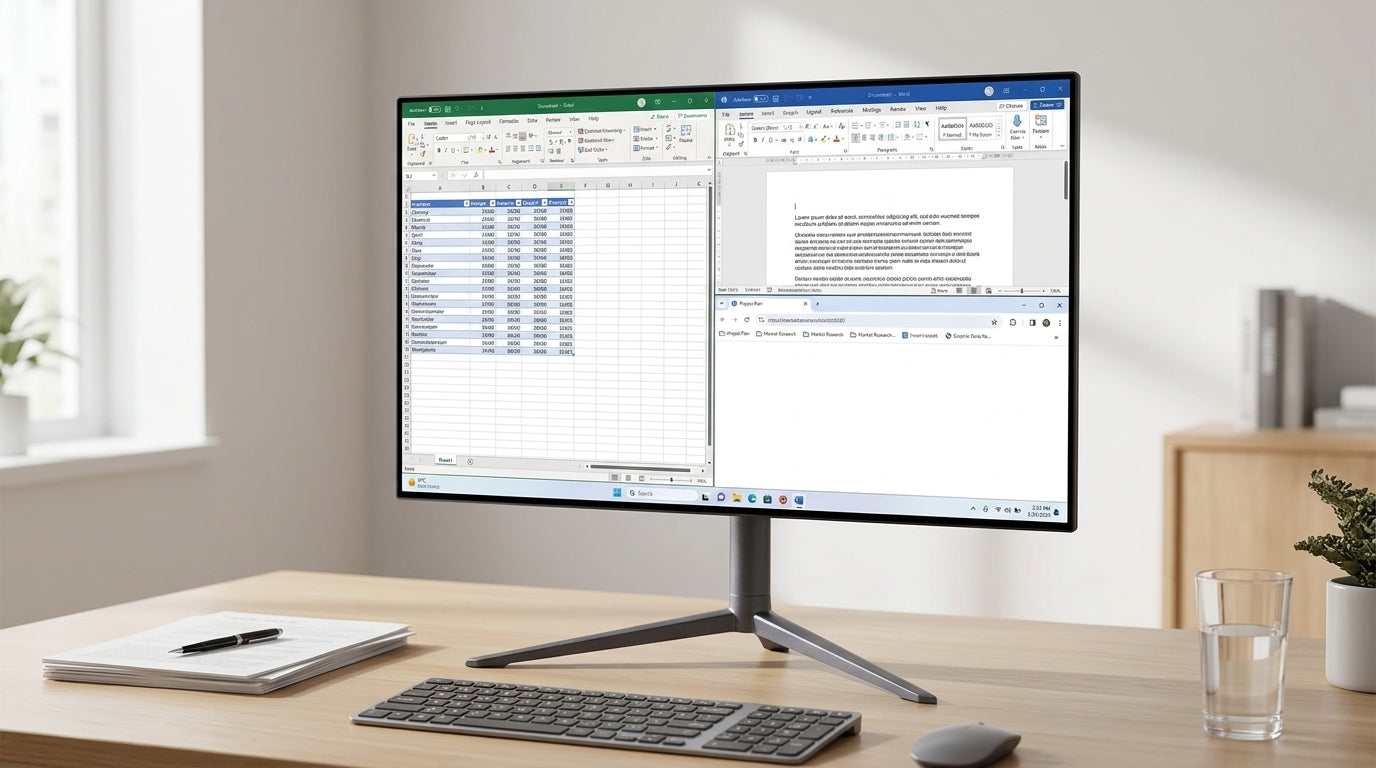
For spreadsheets, coding, writing, and long reading sessions, sharper text usually matters more than extreme refresh. A 27-inch 4K panel typically gives you denser text than 27-inch 1440p, while 32-inch 4K can feel easier to scale for larger desktop windows if your desk has room.
A 27-inch 1440p display can still be a strong middle ground. It is often the simpler choice when you want a monitor that feels sharp enough for work without pushing your GPU as hard as 4K. If you are unsure about the 2K label, the short explainer on what 1440p means on monitors clears up the naming.
Refresh Rate and Motion Comfort
For office use, around 100Hz to 120Hz already makes scrolling and cursor movement feel smoother than basic 60Hz. For gaming, 144Hz to 180Hz and above matters more, especially if you play fast action or competitive titles.
That does not mean the highest number is always the right buy. If you mostly use the screen for work and only game casually, a huge jump in refresh may not change your daily experience as much as better text clarity or a better stand. For buyers who are sensitive to motion comfort, KTC's refresh-rate guidance is a practical reference point.
Color and Panel Behavior
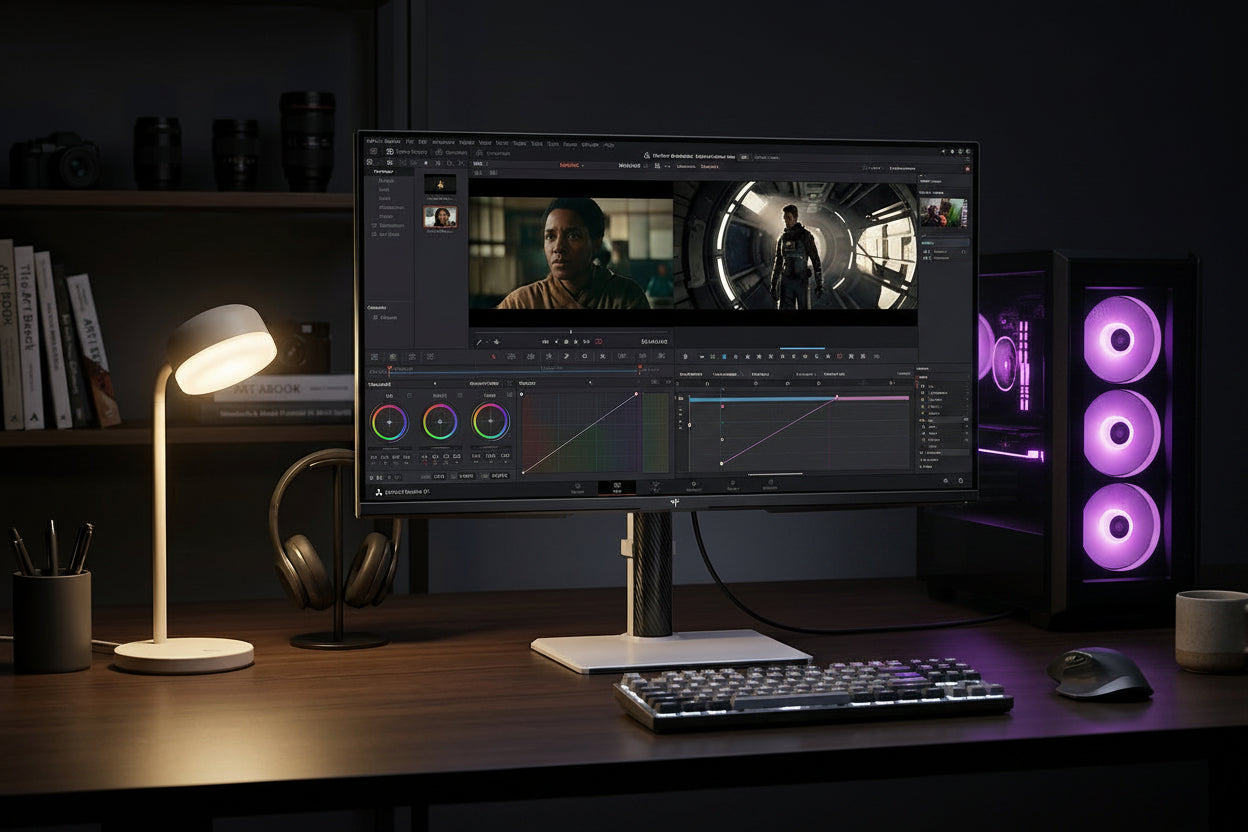
Color coverage can help if you edit photos, make content, or want a more consistent-looking image, but it is not the same thing as guaranteed color accuracy. Panel type also changes the feel of the desk. IPS-style panels usually suit mixed-use work better because they tend to look stable from normal viewing angles, while VA and Mini-LED options can shift the contrast and gaming experience.
HDR is another feature that sounds simple but needs context. It is most useful when the monitor, source device, and content chain all support it well. On a hybrid desk, HDR should be treated as a bonus, not the main reason to buy.
Ports, KVM, and USB-C
USB-C matters most when one cable needs to carry display and charging on a laptop desk. The USB Power Delivery specification overview makes the basic rule clear: for a single-cable laptop setup to feel genuinely useful, the monitor should ideally provide roughly 65W to 90W of power delivery.
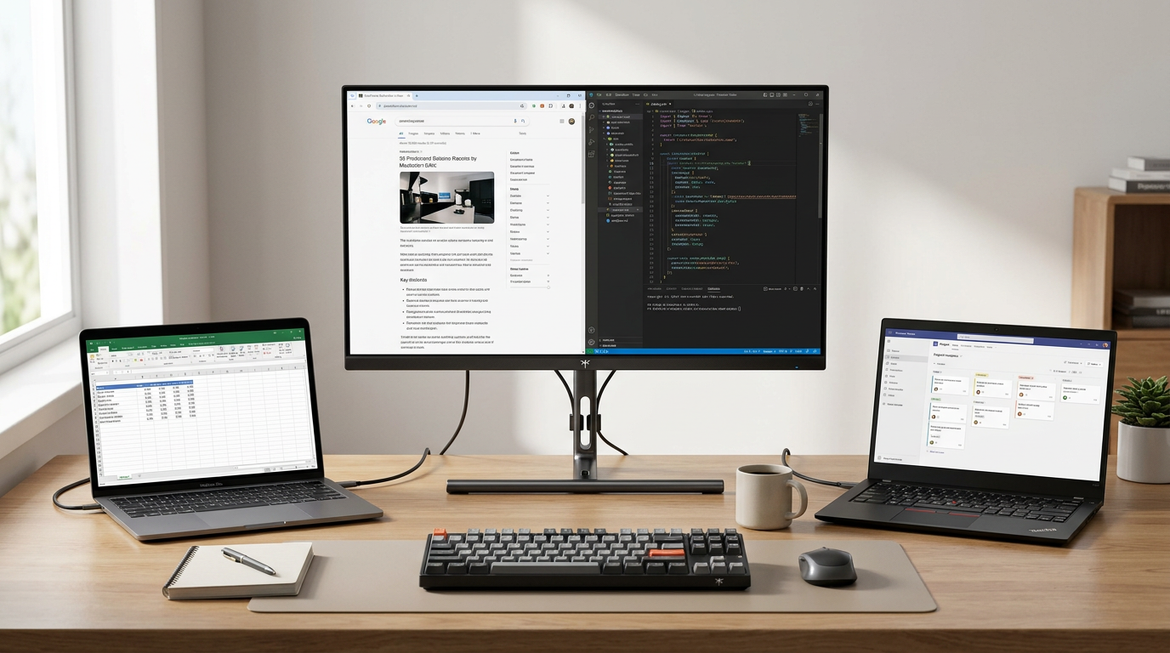
KVM helps when you want one keyboard and mouse set to follow multiple devices. It reduces desk clutter, but it does not fix every setup problem. If you only switch inputs occasionally, dual HDMI or DisplayPort inputs may be enough. If you swap between Mac and PC often, USB-C plus KVM becomes much more valuable.

The practical takeaway is simple: do not let a strong gaming spec hide weak desk ergonomics. A monitor with good ports, a usable stand, and clean switching often feels better than a faster model that is awkward to live with every day.
Work-First Versus Game-First Choices
Use this split if you want one monitor but know which side of the desk matters more. The best monitor for work and gaming changes once you decide whether your monitor should lean toward productivity or motion smoothness.
| Buyer Priority | Best Spec Profile | Best Fit | Watch For |
|---|---|---|---|
| Work-first hybrid | 27-inch 4K or 32-inch 4K, with USB-C and ergonomic stand support | Long document work, spreadsheets, calls, and occasional gaming | Scaling comfort, desk depth, and whether your device can actually drive 4K well |
| Balanced hybrid | 27-inch 4K 160Hz or 27-inch 1440p 180Hz to 200Hz | One monitor that feels sharp for work and still fluid in games | Whether you value desktop sharpness or gaming value more |
| Game-first hybrid | 27-inch 1440p 200Hz to 240Hz, or higher if you really need it | Fast-paced games, esports, and more motion-focused use | Text density and whether the work side starts to feel like a compromise |
A work-first buyer usually gets more value from a 4K-leaning monitor because text clarity and workspace density matter more than extra motion speed. A game-first buyer usually gets more value from a 1440p high-refresh screen because the smoother feel is easier to notice in play than the jump from 1440p to 4K at the desktop.
The balanced middle is the most common hybrid compromise. That is where a 27-inch 4K 160Hz option starts to make sense, especially if you want one screen for work by day and gaming at night. If your desk is more game-first, the 2K monitor options can be a better value path.
The Best Fit for Mixed Use on This Desk
For a buyer who wants one screen that still feels like a real gaming monitor, the featured 27-inch 4K 160Hz option fits the hybrid brief well. Its 27-inch 4K Fast IPS design supports sharp work use, while the 160Hz mode keeps motion smooth enough for evening gaming. The 90W USB-C port also makes it easier to build a laptop-plus-desktop desk without a pile of adapters.
That said, it is not the right answer for every buyer. If you care more about ultra-high refresh than desktop sharpness, a 1440p gaming-first monitor may be the better value. If you need a more office-focused setup, a home office monitor may be the more sensible path.
This is also where the difference between a good monitor and a good hybrid monitor shows up. A monitor can look strong on paper, but if it does not match your laptop, GPU, or console limits, you will not use the top spec every day. The H27P6 is a strong fit when you want one display that stays practical for work and still gives you real gaming headroom.
Mac and PC Switching Without Friction
If you switch between Mac and PC often, treat compatibility as a separate layer from resolution. A monitor can be great at 4K and still be annoying if scaling, charging, or input routing does not match how you work.
- Pick your main device first. If your MacBook is the daily machine, check USB-C video support and charging behavior before you obsess over refresh rate.
- Confirm the connection path. The 2026 hybrid desk setup guide is a helpful reference if you want to reduce cable clutter and source-switching friction.
- Decide whether you need KVM or just input switching. KVM helps when keyboard and mouse should follow the source. If you only change video inputs, dual inputs may be enough.
- Check Mac scaling behavior. Apple notes that changing display resolution on Mac often means using scaled settings on a 4K display so text stays comfortable.
- Verify the cable and dock chain. A good port on the monitor cannot fix a weak cable or a dock that does not pass video correctly.
For desks that also handle video calls or streaming, the article on one monitor for calls and streaming is worth a look, especially if you want to know when KVM or USB-C actually reduces friction.
A useful rule of thumb: if your switching pain is mostly device control, KVM helps. If your pain is charging and peripheral routing, USB-C and dock behavior matter more. If both issues show up, look for a monitor that supports both cleanly instead of trying to fix the desk later.
Choose the Right Monitor Before You Buy
Before you buy, check the basics in this order: resolution, refresh rate, USB-C power delivery, stand ergonomics, and device compatibility. Then ask one final question, which side of the desk is more important most days? If the answer is work, lean sharper. If the answer is gaming, lean faster. If you want the middle path, compare the monitor against your actual laptop, GPU, and console limits before you hit checkout.
FAQs
What Matters More for Hybrid Work and Gaming, 4K or 1440P?
4K usually gives you sharper text and more desktop space, which helps for work. 1440p often feels like the easier value choice for gaming because it is lighter on the GPU and still looks sharp enough on a 27-inch desk setup. The better answer depends on whether work or play wins more hours.
Can One Monitor With KVM Replace a Docking Station?
Not fully. KVM can reduce keyboard and mouse swapping, but a dock still matters if you need more ports, more charging flexibility, or a broader laptop hub. For a simple laptop-plus-monitor desk, KVM can be enough. For heavier workstation use, a dock still adds value.
How Important Is Refresh Rate for Office Work?
Higher refresh rate can make scrolling and pointer movement feel smoother, which is nice on a daily desk. Still, most office comfort comes from text clarity, screen size, and ergonomics. A good stand and a readable panel usually matter more than chasing the highest refresh number.
What Should Mac Users Check Before Buying a Hybrid Monitor?
Mac users should verify USB-C video support, charging wattage, and how the display scales in macOS. On a 4K monitor, scaled resolution is often part of the normal setup. Also check whether the stand or VESA support fits the way you place your laptop and monitor together.
Can a Gaming Monitor Also Be Good for Spreadsheets and Documents?
Yes, if it has enough text clarity, a decent stand, and ports that match your desk. The main catch is that gaming monitors vary a lot in resolution and panel behavior. A gaming model can work very well for office tasks, but it should be checked against your work habits instead of assumed to fit.
Is a Monitor With USB-C Always Better for a Hybrid Desk?
No. USB-C is most useful when you want one cable for display and charging. If you use a desktop most of the time, or if your laptop already has a dock you like, USB-C may be convenient rather than essential. It is a strong feature, not a universal requirement.