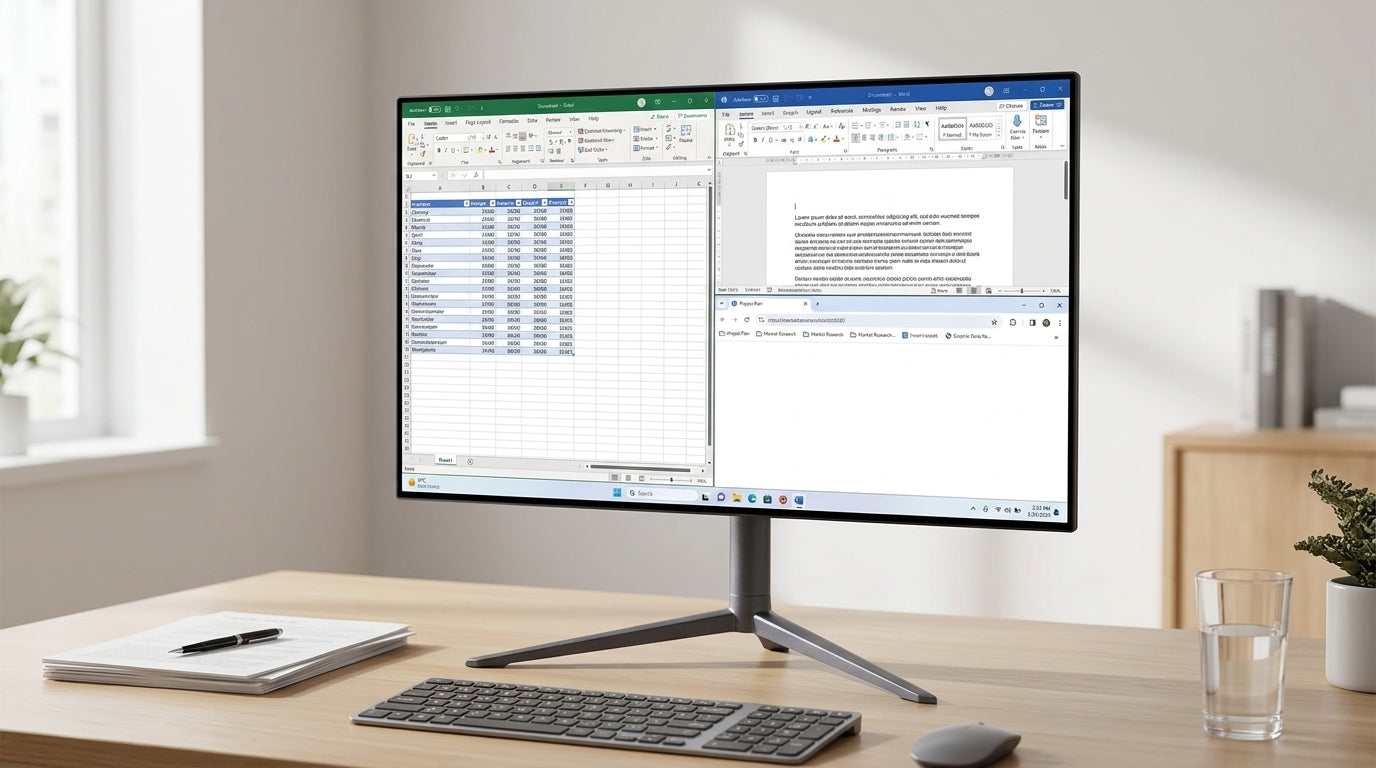
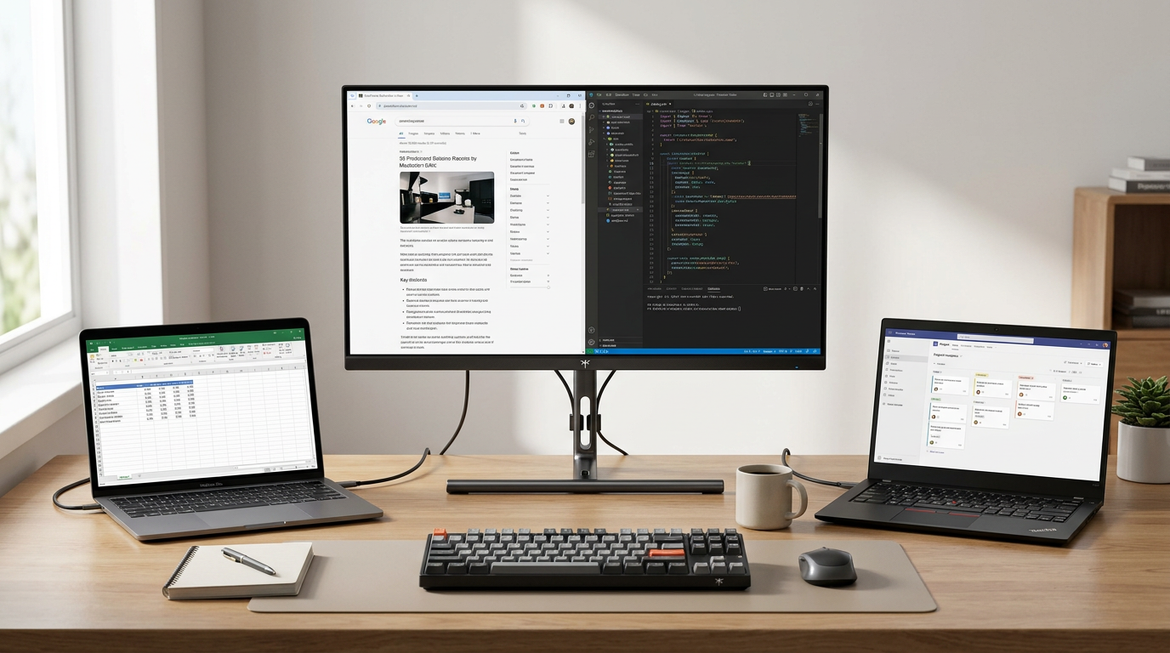
The best monitor for coding prioritizes pixel density above 160 PPI for crisp text in your IDE, a pivot-capable stand for comfortable vertical use, and hardware-level eye comfort features such as low blue light and flicker-free operation. For most developers on Windows, a 27-inch 4K IPS panel hits the practical sweet spot; macOS users often need 27-inch 5K to achieve native Retina scaling without blur. Refresh rate matters less than these factors unless you also game between coding sessions.

Resolution and Text Clarity: Why PPI Matters for Code
Pixel density, measured in pixels per inch (PPI), determines how sharp individual characters and syntax colors appear during long coding sessions. Higher PPI reduces the stair-stepping on diagonal lines and makes small fonts easier to read without zooming. For Windows users relying on ClearType font smoothing, 27-inch 4K monitors deliver roughly 163 PPI, which most developers find ideal for 8-hour sessions. macOS users benefit from 5K panels on the same size, reaching about 218 PPI to enable clean integer scaling that matches Apple's Retina standard and eliminates text fringing.
Subpixel layout also affects clarity. Standard RGB arrangements work best with development tools like VS Code or IntelliJ because they align with how ClearType and Quartz render fonts. BGR layouts, common on some older panels, can introduce color fringing around code elements that Electron-based editors do not fully compensate for. As explained in technical analyses of display subpixel rendering, RGB remains the safer choice for programmers who spend their day reading syntax-highlighted text.
What Subpixel Layout Is and Why RGB and RGBW Panels Look Different and Why Some Monitors Make Syntax Highlighting Look Washed Out or Hard to Tell Apart explore these rendering details in depth.
27-inch models generally outperform 32-inch ones for text work because the higher PPI on the smaller panel keeps everything legible from a normal viewing distance without forcing you to sit farther back. 32-inch 4K drops to around 138 PPI, which can make fine code comments feel slightly softer unless you increase scaling and lose desktop real estate.
This heatmap chart clarifies the practical fit across common coding scenarios and monitor sizes.
Coding Monitor Fit by Size, Resolution, and Use Mode
A quick decision aid for choosing a coding monitor: higher pixel density matters more than refresh rate for text clarity, 27-inch is usually the safest vertical fit, and 32-inch vertical setups can raise neck-strain risk.
View chart data
| Scenario | 27in 4K | 27in 5K | 32in 4K | 32in 5K |
|---|---|---|---|---|
| Landscape coding | 3.0 | 3.0 | 2.0 | 2.0 |
| Vertical coding | 3.0 | 3.0 | 1.0 | 1.0 |
The Vertical Advantage: Maximizing Lines of Code without Neck Strain
Rotating a monitor to portrait orientation lets many developers see over 100 lines of code or documentation at once, roughly doubling the visible context compared with landscape mode. This helps when reviewing long functions, comparing diffs, or reading API documentation alongside your editor. The gain depends on your font size and IDE layout, so test your typical workflow before committing to a vertical-first setup.
Ergonomics become the limiting factor. OSHA guidelines recommend keeping the top of the screen at or slightly below eye level with a 15- to 20-degree downward viewing angle. A 27-inch monitor in portrait usually fits within this zone for most people at standard desk heights. 32-inch models in portrait often force you to look upward at the top edge unless you mount them lower with a monitor arm, increasing the risk of neck extension over time.
Panel type matters more in vertical orientation. IPS panels maintain consistent color and contrast from edge to edge, while VA panels can show gamma shift that washes out syntax colors at the top or bottom of tall code windows. For programmers who rely on color-coded themes, IPS is the safer default.
Most modern monitors with full ergonomic stands include a factory pivot, but a VESA-compatible arm gives more precise height and depth control. If your current desk setup already causes shoulder tension, adding an arm often delivers more immediate relief than upgrading the panel itself.
See our guides on Vertical vs. Horizontal: How to Build the Ultimate Dual Monitor Productivity Setup and Home Office Setup Guide: How to Choose the Right Ergonomic Monitor for practical layout examples.
Eye Comfort for Developers: Beyond Software Blue Light Filters
Computer Vision Syndrome, also called digital eye strain, includes symptoms such as dry eyes, headaches, and blurred vision after prolonged screen time. The American Optometric Association notes that these issues arise from reduced blink rate, improper viewing distance, and glare rather than any single cause. Hardware features can support comfort but do not replace the 20-20-20 rule or regular breaks.
Hardware low blue light shifts the backlight spectrum toward safer wavelengths without applying a heavy yellow tint that distorts syntax colors. This approach preserves accurate code highlighting better than software filters that simply overlay an orange layer. TÜV Rheinland Eye Comfort certification verifies that a display meets defined limits for blue light reduction, flicker elimination, and reflection control, providing a quick way to compare spec sheets.
Flicker-free technology, often implemented through DC dimming, prevents invisible backlight pulsing that can trigger headaches during long debugging sessions. Matte anti-glare coatings further reduce reflections from office lights or windows, which is especially useful in bright shared workspaces.
Our related articles cover these topics in greater detail: The Secret Productivity Issue: How to Remedy Digital Eye Strain and The Complete Guide to Finding the Best Monitor for Productivity & a Healthier Workspace.
Choosing Your Spec: How to Balance Resolution, Refresh Rate, and Budget
Match your primary operating system first. Windows developers usually achieve excellent text clarity with a 27-inch 4K IPS monitor that offers hardware blue light filtering and at least basic height adjustment. The KTC H27P27 provides exactly this combination at a competitive price, making it a practical starting point for most coding setups.
Mac users benefit from the higher native density of a 27-inch 5K panel. The KTC H27P3 delivers 5120×2880 resolution with strong color accuracy and USB-C connectivity that can often charge a MacBook while displaying a crisp, single-cable desktop.
Developers who switch between coding and light gaming may prefer a dual-mode 4K/1080p high-refresh model. The KTC H27P6 lets you run 4K at 160 Hz for sharp productivity work or drop to 1080p at 320 Hz for smoother scrolling and casual play, all while retaining full ergonomic adjustment including pivot.
If your budget is tighter and you mainly need vertical flexibility for code review, the KTC H27E6 offers 1440p at up to 300 Hz with a full ergonomic stand that pivots easily. While its lower pixel density makes it less ideal for very small fonts, many programmers find it perfectly usable with moderate scaling and good lighting.
Avoid 32-inch vertical use unless you have a high-quality monitor arm and can keep the entire screen within your neutral gaze zone. VA panels are generally not recommended for portrait coding because of the viewing-angle limitations mentioned earlier. Refresh rate above 120 Hz can reduce perceived motion blur when scrolling long files, but it rarely justifies sacrificing PPI or ergonomics in a pure coding purchase.

Frequently Asked Questions
Does higher PPI really improve coding productivity?
Yes, in practice. Moving from 109 PPI (typical 27-inch 1440p) to 163 PPI (27-inch 4K) reduces the need to zoom or squint at small UI elements and comments. The improvement is most noticeable during 6- to 10-hour sessions or when comparing multiple files side-by-side. Gains diminish once you reach Retina-level density on macOS, so 5K is usually sufficient rather than strictly better.
Is portrait mode worth the desk space for programmers?
For many backend, systems, and full-stack developers it is. Portrait orientation commonly doubles the number of visible code lines, which speeds up reading documentation, logs, and long methods. The trade-off is reduced horizontal real estate for browser tabs or design tools. A dual-monitor setup with one screen in portrait often solves both needs without forcing a single-monitor compromise.
Should I choose IPS or VA for a coding monitor?
IPS is the clearer choice for vertical use. VA panels deliver higher contrast in dark themes but suffer from color shift at the extreme vertical angles created by portrait orientation. This shift can make syntax colors at the top or bottom of the screen look faded, which defeats the purpose of color-coded code. IPS maintains more consistent appearance across the tall canvas.
Do hardware blue light filters actually reduce eye strain?
They support comfort by reducing the amount of high-energy blue light reaching your eyes without the strong color distortion caused by software filters. Combined with flicker-free backlighting and proper ergonomics, these features help many developers report less fatigue after full workdays. They do not replace the need for regular screen breaks.
Is 4K overkill for coding on Windows?
Not for most developers who work with small fonts or multiple IDE panels. 27-inch 4K at 150% scaling provides sharp text and enough desktop space for split views. 1440p can feel adequate if you use larger fonts and only need one main window, but many programmers who switch to 4K report they do not want to go back.
What refresh rate is useful for coding rather than gaming?
120 Hz or higher noticeably smooths rapid scrolling through long files or logs, which can reduce the subtle visual tracking effort your eyes make. Above 144 Hz the benefit for pure coding becomes smaller for most people. If you also play games, a 160 Hz or 300 Hz model gives headroom without hurting text clarity when set to 4K or 1440p.
Can a 32-inch monitor work well in vertical orientation?
It can with an adjustable arm that keeps the top of the screen below eye level, but it is not the first choice. The taller physical height often forces neck extension for average desk heights, and the lower PPI compared with a 27-inch 4K model can make text feel less crisp. Most developers find 27-inch a more comfortable and practical vertical size.