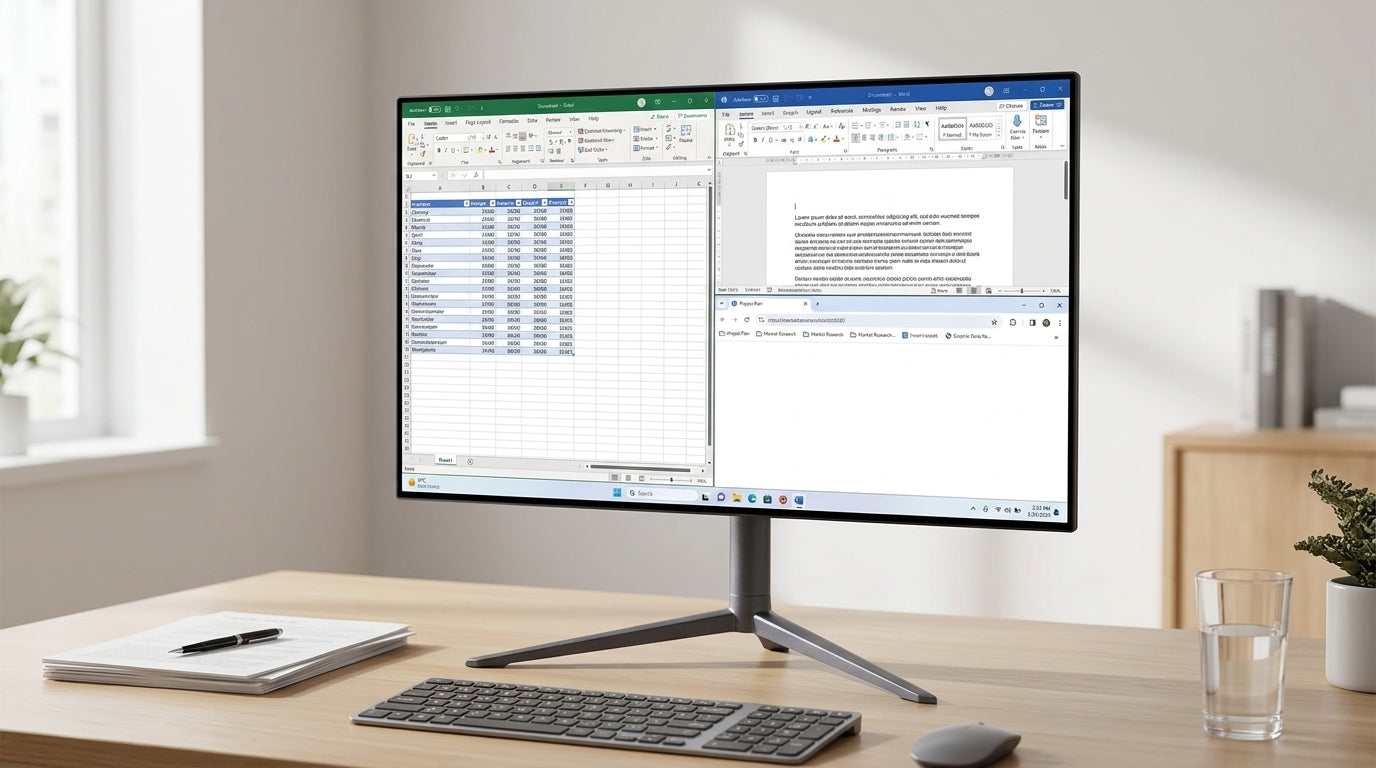
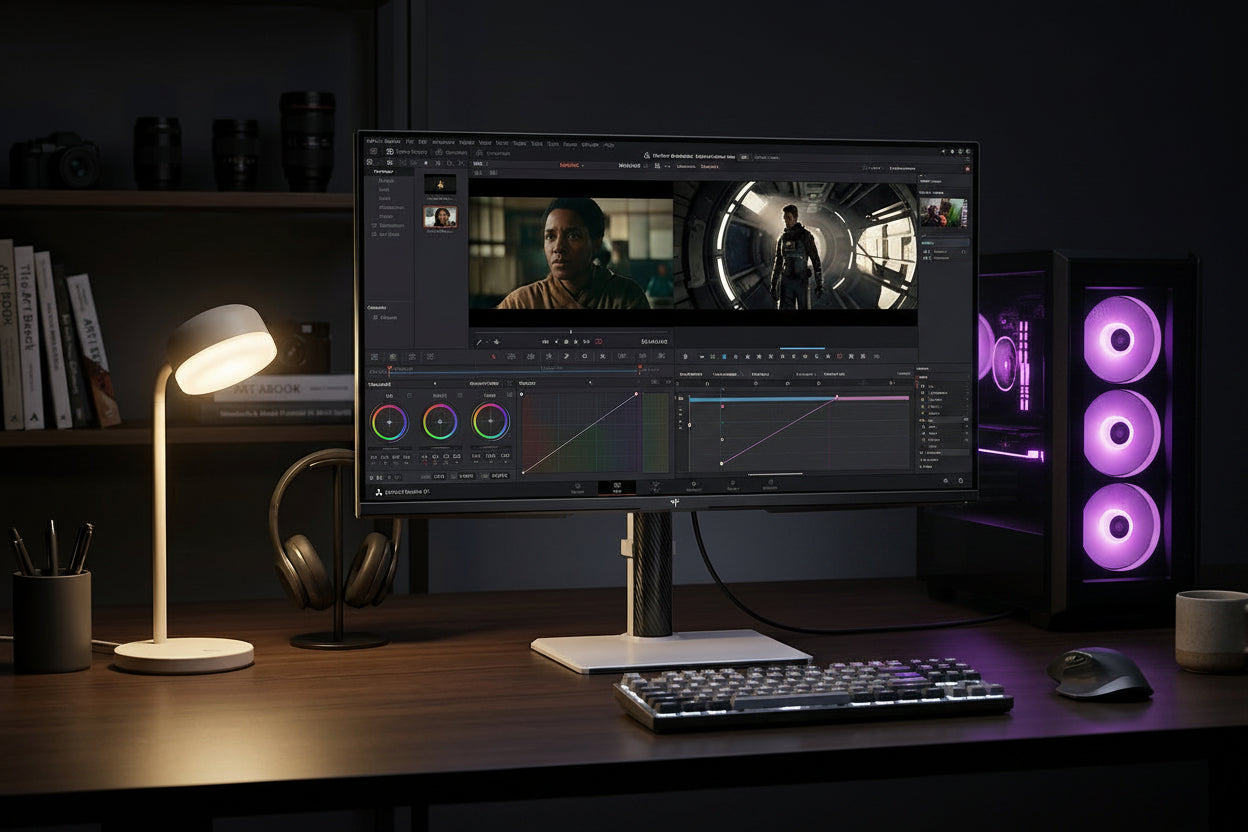
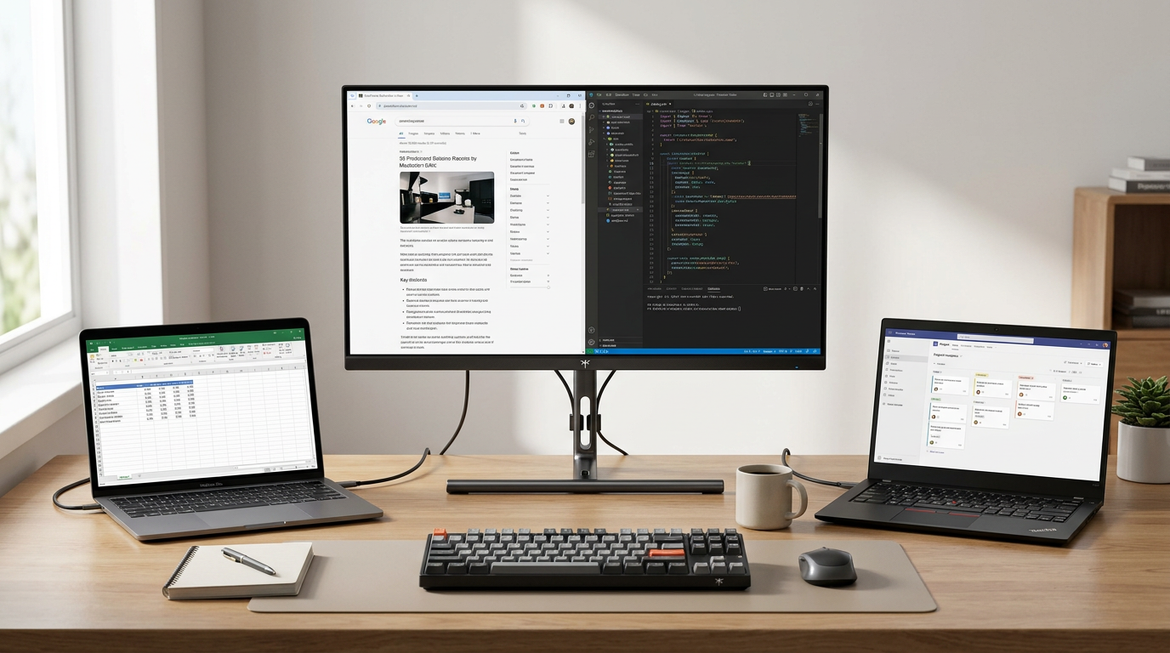
A shared monitor can turn a cable-heavy desk into a clean, high-performance station when the display acts as the central hub for your PS5, Xbox Series X or S, and gaming PC. The key is choosing a monitor with true HDMI 2.1 ports and practical switching tools so every device keeps its full feature set without constant cable swaps.

Why Sharing One Monitor Is the Ultimate Multi-Platform Setup
One high-quality display replaces three separate screens and frees desk space while concentrating performance where it matters most. A single flagship-spec panel often costs less per pixel than buying separate 4K displays for each platform, and modern monitors now bundle video, USB peripherals, and laptop charging in one unit. The real advantage appears when the monitor handles the heavy lifting so you spend less time managing inputs and more time playing.
Core Hardware: Why HDMI 2.1 and VRR Are Non-Negotiable
HDMI 2.1 supplies the 48 Gbps bandwidth required for 4K resolution at 120 Hz on both PlayStation 5 and Xbox Series X. Older ports often cap performance at 60 Hz or force lower resolutions, which defeats the purpose of next-gen consoles. Variable Refresh Rate (VRR) and Auto Low Latency Mode (ALLM) further reduce tearing and automatically switch the display to its fastest response when a console is detected.
This chart shows the practical HDMI threshold for console gaming: HDMI 2.1’s 48 Gbps class is the safe target if you want 4K120, VRR, and ALLM on PS5, Xbox Series X, or a high-end PC. HDMI 2.0 and older ports are typically enough for 4K60, but they usually leave you short of the full-speed console feature set.
HDMI Bandwidth vs Console Gaming Capability
Use this chart to check whether a monitor’s HDMI port is wide enough for 4K120, VRR, and ALLM on current consoles. HDMI 2.1’s 48 Gbps class is the safe target for full-speed console gaming; HDMI 2.0 and older ports are typically enough for 4K60, but not the same feature set or headroom.
View chart data
| Scenario | HDMI 1.4 | HDMI 2.0 | HDMI 2.1 |
|---|---|---|---|
| Bandwidth (Gbps) | 10.0 | 18.0 | 48.0 |
| 4K120 Ceiling | 0.0 | 1.0 | 2.0 |
| VRR/ALLM Support | 0.0 | 1.0 | 2.0 |
Connecting Your PS5, Xbox, and PC: A Device-by-Device Guide
On the PS5, enable 1440p output and VRR through the system settings once the monitor confirms HDMI 2.1 support. The Xbox Series X benefits from the “Allow 4K” setting when paired with many 1440p monitors; this trick often unlocks HDR that a native 1440p signal would miss. A gaming PC gains maximum refresh rates through DisplayPort 1.4, reaching up to 320 Hz on certain dual-mode panels while maintaining G-Sync or FreeSync compatibility.
The Hub Logic: Built-in KVM vs. External Switches
Built-in KVM switches work best when reserved for the two devices that need keyboard and mouse control, typically the PC and a work laptop. Connect consoles directly via HDMI 2.1 to preserve signal integrity and avoid handshake issues common with external 3-port switches. USB-C Power Delivery up to 90 W further simplifies laptop connections by carrying video, data, and charging through a single cable.
Managing the 'Toggle Tax': Seamless Mode Switching
Mini-LED panels deliver strong HDR contrast, yet they often require manual Local Dimming adjustments when switching between SDR work and HDR games. Mapping the monitor’s OSD joystick to quick shortcuts for picture modes or dimming zones reduces friction. Many users find that per-input memory for these settings is limited, so plan on occasional manual changes rather than expecting fully automatic behavior.
Desk Layout and Cable Management for a Triple-Threat Setup
Certified Ultra High Speed HDMI cables are mandatory to carry 4K 120 Hz without signal loss or flickering. A monitor arm that supports the weight of a 27- or 32-inch panel lets you fine-tune height and viewing angle while routing cables behind the desk. Wireless peripherals reduce desk clutter, though wired options remain useful when latency matters most during competitive sessions.
Choosing Your Setup Path: Which Monitor Hub Is Right for You?
For maximum 4K console performance, consider the KTC 27" 4K 160Hz/320Hz 90W Gaming Monitor or the KTC Mini LED 27" 4K 160Hz HDR1400 Gaming Monitor. Users who prioritize competitive PC play alongside lighter console use often prefer the KTC 27" 4K 160Hz/1ms HDR400 Gaming Monitor. If built-in smart features matter more than high refresh rates, the KTC 32" 4K Google TV Smart Monitor offers casual console support with Google TV integration.
Frequently Asked Questions
How Do I Verify That My Monitor Supports Full HDMI 2.1 Features for Consoles?
Check the port specifications listed in the manual or on the manufacturer’s site. Look for explicit mention of 48 Gbps bandwidth and confirmed support for 4K 120 Hz, VRR, and ALLM rather than relying on marketing labels alone.
Can I Use One Monitor for Both Work and Gaming Without Constant Menu Changes?
Most Mini-LED models require at least occasional manual toggles for Local Dimming when moving between SDR productivity and HDR games. Creating OSD shortcuts and testing per-input memory behavior helps minimize daily friction.
Will an External KVM Switch Work Well with PS5, Xbox, and PC Together?
External HDMI 2.1 KVM switches can introduce handshake delays, VRR flickering, or HDCP problems. Direct HDMI connections for consoles paired with the monitor’s built-in KVM for PC and laptop usually deliver more stable results.
What Cable Type Should I Buy for 4K 120 Hz Across All Three Devices?
Only Ultra High Speed HDMI cables are certified to carry the full 48 Gbps signal required for 4K 120 Hz, VRR, and HDR. Using older or uncertified cables often results in dropped features or visual artifacts.
Does a Single Monitor Really Save Desk Space Compared with Separate Displays?
Yes, provided you choose a monitor arm and route cables behind the desk. One well-positioned 27- or 32-inch panel replaces three separate screens and reduces the number of power bricks and video cables on the surface.