Higher zone counts can improve HDR control, but they also make calibration harder because the monitor no longer behaves like one uniform light source. The more independently controlled backlight regions a display has, the more carefully you need to manage blooming, dimming behavior, brightness shifts, tone tracking, and use-case-specific settings.
Is your mini-LED monitor stunning in an HDR game but inconsistent when you open spreadsheets, edit photos, or drag a white window across a dark desktop? A disciplined setup can give you cleaner highlights, steadier shadow detail, and fewer distracting halos without wasting hours chasing perfect numbers. Here is when more zones help, when they complicate calibration, and how to tune a display for gaming, productivity, and color-sensitive work.
Zone Count, Defined Simply
A dimming zone is a section of an LCD monitor’s backlight that can brighten or darken independently. On a basic LCD, the backlight behaves more like one large lamp behind the panel. On a mini-LED display, hundreds or even more than 1,000 smaller lighting regions try to match the bright and dark parts of the image.
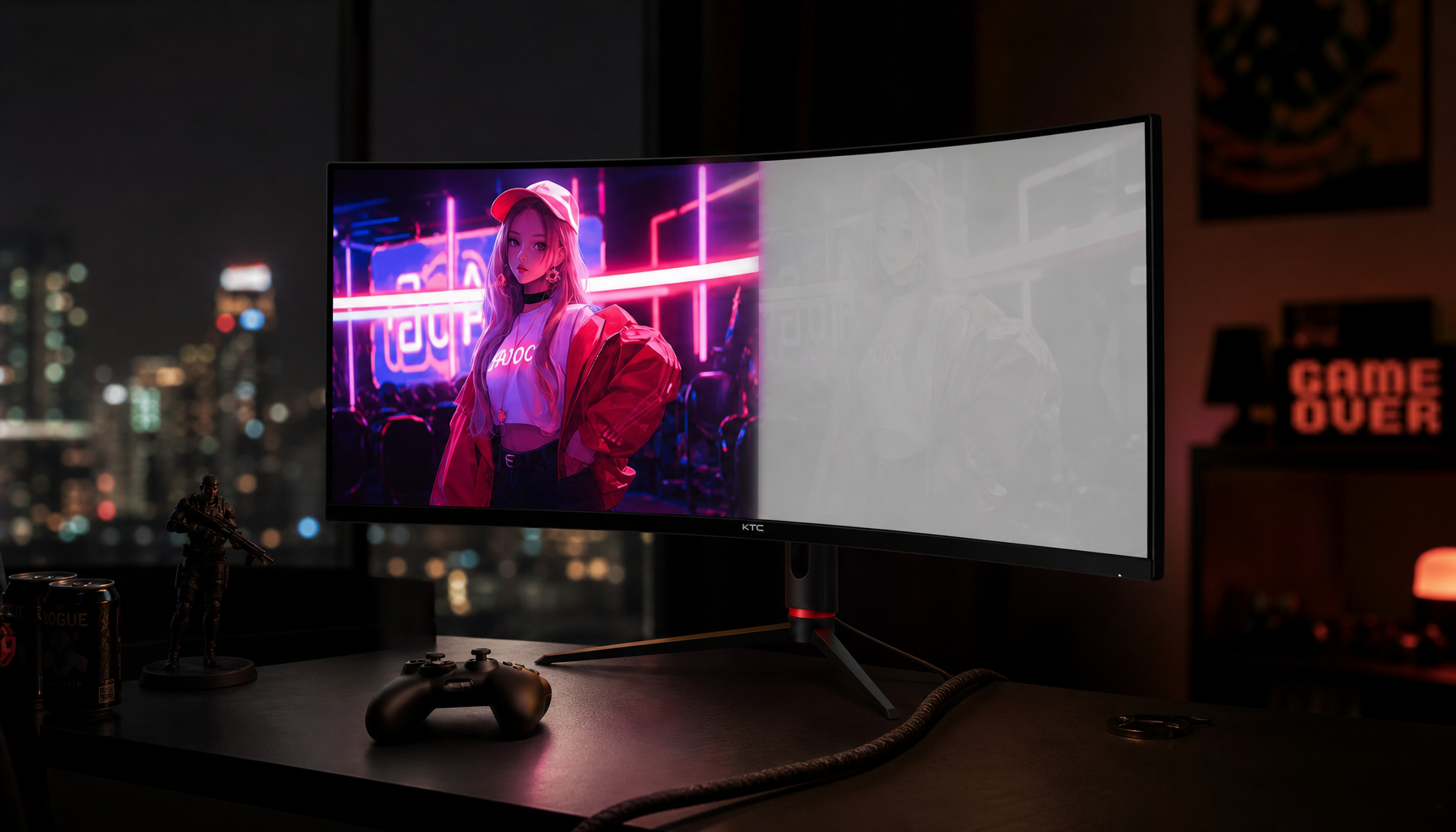
That sounds like an automatic win, and for HDR gaming it often is. A higher zone count lets a bright spell effect, muzzle flash, specular highlight, or starfield stay bright without lifting the entire black background. The tradeoff is that each zone still covers many pixels, not one pixel. When a small bright object sits inside a larger dark zone area, the monitor has to choose between preserving brightness, keeping blacks deep, or hiding the transition. That choice is where calibration complexity begins.
Traditional calibration focuses on brightness, contrast, gamma, white point, and profiling. A standard workflow aims to put the display into a known, repeatable state, then describe its behavior with a profile so color-managed apps can interpret it correctly; monitor calibration is most reliable when the display output is stable. Local dimming challenges that stability because the same gray patch can measure differently depending on what surrounds it on the screen.

Why More Zones Can Mean More Calibration Work
Zone count increases the number of backlight decisions the monitor must make every second. You are not manually calibrating each zone on a consumer monitor, but you are calibrating a display whose firmware is constantly deciding how zones interact with the image. That means the calibration target is no longer just “make white D65, gamma 2.2, and luminance comfortable.” It becomes “make those targets hold up while local dimming is active, inactive, or switching between content types.”
For example, a 27-inch mini-LED monitor with 1,152 zones has much finer backlight control than a 384-zone model. In a dark HDR scene, that usually means tighter highlights and less glow around HUD elements. But in desktop use, the same aggressive dimming may make a white cursor, subtitle, or document edge pulse slightly against a dark background. The extra zones reduce the size of each halo, yet the algorithm still has to interpret motion, contrast, and intent.

This is why zone count and calibration complexity are related, but not linearly. Doubling zone count does not simply double calibration difficulty. The real complexity comes from the combination of zone density, panel native contrast, firmware behavior, screen size, HDR tone mapping, and whether the display offers usable local-dimming modes. A well-tuned 576-zone monitor can look more consistent than a poorly tuned 1,152-zone monitor.
The Calibration Variables That Get Harder With Local Dimming
Brightness is the first variable to revisit. LCD brightness often controls backlight intensity rather than black-level detail, and many displays ship too bright for long reading sessions; LCD monitors commonly need brightness lowered for comfort and near-black visibility. With local dimming, brightness is also tied to how aggressively the backlight boosts highlights. A setting that feels cinematic in HDR may be harsh in office work.
Contrast becomes more sensitive too. On a single-zone display, you raise contrast until white detail starts clipping, then back off. On a zone-dimming monitor, contrast can look excellent in one test pattern and overcooked in another because the backlight is changing behind the LCD layer. A white logo on black, a spreadsheet on gray, and a game scene with fog may all provoke different dimming behavior.
Gamma is where many users feel the problem before they can name it. A standard 2.2 gamma target is common for general computer use, while darker viewing environments may call for different tone handling. But local dimming can crush shadow detail if the algorithm prioritizes black depth too aggressively. If a stealth game hides enemies in dark corners after calibration, the display may be technically punchy but practically worse.
White point and color profiling also get trickier. A 6500K target is a common default for general display work, and color temperature strongly affects perceived accuracy. However, if local dimming shifts luminance unevenly across test windows, colorimeter readings can vary based on patch size and background. That is why professional color work usually benefits from disabling local dimming or using a stable SDR mode.
Display Behavior |
Lower Zone Count |
Higher Zone Count |
Calibration Impact |
HDR highlights |
Larger bright areas, more visible glow |
Tighter highlight control |
More modes to test for clipping and haloing |
Dark scenes |
More raised blacks around objects |
Better black control if firmware is strong |
More risk of black crush from aggressive dimming |
Desktop consistency |
Often simpler, sometimes flatter |
Can show brightness shifts around windows |
Needs separate SDR productivity tuning |
Color work |
Easier to stabilize when dimming is off |
Better HDR preview potential |
Requires stricter mode discipline |
Gaming, Office Work, and Creative Work Need Different Answers
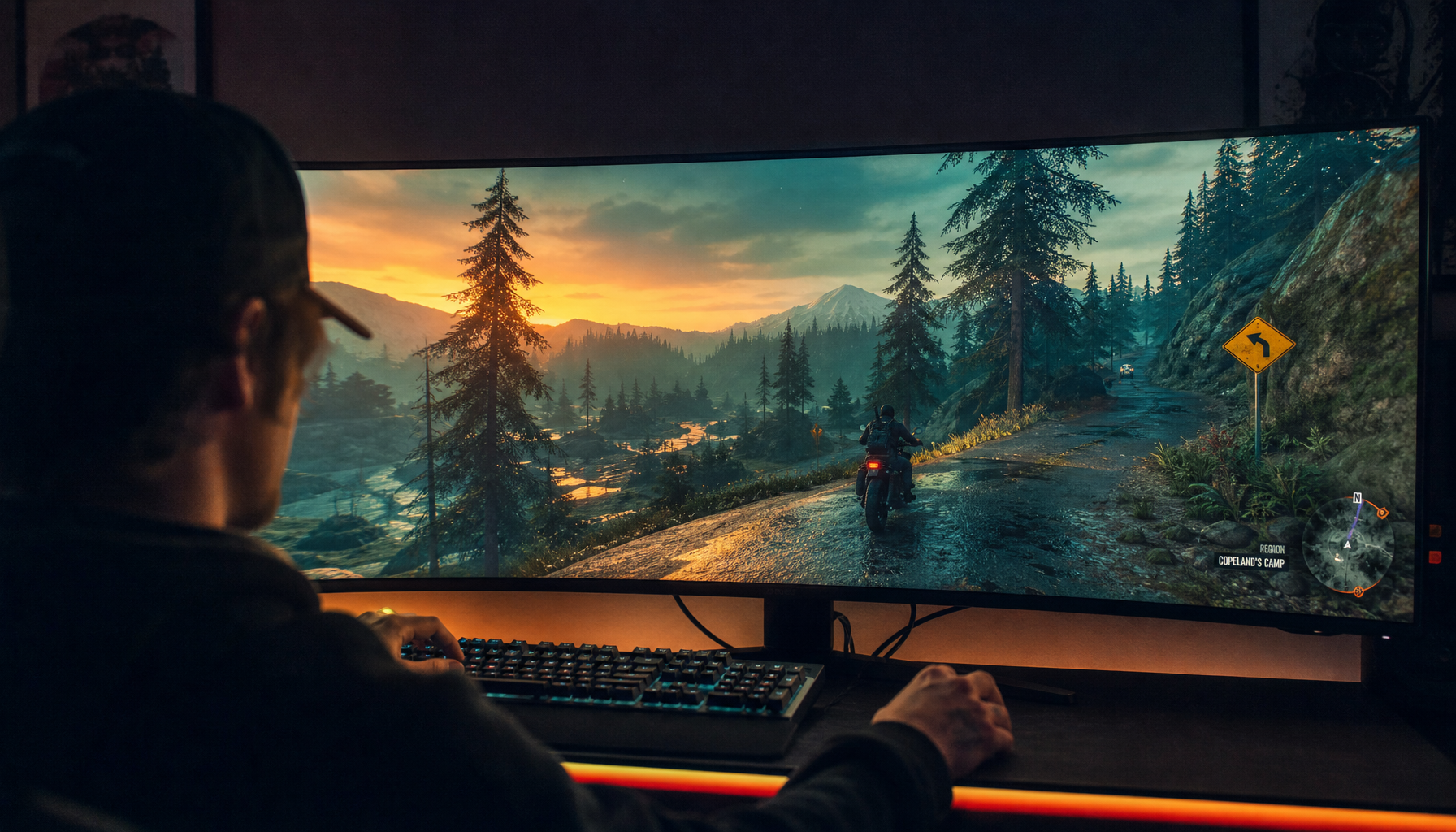
For HDR gaming, more zones are usually worth the extra calibration attention. A 27-inch or 32-inch mini-LED gaming monitor with roughly 1,000 zones can deliver more convincing contrast than a few hundred zones, especially in games with bright particles, neon signage, fire, magic effects, or night maps. The practical setup is to calibrate SDR first for comfort, then tune HDR separately in the operating system, the monitor OSD, and the game’s own HDR sliders.

For competitive gaming, the answer is less obvious. Visibility and response matter more than cinematic contrast. Many players use higher brightness, black equalizer features, adaptive sync, and fast overdrive modes. Optimized gaming settings can improve visibility and responsiveness, but aggressive overdrive can create artifacts; overdrive settings should be chosen by visible motion quality, not by the most extreme label. Local dimming should be tested in the actual games you play because HUDs, crosshairs, and dark corners expose weaknesses fast.
For office productivity, zone count is often secondary. If you work in documents, code editors, dashboards, email, and browser tabs all day, a dimming-off mode or a gentle local-dimming mode matters more than the highest zone number. The best office display feels stable. White windows should not brighten and dim as you resize them, text should remain clean, and the screen should not feel like a light box. A monitor should generally be adjusted to the room rather than forced to maximum brightness.
For photo, video, and design work, calibration discipline matters most. Hardware calibration is recommended when color errors create real costs, because a measurement device reads the screen directly instead of relying on visual judgment; hardware colorimeters are widely treated as the professional path for repeatable profiles. If your mini-LED monitor allows local dimming to be disabled in SDR, use that for color-critical editing. Save the local-dimming HDR mode for review, gaming, and media.
A Practical Setup Method That Keeps Complexity Under Control
Start by separating modes by job. Use one stable SDR mode for office and creative work, one gaming SDR mode if you need faster response or black-level aids, and one HDR mode for HDR games and movies. This prevents a common failure: trying to make one monitor preset serve spreadsheets, print edits, competitive games, and HDR cinema at the same time.
Let the monitor warm up before making judgments. Calibration guidance often recommends a warm-up period because display output changes as components reach normal operating temperature; warm-up period workflows commonly include correct display selection and measured profile creation. In real use, 20 to 30 minutes is a sensible minimum before measuring or making final visual decisions.
Set SDR brightness for the room, not for the spec sheet. A common calibration target is around 120 nits for standard LCD work, though darker rooms may need less and bright rooms may need more. If you do not own a colorimeter, use a practical comfort check: a white document should look like a well-lit page, not a lamp. If your eyes tighten after 30 minutes of reading, the display is probably too bright for productivity even if games look vivid.

Then check black and white detail with local dimming off, if possible. Adjust brightness, black level, contrast, and gamma until near-black bars remain distinguishable and white detail is not clipped. After that, enable local dimming and repeat the same visual checks. If dark bars disappear only when local dimming is enabled, the algorithm is crushing shadow detail. If white bars merge together, the HDR or contrast behavior is clipping highlights.
Finally, validate with real content. Use a dark game with HUD elements, a movie scene with subtitles, a full-screen white document, a dark code editor, and one familiar photo. If the monitor has several dimming strengths, the best mode is the one that stays convincing across those tests, not necessarily the most dramatic one.
The Pros and Cons of Chasing Higher Zone Counts
The advantage of a higher zone count is clear: better local contrast, smaller halos, stronger HDR highlights, and more controlled dark scenes. For immersive gaming and HDR movies, that can make the screen feel substantially more dimensional than a conventional edge-lit LCD.
The downside is that more zones expose the importance of processing. A high-zone monitor with slow transitions can show delayed brightening. A model tuned for showroom contrast can crush shadow detail. A display with poor SDR dimming logic can make office windows look unstable. Calibration cannot fully fix weak firmware, poor panel uniformity, or a backlight system that gives you too few mode controls.
There is also a measurement challenge. Full monitor calibration requires specialized hardware and must be done per individual unit; calibrated settings should not simply be copied from another monitor, even the same model. With mini-LED, that warning becomes more important because firmware updates, dimming mode, test-window size, and content behavior can all affect what you see.
How to Decide How Many Zones You Actually Need
If your display is mainly for office work with occasional gaming, prioritize stable SDR behavior, adjustable brightness, good text clarity, and the ability to soften or disable local dimming. A moderate zone count is fine if the monitor is comfortable and predictable.
If you split time between productivity, HDR gaming, and streaming, look for a monitor with enough zones to control halos but also strong OSD flexibility. Multi-monitor setups add another layer because each screen can differ in tint, brightness, and gamut; multi-monitor setups are powerful for gaming and streaming, but consistency requires checking each display independently.
If you do paid color work, treat local dimming as a feature to manage, not a calibration shortcut. Use a measured SDR profile for decisions, keep room lighting consistent, and recalibrate periodically. Color-sensitive workflows benefit from separate profiles per display because each panel ages and behaves differently.
FAQ
Does a higher zone count automatically mean better color accuracy?
No. Zone count affects backlight control and contrast, not the panel’s native color accuracy by itself. Color accuracy still depends on gamut, white point, gamma tracking, factory tuning, panel uniformity, calibration hardware, and profile management.
Should I calibrate with local dimming on or off?
For SDR color-critical work, calibrate with local dimming off when the monitor allows it. For HDR gaming and media, tune and validate with local dimming on because that is the mode you will actually use.
Can calibration remove blooming?
Calibration can reduce conditions that make blooming more obvious, such as excessive brightness or crushed blacks, but it cannot eliminate the physical fact that each dimming zone covers many pixels. Better zone density and better firmware reduce blooming more effectively than calibration alone.
Zone count is power; calibration is control. Buy enough zones for the HDR experience you want, then build separate, stable modes for work, gaming, and color decisions so the monitor serves the task instead of fighting it.