HDR quality changes because the service, title version, subscription tier, app, device, metadata, bitrate, and your display’s tone mapping all shape the final image before it reaches your eyes.
Does one movie look punchy and dimensional on one app, then flat or oddly dim on another, even though you did not touch your monitor? A five-minute check of the title badge, playback device, HDR mode, and display menu can usually identify whether the problem is the stream, the settings, or the screen. Here is how to separate real HDR quality from marketing labels and get the strongest image your display can deliver.
The Same Display Does Not Mean the Same HDR Pipeline
A modern HDR monitor or TV is only the last link in the chain. Before the image reaches the panel, the content may pass through a different master, compression profile, HDR format, app engine, operating system setting, HDMI path, and subscription rule. Any weak link can turn a strong display into a merely acceptable one.
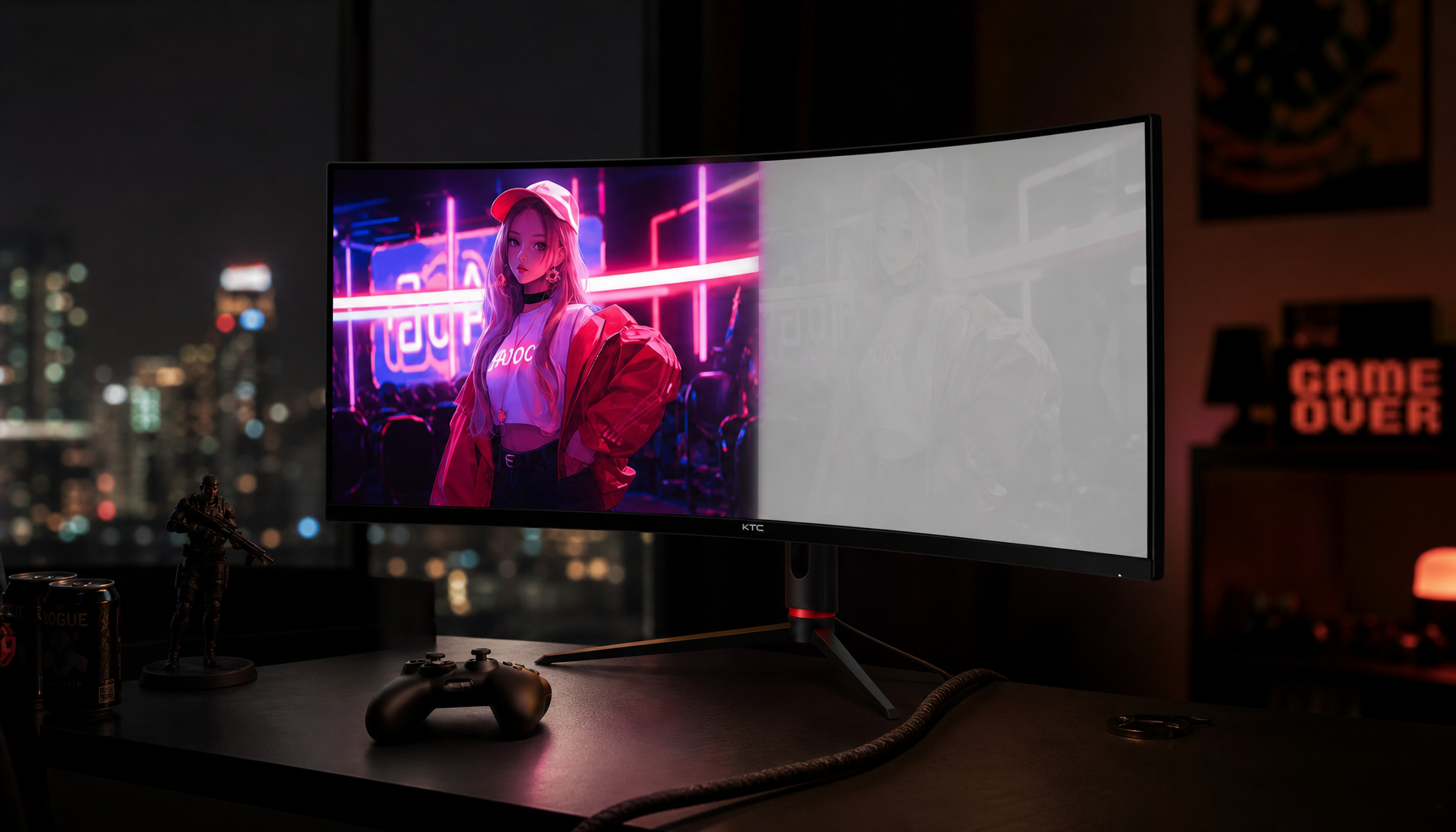
HDR itself is not a magic brightness mode. It is a video system designed to preserve brighter highlights, deeper shadows, and wider color than SDR. Setup guidance for HDR displays makes the practical test simple: real HDR should show a brighter peak white in HDR apps than in SDR apps on the same display, assuming HDR is enabled correctly in the operating system and monitor menu real HDR. If the stream never triggers the display’s HDR mode, the service may be sending SDR, the app may not support HDR on that device, or the operating system may be blocking the path.
For example, if a desktop monitor shows an HDR badge in the operating system but the monitor’s on-screen display never switches to HDR mode during playback, you are likely watching a tone-mapped or SDR presentation rather than the full HDR signal. The display is not the problem; the chain is incomplete.
Different Services May Use Different HDR Formats
HDR10, HDR10+, and other dynamic HDR formats are not interchangeable in practice. HDR10 uses static metadata, which gives the display one set of brightness and color instructions for the whole program. Dynamic HDR formats add metadata that can guide tone mapping scene by scene or shot by shot. That matters when a movie jumps from a dark room to sunlight reflecting off chrome, because the display has more specific instructions for preserving both shadow detail and highlight detail.

KTC’s HDR calibration research explains the core tension: HDR content is mastered inconsistently, with one title targeting 1,000 nits and another carrying 4,000-nit metadata or relying more heavily on device-side tone mapping HDR content. A 600-nit portable smart screen, a 1,000-nit Mini LED monitor, and an OLED TV with excellent blacks will each make different compromises when that signal exceeds their physical limits.
Dynamic formats can look more controlled in difficult scenes, especially on displays that cannot hit the mastering brightness. The tradeoff is support fragmentation. A service may offer a scene-aware HDR format on one device, HDR10 on another, and SDR in a browser. The title-page badge matters, but the active playback format matters more.
The Title Version Can Be Different Across Apps
Two services may not be streaming the exact same asset. They may use different encodes, audio tracks, subtitle files, extras, or even different source masters. That is why a purchased film linked across multiple digital libraries can look and sound slightly different depending on where it is played.
User comparisons of 4K HDR services highlight a practical issue that display enthusiasts run into often: migrated titles across linked services are not always identical, and the same film can vary in soundtrack, subtitle treatment, bonus features, and platform-specific presentation same film. That does not prove one service is always superior, but it does show that “same title” is not always “same master.”
For a simple comparison, choose one visually demanding scene with bright specular highlights and deep shadows, such as a night city shot with neon signs or a sunlit snow scene. Watch it on each service using the same display mode, same device, and same internet connection. If one version keeps texture in highlights while another turns the same area into a white patch, you are seeing differences in mastering, compression, metadata, or tone mapping.
Compression and Bitrate Still Matter
HDR needs room to breathe. Wider color, smoother gradients, and subtle shadow detail are easier to damage with aggressive compression than a bright SDR sitcom. Even when two streams both show a 4K HDR badge, the service may allocate different bitrate, use a different codec, or apply different scene-adaptive compression.
The clearest visual symptoms are banding in skies, blocky shadows, smeared film grain, and highlights that shimmer or pulse. Bit depth also matters during production and delivery. HDR production guidance stresses that higher bit depth reduces banding and improves smooth gradients, especially in skies and highlights higher bit depth. If the original production, grade, or encode loses that precision, your display cannot reconstruct it.
This is where value-oriented buying gets interesting. A premium HDR monitor can reveal better streams more clearly, but it will also expose weaker streams more harshly. On a high-contrast OLED or Mini LED display, a low-quality HDR encode may look worse than a cleaner SDR version because the flaws become more visible.
Cause |
What You See |
Practical Check |
Lower bitrate or heavier compression |
Banding, macroblocking, smeared grain |
Replay a dark scene with fog, smoke, or sky gradients |
Static metadata on a limited display |
Clipped highlights or dull midtones |
Compare the same title in HDR10 and a dynamic HDR format when available |
Different app or device support |
HDR badge missing or wrong format |
Check the playback badge and display info screen |
Poor display mode |
Washed blacks, oversaturated skin, dim highlights |
Switch from Standard or Vivid to Cinema, Filmmaker, or an accurate HDR mode |
Your Subscription Tier and Device Can Limit HDR
Some services reserve 4K, HDR, dynamic HDR, or advanced audio for higher-priced plans. Others support HDR only on selected titles, selected apps, or selected devices. A streaming stick, game console, browser, smart TV app, and desktop app may not expose the same quality options.
Consumer-facing streaming comparisons often evaluate services by design, features, content, and value, not just raw picture quality. That matters because a service with excellent HDR masters is less useful if its app on your device does not trigger HDR correctly or hides format information. A practical streaming setup should be judged by the complete experience: title availability, plan level, format badges, device compatibility, and stable playback.
The same logic appears in high-resolution audio streaming. Home theater guidance notes that service quality depends not only on the stream but also on compatibility and playback equipment playback equipment. HDR video behaves the same way. A premium stream through the wrong app can underperform a standard stream through a better-supported native TV app.
Your Display May Be Tone-Mapping Differently
Tone mapping is the process of fitting HDR content into the real brightness, black level, and color volume of your display. If a movie is mastered for 1,000 nits and your monitor can sustain far less, the display has to choose what to protect. It can preserve highlight detail and make the whole image darker, lift midtones and clip highlights, or apply a manufacturer-specific curve that looks punchy but less accurate.
This is why two HDR-capable displays can react differently to the same stream, and why the same display can react differently to two services. HDR monitor testing advice puts useful HDR performance around at least 600 nits, with 1,000 or more nits becoming especially compelling across viewing conditions useful HDR performance. Brightness alone is not enough, though. OLED gives excellent black levels and contrast, while Mini LED can often push brighter highlights but may show haloing if local dimming is weak.
Aggressive tone mapping can add impact: games, sports, and glossy films can look vivid. The tradeoff is accuracy: shadow texture, skin tones, and highlight detail may drift away from the grade. For office productivity displays that double as entertainment screens, this tradeoff is critical. You may want an accurate HDR preset for films, a lower-latency HDR game preset, and a separate SDR mode for spreadsheets, design work, and browsing.
Settings Can Make a Good Stream Look Bad
HDR is more sensitive to picture settings than SDR. Standard and Vivid modes often boost sharpness, color, and contrast in ways that fight the HDR grade. Practical TV tuning experience shows that switching away from Standard or Vivid, disabling dynamic contrast, avoiding the regular brightness slider as a fake HDR boost, and turning off energy-saving modes can immediately improve HDR consistency HDR consistency.
On monitors, the equivalent move is to select the most accurate HDR mode first, then adjust the operating system HDR calibration tool or app-level HDR controls. Do not tune the whole display around one dark episode or one overly bright demo reel. That creates a fragile setup that fails on the next service.
For a desktop workflow, keep SDR and HDR separate. Calibration community guidance is blunt about desktop HDR complexity: SDR ICC profiles and calibration curves do not reliably describe how a display behaves in HDR, and applying SDR correction in HDR can make grayscale worse desktop HDR complexity. For color-critical work, use a calibrated SDR workflow; for HDR playback, use the display’s best HDR mode and avoid carrying over SDR corrections blindly.
A Practical Diagnostic Workflow
Start by confirming the stream. The title page should show HDR, HDR10+, Ultra HD, or another supported HDR badge where the service exposes those labels. Then confirm the device. A native smart TV app may support a higher-quality format than a browser or older streaming stick. After playback begins, open the display’s info panel or picture-mode menu and verify that HDR actually engaged.
Next, check the display mode. Cinema, Filmmaker, Creator, Reference, or an accurate HDR mode is usually the best baseline. Disable energy-saving features during evaluation because they can cap brightness and make highlights look restrained. Leave the regular brightness or black-level control near default unless you are using a proper calibration pattern, because raising it can wash out dark scenes.
Then compare one scene across services. Use the same device if possible, the same internet connection, and the same display preset. Look for highlight texture, skin tone stability, black detail, banding, and motion artifacts. If one service shows an HDR badge and cleaner gradients while another looks blocky in shadows, the issue is probably stream quality or encode choice. If both look flat, the issue is more likely your display mode, operating system setting, cable path, or panel capability.
When a Better Service Will Not Fix the Image
A stronger HDR stream cannot overcome every hardware limit. A DisplayHDR 400 monitor can accept HDR, but it may lack the brightness, contrast, local dimming, and black level needed for a dramatic HDR image. That is why some HDR-compatible office monitors look like bright SDR rather than true HDR.
For a hybrid work and gaming setup, prioritize measured HDR capability over the presence of an HDR logo. A practical pro display should have meaningful peak brightness, decent sustained brightness, wide color coverage, low blooming, stable local dimming, and clean switching between SDR productivity and HDR entertainment. USB-C, high refresh rate, adaptive sync, and accurate factory calibration matter too, but they do not replace contrast and brightness.
Portable smart screens require especially realistic expectations. A compact HDR-capable panel can be excellent for previewing HDR content, console play, or travel entertainment, but battery limits and thermal design can restrict sustained brightness. In a bright room, even a technically better HDR stream may look muted unless the display can fight ambient light.
FAQ
Why does HDR look darker than SDR on some services?
HDR can look darker when the display is preserving highlight detail instead of lifting the whole image. It can also happen when the stream uses conservative tone mapping, the display is in an accurate but dim mode, energy saving is enabled, or the app is not sending the expected HDR format.
Is dynamic HDR always better than HDR10?
Dynamic HDR can provide better scene-aware guidance, but it is not automatically better on every display or app. A well-mastered HDR10 stream on a strong display can outperform a poorly implemented dynamic HDR stream on a weak app or limited panel.
Should I leave HDR on all the time on a desktop monitor?
For most productivity displays, no. SDR desktop work, web browsing, and color-managed tasks often look more predictable in SDR. Enable HDR when watching HDR content or playing HDR games, then return to SDR for normal work unless your workflow is specifically built around HDR.
The Screen-Savvy Bottom Line
The best HDR experience comes from matching three things: a high-quality stream, a supported playback path, and a display mode that respects the content. When one service looks better than another on the same screen, trust your eyes, verify the format badge, and check the chain before blaming the panel. A capable monitor is the foundation; the right service, app, and settings unlock the image you paid for.