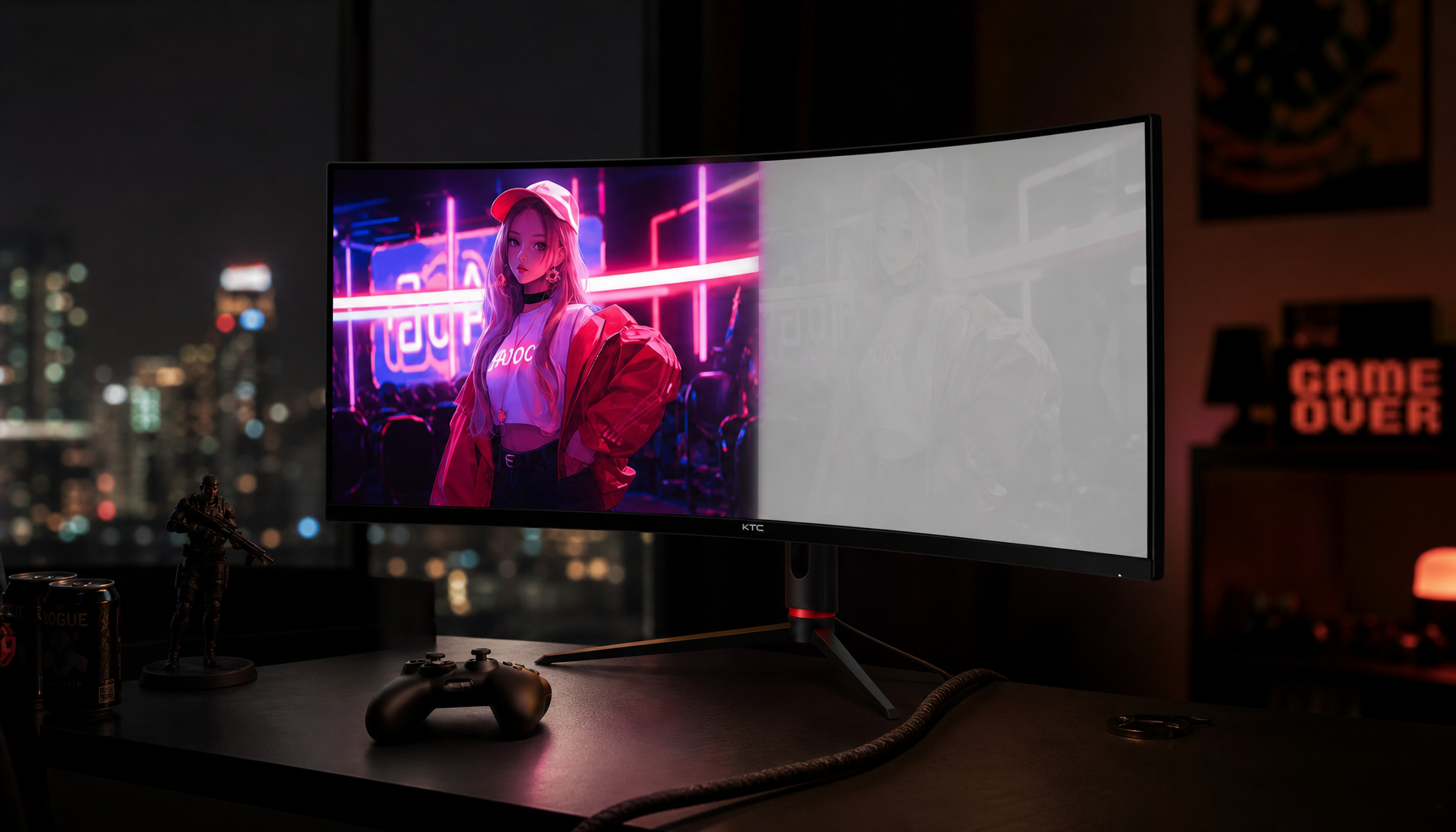
Motion Blur Reduction can make brightness look uneven because the backlight flashes in timed bursts while LCD pixels are still changing, so different screen regions may be caught at slightly different points in the refresh cycle.
Does the top of your monitor look crisp while the bottom looks dimmer, doubled, or washed out when you turn on a blur-reduction or “1ms MPRT” mode? A practical test with a locked frame rate and a moving UFO pattern can reveal within minutes whether the issue is strobe timing, frame mismatch, or normal panel limits. You’ll learn why the unevenness happens, when it is acceptable, and how to tune your monitor for sharper motion without sacrificing too much brightness or comfort.
What Motion Blur Reduction Actually Does
Motion Blur Reduction is a display mode that reduces perceived blur by flashing the backlight instead of leaving it continuously on. LCD monitors are sample-and-hold displays, meaning each frame stays visible until the next refresh; that held image smears across your vision when your eyes track fast motion. Motion blur reduction techniques such as black frame insertion, scanning backlights, and full-screen strobing add dark periods between visible frames so your eyes see a shorter flash of each image.
That short flash is the performance advantage. It is why a 144Hz or 240Hz screen with a good strobe mode can look dramatically clearer in fast side-to-side motion than the same panel running normally. But the same mechanism also creates the brightness penalty: if the backlight is only on for a fraction of each refresh, the screen emits less total light. Some implementations raise the backlight harder during the flash to compensate, but there are limits around heat, power, panel uniformity, and comfort.
In practical terms, a monitor running with MBR may feel like it lost a large chunk of its brightness headroom. Backlight strobing typically reduces brightness by about 30% to 50%, which is manageable in a dim gaming room but frustrating in a sunlit office or a room with bright overhead lighting. That global dimming is expected; uneven regional brightness is the more technical artifact.
Why Different Screen Regions Can Look Uneven
The core reason is timing. An LCD panel refreshes progressively, usually from top to bottom, while pixels do not switch instantly. The backlight strobe has to fire after the new frame has been scanned and after the pixels have settled enough to show the correct image. If the strobe fires too early, too late, or for too long, part of the screen may show a cleaner frame while another part shows leftover information from the previous frame.
This is commonly discussed as strobe crosstalk. Strobe crosstalk appears as double images, ghosting, or uneven clarity because LCD pixel transitions and backlight timing do not line up perfectly across the whole panel. The result may look like the top third is sharp, the center is best, and the bottom has a faint duplicate trail. On some monitors, the unevenness can also feel like brightness variation because the duplicate image adds or subtracts perceived luminance in moving content.

A simple example makes this easier to see. At 120Hz, each refresh lasts about 8.3 milliseconds. If the panel takes several milliseconds for certain gray-to-gray transitions and the backlight flashes before all regions have reached their final values, the top and bottom of the image are effectively being photographed at different stages of readiness. The monitor is trying to create a crisp freeze-frame, but the LCD layer is still catching up.
Strobe Timing, Pulse Width, and the Brightness Tradeoff
The monitor maker has to choose a strobe window. A shorter pulse improves motion clarity because each frame is visible for less time, but it also makes the screen dimmer. A wider pulse raises brightness, yet it increases visible persistence and can expose more pixel-transition artifacts. This is why some monitors include “clarity,” “pulse width,” or “strobe length” sliders: they let you decide whether you want maximum motion sharpness or a brighter image.
Moving Picture Response Time describes perceived motion persistence during eye-tracked motion, and lower MPRT generally means clearer motion. That is different from GtG pixel response, which measures how quickly a pixel changes from one shade to another. A display can advertise fast GtG response and still show motion blur if each frame remains visible too long.
The hard part is that lowering MPRT usually means reducing light output. A competitive player in a darker room may prefer a tight strobe pulse because tracking a fast target is easier. A productivity user switching between spreadsheets, browser windows, and games may find the same mode too dim and too flickery for long sessions. Neither choice is wrong; it is a workload decision.
Why the Center Often Looks Better Than the Top or Bottom
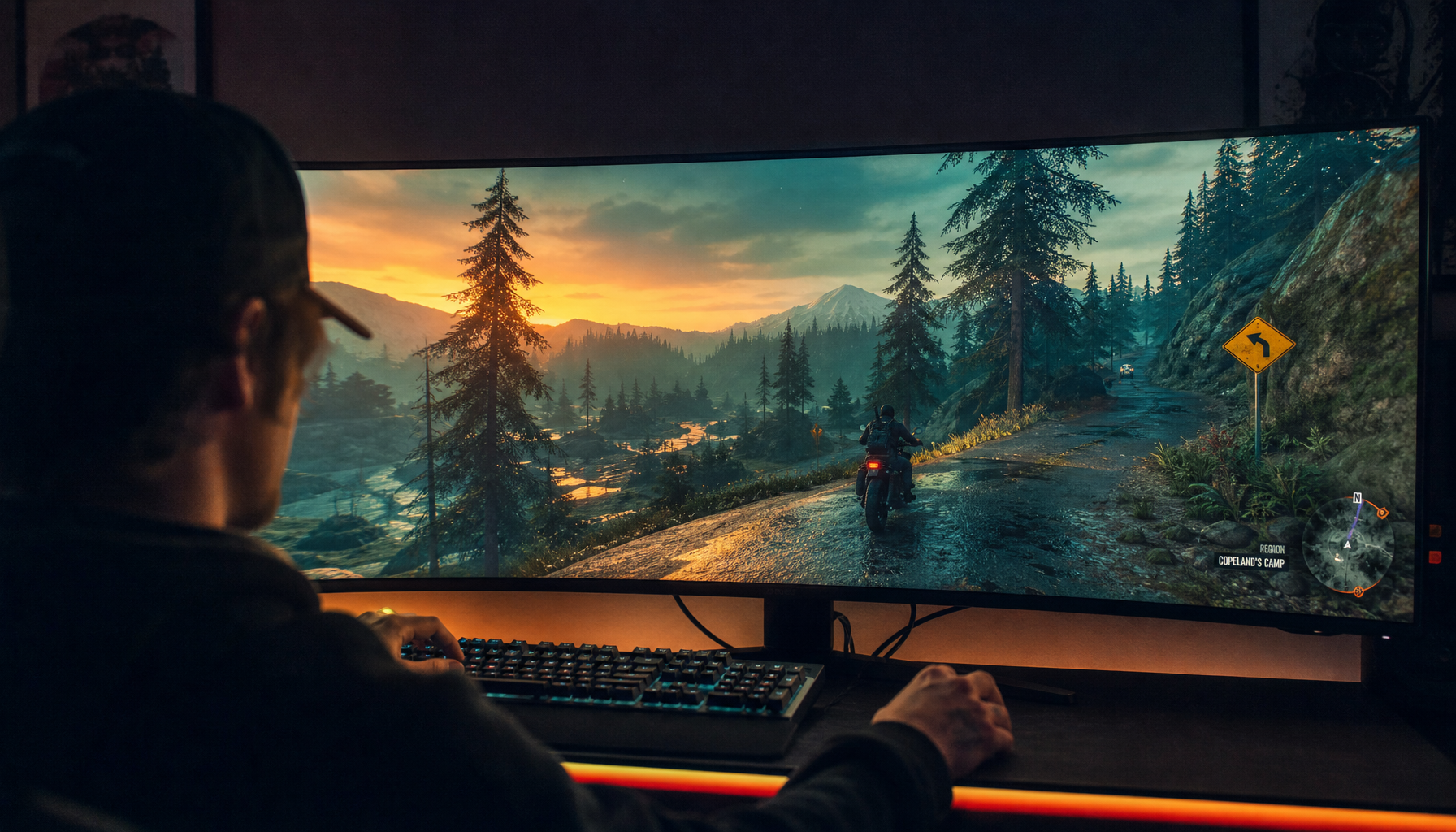
Many strobing modes are tuned to make the center of the screen look best because that is where your eyes usually focus during gameplay. The top and bottom may show more crosstalk because of the panel scan path and the delay between refresh position, pixel settling, and backlight pulse. This is especially visible in fast horizontal motion tests, racing games, side-scrollers, and first-person shooters with quick camera pans.
The effect can also vary by refresh rate. A monitor may look messy at 120Hz strobing but cleaner at 240Hz or 360Hz because the panel and firmware have more favorable timing behavior in that mode. In enthusiast discussions, some users report that specific high-refresh LCD strobe modes produce excellent center-screen clarity while still showing color trails or regional artifacts at less optimal refresh targets. That lines up with the broader technical reality: strobing quality depends on the whole chain, not just the panel’s headline refresh rate.
This is why two monitors with the same refresh rate can behave very differently. Backlight type, overdrive tuning, scan timing, firmware, panel response, and user-accessible pulse controls all matter. A value-oriented gaming monitor can offer useful MBR, but a display with stronger strobe tuning may hold clarity and brightness more consistently across the panel.

Frame Rate Mismatch Makes Unevenness Look Worse
Motion Blur Reduction works best when the game’s frame rate matches the monitor refresh and strobe rate. If you run 120Hz strobing but the game fluctuates between 87 fps and 118 fps, the monitor is still flashing at fixed intervals while the GPU is delivering frames inconsistently. That creates repeated frames, uneven pacing, and sometimes the illusion that different screen regions are changing brightness unpredictably.

Adaptive Sync is usually better when frame rates fluctuate because it matches the monitor refresh rate to the GPU output in real time. MBR is usually better when the frame rate is locked and motion clarity matters more than brightness. This is why many monitors disable Adaptive Sync when you enable blur reduction: the two modes are often solving different problems with incompatible timing methods.
For example, if your PC can hold 240 fps in a tactical shooter at 240Hz, MBR may deliver excellent target clarity. If your system swings from 70 fps to 130 fps in a cinematic game, Adaptive Sync will usually look smoother and more immersive. Forcing MBR in the second case can make the display look dimmer, less stable, and more artifact-prone.
Brightness Uniformity Is Not Always a Defect
Uneven brightness with MBR enabled is not automatically a faulty monitor. If the panel looks uniform with MBR off but uneven only during strobing, the cause is likely strobe behavior rather than a bad backlight diffuser or defective LCD layer. You are seeing a mode-specific timing artifact.
That said, you should still compare normal mode and MBR mode on static gray, white, and moving test patterns. If a corner is permanently darker on static content with all blur reduction features disabled, that points more toward ordinary backlight uniformity variation. If the brightness shifts mainly during motion or appears as bands, double images, or region-specific ghosting, strobe crosstalk is the more likely explanation.
Ambient lighting also changes your judgment. Comfortable indoor brightness is often discussed around 200 to 300 nits depending on surroundings, while office-focused eye comfort guidance may recommend matching the display to room conditions. A strobe mode that feels usable at night may feel uneven and underpowered at noon because your room is asking the monitor for more luminance than the mode can provide.
How to Reduce Uneven Brightness Without Giving Up Motion Clarity
Start by locking the frame rate to the strobe refresh rate. If the monitor is set to 144Hz MBR, cap the game near 144 fps and use a frame-time graph to confirm it is stable. If you cannot hold that target, try 120Hz or 100Hz strobing if your monitor supports it. A stable lower refresh can look cleaner than an unstable higher refresh because the backlight timing has predictable frames to work with.
Next, test the monitor’s overdrive setting while MBR is on. Overdrive that looks good in normal mode may be too aggressive or too weak in strobe mode. If you see bright inverse trails, reduce overdrive. If you see dark smearing or heavy crosstalk, try the next stronger setting. The best setting is the one that makes moving objects readable in the screen area where you actually aim or track, not the one with the most impressive label.
Then adjust pulse width or strobe intensity if available. A shorter pulse will usually improve clarity but lower brightness. A wider pulse will brighten the image but may increase blur and crosstalk. For competitive first-person shooters, the sharper setting can be worth it. For office work, browsing, video, or mixed-use sessions, normal mode or Adaptive Sync is often the better daily setting.
Finally, control the room. Reduce glare, avoid direct sunlight on the panel, and use bias lighting behind the monitor if the image feels harsh in a dark room. Display brightness should match room conditions, and sensitive users may need to evaluate not only brightness level but also flicker behavior, dimming method, and backlight spectrum. If MBR causes headaches, eye strain, or visible flicker discomfort, turn it off for long sessions.
Pros and Cons of Motion Blur Reduction
Decision Factor |
MBR On |
MBR Off |
Fast motion clarity |
Sharper tracking when frame rate is locked |
More sample-and-hold blur |
Brightness |
Usually dimmer, often substantially |
Full brightness range available |
Regional artifacts |
Possible crosstalk, double images, uneven perceived brightness |
Fewer strobe-related artifacts |
Frame-rate tolerance |
Demands stable fps matching refresh |
Better for variable frame rates |
Comfort |
Can introduce flicker sensitivity |
Usually easier for long desktop use |
When You Should Use It
Use Motion Blur Reduction when you play fast competitive games, your GPU can hold a stable frame rate equal to the refresh rate, your room is not overly bright, and you value target clarity more than maximum luminance. It is especially useful for esports titles where reading motion beats cinematic smoothness.
Leave it off when you are doing office work, editing documents, watching video, using variable-refresh gaming, or playing visually rich games with unstable frame rates. In those cases, the brightness loss and uneven regional artifacts usually cost more than the clarity gain. A high-refresh monitor with Adaptive Sync enabled will often feel more reliable and more immersive for mixed use.
FAQ
Is uneven brightness during MBR dangerous for the monitor?
No, the visible unevenness is usually a timing artifact, not damage. If the screen is also uneven in normal mode on static content, test further for standard backlight uniformity issues.
Why does my monitor get much darker when I enable “1ms MPRT”?
“1ms MPRT” usually means the monitor is using strobing to shorten visible frame time. Less visible time means less total light reaching your eyes, so brightness drops.
Can OLED avoid this problem?
OLED has very fast pixel response, but it can still show sample-and-hold blur unless it uses black frame insertion or extremely high refresh rates. LCD strobing can still be the stronger route for users chasing very low motion persistence, though it carries the brightness and crosstalk tradeoffs.
Motion Blur Reduction is a precision tool, not a universal image-quality upgrade. Use it when locked high-fps clarity wins the session, tune it around the center of your screen, and switch back to Adaptive Sync or normal mode when brightness consistency, comfort, and immersion matter more.