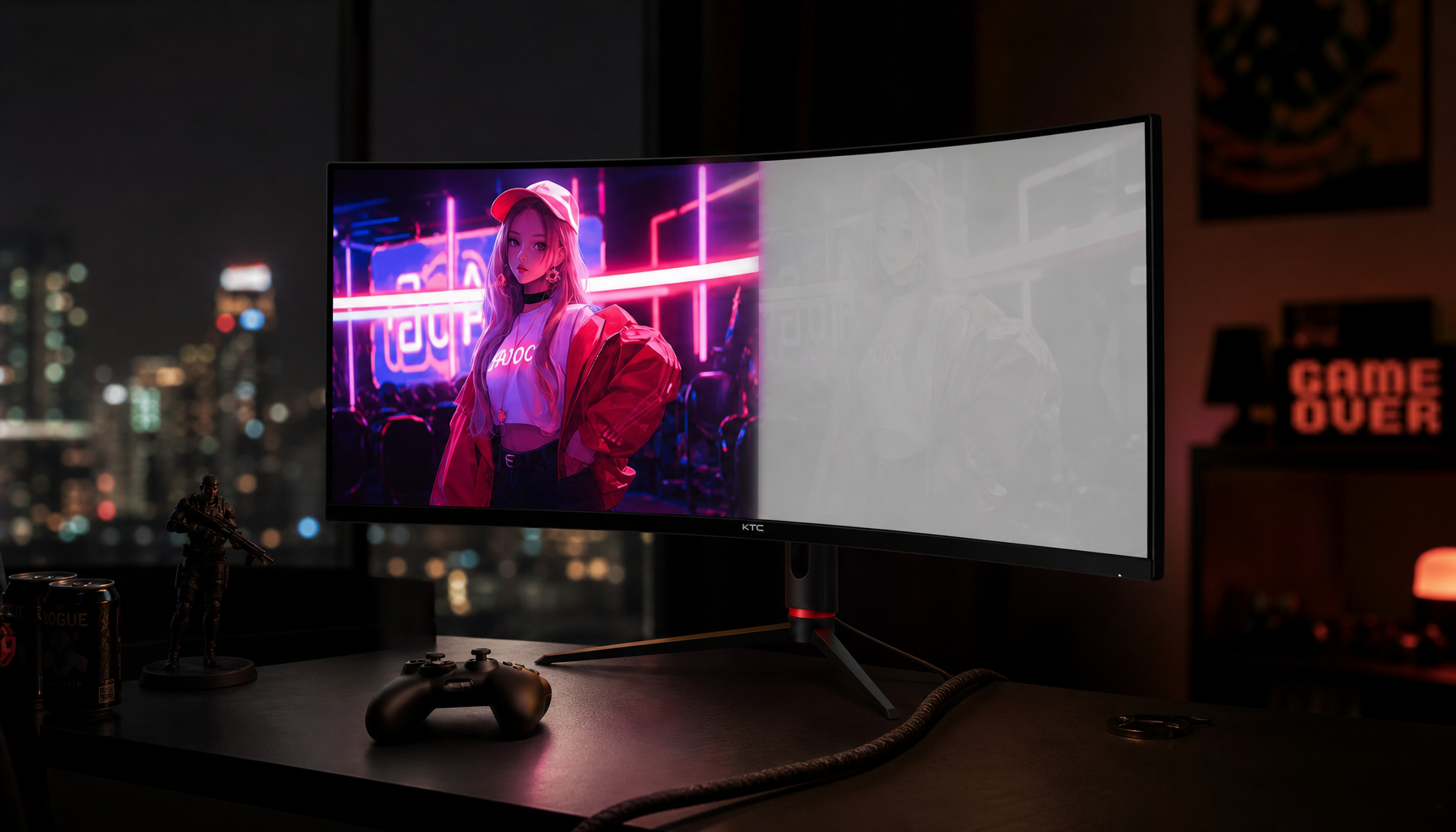
A “178-degree viewing angle” is a broad spec, not a guarantee of identical color, gamma, black-level, and brightness behavior at 45 degrees.
Identical Specs Do Not Mean Identical Panel Behavior
IPS is built for wide viewing stability, and many IPS monitors advertise 178-degree viewing angles. But that number usually means the screen remains viewable, not that color accuracy stays professional-grade from every seat.
At 45 degrees, the panel is no longer being judged by a checkbox. It is being judged by how well it controls hue shift, gamma shift, luminance falloff, black-level rise, and contrast loss at the same time.
That is why one 27-inch IPS display can look clean from the side while another turns cooler, warmer, hazier, or less saturated, even when both claim 99% sRGB and 178/178 viewing angles.

The Hidden Variables Behind 45-Degree Color Shift
The biggest difference is panel engineering. IPS subtypes, liquid-crystal alignment, cell gap consistency, polarizer quality, and screen coating all affect how light exits the panel at an angle.
Backlight design matters too. If one side or corner is already brighter or cooler, angled viewing exaggerates it. Edge-lit displays are especially sensitive because uneven light distribution can make off-axis color look less stable.
Factory calibration also has limits. A monitor may be tuned well at the center point, but calibration cannot fully fix physical corner tint, coating behavior, or uneven backlight zones. That is why strong advertised gamut does not automatically mean strong uniformity.
In real use, those differences are obvious on white documents, spreadsheets, design boards, and pale game skies, where visible tinting or edge imbalance can remain even after calibration.

IPS Glow, Uniformity, and Color Shift Are Not the Same
IPS glow is angle-dependent haze, usually most visible in dark scenes. If the glow changes when you move your head, you are seeing viewing-angle behavior, not necessarily a fixed defect.
Color uniformity problems behave differently. If a white screen stays yellow on one side and pink on the other from multiple positions, that points more toward panel or backlight uniformity than normal glow. User testing around IPS glow and uniformity often comes down to this simple question: does the issue move with your eyes, or stay locked to the screen?

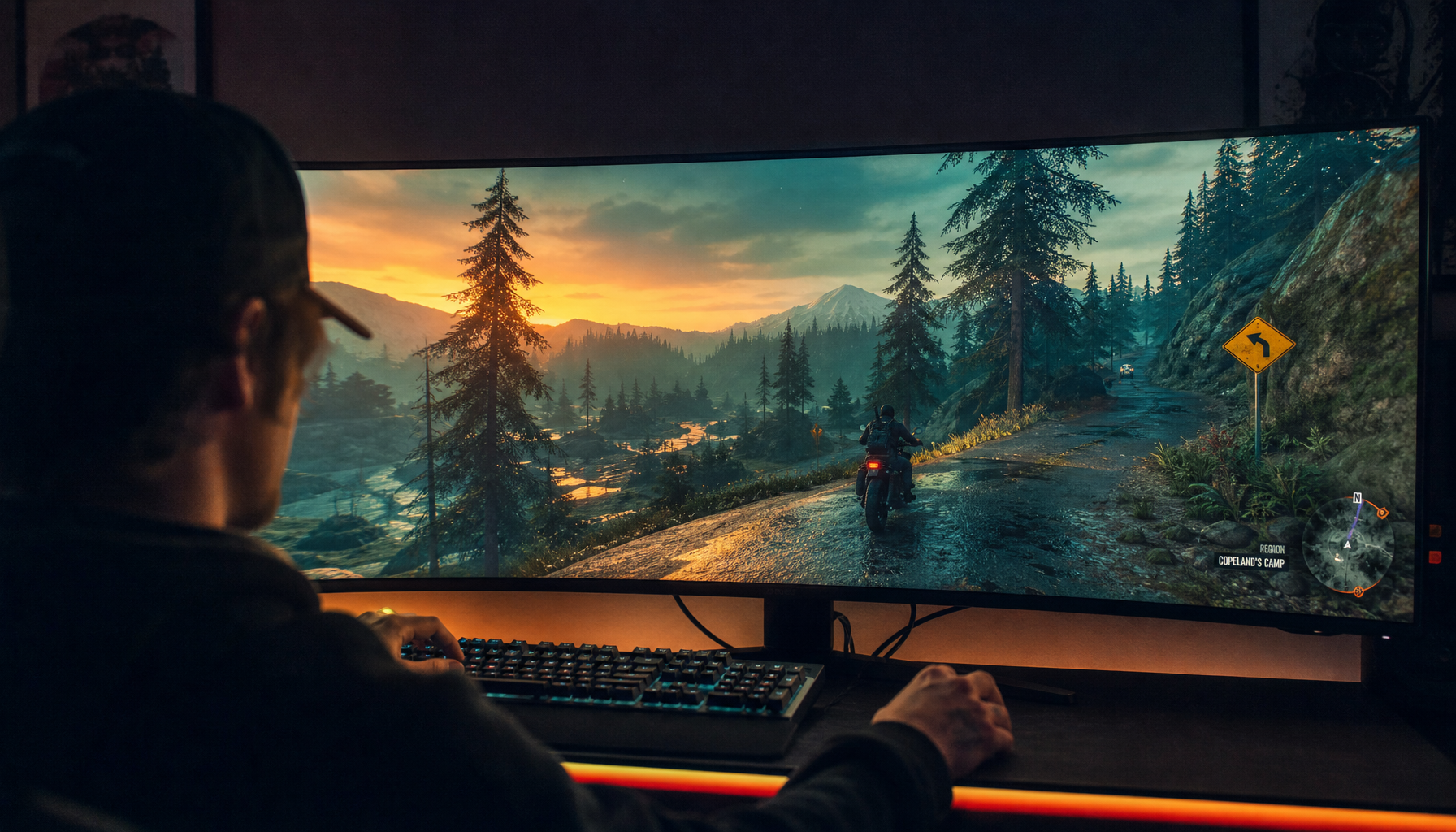
For gaming, this matters in dark maps and cinematic scenes. For office work, it matters across wide spreadsheets and dual-monitor setups. For portable smart screens, it matters because small shifts in tilt can change the viewing angle quickly.
Some “bad IPS color shift” complaints are actually a mix of IPS glow, backlight bleed, and uniformity error rather than pure color-angle performance.
How to Evaluate an IPS Panel Before You Commit
Do not buy only from the spec sheet. Look for measured viewing-angle behavior, uniformity testing, and real photos taken from side angles.
- View white, gray, black, red, green, and blue full-screen test images.
- Sit centered, then move about 45 degrees left and right.
- Check whether skin tones, grays, and whites shift warm or cool.
- Lower brightness and add soft room lighting to separate glow from defects.
- Test after the monitor has warmed up for at least 30 minutes.

Independent labs measure viewing-angle changes in brightness, color, black level, and gamma; vertical viewing angle testing shows why “wide angle” can still hide meaningful performance gaps.
What Buyers Should Prioritize
For competitive gaming, choose IPS for speed and color stability, but check measured response and angle performance. For productivity, prioritize uniformity, ergonomic stand adjustment, and a clean sRGB mode. For creative work, factory calibration and Delta E claims matter, but uniformity compensation and return policy matter more.
For shared viewing or portable displays, avoid assuming every IPS panel is equally stable. A higher-quality IPS screen should keep whites neutral, grays balanced, and dark areas controlled when viewed off-center.
The best value is not the IPS monitor with the longest spec list. It is the one whose panel, backlight, coating, and calibration hold together when you stop sitting perfectly still.