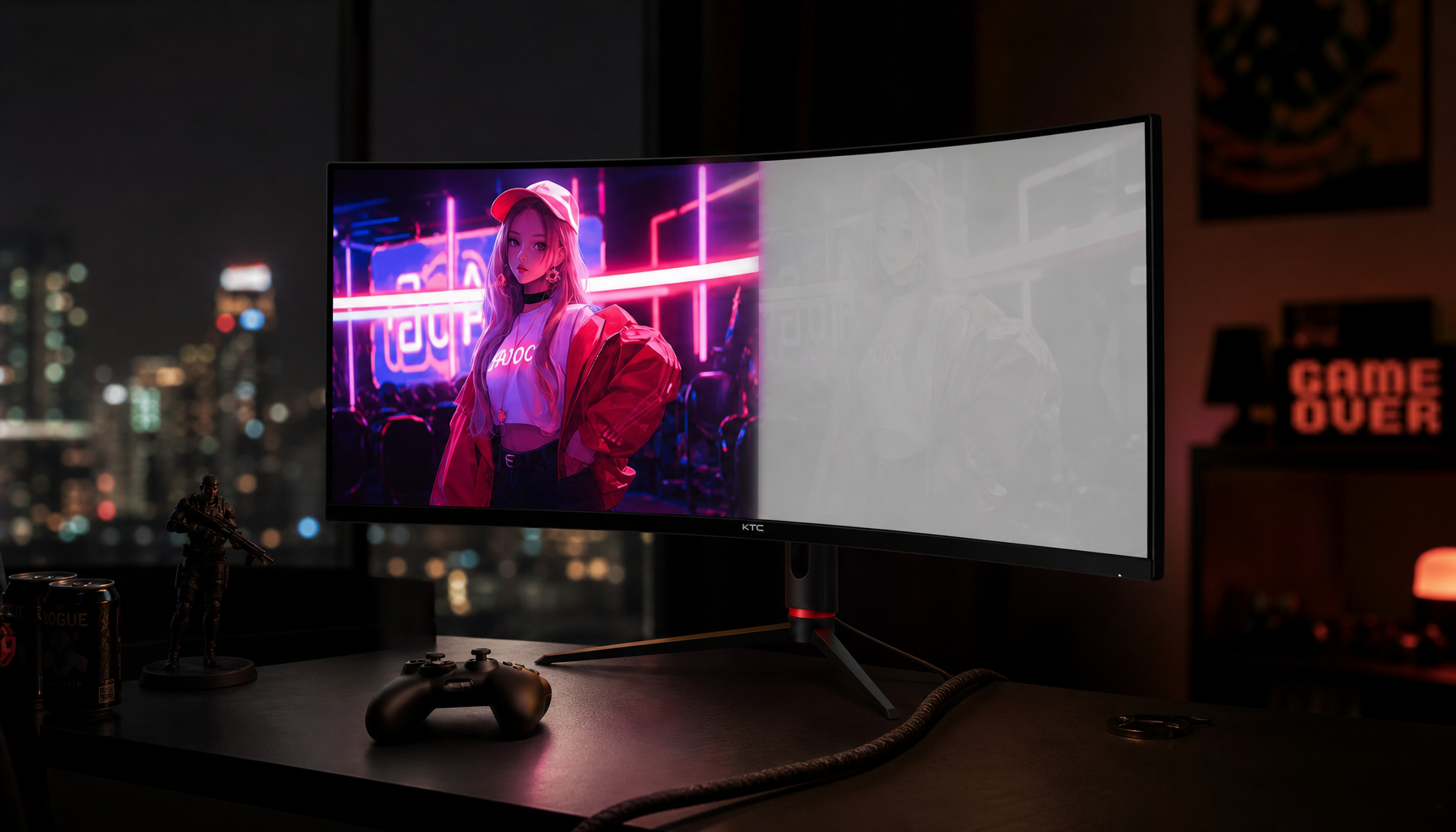
Enabling a high refresh rate can reduce brightness because the monitor, GPU, cable, or operating system may switch to a display mode with different brightness, color, HDR, or bandwidth behavior. In most cases, the panel is not weaker at 144 Hz or 180 Hz; it is following a different signal path or preset.
High Refresh Rate Changes More Than Motion
Refresh rate is how often a screen updates its image each second, so 144 Hz refreshes more than twice as often as 60 Hz. That smoother motion is valuable for esports, fast scrolling, and responsive workspaces, but higher refresh rates also demand more from the full display chain.
Your monitor, graphics card, cable, port, and operating system settings all need to support the selected mode. If one part is near its limit, the system may reduce color depth, switch chroma format, disable a picture mode, or apply a different profile. That can make the screen look dimmer even when the brightness setting still says 80 or 100.
This is why a monitor can look punchy at 60 Hz, then flatter or darker at 144 Hz. The refresh-rate setting is visible; the mode changes behind it often are not.

The Most Common Brightness Drop Causes
A high-refresh mode can trigger a separate monitor preset. Many gaming displays store different image settings per input, HDR mode, adaptive-sync state, or refresh range, so 60 Hz and 144 Hz may not share the same brightness, contrast, gamma, or overdrive behavior.
HDR is another frequent culprit. System HDR, game HDR, and monitor HDR can change luminance mapping automatically, and some displays dim SDR content when HDR is active. A sudden brightness shift during game launch is often tied to system HDR, full-screen mode, color profiles, or display utilities.
Bandwidth also matters. A higher refresh rate increases the data load over HDMI or DisplayPort. If the cable or port cannot carry the ideal signal cleanly, the GPU may negotiate a lower-quality output mode. At 60 Hz, full color settings are often available; at 144 Hz, color depth or profiles may change; at 180 Hz or higher, cable, driver, or monitor firmware limits are more likely to appear. With HDR on, brightness may follow tone mapping instead of the SDR brightness slider.
Why It Feels Worse on Gaming and Portable Displays
Gaming monitors often prioritize speed at high refresh rates. Some models limit backlight behavior, local dimming, strobing, HDR, or certain image presets when pushed into their fastest modes. Motion clarity improves, but peak or perceived brightness can shift.
Portable smart screens have another constraint: power. A USB-C portable display may reduce brightness when running a higher refresh mode because the same cable may be carrying video, power, and data. If the screen is powered by a laptop instead of a wall adapter, the display may behave conservatively to stay stable.

Office users can see the same issue in a quieter way. A 100 Hz or 120 Hz productivity mode may make scrolling feel smoother, but if the monitor switches color mode, text pages can look slightly grayer. For long work sessions, comfort matters more than chasing the highest Hz number.
When users report that brightness changed, they may be seeing real backlight dimming, gamma shift, HDR tone mapping, or contrast changes that only look like dimming.
How to Fix or Reduce the Brightness Drop
Start with the monitor’s own on-screen menu. Physical OSD controls are usually the most reliable place to check brightness because external software may not control every display mode; many monitors expose brightness through built-in monitor menus.

Then verify the operating system mode. Go to display settings, open the advanced display options, and confirm the selected refresh rate for the correct monitor. If the issue appears only after switching Hz, test one step lower, such as 165 Hz instead of 180 Hz.
Use this quick checklist:
- Turn HDR off, then compare brightness again.
- Match monitor presets at 60 Hz and high Hz.
- Update GPU drivers from the graphics card maker.
- Try a certified HDMI 2.1 or DisplayPort cable.
- Disable display utilities temporarily.
When to Choose Brightness Over Maximum Hz
For competitive gaming, high refresh rate is usually worth tuning around. A stable 144 Hz display with correct brightness is better than a dim, compromised 180 Hz mode.
For office productivity, 75 Hz to 120 Hz often delivers the best value: smoother cursor movement, easier scrolling, and fewer trade-offs. For portable screens, 60 Hz or 75 Hz may be the smarter setting when running on laptop power.
The practical goal is not the biggest number in the refresh-rate menu. It is the brightest, clearest, most stable mode your monitor can sustain with the hardware you actually use.