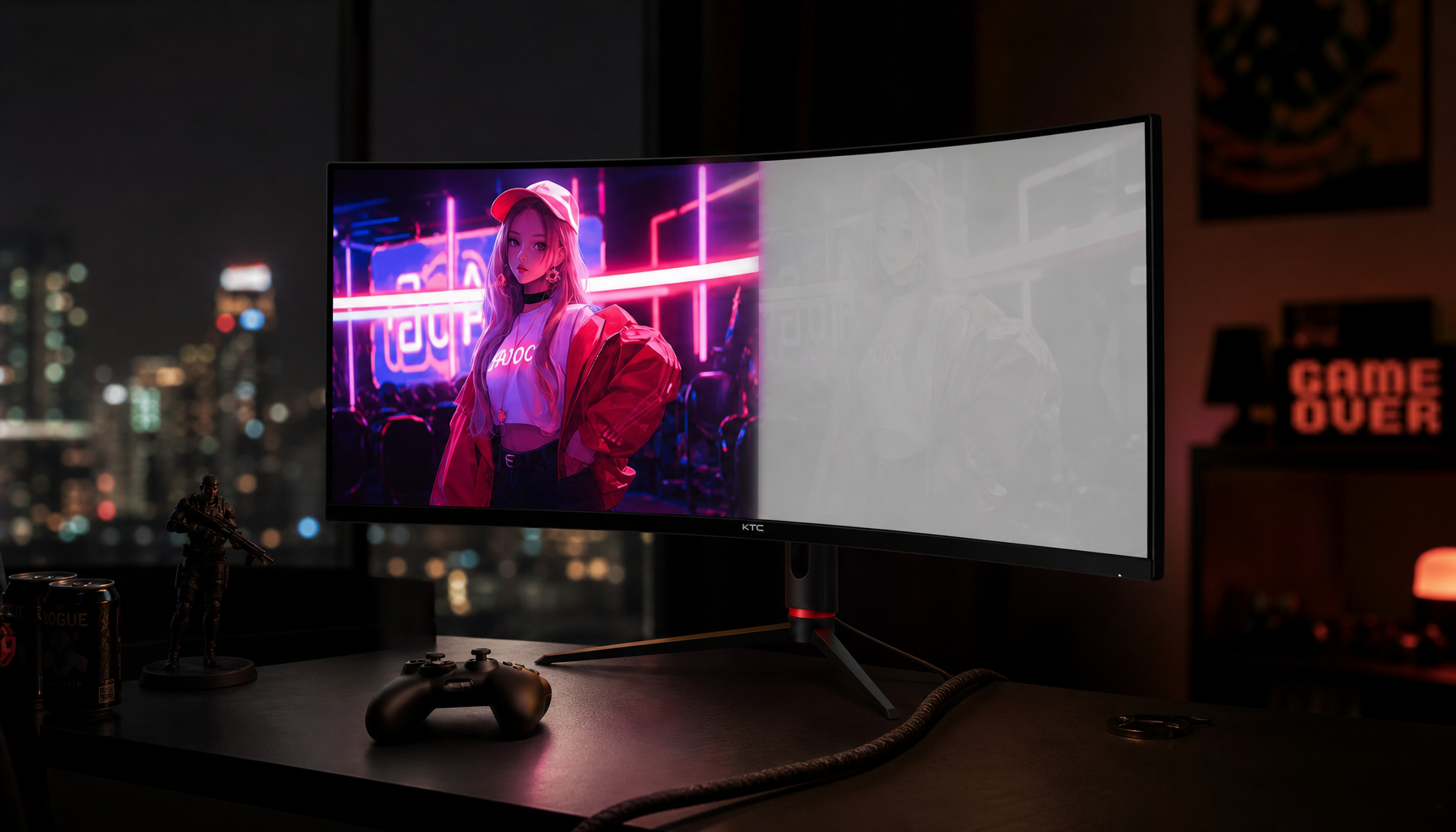
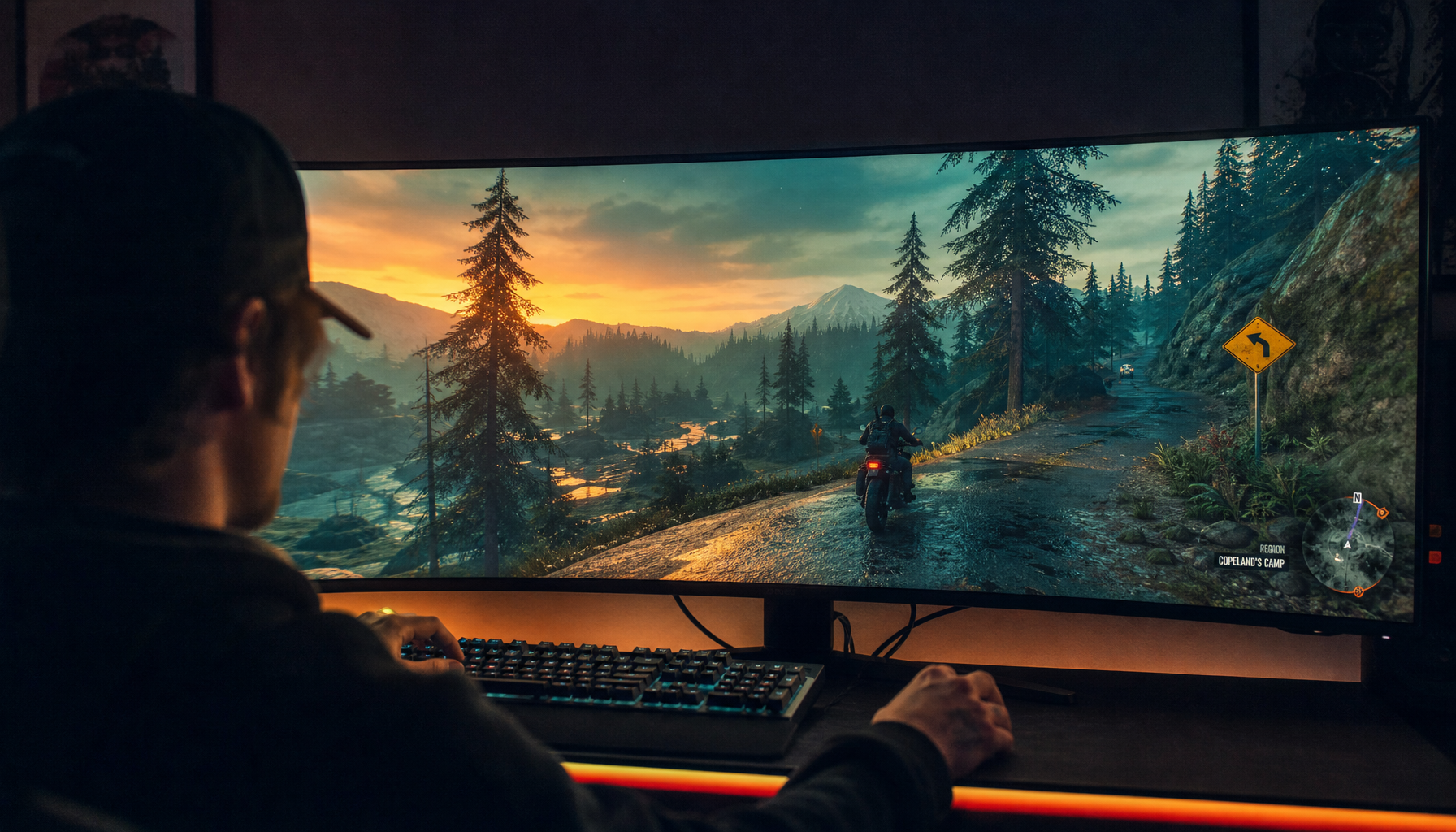
HDR screenshots and recordings often look washed out, too bright, too dark, or strangely colored because the image was made for a high-brightness, wide-color display, while the capture is usually saved, shared, or viewed through an SDR pipeline.
Does your game look rich on your HDR monitor, but the screenshot looks flat the moment you post it or open it on another screen? In practical testing workflows, the fastest fix is usually not new hardware, but checking HDR mode, capture format, tone mapping, and display calibration before you record. You’ll leave with a clear explanation of what is happening and a reliable workflow for cleaner captures.
HDR Is Not Just a Brighter Screenshot
HDR, or High Dynamic Range, expands what a display can show in brightness, contrast, and color, while SDR is built around a narrower range. A good HDR monitor can show brighter highlights, deeper blacks, and wider colors than a standard desktop image, but that advantage depends on the full chain: the game or video, GPU, operating system, cable, monitor, and capture tool all need to handle the signal correctly.
That chain matters because HDR on a monitor uses wider color spaces, higher brightness, and at least 10-bit color in many cases. A typical SDR screenshot workflow is closer to 8-bit color and standard brightness mapping. When a capture app grabs HDR content and saves it as a normal SDR image or video without proper conversion, the result can look wrong even though the original screen looked excellent.
For gamers, this is why a neon sign in a night race may glow perfectly on your OLED or Mini LED panel but turn into a white blob in a clip. For office and creator workflows, it is why an HDR video preview may look controlled in the editing app but appear pale in a shared screen recording.

The Main Cause: Tone Mapping Mismatch
Tone mapping is the process of fitting HDR brightness and color into the actual limits of a display or file. If content was mastered for 1,000 nits and your monitor can reach 600 nits, the system has to compress the brightest information so detail is preserved. If a capture tool skips or mishandles that conversion, bright areas clip, midtones shift, and colors may lose saturation.
Tone mapping scales HDR brightness and color to match the display’s capability. That same idea applies when converting HDR to SDR for a screenshot, except the target range is much smaller. A capture saved for SDR viewing has to make decisions about what to do with highlights that your HDR monitor can show but a normal image file cannot.
A simple example: if a game HUD, sky, or explosion is rendered with HDR highlight detail, your monitor may show texture inside that highlight. A basic SDR capture may flatten those extra highlight levels into the same top-end white value. The information may not be visually represented unless the capture tool performs a proper HDR-to-SDR conversion.
Why Colors Shift or Look Washed Out
Brightness is only half the problem. HDR also often uses a wider color gamut, while SDR content is commonly tied to smaller color spaces. Monitor guidance describes color gamut as the range of colors a display can reproduce, and HDR displays commonly move beyond Rec.709 toward wider gamuts such as DCI-P3.
When a capture tool treats wide-gamut HDR colors like ordinary SDR colors, the result can be undersaturated, oversaturated, or tinted. This is especially visible in games with saturated UI elements, red warning lights, sci-fi blues, and bright foliage. Black may still look black, which makes the issue confusing: the shadow floor survives, but mid-bright colors and highlights drift.
A user report described this exact behavior, where captures from an HDR display showed color shifts and overexposed bright colors while black remained black in captures from an HDR display. That kind of symptom points less to a bad monitor and more to a conversion problem between HDR output and the recording format.
Why It Looks Fine on Your Monitor but Bad Everywhere Else
Your HDR monitor is doing active image interpretation. It reads metadata, applies its own tone mapping, uses local dimming or per-pixel dimming, and displays brightness that many SDR viewers cannot reproduce. A screenshot, however, is just a file. Once it leaves the HDR environment, it may be opened in a browser, chat app, editor, or cell phone gallery that assumes SDR.
HDR testing makes the same practical point: HDR screenshots are difficult to represent accurately in SDR web images. That is why reviewers may judge HDR quality by direct viewing rather than by pasted screenshots. A screenshot of HDR is often not evidence of what the HDR image actually looked like on the display.
This is also why two people can disagree about the same clip. On your HDR monitor, it may look close to the original. On an SDR laptop screen, it may look gray. On a social platform after compression, it may look brighter, flatter, and less colorful.
Display Hardware Still Matters
Not every HDR monitor gives the same real-world result. HDR support alone does not guarantee strong HDR image quality. Good HDR depends on contrast, brightness, local dimming, color gamut, black levels, and tone mapping quality.
An HDR monitor overview notes that higher peak brightness helps highlights stand out, while local dimming zones improve contrast control on LCD and Mini LED displays. OLED and QD-OLED panels can turn pixels off for deep blacks, while Mini LED monitors may get brighter but can show blooming depending on zone count and processing.
Display Type |
HDR Strength |
Capture Risk |
OLED or QD-OLED |
Deep blacks and strong contrast |
SDR captures may look less dramatic than the live image |
Mini LED LCD |
High brightness and strong highlights |
Bright details may clip if tone mapping is poor |
Basic HDR400 LCD |
HDR signal support, limited impact |
Captures may not look very different from SDR |
Wide-gamut creator display |
Richer color reproduction |
Colors may shift if the capture app assumes SDR |
For a gaming setup, a 27-inch 1440p HDR monitor may be fast and balanced, while a 34-inch ultrawide or 49-inch super-ultrawide creates stronger immersion. For productivity and editing, the bigger concern is consistency: if you capture, edit, and publish content, your monitor’s HDR behavior should be predictable, not just impressive in a showroom.
System HDR, Automatic HDR, and Capture Apps
Desktop HDR can make setup easier, but it can also create capture surprises. Automatic HDR expands SDR-only games into an HDR-like output, while native HDR games provide their own HDR rendering. These are not the same, and capture tools may handle them differently.
HDR behavior has improved with game overlay toggles, but features such as night-light color adjustment can conflict with HDR color behavior. In real use, that means a recording setup that works for one game may fail in another, especially when switching between fullscreen, borderless windowed, desktop apps, and browser video.
For a cleaner workflow, treat HDR capture as a controlled mode. Before recording, confirm whether the content is native HDR, automatic HDR, or SDR. Then check whether your capture app supports HDR recording, HDR-to-SDR tone mapping, or only standard SDR capture. If the app only captures SDR, expect some difference and tune for the final viewing target instead of the live HDR image.
Practical Fixes for Better HDR Screenshots and Recordings
The first decision is whether the final audience will view the result in HDR or SDR. If you are uploading a clip for general web viewing, SDR is still the safer target because most platforms and viewers handle it more consistently. In that case, use a capture tool or export path that performs HDR-to-SDR tone mapping rather than simply clipping the signal.
Display guidance recommends enabling HDR mainly when using actual HDR content because SDR desktop use can look inaccurate when HDR is left on. That advice is useful for capture work too. If you are recording tutorials, office apps, browser demos, or standard software, turn HDR off unless the capture specifically needs it.
For gaming, test one short 10-second clip before recording a full session. Capture a scene with dark shadows, bright sky, saturated UI, and skin tones if available. Then view it on an SDR display and your HDR monitor. If the clip looks blown out on SDR, switch the capture output to SDR tone mapping, reduce in-game HDR peak brightness, recalibrate the display, or disable HDR for the recording.

For screenshots, use the tool built into the game when it supports HDR-aware capture, or use a capture app with explicit HDR handling. If a standard snipping tool creates random overexposure, avoid relying on it for color-critical work. For documentation, reviews, and product comparisons, capture SDR reference images separately so your visuals match what most readers will see.
Pros and Cons of Capturing HDR
Capturing HDR can preserve the impact of bright highlights, cinematic contrast, and wide color when the whole workflow supports it. It is valuable for game trailers, monitor testing, HDR video production, and high-end creator workflows where the viewer has compatible hardware.
The downside is reliability. HDR files can be larger, harder to edit, less predictable across apps, and misleading when converted poorly. SDR capture is less spectacular, but it is easier to share, easier to compare, and more dependable for guides, bug reports, office recordings, and social clips.
The right choice is performance-driven, not ideological. If the final viewer has HDR playback, capture HDR correctly. If the final viewer is likely watching on a normal laptop, SDR tone mapping will usually communicate the scene better.
A Note on Comfort and Safety
HDR brightness is not only a capture issue. Research on photosensitive epilepsy guidelines argues that modern display guidance needs to account for display brightness, HDR, refresh rate, PWM dimming, motion-enhancement modes, and color characteristics. That does not mean HDR is unsafe by default, but it does mean aggressive brightness, flashing effects, and strobing modes deserve attention.
If you record games or demos for a public audience, avoid unnecessary flashing transitions and be careful with intense red flashes, high-contrast flicker, and motion blur reduction modes. For your own setup, higher refresh rates, comfortable brightness, and avoiding harsh low-brightness PWM behavior can reduce fatigue during long gaming or productivity sessions.
FAQ
Why does my HDR screenshot look washed out?
It usually means HDR content was captured or viewed as SDR without proper tone mapping. The capture file cannot represent the same brightness and color range your HDR display was showing.
Should I turn HDR off before recording?
For office apps, tutorials, browser demos, and most shareable SDR videos, yes, turning HDR off often gives more predictable results. For HDR gameplay or monitor testing, keep HDR on only if your capture tool and export format support it properly.
Is my monitor defective if HDR recordings look bad?
Usually no. If the live image looks correct but the recording is overexposed or flat, the problem is more likely the capture pipeline, system HDR settings, app behavior, or SDR conversion.
Can a better HDR monitor fix screenshots?
A better monitor can improve the live HDR experience, but it will not automatically fix SDR screenshots. The capture software still has to translate HDR brightness and color into the final file correctly.
Final Word
HDR is built to make the live screen more convincing; screenshots and recordings are built to package that image for another pipeline. For the cleanest result, decide whether your audience needs HDR or SDR, calibrate the display, test a short clip, and make tone mapping a deliberate setting instead of an accident.