HDR can look dim in a bright room because peak brightness is only a highlight number, not a guarantee that the whole image will stay bright, contrast-rich, and readable under ambient light.
Does your 1,000-nit monitor look impressive on a spec sheet but strangely flat once sunlight hits the desk? A practical fix often starts before calibration: reduce reflections, then tune HDR in the same lighting where you actually play, work, or watch. Here is why the image loses punch and how to make HDR look stronger without crushing detail or tiring your eyes.
Peak Brightness Is Not Full-Screen Brightness
The biggest misunderstanding is that “1,000 nits” sounds like the whole screen can run at 1,000 nits all the time. On many HDR displays, that number describes a small highlight, such as a torch, sun glint, muzzle flash, or specular reflection. The average picture level can be much lower, especially on OLED panels and some edge-lit or entry-level HDR monitors.
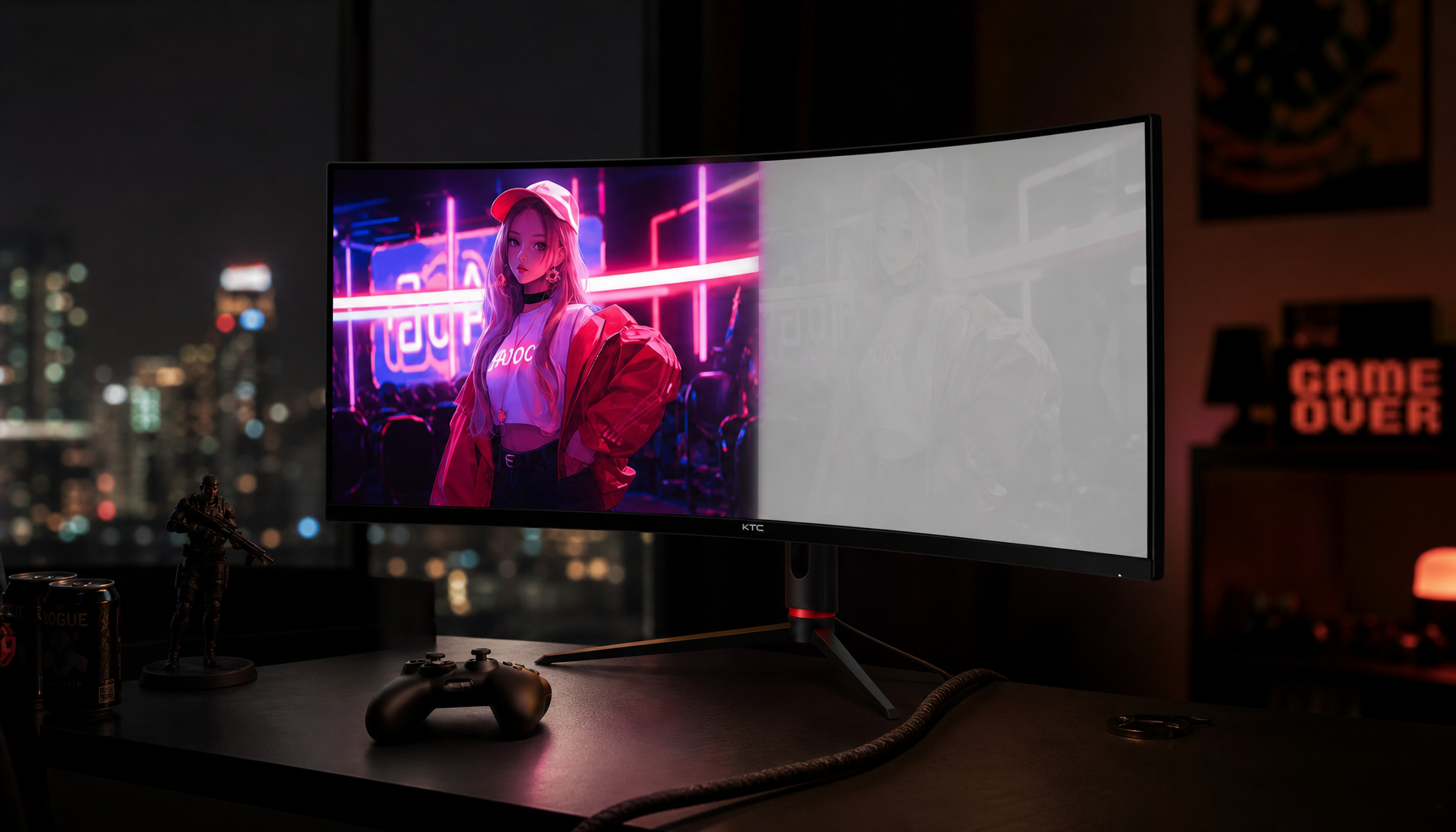
HDR is designed to expand the distance between dark shadows and bright highlights, not simply make every frame brighter. A night scene with a neon sign may reserve brightness for the sign while keeping walls, pavement, and faces comparatively restrained. In a dim room, that looks cinematic. In a sunlit office, the same restrained midtones can look underpowered.

This is why a monitor can technically hit high peak brightness and still feel dim during desktop HDR, streaming video, or story-driven games. The display is protecting highlight headroom while your room light is attacking the darker parts of the image.
Ambient Light Raises the Black Floor
HDR depends on perceived contrast. When light from a window, lamp, or white wall reflects off the panel, it makes black areas look gray. That reduces the visible gap between shadows and highlights, so the entire HDR image feels flatter even if the brightest pixels are still firing hard.
Research on display viewing under changing room light found that viewer preferences shift with ambient illumination, and people tend to adjust displays to preserve available contrast rather than simply chase maximum brightness. In HDR viewing studies, preferred display brightness increased as ambient light rose, but not in a one-to-one way. In plain terms, your eyes do not treat display brightness and room brightness like two equal sliders.
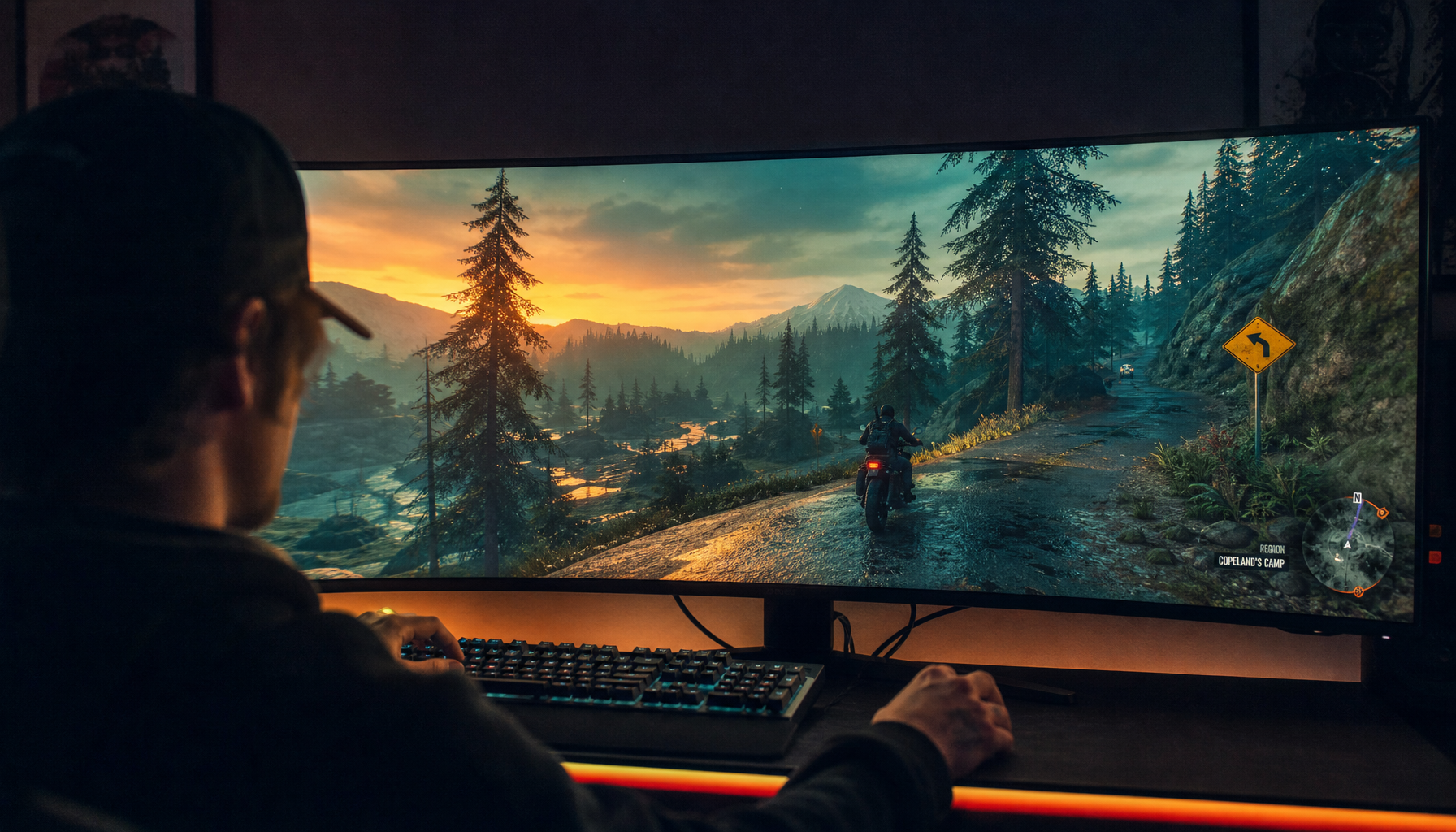
For a gaming monitor near a window, the real enemy may not be insufficient peak output. It may be a bright rectangle reflected behind your character during a dark dungeon, racing cockpit, or tactical shooter map. The fix is physical before it is digital: angle the screen away from windows, move desk lamps out of the reflection path, and avoid glossy objects behind your seating position.

Tone Mapping Can Make the Whole Scene Darker
Tone mapping is the display’s way of fitting HDR content into its actual capabilities. If a game or movie is mastered for brighter highlights than your monitor can reproduce, the display has to decide what to sacrifice. It can clip bright detail and keep the rest of the image brighter, or it can compress the whole luminance range to preserve more highlight detail.
That second approach is often why HDR looks dim. A monitor trying to preserve a 1,000-nit highlight on a lower-capability panel may lower midtones so the bright detail still has room to exist. The result can be technically cautious but visually disappointing in a bright room.
This is especially noticeable on monitors with basic HDR certification, limited local dimming, or weak black levels. They accept the HDR signal, switch into an HDR pipeline, and may even lock familiar controls such as brightness, contrast, or gamma. That lockout can be frustrating, but the intention is usually to prevent double processing, clipped highlights, lifted blacks, and inaccurate color.
Bright Rooms Punish Midtones More Than Highlights
A bright HDR highlight may still look bright in daylight, but the image can feel dim because midtones and shadow detail lose separation. Faces, UI panels, cave walls, asphalt, dark uniforms, and office content sit mostly in the middle and lower parts of the luminance range. When ambient light washes over the panel, those tones become harder to distinguish.
Cell phone display research makes this problem clear: high ambient illumination can reduce perceived brightness, contrast, and overall image quality, and the study used ambient levels reaching very bright outdoor-like conditions. The paper’s focus on ambient contrast ratio is useful for monitor buyers because it reframes the question. You are not just buying brightness; you are buying visibility after room light hits the screen.
A simple real-world check is to pause a mixed HDR scene with a bright sky, a shaded face, and dark clothing. If the sky is bright but the face looks muddy, raising peak brightness alone will not solve the problem. You need less reflection, better tone mapping, stronger local dimming, or a different HDR preset.
OLED, Mini-LED, and LCD Behave Differently
OLED HDR often looks stunning in controlled lighting because each pixel can shut off for true black. In a bright office, though, the perceived black advantage is weakened by reflections and ambient light. Some OLED monitors also limit full-screen brightness, so productivity windows, web pages, and bright game scenes may not feel as punchy as the peak spec suggests.
Mini-LED monitors usually have a stronger case for mixed lighting because they can deliver higher brightness while using local dimming zones to protect contrast. The tradeoff is blooming or haloing around bright objects, especially subtitles, stars, HUD elements, or cursor movement on dark backgrounds. A high-quality Mini-LED panel with disciplined local dimming can look more forceful during daytime HDR gaming than an OLED that measures beautifully in a dark lab.

Conventional LCD monitors without effective local dimming are the riskiest HDR buy. They may advertise HDR support, but if the black level is weak and the backlight behaves mostly as one large zone, the image cannot create convincing depth. You get the HDR handshake, not the HDR experience.
Display type |
Bright-room HDR strength |
Main tradeoff |
OLED |
Excellent black control in dim rooms |
Reflections and lower full-screen brightness can weaken daytime impact |
Mini-LED |
Strong brightness and better mixed-room performance |
Blooming and zone behavior can affect dark scenes |
Basic LCD HDR |
Affordable and compatible |
Often lacks the contrast control needed for convincing HDR |
The Room Setup Matters More Than Most Specs
Before replacing a monitor, test the room. Turn off overhead lights, close blinds halfway, or shift the monitor a few degrees. If HDR suddenly gains depth, the panel was not the only problem.

A neutral bias light behind the display can help at night because it reduces eye fatigue without shining directly onto the screen. In daytime, the priority is different: remove light that lands on the panel or reflects into your eyes. A matte coating helps, but it cannot fully defeat a bright window behind you.
Eye comfort also matters. Lowering brightness can reduce glare and visual stress in some conditions, but a screen that is too dim for the room can make reading harder. Eye-care guidance emphasizes that brightness should match ambient lighting, which aligns with practical display tuning: bright enough for readability, controlled enough to preserve contrast.
Calibration Should Match the Room You Actually Use
HDR calibration done at midnight will not necessarily work at 2:00 PM. If you play competitive shooters in the afternoon and watch HDR movies at night, you need separate habits or presets.
For gaming, start with the monitor’s most accurate HDR mode instead of a flashy vivid preset. Then use the game’s HDR calibration screen to set peak brightness, paper white, black level, and UI brightness if available. Paper white is especially important because it controls how bright ordinary white objects and interface elements appear, separate from explosive highlights.
For desktop use, HDR is often less predictable than SDR for office work, browsing, spreadsheets, and email. If your day is mostly productivity, SDR may give you cleaner whites, steadier brightness, and fewer color surprises. Keep HDR for games, movies, video review, and product visualization where the content was actually created for it.
Beware Fake HDR and Overprocessed Modes
Some monitor modes simulate HDR from SDR content. They may boost contrast, stretch colors, or brighten edges, but they do not have real HDR metadata. The result can look exciting for a few seconds and then become harsh, washed out, or inconsistent.
HDR capture and processing can create artifacts when handled poorly, including halos, oversaturation, ghosting, and unstable exposure. The same visual logic applies to displays: aggressive processing may make a demo image pop while damaging skin tones, shadow detail, or UI readability. A discussion of HDR imaging describes how poor HDR processing can produce unnatural color and halo effects, which is exactly the kind of fake punch serious monitor users should avoid.
A reliable HDR setup should make bright highlights more lifelike while keeping dark detail believable. If the monitor’s enhancement mode makes every scene look like a showroom loop, it is probably not the best mode for daily gaming or creative review.
Ambient Light Sensors Can Help, But They Are Not Magic
Automatic brightness can be useful when your room changes throughout the day. Some monitors include ambient light sensors that adjust screen brightness based on surrounding light, and display forum users have long valued this kind of feature for comfort during desktop use. The practical distinction is important: ambient light sensors respond to the room, while image-based brightness systems respond to what is on screen.
For productivity, sensor-based adjustment can reduce manual tweaking. For HDR gaming or color-sensitive work, automatic changes can also become a liability because the display may shift brightness while you are judging shadow visibility, color, or highlight detail. If your monitor has this feature, use it for office modes first and test carefully before relying on it for HDR games or video grading.
Practical Fixes That Improve the Image
Start by controlling reflections. Change the monitor angle, lower blinds, move lamps, and remove bright objects behind your chair. This often produces a bigger HDR improvement than pushing another software slider.
Next, confirm you are watching real HDR content. A streaming app, browser tab, game menu, cable, graphics setting, or monitor on-screen menu can break the chain. If the image looks gray or oddly muted, switch to a known HDR video or a game with a clear HDR calibration pattern before blaming the panel.
Then calibrate in the room condition you care about. In a bright room, raise paper white or midtone brightness only enough to restore readability. Do not max every slider, because that can flatten the HDR effect and erase the highlight separation you paid for. In a dark room, lower UI brightness and avoid overly intense presets that make menus and subtitles uncomfortable.
Finally, decide whether HDR belongs in the current task. Cinematic gaming, HDR movies, and visual review benefit most. Competitive play, coding, spreadsheets, and long office sessions may be better in SDR, where brightness and color behavior are simpler and more predictable.
FAQ
Why does SDR sometimes look brighter than HDR?
SDR often lets you raise the whole backlight and push the entire image brighter. HDR reserves room for highlights, so average brightness may look lower even though bright effects can peak much higher.
Should I buy the monitor with the highest peak brightness?
Peak brightness matters, but it should not be the only buying filter. Look for black-level performance, local dimming quality, color volume, panel coating, full-screen brightness behavior, and whether the HDR mode gives you useful calibration controls.
Is HDR bad for office productivity?
Not necessarily, but SDR is usually more stable for email, documents, spreadsheets, coding, and web work. HDR is most valuable when the content itself contains HDR brightness and color information.
HDR looks dim in bright rooms because the room reduces perceived contrast while the display protects highlight detail. Treat the monitor, room, and source as one system: control reflections first, calibrate for your real lighting, and judge HDR by visible contrast rather than the biggest number on the box.