HDR calibration affects SDR because, once HDR is enabled, the operating system has to remap normal desktop apps into an HDR output space instead of sending them as plain SDR. That can change brightness, saturation, tone mapping, and sometimes the monitor mode itself.
Does your monitor look great in an HDR game, then make spreadsheets, browser tabs, photos, or email look dull, gray, or oddly bright afterward? A correct HDR setup can make HDR games more consistent while keeping SDR work readable and color-stable. Here is how the signal path changes, why SDR shifts, and what to adjust without weakening your display’s strengths.
The Core Reason: SDR Is Being Displayed Inside an HDR Pipeline
SDR content was built around a smaller brightness and color range than HDR. In practical terms, SDR desktop apps usually expect an sRGB-style environment: predictable white, limited color, and a brightness level that feels comfortable for office work. HDR, by contrast, expands brightness, contrast, and color range, and HDR content commonly uses wider color spaces plus higher bit depth than SDR.
When you turn on HDR, the desktop does not become native HDR. Your SDR apps still output SDR values, but the system must place those values into an HDR container so the monitor can remain in HDR mode. That conversion is why a document, browser window, or SDR video can look different after calibration.

The HDR Calibration app is not only about “making HDR brighter.” It helps the system understand your display’s darkest visible detail, brightest visible detail, and maximum brightness, while also offering a saturation control that can affect how SDR and HDR content appear when HDR is enabled. Official calibration documentation says the app can improve HDR color accuracy and consistency, but those system-level choices influence how SDR desktop content is blended into an HDR presentation.
Why SDR Can Look Washed Out After HDR Calibration
The most common complaint is simple: “HDR is on, but my desktop looks washed out.” That can happen for several reasons, and not all of them mean the calibration is wrong.

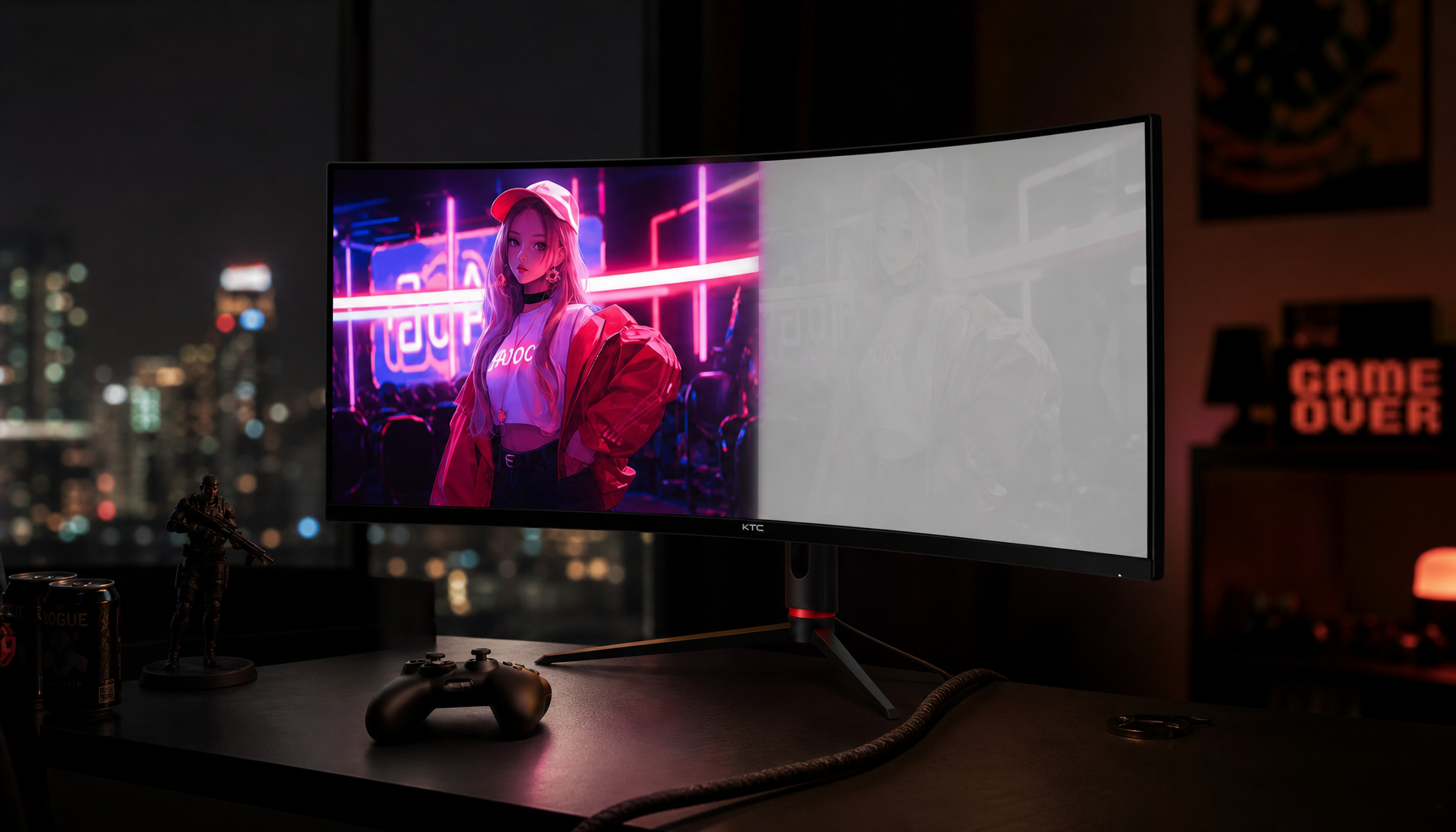
First, SDR may have looked oversaturated before. Many wide-gamut monitors show SDR content using the panel’s native color range unless you select an sRGB or Rec.709 mode. That makes reds, greens, and blues pop harder than intended. When HDR mode engages, the system and monitor may handle color more strictly, so the same icons and web pages look less intense. The result can feel like a downgrade even when it is closer to reference behavior.
Second, SDR brightness in HDR mode is a preference bridge, not a universal truth. The system has to decide how bright “paper white” should be for normal desktop content while still leaving headroom for HDR highlights. If that SDR brightness balance is set too low, office apps feel dim. If it is too high, the desktop becomes fatiguing and HDR highlights lose their visual separation.
Third, the monitor may switch picture modes. A gaming monitor might use a vivid SDR preset at 300 nits for desktop work, then jump into an HDR mode with different gamma, local dimming, color temperature, sharpness, or tone mapping. In that case, system calibration is only one part of the change; the display’s own processing is doing the rest.
HDR Calibration Changes the Display’s Map
HDR uses tone mapping because most monitors cannot reproduce every HDR signal level exactly. A 400-nit HDR monitor and a 1,000-nit HDR monitor may receive the same signal, but each must fit that signal into its real brightness, contrast, black level, and color volume. That mapping affects highlights, shadows, and midtones.
This matters for SDR because SDR desktop content lives mostly in the midtone zone. If calibration tells the system your display has a different black floor or peak brightness than before, SDR white and mid-gray may be placed differently inside the HDR range. The calibration patterns define darkest visible detail and maximum brightness, so an aggressive or inaccurate pass can shift the whole feel of the desktop.
A real-world example: if you drag the maximum brightness slider too far because your monitor tone maps gradually instead of hard-clipping, the system may think the display can handle more highlight range than it truly can. HDR games may then look flatter or clip later than expected, while SDR content may sit at a less comfortable brightness level. Monitor testing resources note that users should be careful with displays that roll off HDR brightness slowly instead of blindly chasing the “barely disappears” point in calibration.
SDR Accuracy Versus SDR Comfort
For productivity displays, accuracy and comfort are related but not identical. A calibrated SDR mode may be better for color-sensitive work, while HDR-on desktop mode may be better if you constantly switch between HDR games, HDR video, and normal apps.
Scenario |
Better Default |
Why It Works |
Office, coding, web, email |
SDR mode |
Stable brightness, predictable sRGB color, less eye strain |
HDR gaming and streaming |
HDR mode with calibration |
Better highlight mapping and game-level HDR consistency |
Photo editing for SDR delivery |
SDR with ICC/profile workflow |
More reliable color management in SDR apps |
Mixed daily use |
HDR on only when needed |
Avoids making every SDR app depend on HDR tone mapping |
The tradeoff is control. SDR mode is mature, predictable, and easier to profile. HDR mode is more immersive when the content is truly HDR, but it adds tone mapping, metadata interpretation, and monitor-specific behavior. A large subjective study with more than 23,000 ratings found that viewers do not always prefer HDR over SDR; display type, scaling, compression, and bitrate all affected perceived quality. That aligns with daily monitor experience: HDR is powerful, but it is not automatically better for every task.
Why Games, Videos, and Desktop Apps React Differently
HDR games often read system HDR calibration data or use their own sliders. SDR apps usually do not. That difference explains why a game can improve after calibration while the desktop feels off.
A game may ask the operating system for the display’s HDR capability, then map skies, fire, neon, and reflections around those limits. A spreadsheet has no such intent. It simply needs a clean white background, readable text, and stable contrast. When both live in the same HDR desktop mode, the system has to preserve HDR headroom while keeping SDR usable.
Video adds another layer. Research on HDR and SDR video quality found that preference depends heavily on display technology and delivery constraints, and HDR videos were often rated lower than SDR at lower bitrates in the tested conditions. The open-access version of the study describes how display device and delivery constraints can change whether HDR actually looks better. For a monitor buyer, that means the panel and content source matter as much as the HDR toggle.
Practical Settings That Usually Fix SDR Appearance
Start by deciding what the monitor is for during that session. If you are writing, browsing, trading, designing SDR web assets, or doing long office work, use SDR mode and the monitor’s sRGB or Rec.709 preset if available. That keeps color contained and reduces the chance of a dull or overly bright desktop.
When you want HDR gaming or HDR video, enable HDR, choose the monitor’s most accurate HDR mode first, then run HDR Calibration on that exact display. Official guidance recommends running calibration under the same lighting conditions you normally use, which matters because a bright room can make shadow detail look weaker and tempt you to over-brighten the result.

After calibration, adjust the SDR content brightness slider in HDR settings by eye using a familiar white page, a browser tab, and a dark UI. The target is not maximum brightness. It is a comfortable paper-white level where text looks crisp, white windows are not glaring, and HDR highlights still have room to stand out. On many desktop monitors, that means the SDR desktop should look intentionally calmer than HDR explosions, sunlight, or specular reflections.

If colors still look wrong, check the monitor’s on-screen menu. Avoid fake “HDR effect” or SDR-to-HDR modes for serious work, because simulated HDR can overbrighten images, crush blacks, or create washed-out output. For a monitor with separate SDR and HDR presets, save an SDR work mode and an HDR game or cinema mode rather than trying to make one global setup handle everything.
Pros and Cons of Leaving HDR On
Leaving HDR on is convenient. You can launch HDR games faster, watch HDR video without toggling settings, and use automatic HDR or app-level HDR features where supported. On a strong OLED or Mini LED monitor, that can feel seamless.
The downside is SDR compromise. Normal desktop content may look less saturated than your old SDR preset, brightness may need tuning, screenshots and color-managed apps can behave differently, and some monitors apply heavier processing in HDR mode. HDR setup guidance emphasizes verifying that the operating system and display are truly operating in HDR, including checking the HDR toggle and comparing SDR and HDR white levels with test content. That kind of validation matters because a monitor can accept HDR input without delivering a satisfying HDR image.
When Calibration Is Worth Repeating
Rerun HDR Calibration when you change monitors, swap GPU drivers, move from HDMI to DisplayPort, update firmware, change the monitor’s HDR picture mode, or significantly change room lighting. Also repeat it if you reset the display, enable or disable local dimming, or move the calibration app to a different screen in a multi-monitor setup.
Do not rerun it repeatedly just because one game looks wrong. Many HDR games have their own calibration sliders, and some titles are graded brighter, darker, or more aggressively than others. Calibrate the system to the monitor, then tune the game inside the game. That keeps one poorly tuned title from distorting your whole desktop.
FAQ
Should I keep HDR on all the time?
For pure productivity, usually no. SDR mode is more predictable for text, web, office apps, and SDR creative work. Keep HDR on when you are actively using HDR games, HDR video, or workflows that need HDR output.
Why does SDR look less colorful after HDR calibration?
It may be less colorful because HDR mode is mapping SDR into a more controlled color space, while your previous SDR monitor mode may have been using the full native wide gamut. Less punch does not always mean less accuracy.
Does HDR Calibration replace hardware calibration?
No. It improves system HDR behavior, especially for games and apps that use HDR data, but it does not replace a colorimeter-based SDR or HDR calibration workflow.
What is the fastest sanity check?
Open a familiar SDR white document, set a comfortable SDR brightness in HDR settings, then launch real HDR content and confirm highlights look brighter than the desktop without making the desktop harsh. If that balance fails, adjust the SDR brightness slider before touching every monitor setting.
HDR calibration affects SDR because the desktop is no longer traveling through a simple SDR path. Treat SDR work and HDR immersion as separate display jobs, save modes for each, and your monitor will feel sharper, calmer, and more capable instead of unpredictable.