Games usually stretch on ultrawide monitors when the image is displayed at the wrong aspect ratio or scaling mode. In most cases, the fix is to align the game, the graphics settings, the monitor, and the connection so they all use the panel’s native shape.
Games usually stretch on ultrawide monitors because the game, the graphics card, the monitor, or the cable path falls back to the wrong aspect ratio or scaling mode instead of preserving the panel’s native shape. In practice, that means a 16:9 image gets expanded across a 21:9 or 32:9 display, or a game outputs the wrong resolution and the screen fills the panel anyway.
If your HUD looks too far apart, characters seem wider than they should, or a menu looks normal until gameplay suddenly fills the screen the wrong way, the cause is often simpler than it looks. When the panel runs at its native resolution, the correct refresh rate, and the right scaling path, ultrawide gaming usually snaps back into place. The goal is to identify whether the problem starts with the game, the operating system, the graphics driver, or the monitor itself.
The Real Reason Stretching Happens
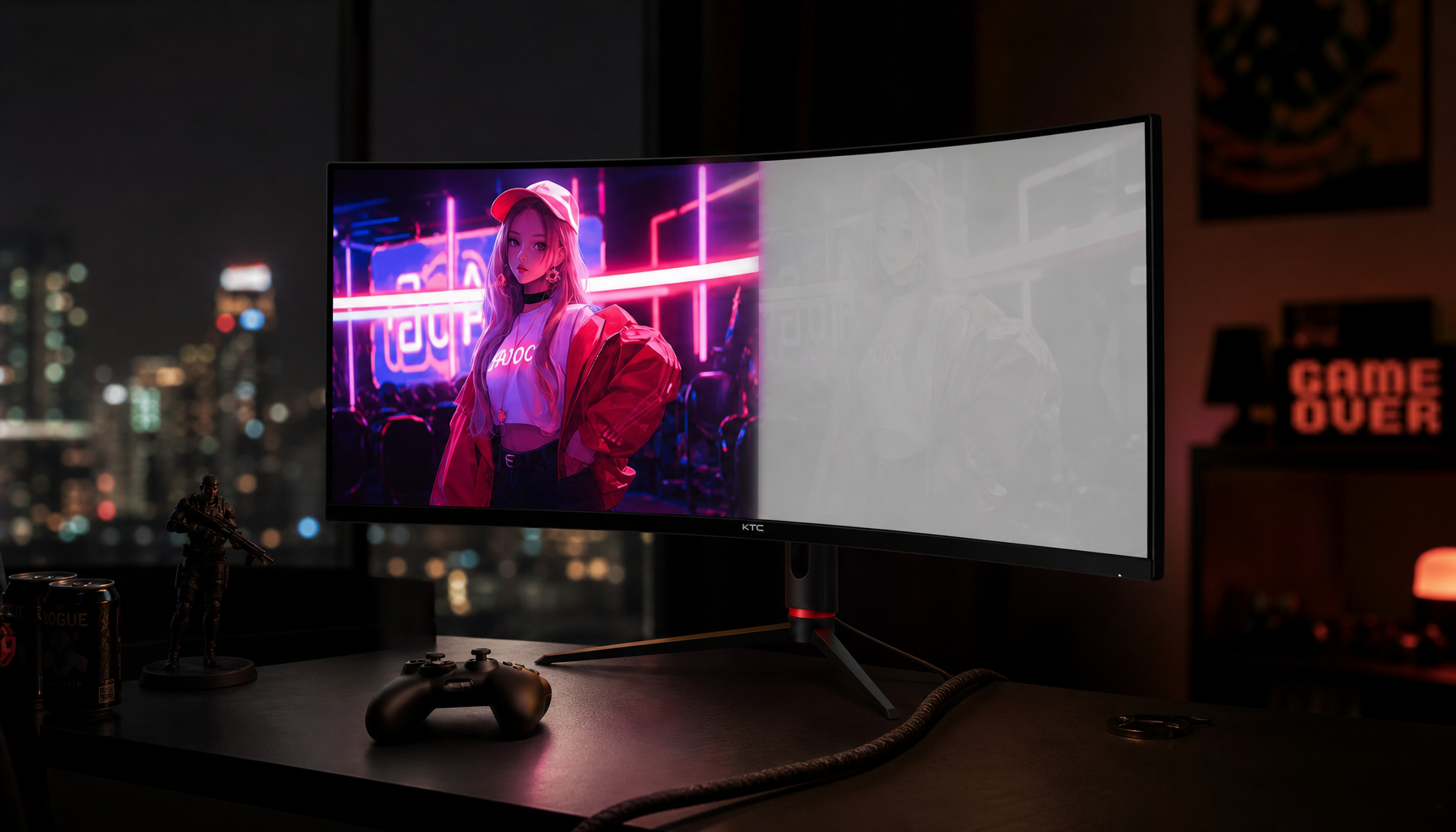
The root issue is usually an aspect-ratio mismatch between what the game renders and what the monitor is told to display. A standard display uses 16:9, while ultrawide panels are commonly 21:9 and super-ultrawide panels are 32:9. If a title expects only 16:9 and the system forces a full-screen fill mode, the image gets widened instead of staying proportional.
That problem is more obvious on ultrawide hardware because ultrawide formats expose compatibility gaps that a 16:9 monitor can hide. On a 34-inch 3440x1440 panel, for example, a game that quietly falls back to 2560x1440 may still look usable. But if the monitor or graphics card stretches that 16:9 image to full width, faces, circles, and crosshairs all look wrong.

Why Some Titles Break and Others Don’t
A lot depends on the game engine and the developer’s ultrawide support. Ultrawide display compatibility is still inconsistent, especially in older titles, some esports games, and menus or cutscenes built around 16:9. That is why one game can look perfect at 21:9 while another shows stretched gameplay, black bars, or UI pushed into the corners on the same monitor.
There is also a difference between supporting ultrawide and supporting it correctly. Ultrawide behavior in games is usually more reliable at 21:9 and less predictable at 32:9, where some titles treat the panel like two merged screens and others simply zoom or stretch. That distinction matters because a 5120x1440 monitor places much heavier demands on both the game and the display pipeline than a 3440x1440 model.
The Four Places Stretching Usually Starts
The Game Is Rendering the Wrong Resolution
The first place to check is the game itself. Native resolution and the highest available refresh rate should be selected in the operating system and then matched inside the game. If your 3440x1440 monitor is somehow running at 1920x1080 or 2560x1440 in full-screen mode, the panel has to decide how to scale that image, and many bad results start there.
A simple example makes this easy to spot. If your monitor is 3440x1440 and the game is outputting 2560x1440, the image has the right height but not the right width. If the system stretches it to fill the panel, everything becomes visibly wider. If it preserves the aspect ratio instead, you should see black bars on the sides rather than distortion.

The Operating System or Graphics Card Is Scaling Incorrectly
The second place is the scaling path. Graphics-card scaling and aspect-ratio control often work better when the graphics card handles the resize and the monitor stays on its original or native aspect mode. That gives you tighter control over whether a non-native image is stretched, centered, or shown with side bars.
This is where common desktop-display habits can hurt gaming. Interface scaling can make text easier to read, but if resolution, scaling, and driver settings are all slightly off, the result can look like a broken monitor when the real issue is a software configuration problem. In practice, aspect-preserving modes such as “Aspect Ratio,” “Maintain Aspect Ratio,” or “No Scaling” are safer than full-screen fill while troubleshooting.
The Monitor OSD Is Forcing Full-Screen Expansion
The third place is the monitor’s on-screen display. Picture controls often include aspect options, sharpness, presets, and scaling behavior that can override what you expected from the operating system or the graphics card. If the monitor is set to stretch every incoming signal to full width, even a correctly rendered 16:9 image can be mangled.
That is why it helps to think like a display technician for a minute. On many panels, “Original,” “1:1,” or “Aspect” preserves geometry, while “Full” or “Wide” prioritizes screen fill. If you want a 16:9 title to stay unstretched on a 21:9 display, preserving shape is the goal, even if that means accepting side bars.

Cable, Port, and Handshake Problems Can Trigger Wrong Modes
The fourth place is the signal path. Display connection choice can change whether a game behaves correctly, and one user report showed DisplayPort avoiding stretch where HDMI brought it back. That is not proof that HDMI is always the problem, but it is a useful reminder that the active port, bandwidth limit, HDR state, and monitor firmware can affect detected resolutions and aspect handling.
A related clue comes from bad cables and EDID fallback behavior. If the PC fails to read the monitor’s capabilities cleanly, the system may fall back to a lower or legacy mode such as 1024x768, and any full-screen scaling after that can look dramatically wrong on an ultrawide display.
Why Refresh Rate and Performance Still Matter
Stretching is mostly an aspect-ratio problem, but performance settings can make diagnosis easier or harder. Higher refresh rates improve motion clarity and reduce frame interval, which matters because a blurry or tearing image can make you think the monitor is scaling badly when the real issue is poor synchronization or low frame delivery.
There is also a performance penalty with ultrawide resolutions. Pixel count jumps by about 34% when moving from 2560x1440 to 3440x1440, so a graphics card that was comfortable at 16:9 may start missing frame targets at 21:9. When that happens, players sometimes lower resolution to recover frame rate, and that workaround can create the same stretching problem they were trying to avoid.
The Fastest Way to Fix It Without Guessing
The cleanest repair path starts with correct monitor setup basics: confirm the panel’s native resolution in the operating system, set the highest proper refresh rate, and use the connection that supports the monitor’s intended mode. Then open the graphics control panel and choose aspect-preserving scaling rather than forced full-screen stretch.
After that, check the monitor OSD and make sure it is not overriding the signal with a “Wide” or “Full” mode. Display tuning also helps here because adaptive sync, proper brightness, and the correct graphics connection reduce false symptoms while you test. If one title still stretches while others look normal, the game is the likely weak link, not the monitor.
When a stubborn title refuses to cooperate, it is often smarter to run that specific game in unstretched 16:9 than to force broken ultrawide support. Community ultrawide workarounds consistently point to the same conclusion: preserving geometry is usually the better choice for competitive play because correct proportions matter more than filling every inch of the panel.
When Ultrawide Is Worth It Anyway
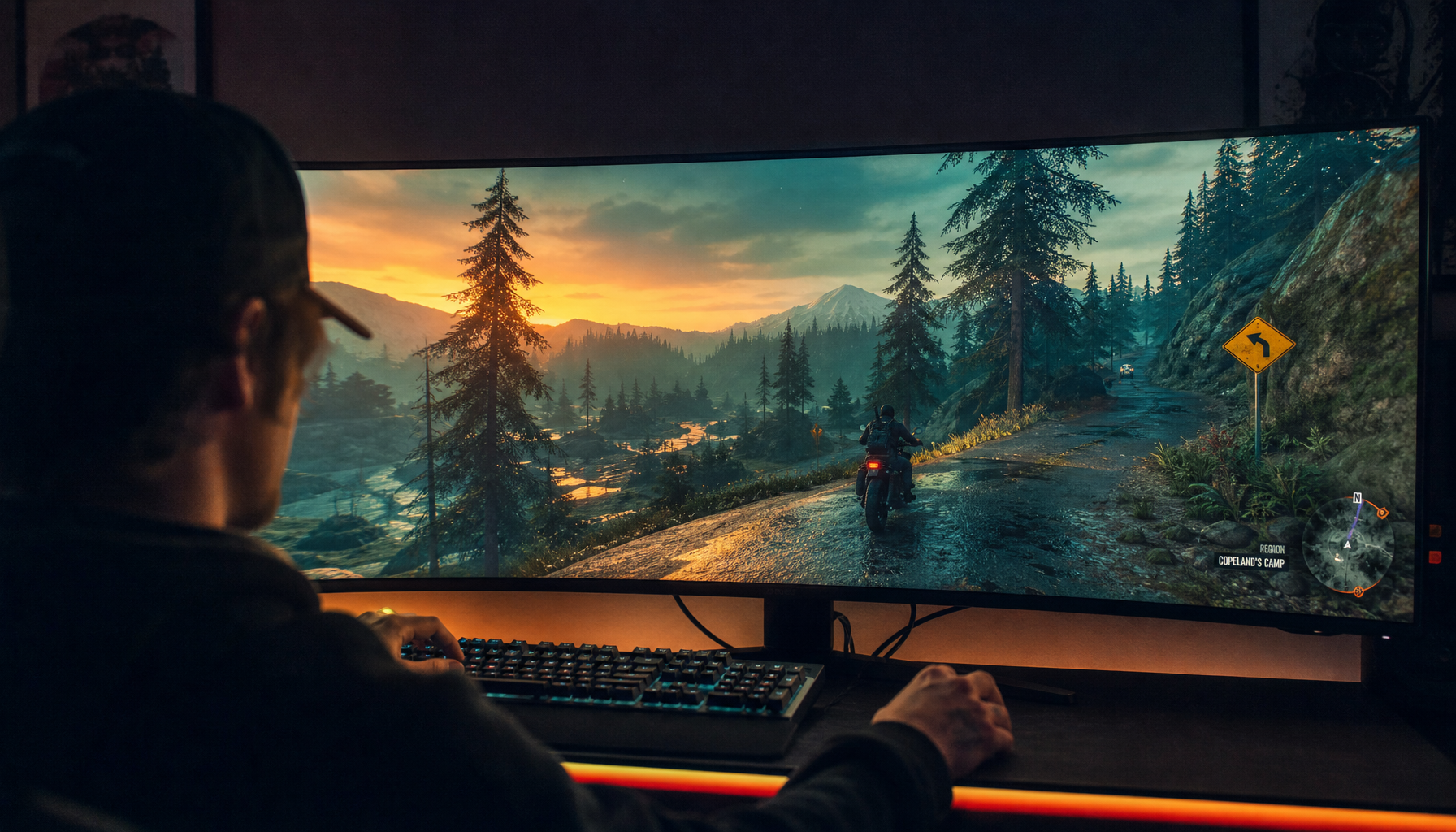
Despite the headaches, ultrawide immersion and workspace gains are real. Racing games, sims, open-world titles, and multitasking workflows all benefit when the game and display pipeline are set up properly. The key is to treat ultrawide as a format that rewards correct configuration, not as a plug-and-play upgrade.
A well-tuned ultrawide should feel expansive, sharp, and controlled, not stretched and fatiguing. If the image looks wrong, assume a settings conflict before assuming the panel is bad. Most of the time, the fix is simply getting the game, graphics card, monitor, and cable to agree on the same shape.