Black level can change after a firmware update because a monitor may handle gamma, HDR tone mapping, local dimming, presets, overdrive, and signal negotiation differently, even when the physical panel is unchanged.
Did your favorite dark map suddenly look flatter after an update, or did a work monitor start hiding shadow detail in video calls and media previews? A careful settings check can usually separate a real firmware behavior change from a reset preset, an HDR switch, or a room-light problem. The goal is to diagnose what changed, keep blacks consistent, and decide when a firmware version is worth rolling back or reporting.
Why Firmware Can Change Black Levels Without Changing the Panel
Black level is the darkest luminance a display can produce while still showing detail where needed. On LCD monitors, the backlight is always part of the equation; on OLED-style displays, self-emitting pixels can shut off much more completely. Firmware sits between the incoming video signal and the panel’s light output, so a firmware revision can change how near-black values are mapped, clipped, lifted, or delayed.
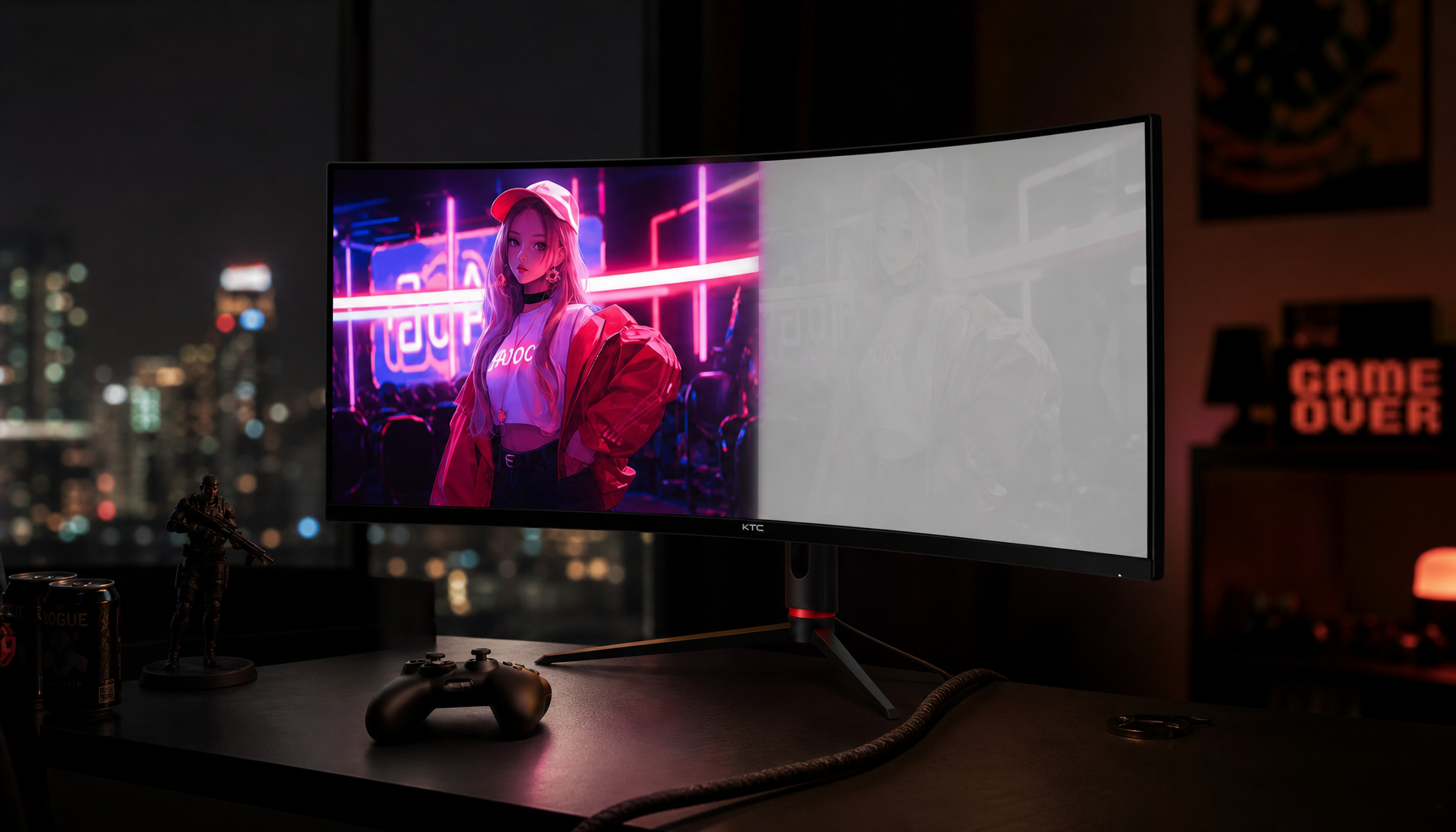
A monitor preset is not just a cosmetic color filter. It may alter brightness, color temperature, gamma, black level, gamut, overdrive, HDR tone mapping, local dimming, adaptive sync, and refresh behavior, which is why switching presets can briefly resync the display chain through video signal settings. A firmware update can revise any of those preset rules, then leave the user thinking the panel got worse when the monitor is simply interpreting the same content differently.
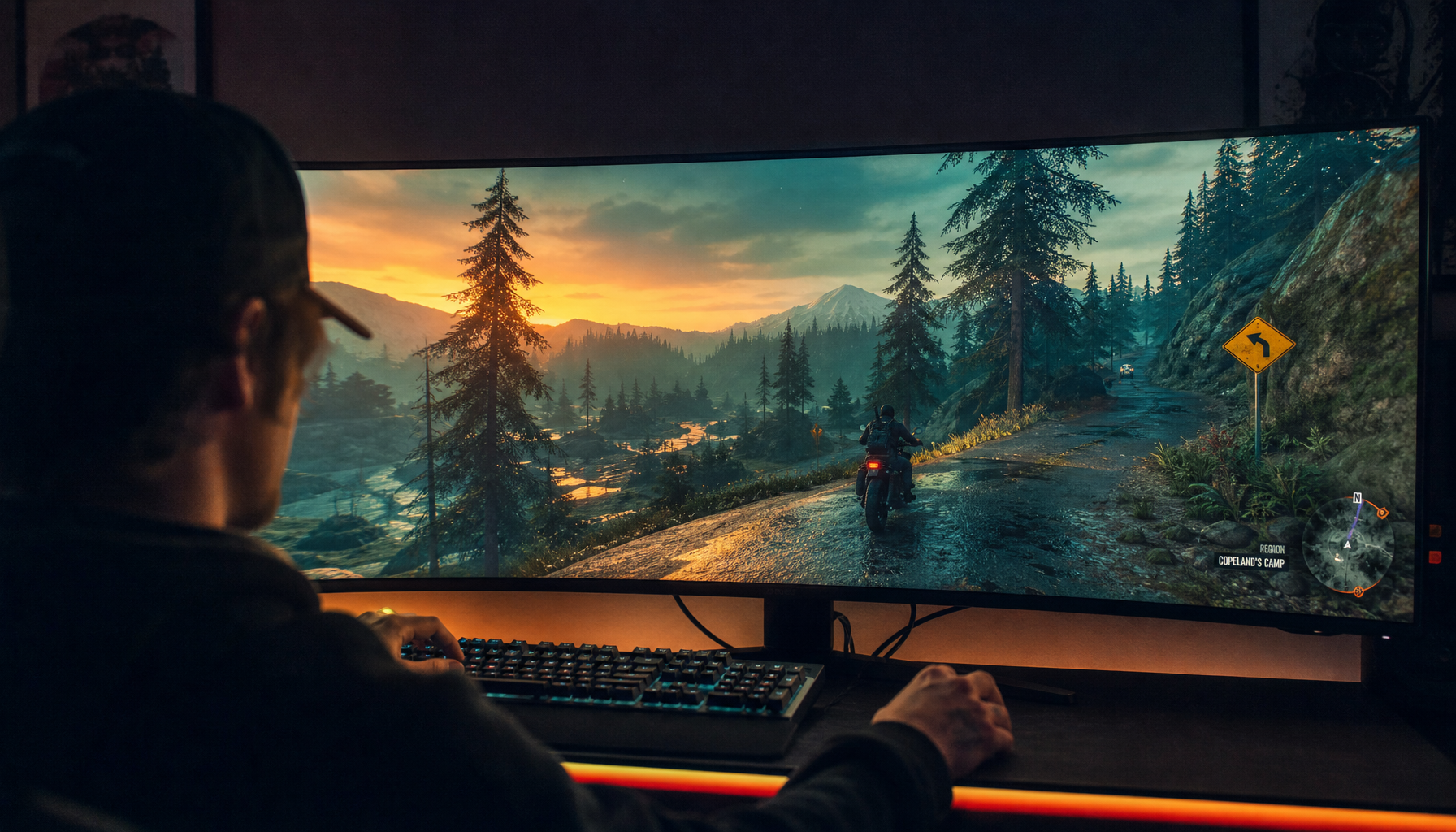
For a real-world example, imagine a 27-inch gaming monitor where FPS mode previously lifted shadows aggressively, then a newer firmware makes that same preset less aggressive to preserve contrast. The black floor may look deeper, but enemies in a dark hallway may become harder to spot. That is not necessarily a defect; it is a different tuning priority.

The Main Firmware-Level Variables
Gamma and Shadow Boost Tuning
Gamma controls how midtones and dark tones rise from black toward white. Small gamma changes can make a dark scene look cinematic, muddy, washed out, or tactically clear. Gaming-oriented shadow-boost features brighten dark regions by adjusting gamma in the darker parts of the image rather than simply raising the whole screen’s brightness.

The upside is obvious in competitive shooters: a dark corner becomes easier to read without turning the entire image into fog. The downside is equally real: higher shadow boost can reduce perceived contrast and make a carefully graded movie or story game look less convincing. If firmware changes the scale behind Level 5 or changes which preset enables it by default, black level performance appears to vary even when your OSD number has not changed.
A simple test is to open the same dark scene, disable HDR, set brightness to a fixed value, and move Shadow Boost or Dark Boost one step at a time. If the difference between steps feels larger after an update, the firmware likely changed the curve behind the control.
HDR Tone Mapping and EOTF Behavior
HDR is one of the biggest reasons two firmware versions can produce different blacks. HDR does not only ask the monitor to get brighter; it changes how the display interprets dark detail, highlights, metadata, and tone mapping. When a preset crosses from SDR to HDR, the monitor may reapply signal format, brightness mapping, transfer behavior, and viewing assumptions through HDR handling.
A firmware update may make HDR near-black tracking more conservative to avoid raised blacks, or it may lift shadows to prevent black crush. Neither choice is universally better. For gaming, lifted near-blacks can improve visibility. For HDR movies, that same lift can make letterbox bars and night scenes look gray.
The practical move is to keep an SDR baseline. Use one stable Custom or User mode for office work and SDR games, then reserve HDR for actual HDR content. If black levels only change when HDR is enabled, the firmware difference is probably tone mapping rather than panel performance.
Local Dimming and Backlight Control
On LED-backlit LCD monitors with local dimming, firmware decides when zones brighten, dim, or stay active. A new version can reduce blooming around subtitles and UI elements, but it may also lift the surrounding black floor to avoid visible pulsing. Conversely, more aggressive dimming can deepen blacks while crushing shadow detail or creating halos.

This tradeoff is especially visible in desktop use. A white mouse cursor over a black wallpaper may cause a dimming zone to brighten, making the nearby black background look cloudy. In a game, the same behavior may look like haze around a HUD element. Firmware can change the algorithm’s timing, thresholds, and zone response, so local dimming should always be tested with both real content and static patterns.
Overdrive, Dark Transitions, and Motion
Black level is not only about a still image. In motion, dark pixels must transition from black to dark gray, gray to black, and many subtle shades in between. Perceived motion clarity is affected by sample-and-hold behavior, pixel transitions, strobing, and overdrive, while manufacturer GtG and MPRT numbers can be optimistic because they may not capture the full visible transition through monitor responsiveness.
Firmware often adjusts overdrive tables. That can make dark transitions cleaner, faster, or more artifact-prone. On some VA monitors, dark smearing is more noticeable because black-to-gray transitions can be slower; a firmware update may push overdrive harder to reduce trails, but that can introduce overshoot or banding around moving objects.
The practical example is a dark third-person game with a character running past a shadowed wall. If the wall leaves a smear behind motion after firmware A but shows bright inverse trails after firmware B, you are not seeing a static black-level change. You are seeing motion tuning change the way dark tones behave over time.
Panel Type Still Sets the Ceiling
Firmware matters, but it cannot turn one panel technology into another. IPS, VA, OLED, and newer enhanced IPS or QD-OLED variants have different native contrast, viewing behavior, and dark-room strengths. Budget and mainstream buying guidance still shows this split clearly: VA monitors often advertise much higher contrast than IPS models, while IPS models often win on viewing-angle consistency and all-around speed in mixed-use setups through budget monitors.
Enhanced IPS panels show how hardware and tuning move together. Some models claim a 3,000:1 contrast ratio, deeper blacks than conventional IPS, and improved ambient contrast for certain high-end displays. Firmware can refine that experience, but the panel architecture and coating still define the available range.
Display factor |
What firmware can change |
What firmware cannot fully overcome |
Gamma and shadow visibility |
Dark-tone curve, shadow-boost strength, preset defaults |
Native contrast limits and panel glow |
HDR |
Tone mapping, near-black tracking, mode switching |
Peak brightness and real HDR hardware capability |
Local dimming |
Zone thresholds, blooming control, dimming speed |
Number of zones and backlight design |
Motion in dark scenes |
Overdrive tables and strobe timing |
Slow native dark transitions on some panels |
Room-light performance |
Brightness behavior and some adaptive features |
Screen coating and ambient reflections |
Why the Same Firmware Looks Different in Different Rooms
Black level is perceived, not just measured. A dim room makes IPS glow, backlight bleed, and raised blacks more obvious. A brighter room can hide some uniformity flaws, but too much light facing the screen can wash out dark detail. Portable monitor advice often starts with brightness and contrast because poor defaults affect clarity, comfort, and battery life, with indoor brightness commonly adjusted well below maximum through screen adjustment.
For office productivity, that means a firmware update tested at night may feel worse than it does at 10:00 AM under controlled ambient light. For gaming, a monitor that looks inky in a dark room may become visibly gray if a desk lamp hits the panel directly. Before blaming firmware, keep room lighting consistent and avoid comparing one version in a dark room against another in daylight.
How to Diagnose a Firmware Black-Level Change
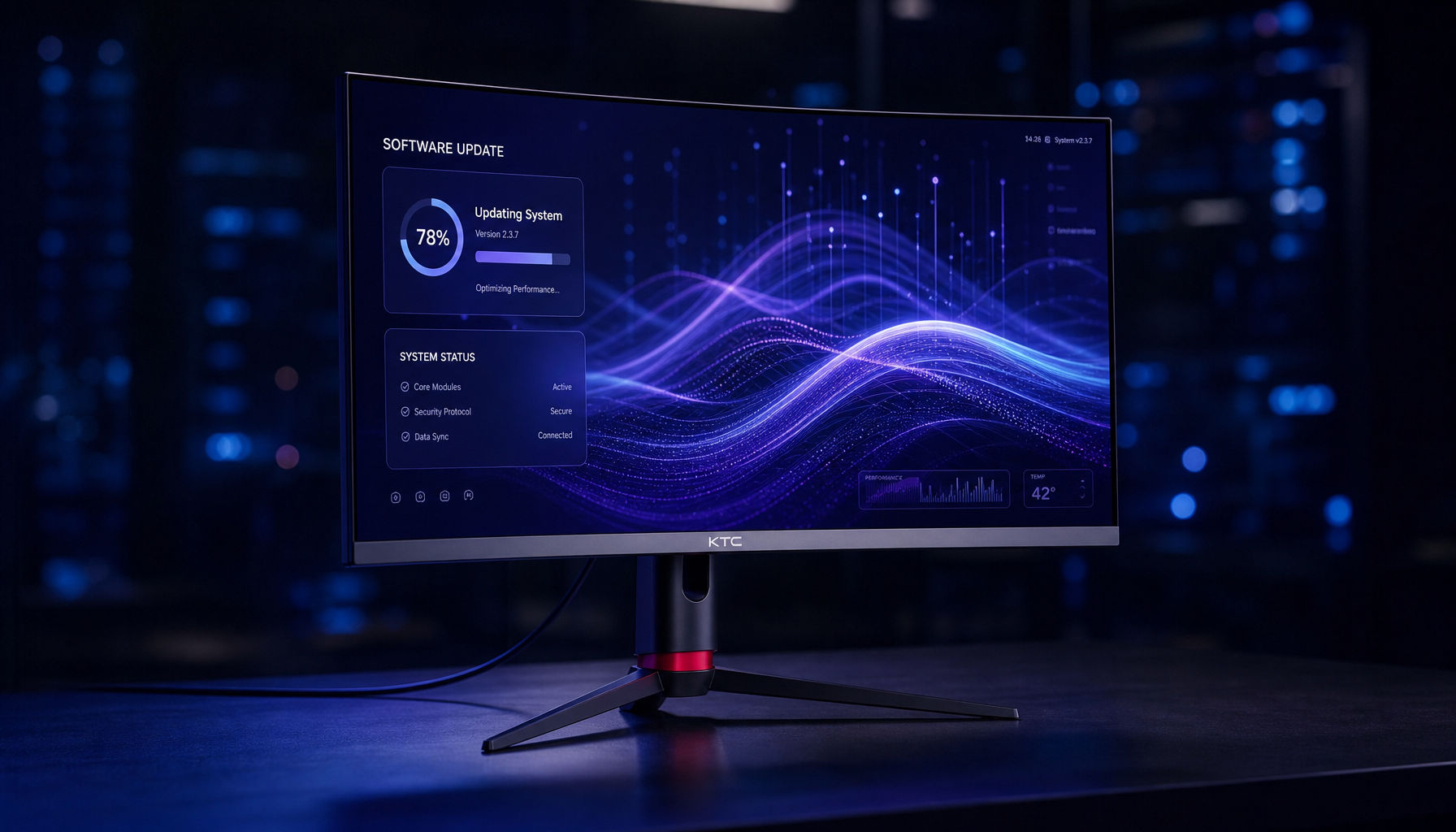
Start by writing down your current OSD settings before updating: brightness, contrast, gamma, color temperature, black equalizer, HDR state, local dimming, adaptive sync, refresh rate, and overdrive. After updating, do not trust preset names. Recheck every setting because firmware can reset defaults or change what a preset actually controls.

Use the same connection path. A laptop over USB-C, a desktop over DisplayPort, and a console over HDMI may trigger different color formats or limited/full range behavior. Single-cable USB-C setups can keep workstations cleaner through single-cable USB-C, but simplicity does not remove the need to verify signal range and HDR state after an update.
Then compare three scenes: a full-screen black image for glow and bleed, a dark game or movie scene for shadow detail, and a moving dark scene for smearing or overshoot. If the full-screen black is unchanged but the game looks different, the cause is probably gamma, HDR, or shadow boost. If motion looks different but static images do not, suspect overdrive or strobe tuning. If everything looks different only after switching presets, the firmware likely changed preset behavior rather than the core panel output.
Should You Update, Roll Back, or Stay Put?
Updating is usually worth it when the firmware addresses signal stability, HDR bugs, local dimming issues, input compatibility, or known blackout behavior. It is less urgent when your current display is stable, calibrated, and used for color-sensitive work where consistency matters more than new features. Professional setups with docks, KVM behavior, USB-C charging, and multi-monitor workflows benefit from reliability as much as raw image performance.
The strongest approach is value-oriented: update only after saving settings, reading release notes when available, and allowing time to retune. If a firmware version improves HDR but worsens SDR blacks for your workflow, separate your modes instead of forcing one preset to serve everything. For a competitive gaming monitor, a slightly lifted black level may be a worthwhile trade for visibility. For a productivity or creative display, stable gamma, predictable SDR, and clean text may matter more.
FAQ
Can a firmware update permanently damage black levels?
A normal firmware update should not physically change the panel’s native black capability. It can, however, change settings, tone mapping, local dimming behavior, or preset defaults enough that the display looks meaningfully different.
Why did blacks look worse after my monitor reset?
Many monitors return to a vivid, game, eco, or HDR-influenced preset after an update. That can raise brightness, change gamma, disable local dimming, or enable shadow-boost features. Rebuild your previous custom mode before judging the firmware.
Is deeper black always better?
No. Deeper black improves contrast and immersion, but overly aggressive black handling can hide shadow detail. The best setting depends on whether you are editing, reading, watching movies, or trying to spot movement in a dark competitive map.
Firmware changes black-level performance because the panel is only half the story; the processing path decides how dark signals become visible light. Lock down your baseline settings, test SDR and HDR separately, and judge black performance by your real workload rather than by one preset name or one dark screenshot.