Enabling HDR changes desktop color because the system routes colors through a different brightness and tone-mapping pipeline. The result can look dimmer, flatter, brighter, or more accurate depending on your monitor, profile, driver, and app.
Does your desktop look washed out the moment you turn on HDR, while games or movies suddenly look more cinematic? A practical calibration pass can usually separate a real HDR problem from a normal SDR desktop mismatch in minutes. You’ll learn why the shift happens, when it is expected, and how to set your display so work, games, and video look intentional instead of random.
The Core Reason: SDR Desktop Content Is Being Re-Mapped
Most desktop content is still SDR. Your browser UI, spreadsheets, email, file explorer, and many creative apps are usually designed around the older sRGB or Rec.709 color and brightness world. HDR, by contrast, is an end-to-end signal system that can represent much brighter highlights, deeper shadow detail, and wider color than SDR; luminance and color representation changes in HDR, but the format cannot make a panel exceed its real hardware limits.
When you enable HDR, the system has to place ordinary SDR windows into an HDR desktop container. That means a white spreadsheet cell, a gray toolbar, or a web page background is no longer sent to the display in the same simple way. The system must decide how bright “paper white” should be, how SDR colors should sit inside the wider HDR color space, and how the final image should be tone-mapped for your display.
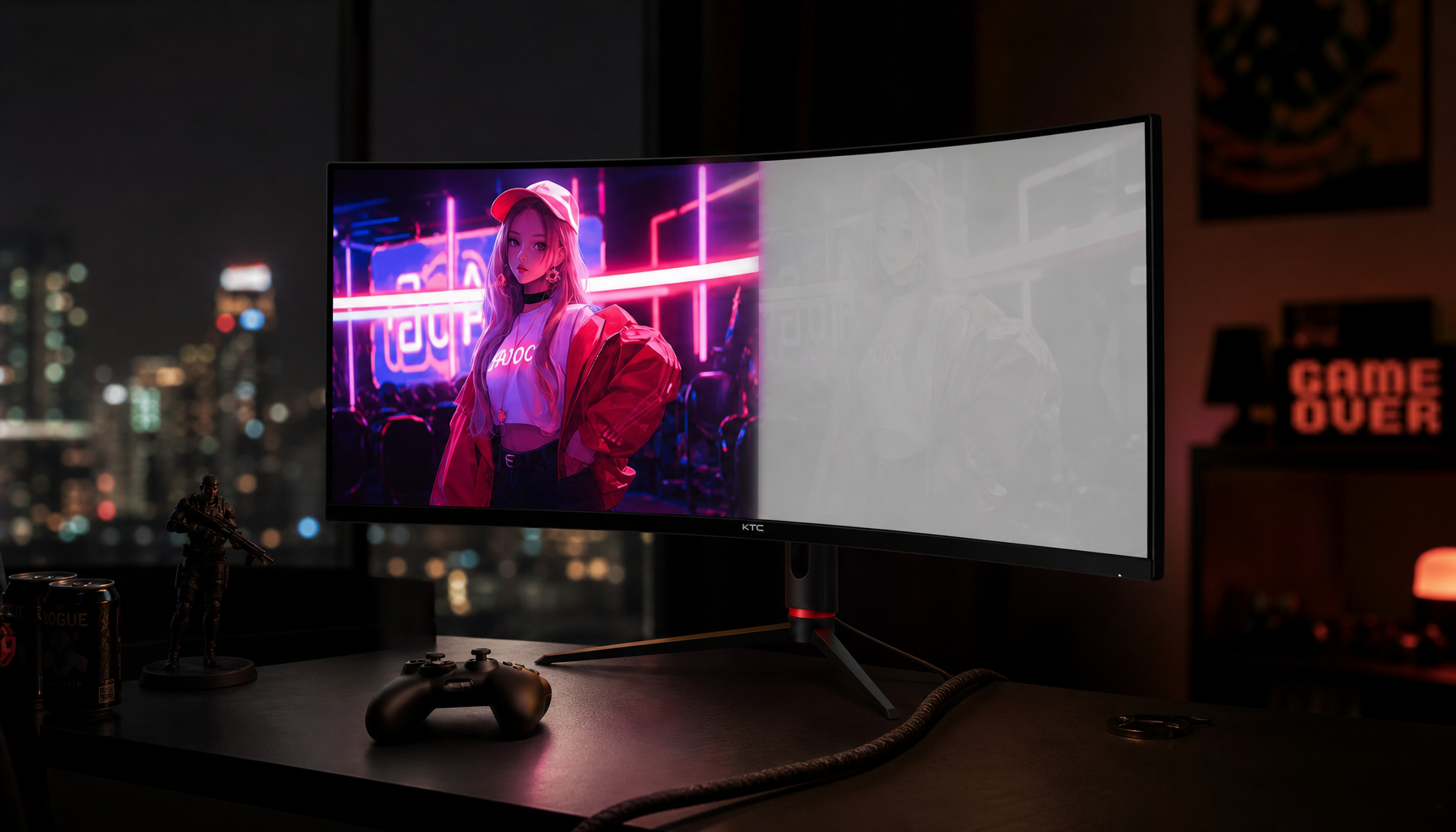
A common real-world example is a text editor beside an HDR test video. In SDR mode, the editor’s white background may look punchy because the monitor is using a bright SDR mode or stretching sRGB colors across a wide-gamut panel. In HDR mode, the same white area may look less saturated or less bright because the system is preserving room for true HDR highlights. That does not always mean HDR is broken; it often means your old SDR desktop was being exaggerated.

HDR Changes Brightness, Not Just Color
HDR is not only “more color.” It changes how brightness is encoded. SDR desktop work is commonly built around a much lower reference white than HDR movies and games, while HDR formats can carry highlights far beyond normal desktop white. HDR setup guidance frames the format as a full chain involving the operating system, GPU, display, and app pipeline, which is why one weak link can make the desktop look wrong.
This is where the SDR content brightness control matters. If your desktop looks too dim after enabling HDR, the SDR brightness balance is often set too low for your room and monitor. If it is pushed too high, SDR apps can look harsh, and HDR highlights lose the visual separation that makes HDR worthwhile. For an office display in a bright room, you may prefer a higher SDR brightness level; for late-night gaming or OLED use, a lower setting can be more comfortable and less fatiguing.

The simple calculation is visual rather than mathematical: if an HDR game explosion should be dramatically brighter than a white web page, your SDR desktop white cannot also sit near the monitor’s peak brightness. HDR needs headroom. Without headroom, everything becomes bright, and nothing feels high dynamic range.
Why Colors May Look Washed Out
Washed-out desktop color usually comes from one of three causes: the system is accurately mapping SDR into HDR and your old SDR mode was oversaturated, the monitor is in a poor HDR picture mode, or the color profile and app behavior are fighting each other. A profile built for SDR brightness and gamma may not describe the monitor correctly once HDR mode changes its tone curve and gamut behavior.
Wide-gamut monitors make this more obvious. In SDR mode, an unmanaged app may stretch ordinary sRGB red across a P3-capable or wider native gamut, making icons, thumbnails, and game launchers look extra vivid. When HDR is enabled, the system may pull those colors back into a more controlled mapping. The desktop can feel duller, but the color may be closer to the intended SDR source.
That distinction matters for productivity displays. If you edit product photos, prepare slides, or match brand colors, “more saturated” is not the same as “more correct.” For gaming and movies, you may enjoy a more vivid HDR mode. For office and creative work, a calibrated SDR mode may be the more reliable daily driver.
Tone Mapping Is the Hidden Middleman
No consumer monitor can show every brightness and color value that HDR formats can encode, so tone mapping is unavoidable. Tone mapping reshapes the HDR signal to fit the monitor’s actual peak brightness, black level, and color volume. A 1,000-nit mastered scene shown on a lower-brightness monitor must be compressed somehow; otherwise highlights clip, shadows crush, or the whole image looks flat.
The KTC calibration discussion makes the practical point that HDR content is mastered inconsistently, with differences in peak brightness targets, metadata, HDR formats, and delivery paths. That is why one HDR game can look excellent while another looks dim on the same setup. It is also why chasing a perfect look for one title can make another title worse.
For example, if you tune your monitor’s HDR mode until one dark sci-fi game shows every shadow, a bright racing game may lose sparkle or look milky. A better approach is to calibrate the display to a stable baseline, then use per-game HDR sliders only when a specific title needs adjustment.
HDR Calibration: When It Helps
An HDR calibration app is useful because it gives the system display-specific values for dark detail, bright detail, and maximum brightness. This is especially relevant on HDR-capable monitors because it helps the system understand what your screen can actually show instead of relying only on generic behavior.
Run calibration after choosing the monitor’s HDR mode, not before. If your monitor has separate HDR Game, HDR Movie, DisplayHDR, or native HDR modes, pick the one you actually plan to use, then calibrate. Changing the monitor mode afterward can invalidate the practical result because brightness roll-off, local dimming, and saturation handling may change.

A strong workflow is to set the monitor’s HDR mode first, disable aggressive post-processing if it interferes with test patterns, run HDR calibration full screen on the HDR display, then adjust the SDR content brightness slider for your normal room lighting. After that, test a known HDR video and a normal desktop app side by side.
Should You Leave HDR On All Day?
For pure HDR entertainment, enabling HDR makes sense. For office work, browsing, coding, spreadsheets, and SDR media, leaving HDR on all day is more debatable. Setup guidance recommends confirming HDR with sample content, while enthusiast discussions of desktop HDR behavior reflect a common reality: results depend heavily on operating-system version, GPU driver, monitor firmware, and panel quality.
Use Case |
HDR On |
HDR Off |
HDR games and movies |
Best chance of bright highlights, wider color, and intended tone mapping |
HDR content may play as SDR or lose impact |
Office apps and browsing |
Can look dimmer or less saturated because SDR is mapped into HDR |
Usually cleaner, predictable SDR appearance |
Riskier unless the app and workflow are HDR-aware |
Better match for standard sRGB/Rec.709 deliverables |
|
OLED and Mini LED gaming |
Often worth it with proper calibration |
Leaves HDR hardware capability unused |
For a gaming monitor, the best default is often SDR for desktop productivity and HDR for HDR games or video. The keyboard shortcut Win + Alt + B can make this switch fast on many systems, which is more practical than forcing every app into one mode all day.
How to Make HDR Desktop Color Look Right
Start by confirming that the system recognizes the correct display as HDR-capable. If you use multiple monitors, select the actual HDR monitor in Display Settings before enabling HDR. Current operating-system support and graphics drivers matter because HDR depends on the system, GPU, display, and app all cooperating.
Next, use the monitor’s on-screen display deliberately. For SDR work, choose an sRGB or Rec.709 mode if your monitor offers one. For HDR, use the monitor’s real HDR mode rather than an SDR “HDR effect” preset. Simulation modes may boost contrast or saturation, but they do not process HDR metadata correctly and can make the desktop look impressive for five minutes, then unreliable for actual content.
Then calibrate HDR and set SDR brightness in the system settings. After calibration, compare three things: a white desktop app, a known HDR video with the HDR label available, and an HDR game or test pattern. If HDR video looks right but one app looks wrong, the app may be the problem. If everything looks wrong, check the display mode, cable capability, driver version, and HDR calibration profile.

Pros and Cons of Enabling HDR
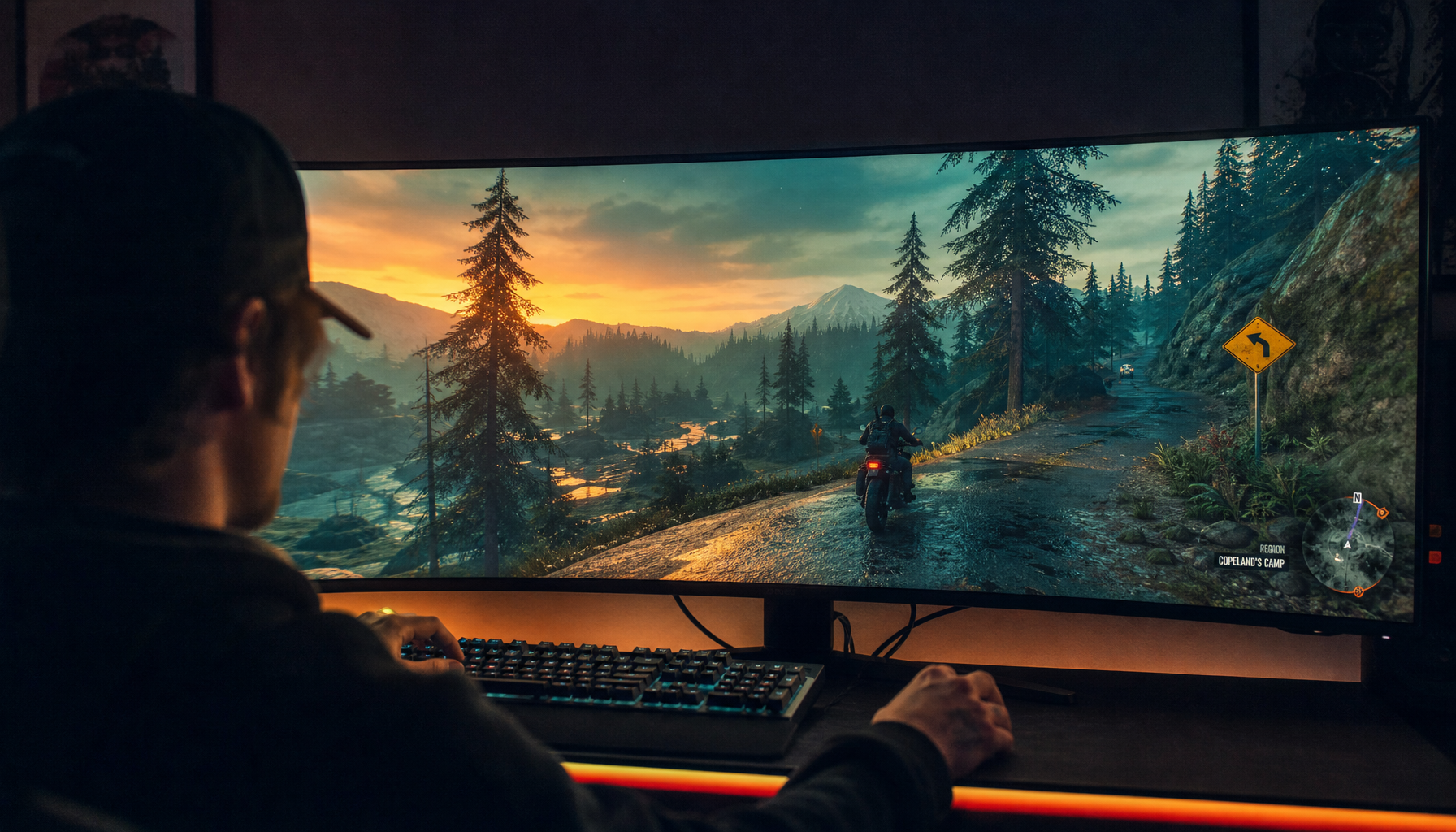
HDR’s main advantage is immersion. On a capable OLED or Mini LED display, bright specular highlights, deeper blacks, and richer color volume can make HDR games and movies feel more dimensional. It also lets high-end monitors show the performance you paid for instead of compressing every experience into SDR.
The tradeoff is consistency. SDR desktop content has to be translated into the HDR environment, and not every app handles color the same way. Calibration is also more sensitive to room lighting, monitor mode, and firmware behavior. In a dark room, shadow detail may look excellent; under bright office lighting, the same settings may feel too dim.
The value-oriented answer is not “HDR always on” or “HDR always off.” The reliable answer is mode discipline. Use SDR when accuracy and comfort matter most. Use HDR when the content is actually HDR and the display has the brightness, contrast, and tone-mapping control to do it justice.
FAQ
Why does HDR make my desktop look gray?
Your SDR desktop is being placed into an HDR brightness range, so the system preserves headroom for brighter HDR highlights. If the SDR brightness level is too low, normal apps can look gray or muted.
Is washed-out HDR always a bad sign?
Not always. If your SDR mode was oversaturating sRGB content on a wide-gamut monitor, HDR may look less punchy but more controlled. If HDR videos and games also look flat, then calibration, monitor mode, driver, or cable issues are more likely.
Do I need HDR for productivity?
Usually no. Most office and web work is SDR. HDR is most valuable for HDR games, HDR video, and specialized creative workflows where the display, app, and delivery target all support it.
Bottom Line
HDR changes desktop color because the system is managing a different visual contract: more brightness range, wider color potential, and tone mapping built around the display’s limits. Treat HDR as a performance mode for the right content, calibrate it once the monitor is in the correct HDR mode, and keep SDR available when accuracy, comfort, and predictable desktop color matter most.