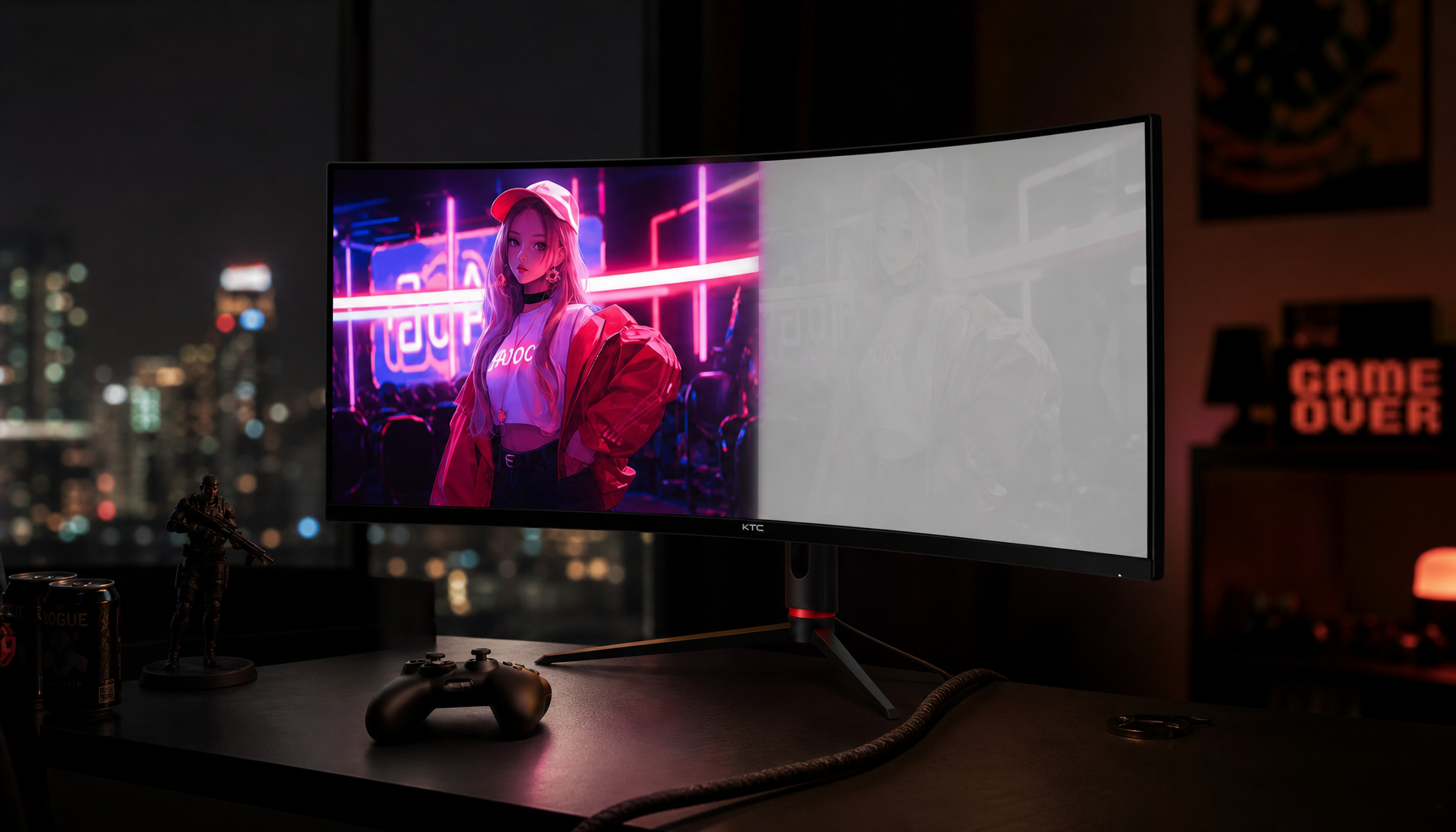
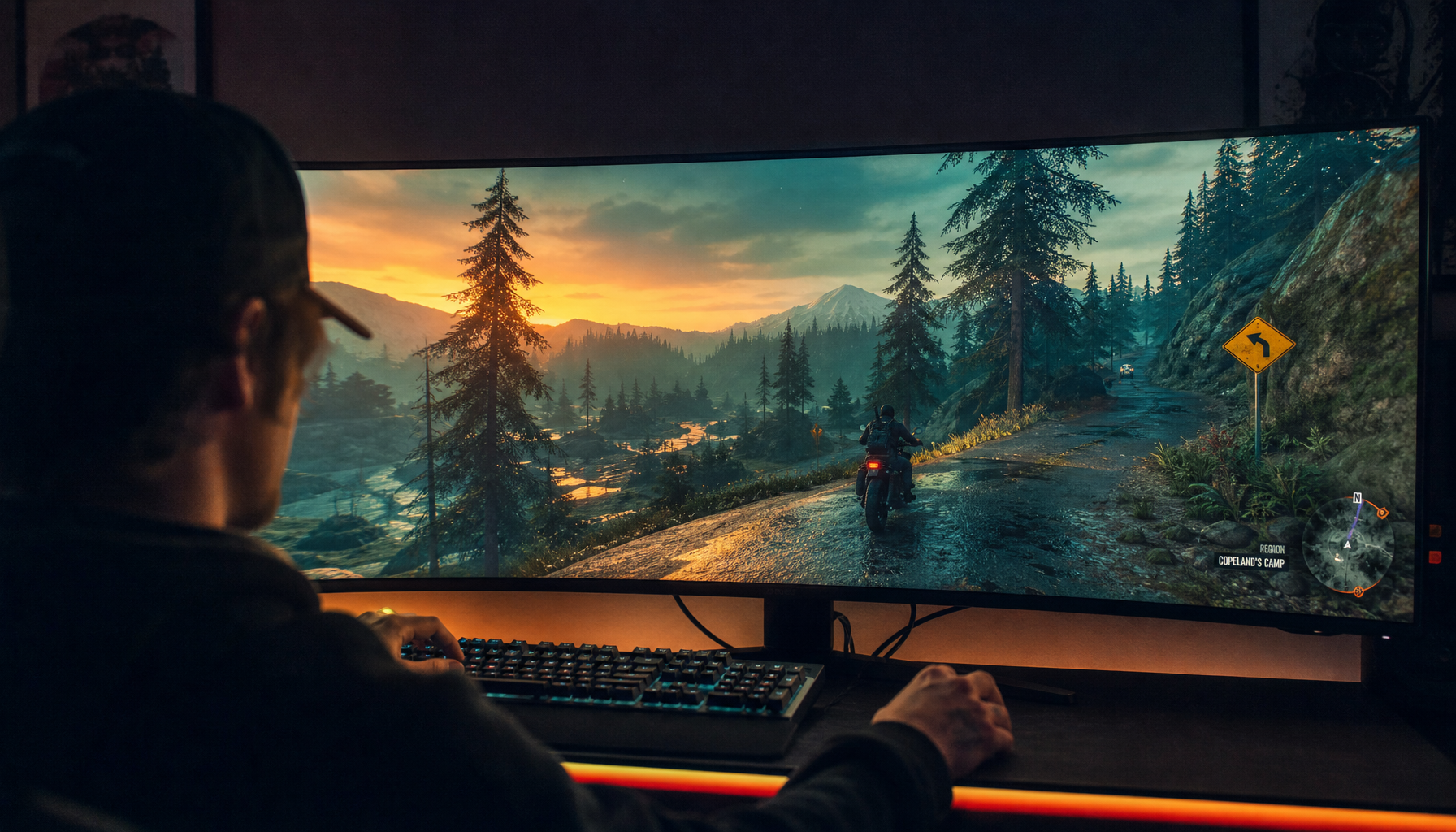
Color accuracy can degrade below 50% brightness because many displays no longer behave linearly: backlight dimming, gamma shifts, PWM flicker, panel non-uniformity, color-channel imbalance, and preset changes can all alter how colors are perceived or reproduced.
Does your calibrated monitor look clean at 70% brightness, then suddenly make skin tones look flat, shadows muddy, or whites slightly green when you dim it for night work? In practical color workflows, holding a stable white point, gamma curve, and contrast relationship is more valuable than simply making the screen comfortable. This article explains why the shift happens, when it matters, and how to keep a gaming, editing, office, or portable display trustworthy at lower brightness.
Why Lower Brightness Changes More Than Brightness
On most LCD monitors, the brightness control mainly changes the backlight intensity, not the actual RGB pixel values. That sounds harmless, and in a well-engineered monitor it often is. The problem appears when the panel, backlight driver, or monitor firmware does not preserve the same gamma, white point, and contrast behavior as luminance drops.
For office work, this may only look like a slightly duller spreadsheet. For a gaming monitor, it can mean shadow detail disappears in a dark map. For video editing, photo review, or brand-color work, it can mean you are correcting an image that is not actually wrong. Brightness on monitors is best treated as a room-matching control, while gamma, color temperature, contrast, and RGB gain determine whether the image remains visually faithful.
A simple real-world example: a 27-inch 4K display at 50/100 brightness and 50/100 contrast may look neutral in a bright room, but the same display at 20/100 brightness in a dark room may compress dark grays. If a near-black test pattern has ten visible bars at 50% brightness but only six visible bars at 25%, the display is not just dimmer; it is hiding tonal information.
Backlight Dimming Can Shift Gamma and Shadow Detail
Gamma describes how smoothly a display moves from black to white. When brightness is reduced below the monitor’s more stable operating range, some displays change the shape of that curve. The result is easy to spot: midtones may look too heavy, dark grays may merge into black, and highlights may seem less separated.

This is why two monitors with the same brightness percentage can behave differently. One model may preserve detail at 30%, while another crushes shadows below 50%. Black-level and white-level patterns are useful because they reveal whether a brightness change has disrupted shadow or highlight visibility.
For competitive gaming, this can affect target visibility in dim scenes. For creative work, it can push you into lifting shadows or warming skin tones unnecessarily. For office productivity, it can make gray interface text and thin gridlines harder to distinguish, increasing visual effort over a long session.
PWM Flicker and Low-Brightness Driving Can Affect Perception
Some displays reduce brightness by rapidly turning the backlight on and off, a technique called pulse-width modulation, or PWM. If the flicker frequency is low enough or your eyes are sensitive to it, low brightness may feel unstable even when the image technically measures close to target. That visual instability can make color judgments less reliable because your eyes are working harder to maintain comfort.
Comfort-focused monitor features often try to reduce this problem through ambient brightness adjustment, low blue light modes, and flicker reduction. For accuracy, the key point is that automatic or comfort modes should be used carefully during color-critical work. Flicker reduction is especially relevant at low brightness because dimming behavior is one common place where fatigue and perceived instability show up.
There is a tradeoff. A low-blue-light or reading mode can be easier at night, but it usually warms the white point and reduces color reliability. That is helpful for reading reports at 10:30 PM, not for matching a product photo or grading a video clip.
Color Channels May No Longer Track Evenly
Accurate white is created by balancing red, green, and blue output. At lower brightness, those channels may not scale down perfectly together. If blue drops faster than red and green, whites can look warmer. If green remains too strong, neutral grays can look slightly sickly. On inexpensive panels, portable monitors, or aging displays, this imbalance can become more visible below the midpoint of the brightness range.
Professional calibration exists because visual matching by eye is limited. Hardware calibration is the most accurate method, and higher-end graphics monitors often provide controls for brightness, gamma, gain, individual RGB levels, and color-space presets. Hardware calibration matters most when the monitor must match printed output, another display, or a known color standard.
A practical test is to open a neutral gray image at 25%, 50%, and 75% brightness. If the gray changes tint as the screen dims, your display is not maintaining channel balance. That does not always mean the monitor is defective, but it does mean low-brightness color decisions should be treated with caution.
Picture Modes Can Make the Problem Worse
Many users dim the display and also switch into Movie, Vivid, Reading, Eye Care, Night, or Game mode. That stacks multiple changes at once. A preset may alter brightness, contrast, color temperature, saturation, sharpness, local dimming, blue-light filtering, and dynamic contrast. When color accuracy suddenly collapses below 50%, the brightness slider may be only one part of the story.

A common editing scenario is a 27-inch 4K monitor set around 50 brightness and 50 contrast, then moved from Standard to Movie mode while Dynamic Contrast is debated. Dynamic Contrast automatically changes display behavior based on image content, which makes grading unreliable because the same color can be shown differently depending on the scene.
A display mode can optimize visibility, comfort, or punch for different content, but modes like Vivid and Movie often prioritize impact over neutrality. For editing, design, and print matching, start with Standard, Custom, User, sRGB, or a calibrated profile before touching brightness.
Setting Choice |
Benefit |
Accuracy Risk |
Standard or Custom mode |
Stable baseline for work and calibration |
May look less dramatic than media presets |
sRGB mode |
Helps clamp wide-gamut color for web work |
Some monitors lock brightness or RGB controls |
Movie or Vivid mode |
More punch for casual viewing |
Can boost saturation, contrast, and color temperature |
Dynamic Contrast |
Adds perceived depth scene by scene |
Breaks consistency for editing and grading |
Low Blue Light or Night mode |
More comfortable in dim rooms |
Warmer whites and less reliable color judgment |
Portable Monitors and Budget Panels Are More Vulnerable
Portable smart screens and thin USB-C monitors often use edge-lit backlights to stay light and slim. That design is convenient, but it can make brightness uniformity harder. Below 50%, corners, edges, and patches may become more visible because the eye adapts to the darker overall image and starts noticing uneven luminance.

Uneven brightness can appear as dim corners, bright edges, bands, or cloudy zones, and most portable LCD monitors rely on LED backlights that vary by design and panel quality. Before assuming the hardware is damaged, reset settings, avoid exaggerated vivid or high-contrast modes, and use more moderate backlight and contrast levels.
For travel work, a portable display is excellent for timelines, chat, dashboards, notes, or a second reference window. For final color approval, use the most stable calibrated display in the setup. If the portable screen must be used, test it with gray, white, black, and skin-tone references at the exact brightness you plan to use.
OLED and Mini-LED Behave Differently at Low Brightness
OLED displays do not use a traditional LCD backlight. Each pixel emits its own light, which gives OLED its famous black level and contrast. But OLED brightness behavior can still affect color perception, especially when automatic brightness limiting, pixel-care routines, HDR behavior, or panel protection features step in.
OLED owners often reduce brightness to manage longevity. In one real-world monitor account, 2,656 hours of use with brightness reduced to 50%, pixel movement enabled, and screen-saver behavior used to reduce static wear led to minimal OLED burn-in in normal use, though faint marks appeared under specific gray testing. That supports a practical point: reduced brightness can protect the panel, but you still need a stable mode and periodic checks if you make color decisions.
Mini-LED monitors use an LCD panel with many dimming zones behind it. They can sustain higher brightness for productivity, but local dimming may alter perceived contrast around bright objects on dark backgrounds. KTC’s longevity comparison notes that Mini-LED panels are less vulnerable to static-content burn-in than OLED and reported less than 3% brightness degradation after 10,000 hours in its discussion of 2026 models; Mini-LED panels are therefore appealing for bright, long-duration office use. For accuracy, however, local dimming should be tested because it can change how contrast is perceived in real scenes.

Brightness Should Match the Room, Not a Magic Percentage
Below 50% is not automatically bad. In a dim room, 30% may be correct. In a sunlit office, 30% may force your eyes to work harder and make whites look gray. The right target is a comfortable match between display luminance and ambient light while preserving visible shadow and highlight detail.
Visual fatigue research supports this balance. A study on screen brightness and color in a dark nighttime environment found that low brightness produced the lowest subjective fatigue, while medium and high brightness tended to deepen fatigue; the study used 15 participants, a 4K display, and controlled illumination below 3 lux. Low screen brightness can be beneficial in darkness, but that does not mean every low-brightness display remains color-accurate.
Workspace lighting also matters. Poor lighting, glare, and uneven illumination force the eyes to work harder, and good workplace lighting supports focus and comfort during screen-heavy work. If you dim a monitor to 25% because the room is dark, adding a soft bias light behind the display may let you raise brightness slightly while reducing contrast strain.
How to Keep Color Accurate Below 50%
Start with the most neutral picture mode your monitor offers, usually Custom, User, Standard, or sRGB. Turn off Dynamic Contrast, Vivid enhancements, automatic color temperature changes, and aggressive eye-care modes during color-sensitive work. Then adjust brightness for the room and check black-level and white-level test patterns.
If you own a colorimeter, calibrate at the brightness level you actually use. A profile made at 70% brightness may not perfectly describe the display at 25%. Graphics and photography monitor makers commonly recommend recalibration every two to four weeks, while more demanding environments may recalibrate more often. That cadence is realistic for creators whose work depends on repeatable color.
If the display is still too bright at 0%, a last-resort method is to lower red, green, and blue controls together in the monitor’s custom color menu. Monitor brightness can sometimes be reduced further this way, but it can also introduce color shifts, so recalibration is important after any RGB adjustment.
For multi-monitor setups, make the best calibrated display your color-critical screen and use secondary monitors for scopes, chat, scripts, browser references, or productivity tools. Creative professionals benefit from separating the main canvas or timeline from previews and palettes, but color-calibrated and matching monitors are preferred when visual consistency matters.
FAQ
Is 50% brightness the best setting for color accuracy?
Not universally. A monitor’s percentage scale is not standardized, so 50% on one display may be much brighter than 50% on another. Accuracy depends on whether the display preserves gamma, white point, contrast, and uniformity at that brightness.
Should I use Night Mode while editing photos or video?
Use it for comfort reading, not for final color decisions. Night Mode and Low Blue Light settings usually warm the image, which can make you overcorrect whites, skin tones, and neutral grays.
Why does my screen look dull after turning off Dynamic Contrast?
Dynamic Contrast often makes images look punchier by changing contrast or backlight behavior dynamically. Turning it off can look flatter at first, but the stable image is more reliable for editing because the display stops changing the rules scene by scene.
Can a cheaper monitor be accurate at low brightness?
Sometimes, but it is less predictable. Budget and portable panels may have weaker uniformity, fewer RGB controls, and less stable low-brightness behavior. A hardware calibration check is the fastest way to know.
Final Word
Reducing brightness below 50% is not the enemy; unstable display behavior is. Match brightness to the room, keep the picture mode neutral, disable dynamic enhancements for color work, and calibrate at the level you actually use. A display that stays consistent when dimmed gives you comfort without surrendering control.