A higher refresh rate still matters, but Adaptive Sync matters more when frame rates fluctuate. It keeps motion smoother, more responsive, and visually cleaner during real play.
Does your 165Hz or 240Hz monitor still show split images, choppy camera pans, or uneven aim when the action gets heavy? A practical 58 FPS moment on a 75Hz screen can look smoother with sync working correctly than a higher-spec display running out of rhythm. Here is how to judge monitors by the motion you actually feel, not just the biggest number on the box.
The Refresh Rate Number Is Only the Ceiling
Refresh rate tells you how many times per second a monitor can update its image. A 144Hz display can refresh up to 144 times per second, while a 240Hz display can refresh up to 240 times per second. That ceiling is valuable, especially in esports titles where high FPS can improve responsiveness, and FPS basics still matter because higher FPS generally creates smoother motion.
The problem is that games rarely run at one perfect frame rate. A GPU might push 170 FPS while you look at a quiet hallway, then drop to 92 FPS during smoke, reflections, crowd scenes, or ray-traced lighting. Office users see a quieter version of the same issue when moving between a laptop display, a portable screen, and a docked monitor with different refresh behaviors. The monitor’s maximum Hz does not solve the timing mismatch by itself.
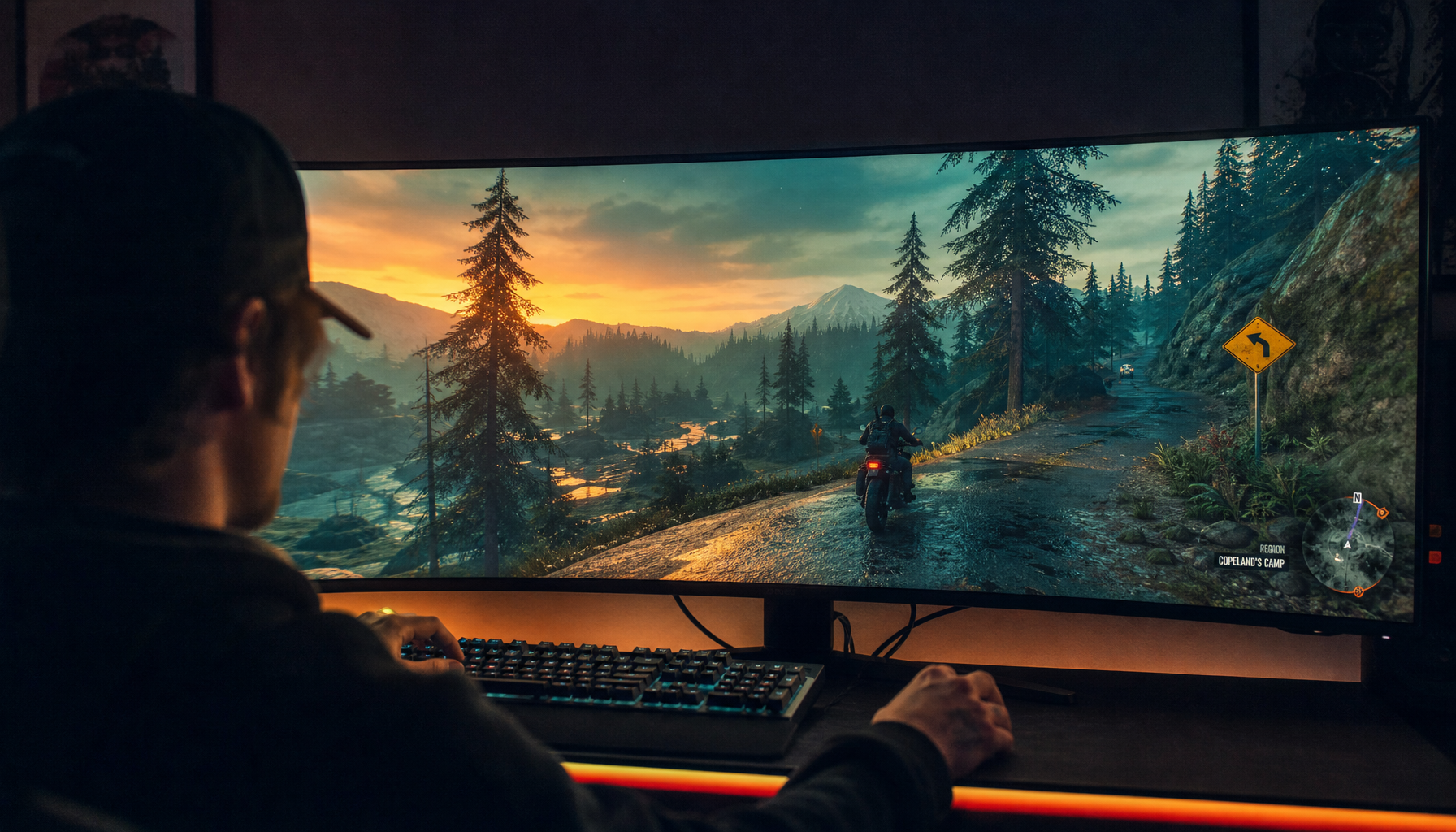
In hands-on display evaluation, the easiest way to expose this is to stop staring at the FPS counter and pan slowly across high-contrast vertical objects, such as fences, buildings, window frames, or text columns. If the image breaks into horizontal slices or the camera motion feels uneven, the refresh-rate headline is not telling the full story.

What Adaptive Sync Actually Fixes
Adaptive Sync, also called variable refresh rate or VRR, lets the display adjust its refresh behavior to match the GPU’s frame output in real time. Instead of forcing the game to meet a fixed 144Hz or 240Hz schedule, Adaptive Sync is a monitor technology that makes the screen follow the pace of the frames being delivered.
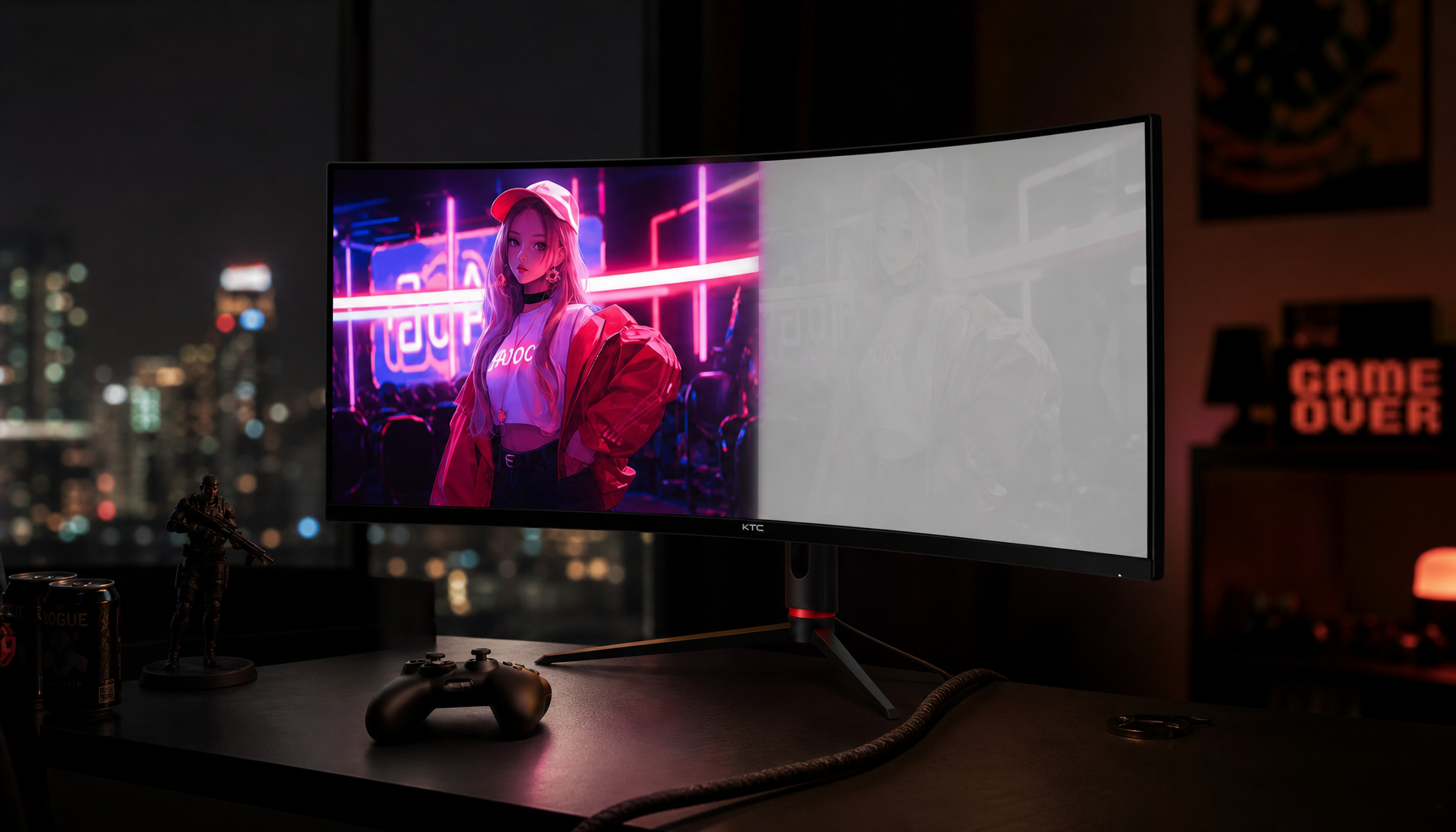
That matters because screen tearing is a timing problem. If a monitor refreshes while the GPU is partway through sending a new frame, you may see parts of two frames at once. For example, if a 60Hz monitor receives 80 FPS, the display may show pieces of multiple frames, creating the broken-line effect players call tearing. Adaptive Sync attacks that mismatch directly.
Stutter is the other half of the issue. If the GPU cannot keep up with a fixed refresh cadence, frames can repeat, arrive late, or appear unevenly spaced. A game can report a decent average FPS while still feeling rough because the frame pacing is inconsistent. This is why a stable-feeling 100 FPS can be more useful than a spiky 160 FPS.
Why V-Sync Is No Longer Enough
V-Sync was the classic answer to tearing. It forces the GPU to wait for the monitor’s refresh cycle before presenting the next frame. That can clean up tearing, but it often adds latency and can make performance drops feel worse. An explanation of the core synchronization tradeoff makes the point clear: synchronization can smooth gaming, but the older software method can punish fluctuating frame rates.
For competitive players, that delay matters. If your mouse movement reaches the display a little later, aim can feel heavier even when the image looks clean. For single-player and racing games, the issue is more about immersion: V-Sync can prevent obvious tearing but still make camera pans feel less immediate.

Adaptive Sync is the cleaner middle ground. It reduces tearing without simply locking the GPU to a rigid output pattern. If the game is rendering at 58 FPS, the monitor can refresh around 58Hz. If the game climbs to 75 FPS, the monitor can follow around 75Hz, assuming the display’s sync range supports it.
The Real Buying Question: How Wide and Reliable Is the Sync Range?
A raw refresh-rate number tells you the top speed. The sync range tells you how often the monitor can stay smooth when performance changes. A 165Hz display with a useful VRR range can feel better than a 240Hz display with weak VRR behavior, especially on a mid-range GPU.
Spec You See |
What It Really Means |
Why It Matters |
144Hz, 165Hz, 240Hz |
Maximum refresh ceiling |
Useful only when your system can feed frames consistently |
Adaptive Sync or VRR |
Dynamic refresh matching |
Reduces tearing and uneven motion during fluctuating FPS |
Open VRR support |
Broad compatibility across many monitors |
Often strong value and common across affordable displays |
Certified VRR compatibility |
Vendor-tested VRR behavior on supported displays |
Useful when you want extra confidence with a specific GPU |
Sync range |
The FPS window where VRR works |
Critical for avoiding stutter when FPS dips |
Lower-end displays may have limited sync ranges, and that is a decision-critical detail. If your game often runs between 48 and 90 FPS, a monitor that only behaves well in a narrow band may not deliver the upgrade you expected. Low frame-rate compensation can also matter because it helps when FPS falls below the normal VRR window.
VRR Standards and Compatibility: The Practical Difference
VESA Adaptive-Sync is the underlying open standard used in many modern displays. Some VRR implementations build on that open approach and are widely available across affordable monitors. Others started as more proprietary solutions using dedicated monitor hardware, while broader compatibility programs now allow many Adaptive-Sync monitors to work across more GPU setups.
For buyers, the cleanest rule is to match the monitor to your GPU ecosystem and verify the exact model, not just the marketing badge. Open VRR monitors are often less expensive because they usually do not need dedicated proprietary modules, while displays with specialized hardware can cost more.
That does not mean one VRR path is automatically better than another. Tighter certification can appeal to buyers who want a more controlled experience. Open implementations tend to win on value, variety, and availability. Certified compatibility is often the practical middle ground for users who want VRR without paying for a full hardware-module monitor.
Why Office and Portable Screens Are Part of This Conversation
Adaptive Sync is not only for esports. Portable smart screens, USB-C display extenders, and hybrid productivity setups increasingly rely on mixed refresh rates, varied cable paths, and non-native display modes. When you move a laptop from a desk monitor to a portable second screen, smoothness can change even if the resolution looks sharp.

For productivity, the benefit is subtle but real. Timeline scrubbing, high-frame-rate video playback, window dragging, and stylus-like cursor movement can feel steadier when the display pipeline is not fighting inconsistent frame timing. If you spend all day moving between spreadsheets, browser dashboards, video previews, and conferencing tools, reduced judder is less dramatic than an esports clutch, but it lowers visual friction.
For portable buyers, connection details matter. USB-C, DisplayPort Alt Mode, HDMI, and GPU support can affect whether VRR is available at all. The safest buying habit is to check the monitor spec sheet for VRR, Adaptive-Sync, or certified compatibility language, then confirm your laptop or GPU driver exposes the setting.
How to Test Whether Adaptive Sync Matters on Your Setup
Start with the games or workflows you actually use. Do not benchmark only in a light training map if you spend real time in demanding raids, open-world driving, or multi-window creative work. Use an overlay to watch average FPS, 1% lows, and frame-time consistency. Performance-monitoring tools can help, and frame-time analysis is especially useful because it can help separate CPU and GPU bottlenecks.
Then run a simple comparison. Turn Adaptive Sync on, play a demanding scene for several minutes, and pay attention to camera pans, aiming feel, and tearing. Turn it off and repeat the same route. If tearing appears or motion becomes uneven, VRR is giving you a real benefit. If you already sustain very high, stable FPS with no visible tearing, the benefit may be smaller.

Competitive players should test one more setting: latency feel. Some ultra-competitive FPS players may prefer disabling Adaptive Sync in specific games if they are chasing the absolute lowest possible input delay. That is not a universal rule; it is a per-game, per-system choice. The right answer is the setting that gives you the best combination of visual stability and control.
When Raw Refresh Rate Still Wins
Raw refresh rate still matters when your GPU can consistently feed the monitor. A 240Hz display can feel meaningfully faster than 144Hz in games where your system sustains high FPS, especially shooters with low visual complexity and strong optimization. A higher ceiling also gives Adaptive Sync more room to work when frame rates vary within the upper range.
But buying only by Hz is like buying a performance car by top speed and ignoring the transmission. If your frame rate swings between 70 and 140 FPS, a well-implemented Adaptive Sync monitor can feel more composed than a faster display with poor VRR support. Smooth delivery is what your eyes and hands actually experience.
Final Buying Guidance
For gaming, prioritize a monitor with the right resolution, panel quality, response time, and a proven Adaptive Sync implementation before chasing the biggest Hz number your budget can touch. For office and portable smart screens, look for VRR support when you use video, design tools, multi-display docks, or mixed laptop setups where motion consistency matters.
The best display is not the one with the loudest spec sheet. It is the one that keeps frames arriving cleanly, controls latency, and lets your GPU and screen move in rhythm when the workload gets real.