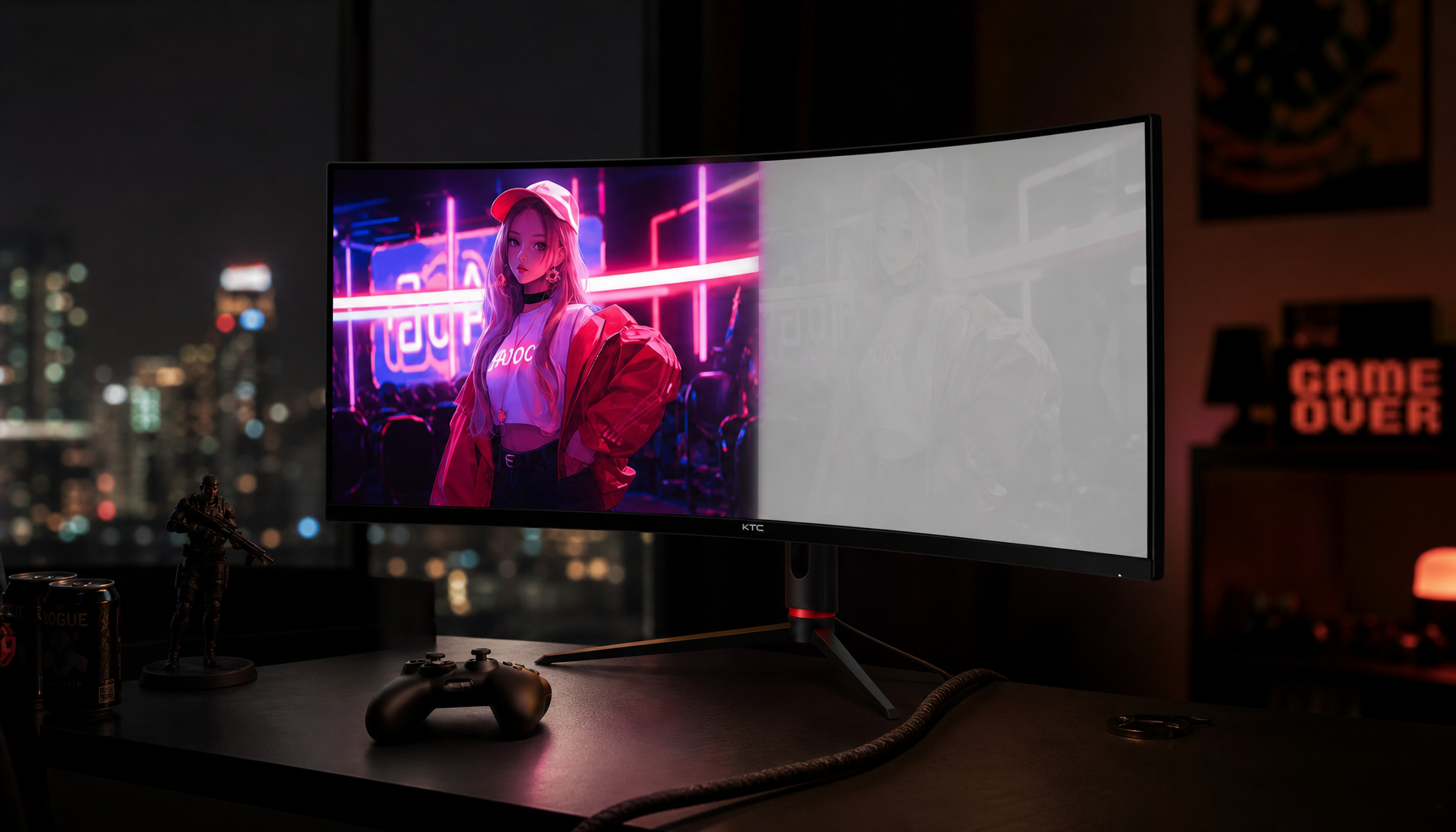
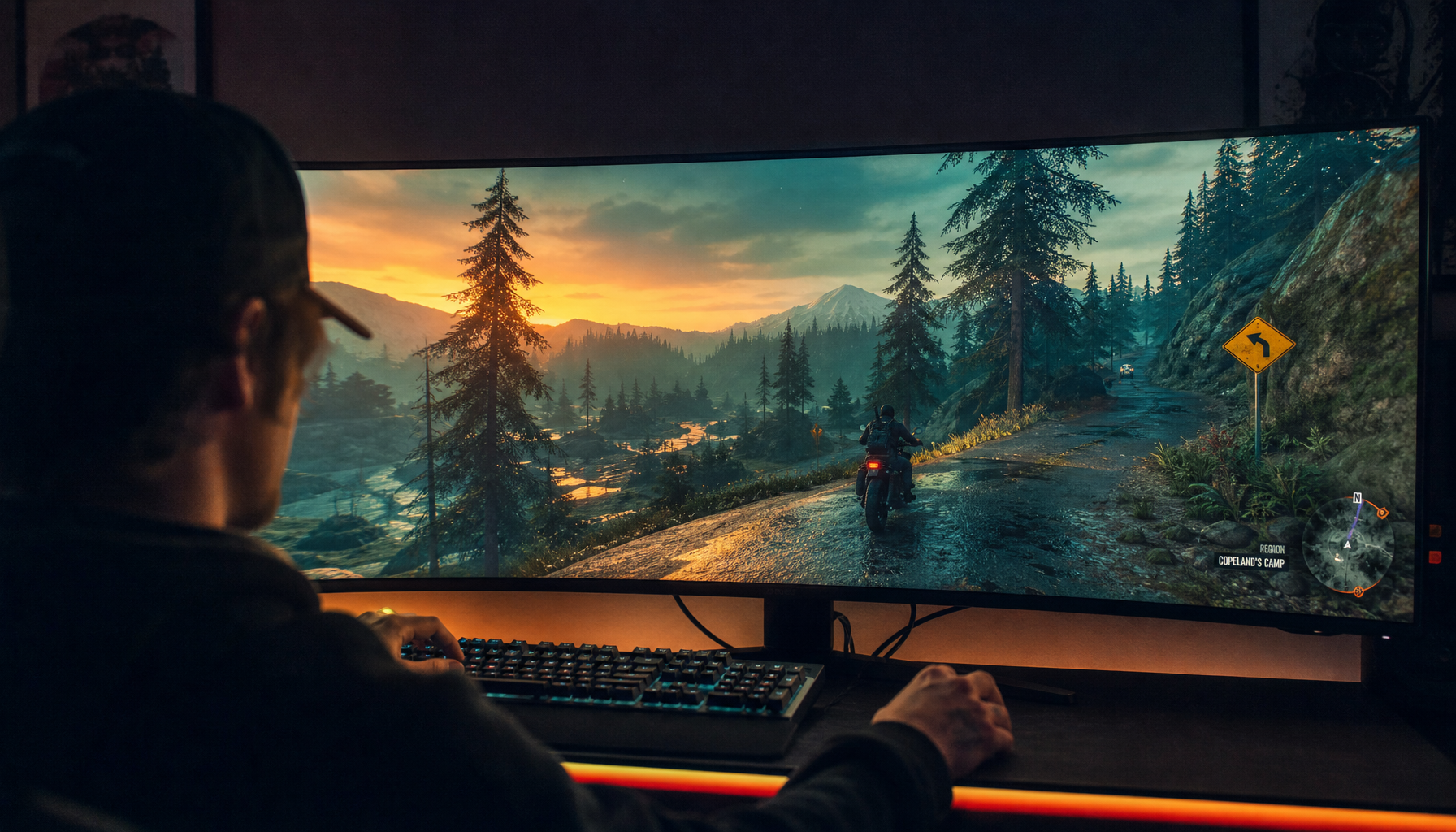
A 144Hz label promises more motion updates, but real smoothness also depends on pixel response, frame pacing, input lag, overdrive tuning, panel type, cables, and whether your PC can feed the monitor cleanly.
Does your “fast” 144Hz monitor still smear targets, stutter while scrolling, or feel oddly heavier than a cheaper 75Hz screen? A quick refresh-rate check, response-time reality check, and cable and settings audit can often reveal the issue in under 10 minutes. Here’s how to tell whether the panel is truly slow, misconfigured, or simply the wrong fit for your workload.
Refresh Rate Is Only the Ceiling, Not the Whole Experience
Refresh rate tells you how many times per second a monitor can update the image. A 75Hz display updates 75 times per second, while a 144Hz panel updates 144 times per second. In a clean comparison, higher refresh rates generally look smoother, especially in action games, fast camera pans, and cursor-heavy desktop work.
The catch is that refresh rate is a ceiling. If your game runs at 58 to 90 frames per second with uneven pacing, a 144Hz monitor cannot magically create a perfectly fluid stream. A stable 75 FPS on a well-tuned 75Hz display can feel calmer than a 144Hz screen being fed inconsistent frames. This is especially obvious in competitive shooters, racing games, and even fast spreadsheet scrolling, where your eyes track moving edges closely.
For example, if a laptop dock limits your external display to 75Hz but delivers that signal consistently, the desktop may feel predictable. If a gaming monitor is set to 144Hz but connected through the wrong port, routed through a weak adapter, or driven by unstable GPU output, the experience can feel worse despite the higher number.
Pixel Response Can Make a 144Hz Panel Look Messy
The most common reason a lower-refresh monitor feels smoother is pixel response. Response time describes how quickly pixels change from one shade to another. The monitor may refresh 144 times per second, but if dark-to-light or gray-to-gray transitions are slow, the old image trails behind the new one.
This is where panel type matters. IPS panels are often favored for office work and general productivity because they provide stable colors and wide viewing angles, while VA panels can offer deeper contrast but may show motion smearing on budget models. A monitor buying decision should weigh panel type and motion behavior, not just the largest Hz number on the box.

In practice, a clean 75Hz IPS office display can make mouse movement and scrolling look more composed than a cheap 144Hz VA panel with slow dark transitions. The 144Hz screen is updating more often, but each update may drag a shadow. That creates the perception of blur, especially in dark game scenes, black text moving over gray backgrounds, or fast side-scrolling content.
GtG, MPRT, and Why Advertised “1ms” Can Mislead
Many gaming monitors advertise 1ms response time, but that number rarely tells the full story. GtG, or gray-to-gray response time, measures pixel transition speed between shades. MPRT, or moving picture response time, is closer to perceived motion blur because it relates to how long a moving image remains visible to your eyes.
On sample-and-hold displays, perceived motion blur closely follows refresh interval, but slow pixel transitions can still add visible trailing. That is why two 144Hz monitors can feel completely different. One may have well-controlled overdrive and low overshoot, while another produces ghosting, inverse ghosting, or smeared dark motion.
Overdrive is the monitor’s attempt to push pixels faster. Too little overdrive causes blur. Too much causes bright halos or inverse ghosting. Some budget high-refresh monitors only look decent at their maximum refresh rate, then show worse artifacts at 100Hz, 75Hz, or variable refresh-rate ranges. That matters because most real games do not stay locked at 144 FPS forever.
Frame Pacing Beats Raw FPS When Smoothness Is the Goal
A steady frame cadence feels better than a higher average frame rate with spikes and dips. If one game runs at a locked 75 FPS and another swings between 80 and 144 FPS, the first can feel smoother even though the second has a higher average.

This is why VRR matters. Variable refresh rate synchronizes the monitor’s refresh timing with the GPU’s frame output, reducing tearing and stutter when frame rate changes. VRR refreshes when a new frame is ready, which helps motion feel more continuous when your PC cannot hold a fixed target.
For a practical gaming setup, try capping frame rate slightly below the top of your VRR range. On a 144Hz display, a cap around 141 FPS is common. If your GPU cannot maintain that, try 120 FPS, 100 FPS, or even 72 FPS depending on the game. A stable cap with VRR often feels cleaner than chasing the highest possible FPS.
Input Lag and Responsiveness Are Related, but Not Identical
Smoothness and responsiveness overlap, but they are not the same. Smoothness is what motion looks like. Responsiveness is how quickly the screen reacts after your mouse, keyboard, or controller input.
Higher refresh can reduce the wait for the next screen update, but refresh rate alone does not guarantee a low-lag monitor. Signal processing, scaler behavior, overdrive mode, HDR mode, and gaming presets can all affect the final feel.
This is why a well-built 75Hz productivity monitor may feel immediate on the desktop, while a 144Hz display in the wrong picture mode feels sluggish. If your monitor has a game mode or low-latency mode, test it. Also disable unnecessary image processing features such as motion smoothing, dynamic contrast, or heavy noise reduction when using the display for PC gaming.
The Cable, Port, and System Setting Can Quietly Cap Performance
A surprising number of “bad 144Hz” experiences are setup problems. The operating system may be running the display at 60Hz or 75Hz. The cable may not support the target resolution and refresh rate. The monitor may require DisplayPort for its full mode. A dock or adapter may be the bottleneck.
Most systems let you assign refresh rates per display, and different refresh rates per monitor can be useful when one screen is for gaming and another is for chat, email, or documents. The key is to identify the correct display, open advanced display settings, and confirm the active refresh rate instead of assuming the advertised spec is active.
For high-refresh PC monitors, DisplayPort is often the safer connection. HDMI can work well, but the generation matters, and so does the cable. If 144Hz is missing, test another cable, bypass the dock, update GPU drivers, and try the monitor alone before blaming the panel.
Symptom |
Likely Cause |
Practical Fix |
144Hz monitor feels like 60Hz |
Wrong refresh rate selected |
Check advanced display settings |
Motion has dark smears |
Slow pixel transitions, often VA behavior |
Try another overdrive mode or lower expectations for dark scenes |
Bright halos trail moving objects |
Overdrive set too high |
Reduce overdrive from Extreme to Normal |
Game feels uneven despite high FPS |
Poor frame pacing or no VRR |
Enable VRR and use a stable frame cap |
144Hz option is missing |
Cable, port, dock, GPU, or resolution limit |
Use DisplayPort or a certified high-bandwidth HDMI cable |
When a 75Hz Monitor Is Actually the Better Buy
A 75Hz monitor can be the smarter choice when your priority is text clarity, color stability, office comfort, and value. For office productivity, 60Hz is generally adequate, though higher rates can make scrolling feel smoother. That makes 75Hz a practical middle ground for web work, spreadsheets, writing, coding, and portable screen setups.
The stronger 75Hz options usually win through balance. A good IPS panel, sharp resolution, ergonomic stand, correct viewing distance, and reliable connectivity can make the whole screen feel more composed. A cheap 144Hz display with weak color, poor stand adjustment, bad overdrive, and limited ports may win a spec-sheet comparison while losing the daily-use test.
For gaming, the calculation changes. A 144Hz monitor is still the better target for fast shooters, racing, fighting games, and competitive play, provided the panel’s response tuning is good and your GPU can feed it. 144Hz displays motion more smoothly than 60Hz in gaming when the rest of the system supports it. The mistake is buying the cheapest high-Hz model and assuming the number alone guarantees premium motion.

How to Test Your Monitor Before Replacing It
Start with the basics. Confirm the active refresh rate in your operating system or GPU control panel. Then check your game’s actual frame rate and frame-time graph, not just average FPS. A flat frame-time line matters more than a flashy peak.
Next, test overdrive settings. Use the same game scene, browser scrolling pattern, or motion test and switch between Off, Normal, Fast, and Extreme. The best mode is usually the one that reduces blur without creating bright outlines. If the monitor supports VRR, enable it and test with a frame cap. If stutter appears on a second display, try matching refresh rates or using clean multiples such as 120Hz and 60Hz.
Finally, evaluate the screen for your actual work. For esports, prioritize low lag, clean motion, and 144Hz or higher. For office work, prioritize resolution, text sharpness, ergonomics, and panel quality. For a hybrid desk, a strong 100Hz to 165Hz IPS or OLED monitor can be the sweet spot, but only if the price, ports, and GPU demands make sense.
The Real Answer
Some 75Hz monitors feel smoother than certain 144Hz panels because smoothness is a system result, not a single spec. A stable frame rate, clean pixel transitions, sensible overdrive, low processing lag, VRR, and the right cable can beat a bigger Hz number with poor execution.
Buy the monitor that performs well in the motion you actually use. The best display is not the one with the loudest refresh-rate badge; it is the one that keeps your aim, scrolling, reading, and workflow feeling controlled from the first minute to the last.