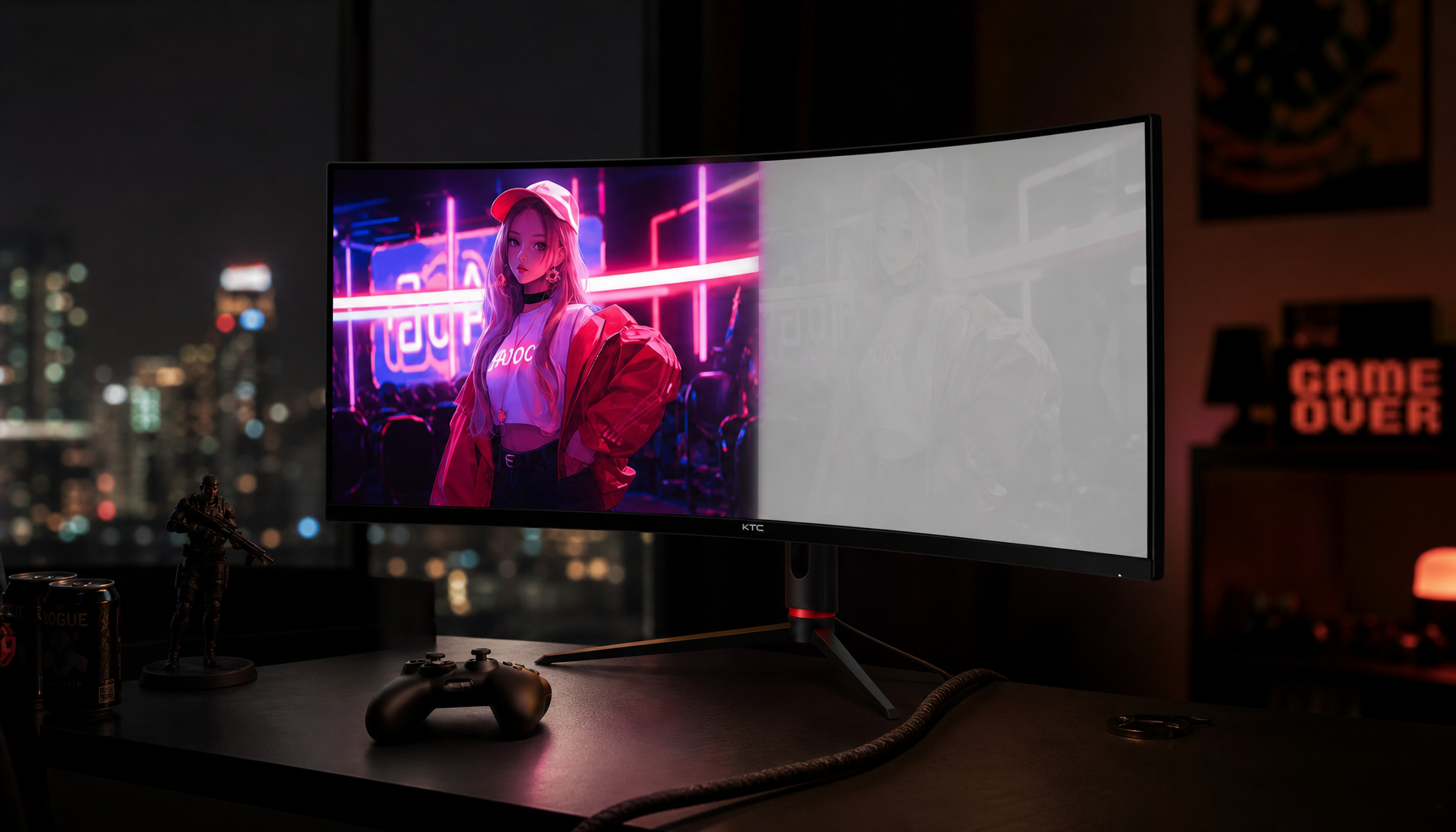
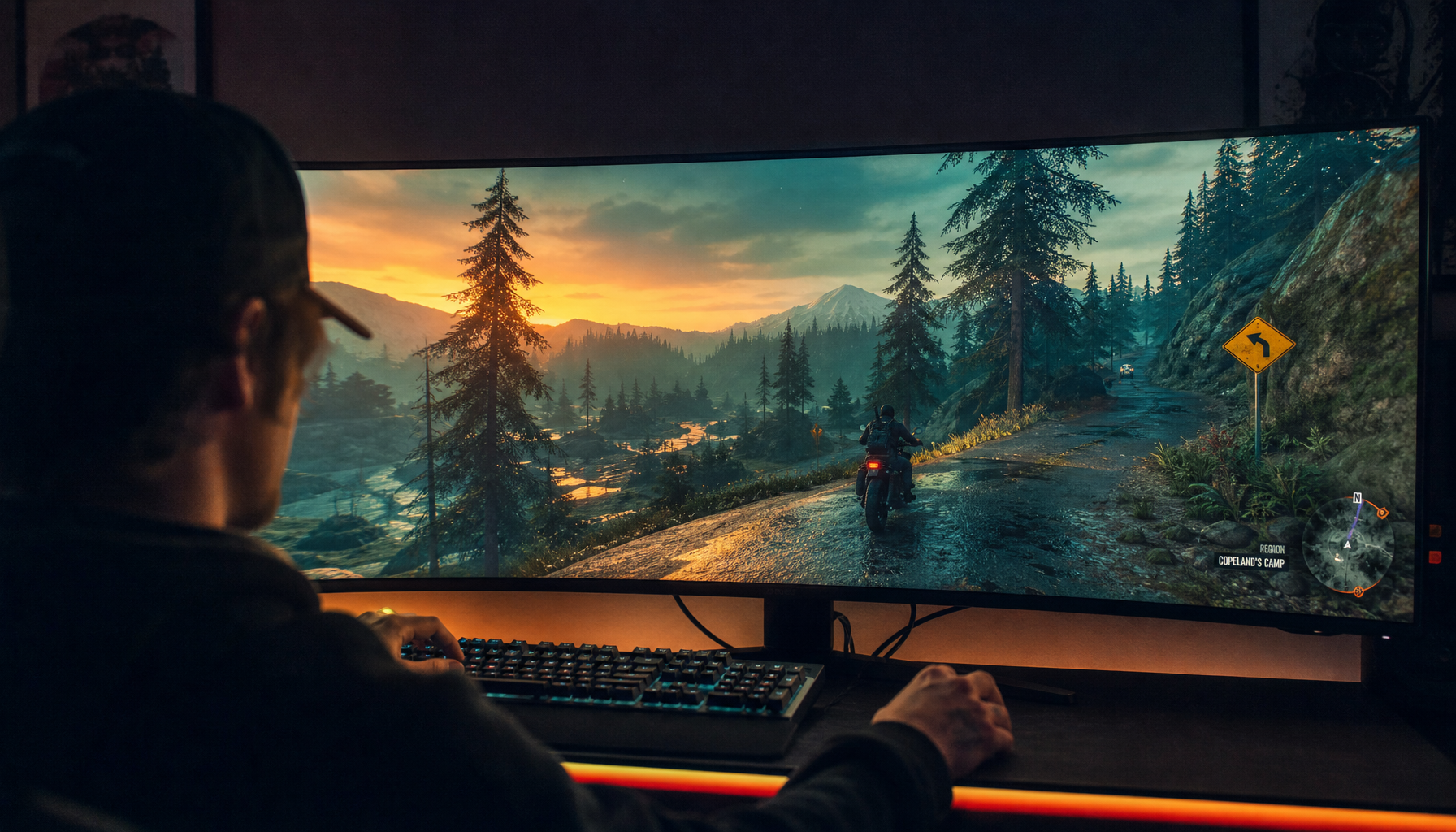
4K 144Hz Mini-LED panels are getting cheaper because the premium stack is no longer rare: more panel makers, OEM-direct sellers, maturing backlight supply chains, and stronger OLED competition are compressing margins. For buyers, that means the old $900.00 to $1,200.00 flagship experience is moving toward the $500.00 class, though a few tradeoffs still matter.
Mini-LED Is Moving From Flagship to Mainstream
Mini-LED is not a new display panel type; it is an advanced LCD backlight system that uses many small LEDs grouped into local dimming zones. That matters because manufacturers can keep using familiar IPS or VA LCD panel production while improving brightness, contrast, and HDR control.

By early 2026, the category has more competition across more sizes. Market tracking points to Mini-LED and OLED becoming central to the mid-to-high-end 4K 144Hz segment, with prices potentially falling 15% to 20% as adoption grows across gaming and smart displays 4K 144Hz segment.
This is the classic display cycle: once premium specs become repeatable at scale, sellers stop charging only for scarcity and start competing on value.
OEM-Direct Sellers Are Cutting the Retail Layer
One of the biggest pressure points is OEM-direct pricing. Some sellers now offer monitors closer to the manufacturing source, reducing the distributor, retail, and licensing overhead that used to inflate high-refresh Mini-LED pricing.
That is why under-$500 4K Mini-LED models are becoming plausible. OEM-direct sellers argue that avoiding traditional retail markups can reduce costs by an estimated 20% to 40%, helping create a budget-premium tier with 4K, 144Hz-plus refresh, and local dimming under-$500 4K Mini-LED models.

For performance buyers, the math is simple: if a $900.00 monitor carries 30% channel-related overhead, removing part of that layer can push the same class of hardware much closer to $600.00 before promotions.
OLED Competition Is Forcing Mini-LED to Prove Its Value
OLED is pushing the premium monitor market hard with perfect blacks, fast pixel response, and strong gaming appeal. Mini-LED has to respond with brightness, durability, and price.
That pressure is useful for buyers. A 4K 144Hz monitor now has to justify itself not just with resolution and refresh rate, but with HDR brightness, dimming-zone control, HDMI 2.1, DisplayPort bandwidth, and real usability for work and play. Current buying advice for high-end 4K 144Hz screens already weighs price-to-performance, port selection, HDR, and adaptive sync rather than refresh rate alone high-end 4K 144Hz screens.
Mini-LED’s advantage is practical: it is bright, burn-in resistant, and better suited to long desktop sessions with static windows, timelines, HUDs, and spreadsheets.

Better Component Availability Is Lowering Build Costs
The price drop is also technical. Mini-LED backlight modules, dimming controllers, power systems, and high-bandwidth inputs are becoming easier to source in volume. A 32-inch 4K Mini-LED monitor with strong local dimming is still more complex than a basic IPS display, but the expensive parts are less exotic than they were two years ago.
Buyers should still look past the label. A strong Mini-LED monitor needs enough dimming zones, useful HDR brightness, clean motion tuning, and modern inputs. Buying guidance still recommends checking local dimming quality, GPU capability, and meaningful HDR support instead of trusting broad labels like “HDR Ready” local dimming quality.
Cheaper does not always mean equal. Some budget models save money with weaker stands, clunky on-screen controls, inconsistent calibration, or limited local-dimming behavior in SDR.
What This Means for Buyers in 2026
The price drop is real, but the best value is not automatically the lowest sticker price. For gaming, 4K at 144Hz still needs a strong GPU. For office productivity, 4K gives the workspace advantage: 3840 x 2160 resolution provides about four times the pixel area of Full HD, which helps with multitasking, editing, and dense dashboards workspace advantage.
Before buying, prioritize:
- 1,000-nit-class HDR if HDR matters.
- HDMI 2.1 or DisplayPort 1.4 with DSC for high-refresh 4K.
- At least 1,000-plus dimming zones for serious 32-inch 4K HDR.
- Return policy and warranty coverage, especially for newer OEM-direct models.
Early 2026 is the first moment when 4K 144Hz Mini-LED feels less like a luxury flex and more like a smart performance buy. The winners will be shoppers who treat the lower price as an opening, then verify the panel tuning, ports, warranty, and real HDR behavior before they commit.