Smart monitors can collect more than picture settings. The connected features that make them convenient often create records about apps, inputs, accounts, and device health.
You sit down to use a new display, and instead of just picking brightness and color, you are asked to sign in, pair a phone, allow recommendations, or turn on voice control. That can be genuinely useful on a bedroom TV-monitor hybrid, a second work display, or a portable screen that travels between desks. What matters is knowing which data is tied to those features, which data is optional, and when a simpler monitor is the better buy.

What makes a monitor “smart”?
The features that change the privacy equation
A smart monitor is more than a panel with video ports; it can offer built-in access to a productivity platform, web browsing, streaming apps, video calls, speakers, and wireless connectivity without needing a PC for every task. That is a different product category from a standard gaming monitor or ultrawide that only shows whatever your console, laptop, or desktop sends to it.

Modern smart TV platform features push that even further with multiple user accounts, watchlists, curated recommendations, remote control, and a voice assistant. Those features do not prove that every brand collects the same telemetry, but they do make it reasonable to infer that the monitor ecosystem may track app use, account activity, voice-command events, and preference changes.
Smart is not automatically better
A competitive gaming use case often exposes the tradeoff fastest: many smart monitors are built around 60 Hz panels and slower response times, while serious gaming buyers usually want higher refresh rates, lower latency, and fewer extra software layers. If your main goal is a 240 Hz or 300 Hz experience, smart features are usually secondary to panel speed, adaptive sync behavior, and input consistency.
What usage-pattern data is most likely involved?
Content, account, and app signals
No single source here publishes a universal consumer-monitor telemetry list, but multiple accounts, watchlists, recommendations, and voice control strongly suggest a first category of usage data: which apps are opened, which profile is active, what content is resumed, and which commands are triggered from the remote or microphone. For buyers, that matters because a smart monitor used like a mini TV in a dorm room will usually generate more behavior data than the same screen used only as a wired display.
Input, pairing, and session signals
Features such as automatic source switching, a wireless casting platform, wireless peripherals, and a desktop mode point to a second category: which input becomes active, which device was paired, how often the monitor switches sources, and whether use is happening over a wired video connection, a single-cable connection, wireless casting, or short-range wireless pairing. In plain terms, a smart monitor can learn a lot about your routine without “watching” you directly, simply because the display has to manage repeated device handoffs and remember how you like to use it.
Health, settings, and support telemetry
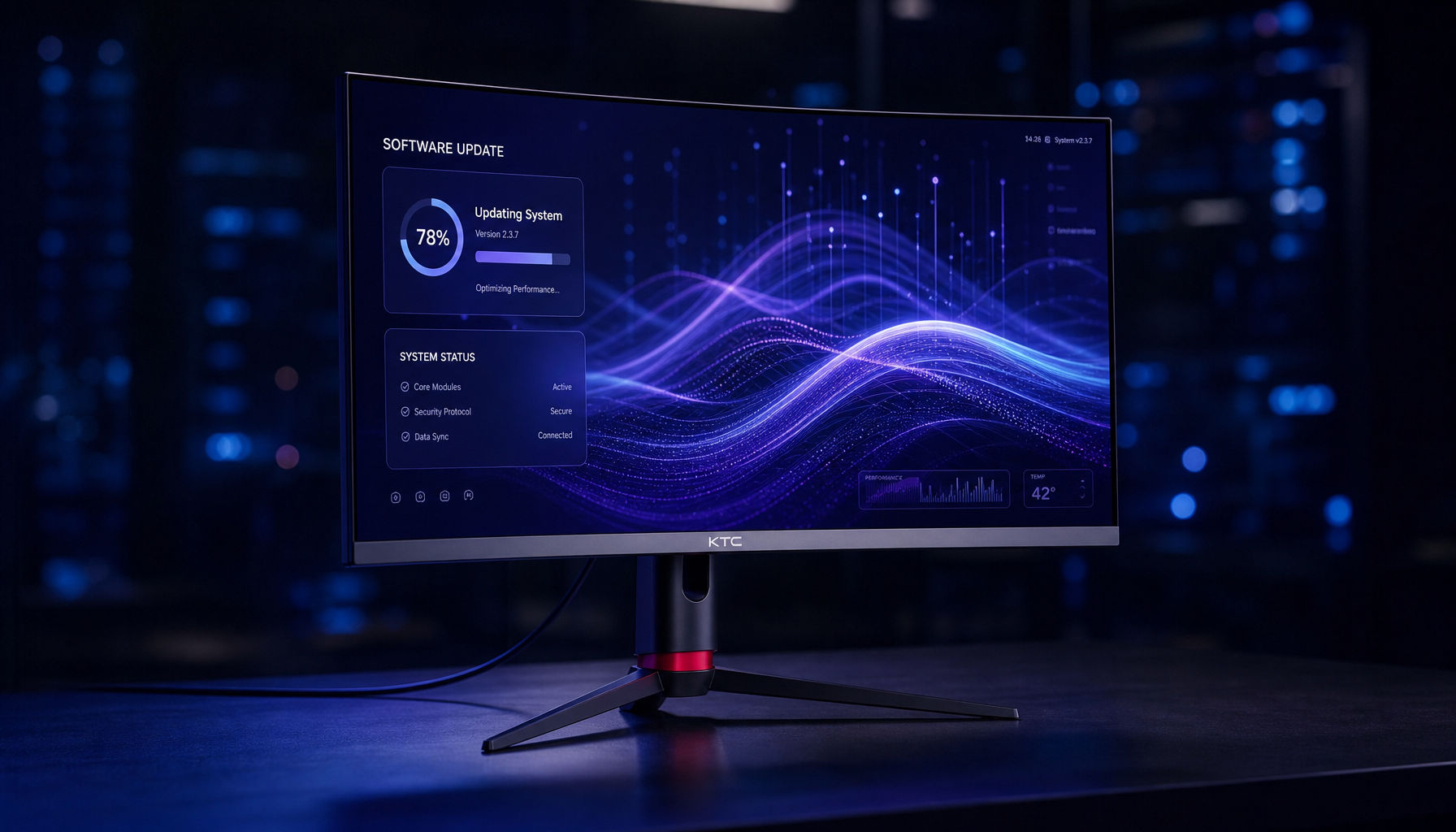
A third category is device-health data rather than personal-behavior data. The hardware health monitoring model for storage devices shows the usual pattern clearly: connected hardware often stores threshold states, error logs, and self-test logs so failures can be predicted or diagnosed. That does not prove every monitor stores the same fields, but it is a good model for understanding why a smart display may log firmware version, network errors, failed updates, repeated handshake problems, or unusual power behavior after a long gaming session.
Why brands collect that data in the first place
Personalization and convenience
Built-in casting, app access, split-screen features, and one-keyboard control across devices are easier to deliver when the monitor remembers user preferences and recent behavior. That is the practical upside of telemetry: faster reconnection, better source switching, fewer repeated setup steps, and more relevant home-screen content for people who use the monitor as both a display and a standalone entertainment device.
Troubleshooting and product support
Connected hardware vendors also want logs because device reliability systems are useful for support and failure detection, even if they are imperfect. The same research that made that hardware health monitoring approach well known also showed its limits, with many failed drives showing weak or incomplete warning signals, which is a useful reminder for monitor buyers: telemetry may help support teams explain a bad firmware update or unstable single-cable display link, but it is not a magic guarantee of reliability.
How the tradeoff changes by monitor type
Gaming and high-refresh displays
A smart monitor meant for mixed work and entertainment is rarely the cleanest choice for competitive gaming. If you mainly care about frame pacing, fast response, adaptive refresh behavior, and uncomplicated console or PC input switching, a non-smart gaming monitor often gives you the better balance of performance and lower data exposure.
Ultrawide productivity setups
A 34-inch ultrawide paired with a 15.6-inch portable monitor is a good example of when smart features may add less value than extra screen space. In that setup, the main workflow already lives on the PC, and the portable side screen mainly handles chat, research, or monitoring tools. That means a plain ultrawide plus a simple sidecar display can often deliver more practical productivity than a smart monitor OS you barely use.

Portable monitors and travel use
The portable monitor category usually starts simple: one single-cable connection or a standard video connection, 13-inch to 21.5-inch panels, and prices under $100 at the low end. Data collection risk tends to rise as you add extras such as wireless casting, touch, batteries, app layers, or built-in audio controls. A wired portable panel used strictly as a second screen generally exposes less than a portable display that behaves like a semi-independent smart device.
Smart vs. standard monitor choices
Quick comparison
A portable monitor market full of category winners shows how quickly features branch out now: there are budget work screens, 300 Hz gaming portables, touch models, wireless premium-display options, and premium color-accurate panels. That is why it helps to compare the feature set, not just the screen size.
Monitor option |
Likely usage data surface |
Best fit |
Privacy upside |
Main tradeoff |
Standard high-refresh gaming monitor |
Low: mostly input and basic settings |
Esports, console, fast PC gaming |
Few smart services to log activity |
No built-in apps or casting |
Smart 27-inch to 32-inch desk monitor |
Medium to high: apps, accounts, recommendations, voice, source history |
Bedrooms, dorms, mixed work and streaming |
Replaces extra streamer or TV box |
Often capped around 60 Hz |
Ultrawide plus simple portable side monitor |
Low to medium: mostly whatever the PC already tracks |
Productivity, editing, research-heavy work |
Keeps the display layer simpler |
More cables and desk hardware |
Wireless or touch portable monitor |
Medium: pairing, casting, battery, touch features |
Travel, presentations, flexible work setups |
Very convenient away from a desk |
More subsystems, more setup complexity |
How to buy for lower data collection
A 24-inch privacy screen buying process is a good reminder that privacy is not only about telemetry. If you keep smart features because you want streaming apps or wireless casting, you can still reduce risk by choosing a model you can use over a wired video connection or a single-cable connection without signing in, skipping optional personalization, and treating the monitor as a display first and a smart platform second.
Physical privacy still matters
A monitor privacy screen blocks shoulder surfing, which matters in shared apartments, open offices, front desks, and healthcare spaces. For many buyers, the real-world privacy threat is still the person standing three feet away with a cell phone camera, not just the vendor app collecting diagnostics in the background.
FAQ
Q: Do smart monitors always collect more data than standard monitors?
A: Not always, but smart features such as apps, accounts, recommendations, and voice control create more chances for behavior data to exist. A smart monitor used only as a plain wired screen may expose much less than the same model used with its full TV-style software stack.
Q: Are portable monitors usually safer for privacy?
A: Often yes, especially when the portable monitor is just a wired second screen. The risk rises when you add wireless casting, touch layers, batteries, built-in smart software, or remote features.
Q: If I want streaming apps and low data collection, what should I do?
A: Buy the smart monitor for the panel quality and connectivity, but use only the features you need. A mixed-use smart monitor is most sensible when you truly want standalone entertainment or desktop-mode use; otherwise, a standard monitor plus an external streamer keeps your upgrade path cleaner.

Final Takeaway
Smart monitors usually collect usage-pattern data because they are doing more jobs than a regular display: running apps, managing accounts, switching sources, pairing devices, and reporting health information when something breaks. For most gaming-monitor and ultrawide buyers, the practical answer is simple: if the PC or console already handles your workflow, a standard display keeps both latency and data collection lower; if you genuinely want built-in streaming, casting, or desk-friendly TV features, choose a smart model with the smallest feature set you actually plan to use.
- Pick the monitor type first: high-refresh gaming, ultrawide productivity, portable travel, or smart all-in-one.
- Treat app stores, voice assistants, and multiple profiles as optional data-collection layers, not free extras.
- Prefer wired video or single-cable use if you do not need wireless casting.
- Skip sign-in and personalization prompts when the monitor works fine without them.
- Add a privacy screen if the display faces coworkers, clients, roommates, or foot traffic.
- Keep firmware updated, but do not confuse support telemetry with a reason to accept every smart feature.