VA panels can crush near-black detail because their high-contrast liquid crystal structure changes gamma response with viewing angle, especially in dark tones. Blacks can look deep straight-on while subtle shadow detail compresses or disappears when seating position, screen curvature, or calibration is less than ideal.
VA Contrast Is the Strength and the Tradeoff
VA, or vertical alignment, panels are popular because they deliver deeper native blacks than most IPS displays. That can make dark games, horror titles, and night racing scenes feel more immersive.
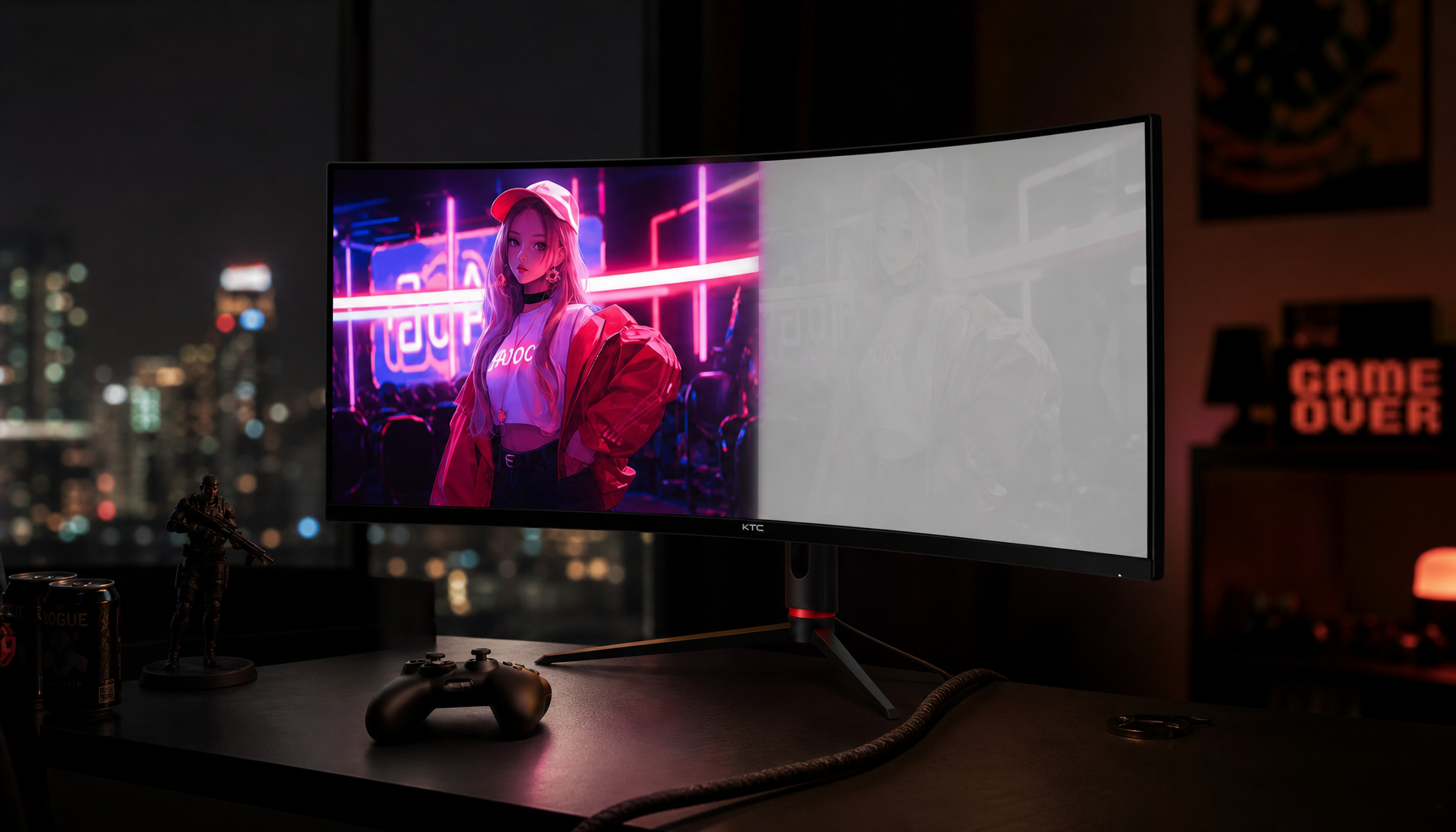
The tradeoff is that VA pixels do not maintain the same luminance curve from every angle. As your eyes move off-center, even across a wide screen, the panel can show a different gamma response; gamma shift is most visible in darker shades because small brightness changes matter more near black.
On a 32-inch desk monitor viewed from about 2 ft away, your eyes already see the left and right edges at different angles than the center. The center may appear rich and detailed while the edges lose subtle shadow steps.

Why Near-Black Detail Gets Crushed
Black crush occurs when several dark gray levels are rendered too close to black. Instead of seeing texture in a charcoal jacket, cave wall, or game corridor, you see a flat dark patch.

VA panels are more prone to this effect because their high contrast depends on strongly blocking light in dark states. That blocking improves perceived depth, but it can make the lowest part of the gamma curve less forgiving.
Viewing angle can cause off-axis areas to shift darker or lighter. A high gamma setting can compress shadow detail, while very low brightness can bury dark gray steps. Content also matters because games and video vary in how shadows are graded.
For that reason, a VA monitor may look immersive in a dark game but be less dependable for photo or video work that requires consistent shadow detail. Discussions of black crush often describe this balance: strong contrast paired with less consistent dark detail.
Why Curved and Large VA Screens Make It More Noticeable
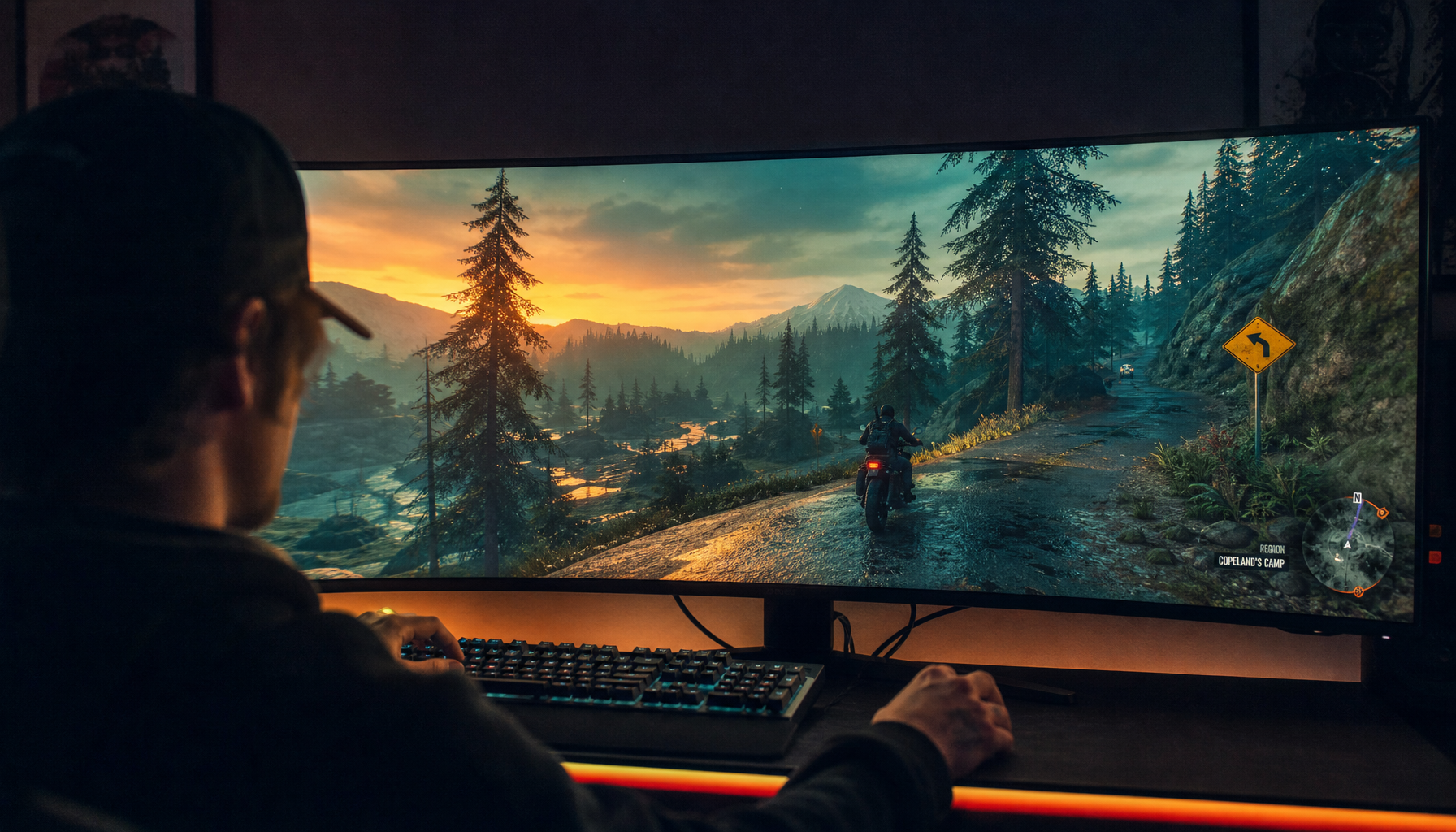
A curved VA monitor can help keep the panel edges aimed more directly toward your eyes. This is one reason curved VA panels are common in 27-inch, 32-inch, and ultrawide gaming displays.
However, curve radius, seating distance, and desk height still matter. Sitting too close increases the angle across the panel, while sitting too far away can reduce the intended benefit of the curve.
In productivity work, gamma shift can appear in dark user interfaces, code editors, spreadsheets with gray fills, and video timelines. In games, it can hide detail in night scenes, smoky corners, or dark interface gradients.

Not every VA panel behaves the same way. Panel generation, backlight tuning, overdrive settings, and factory calibration can all affect how noticeable the issue is.
How to Reduce VA Gamma Shift Without Losing the VA Advantage
A properly adjusted VA display can still provide strong contrast and an immersive image.
- Sit centered with your eyes aligned to the midpoint of the panel.
- Raise brightness slightly if dark gray steps disappear into black.
- Try a gamma setting of 2.2 to reduce excessive shadow compression.
- Use in-game black-level calibration patterns when available.
- Add a small bias light instead of viewing in a completely dark room.

For office use, test the monitor with dark gray blocks rather than relying only on colorful images. For gaming, check a dark scene from a title you actually play, since synthetic tests do not always reflect perceived performance.
If consistent shadow visibility is your highest priority, IPS may be easier to trust. If you prefer cinematic contrast and stronger black depth, a well-tuned VA display remains a practical choice.