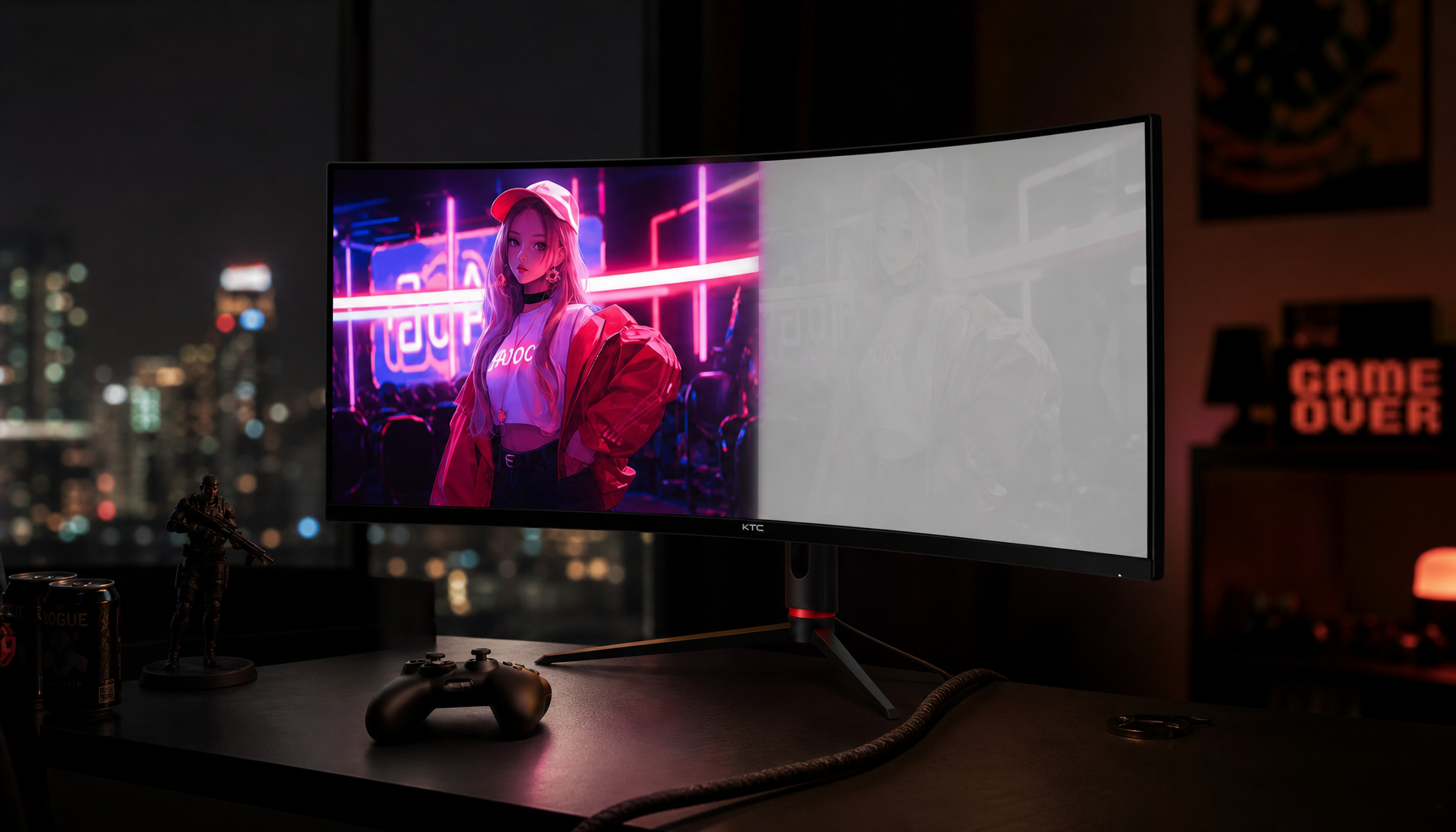
A single versatile device can eliminate the common family struggle of juggling separate hardware for cloud gaming, kids' learning apps, and portable entertainment. The KTC MegPad series functions as a lifestyle display — a hybrid of a high-definition smart screen and a mobile hub — that uses thin-client technology to deliver console-quality cloud gaming while providing a secure, curated education library through Google EDLA certification. This setup works best for households with stable high-speed internet and parents who want managed transitions between play and learning, though it requires checking your network first and using profiles to avoid context-switching friction.

What is a Lifestyle Display? Redefining the Home Hub in 2026
Traditional monitors sit fixed on a desk while tablets feel too small for shared family viewing. A lifestyle display bridges these gaps by combining a large high-definition screen, integrated Android OS, built-in battery, and mobility features such as 360-degree wheels. This creates a portable smart hub that moves easily from kitchen to living room without sacrificing picture quality or app access.
The category stands apart from standard monitors because it supports full smart-TV functionality, touch interaction, and wireless streaming while remaining lighter than a full TV. For families, this means one device can handle everything from streaming shows to cloud gaming and educational content without needing multiple screens or a dedicated console. As market reports on smart displays note, these hybrids emphasize versatility across home environments rather than fixed workstation performance (Smart Display Market Report 2026 - Global Trends).
In practice, the mobility solves real location friction. You can roll the screen to wherever the family gathers instead of crowding around a small tablet or dragging cables across rooms. However, this convenience trades off against the absolute precision of a stationary high-end monitor — a worthwhile exchange for most shared-use scenarios but less ideal for dedicated creative workstations.
Cloud Gaming on a Smart Display: Can a Thin Client Replace a Console?
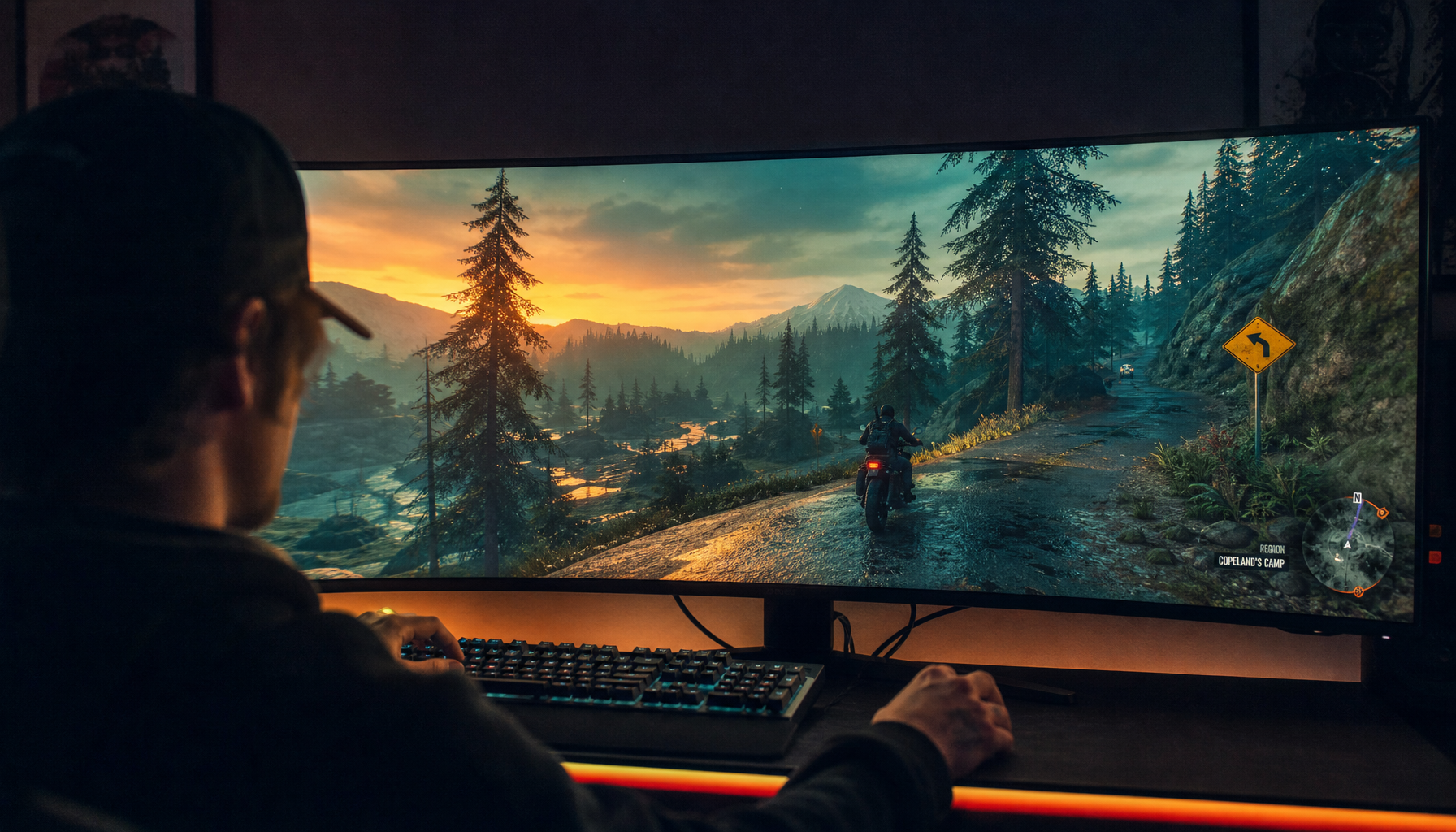
Yes, a thin-client smart display like the MegPad can deliver high-end gaming experiences in 2026 without a local console or powerful GPU, provided your home network meets certain thresholds. Services such as GeForce Now and Xbox Cloud Gaming stream AAA titles at up to 4K and 120Hz by offloading all rendering to remote servers, turning the display into an intelligent client that handles input and decoding.
The technical floor is clear: stable bandwidth of roughly 25 Mbps supports good 1080p play, while 40-52 Mbps is typically needed for smooth 4K visuals with high fidelity. Latency should stay under 30 ms for responsive feel in fast-paced games; above 50 ms it often becomes noticeable as input lag. Network stability matters more than raw hardware speed because jitter and packet loss create the stuttering many users mistakenly blame on the screen itself (Cloud Gaming Internet Speed Requirements 2026; What Is a Good Internet Speed in 2026 for Browsing, Streaming and Online Gaming).
Home Network Readiness for Cloud Gaming Resolution Targets
Bandwidth and latency thresholds indicate whether a home network is more likely to fit 1080p or 4K cloud gaming on a smart display. The chart shows recommended ranges, not a guarantee of image quality.
View chart data
| Category | Bandwidth lower bound (Mbps) | Bandwidth upper bound (Mbps) |
|---|---|---|
| 1080p | 25.0 | 25.0 |
| 4K | 40.0 | 52.0 |
This chart helps visualize the practical bandwidth ranges. A thin client like the MegPad leverages Wi-Fi 6 and its processing power to minimize added delay, but performance still depends on your ISP stability and router placement. Do not expect console-level consistency on congested or low-speed networks — those cases often make a local console or PC the better choice.
The MEGAPAD Education Library: Transforming Screen Time into Learning Time
Parents often worry that a large smart screen will become just another distraction. The MegPad addresses this through Google EDLA certification, which grants official access to the Play Store, Google Workspace for Education, and regular security updates while enabling managed profiles (Understanding Google EDLA - V7 World).
This certification creates a secure environment where parents can use Google Family Link to set learning goals, approve apps, and create distinct profiles that separate educational content from gaming. Interactive touch capability further improves outcomes: large-format touch displays encourage hands-on collaboration and active engagement far more effectively than passive video playback, according to classroom technology research (Education Classroom Technology - Google EDLA for Classrooms).
The curated Education Library draws from Google Kids Space and approved apps, turning what could be unstructured screen time into guided learning sessions in subjects ranging from math to science. For families, this means the same device that hosts evening cloud gaming can switch to structured morning lessons without needing separate hardware. The key is proactive setup of profiles — without them, the convenience of one device can blur boundaries and reduce the learning benefit.
Real-World Scenarios: From Morning Classroom to Evening Arena
Consider a typical day in a tech-savvy household. In the morning the MegPad rolls into the kitchen for interactive math apps and reading exercises using the touch screen and Google Workspace tools. Its 360-degree wheels and long battery life (up to 11 hours under lighter loads) make these transitions effortless, though high-brightness gaming will shorten runtime noticeably.
In the afternoon it might move to a bedroom or study corner for research and collaborative projects. By evening it becomes the living-room arena for cloud gaming sessions streamed from GeForce Now or Xbox Cloud. The insight that matters is the “Job to be Done” shift: instead of treating the device as a big tablet, view it as a managed family environment where EDLA certification and profiles keep learning and play in separate, parent-controlled zones.
Context switching remains the main friction point for non-technical parents. Using managed profiles and Family Link simplifies this, but it requires initial setup time. When configured well, the MegPad reduces the need for multiple devices and minimizes arguments over screen access. It breaks down, however, in homes with unreliable Wi-Fi or where parents prefer fully locked-down dedicated learning tablets without gaming access.

Choosing Your Setup: How to Maximize the MegPad for Your Family
Two main models cover most needs. The A25Q5 24.5" FHD portable touch model offers greater portability and lighter weight for smaller spaces or travel, making it suitable when mobility across tight rooms matters most. The A32Q7 Pro 32" 4K model provides a larger canvas ideal for shared family viewing and more immersive cloud gaming, though it requires more space and a stronger network to take full advantage of the resolution.
To maximize value, prioritize Wi-Fi 6 router placement, enable QoS settings to prioritize gaming traffic, and test your actual sustained speeds before heavy use. A practical checklist includes: stable bandwidth above 40 Mbps for 4K gaming, willingness to configure parent profiles, and acceptance that battery life varies with brightness and content type.
A lifestyle display such as the MegPad is the right choice when your household values one portable hub for both entertainment and learning and your network can support streaming demands. It becomes less suitable if you need guaranteed sub-20 ms local input lag for competitive esports, prefer completely separated devices for kids, or have inconsistent internet. In those cases, dedicated tablets for education paired with a console or gaming PC often create fewer compromises.
By focusing on real daily routines rather than peak specs, families can turn the MegPad into a true home hub that evolves with their needs in 2026 and beyond. Check your current network conditions first, then explore the Mobile Touch Screen collection to match the right model to your space.
Frequently Asked Questions
Can the MegPad deliver console-quality cloud gaming without a local console?
It can for many titles when your network provides at least 40 Mbps stable bandwidth and latency stays under 30 ms. The device acts as a capable thin client, but real-world consistency depends on your ISP stability and router quality rather than the screen itself. Test your connection with the target service before committing.
How does Google EDLA certification improve the education experience?
EDLA ensures secure, official access to educational apps and Google Workspace tools with automatic updates and parent-management features via Family Link. This creates a safer environment than standard Android devices and supports curated content libraries that reduce exposure to inappropriate material.
What is the realistic battery life during mixed use?
Runtime reaches up to 11 hours for lighter tasks such as document viewing or low-brightness streaming. Gaming or maximum brightness typically reduces this to 4-7 hours. Treat the higher figure as a planning guideline rather than a constant.
Is the touch screen effective for children's learning activities?
Large interactive touch displays generally promote better engagement and collaboration than passive screens, according to pedagogical studies. Combined with managed profiles, this helps transform recreational screen time into active learning when parents set clear boundaries.
Which MegPad model should a family choose first?
Choose the 25-inch FHD version for maximum portability and easier room navigation. Select the 32-inch 4K version when shared viewing, higher resolution for cloud gaming, and a larger learning canvas matter more than moving the unit frequently. Both support the same smart features and EDLA benefits.
How do you prevent gaming from interfering with learning time?
Use Google Family Link and managed profiles to create separate “learning” and “gaming” environments with scheduled limits and app approvals. The device does not automatically enforce separation — thoughtful configuration is required to maintain the balance families seek.
Does the MegPad work well in homes with average internet speeds?
It performs adequately for 1080p cloud gaming and most educational streaming on 25-35 Mbps connections. Full 4K gaming usually needs 40 Mbps or higher with low latency. Run a speed test under typical household load before purchase to set realistic expectations.