HDR makes color banding look worse because it asks your monitor and signal chain to render finer brightness and color transitions than SDR, so weak bit depth, tone mapping, compression, or bandwidth limits become easier to see.
Flip on HDR on a new gaming monitor and the sunset looks richer, but the dark menu behind it suddenly breaks into stripes. Recent user reports show that the artifact can disappear just by dropping from 144 Hz to 120 Hz, which is a strong sign that the issue is often technical, not imagined. The goal here is to show why HDR exposes banding more aggressively and what to check before you blame the panel.

Why HDR Makes Banding Easier to See
Modern HDR standards combine a wider brightness range with 10-bit or 12-bit signals, wider color gamuts, and higher contrast targets. That gives HDR more room to show subtle highlight and shadow detail than SDR, but it also means the display chain has to preserve far more tonal steps. If those steps get compressed anywhere between the source, GPU, cable, and monitor, smooth gradients turn into visible bands.
The problem shows up fastest in subtle gradients like blue skies, fog, smoke, dark gray menus, and skin tones. Those are exactly the scenes where missing tonal values are easiest to spot, especially on OLED and mini-LED monitors that make contrast changes look more dramatic. In practice, this is why HDR banding often stands out more in a game lobby, a near-black loading screen, or a sunset cutscene than in a busy action scene.
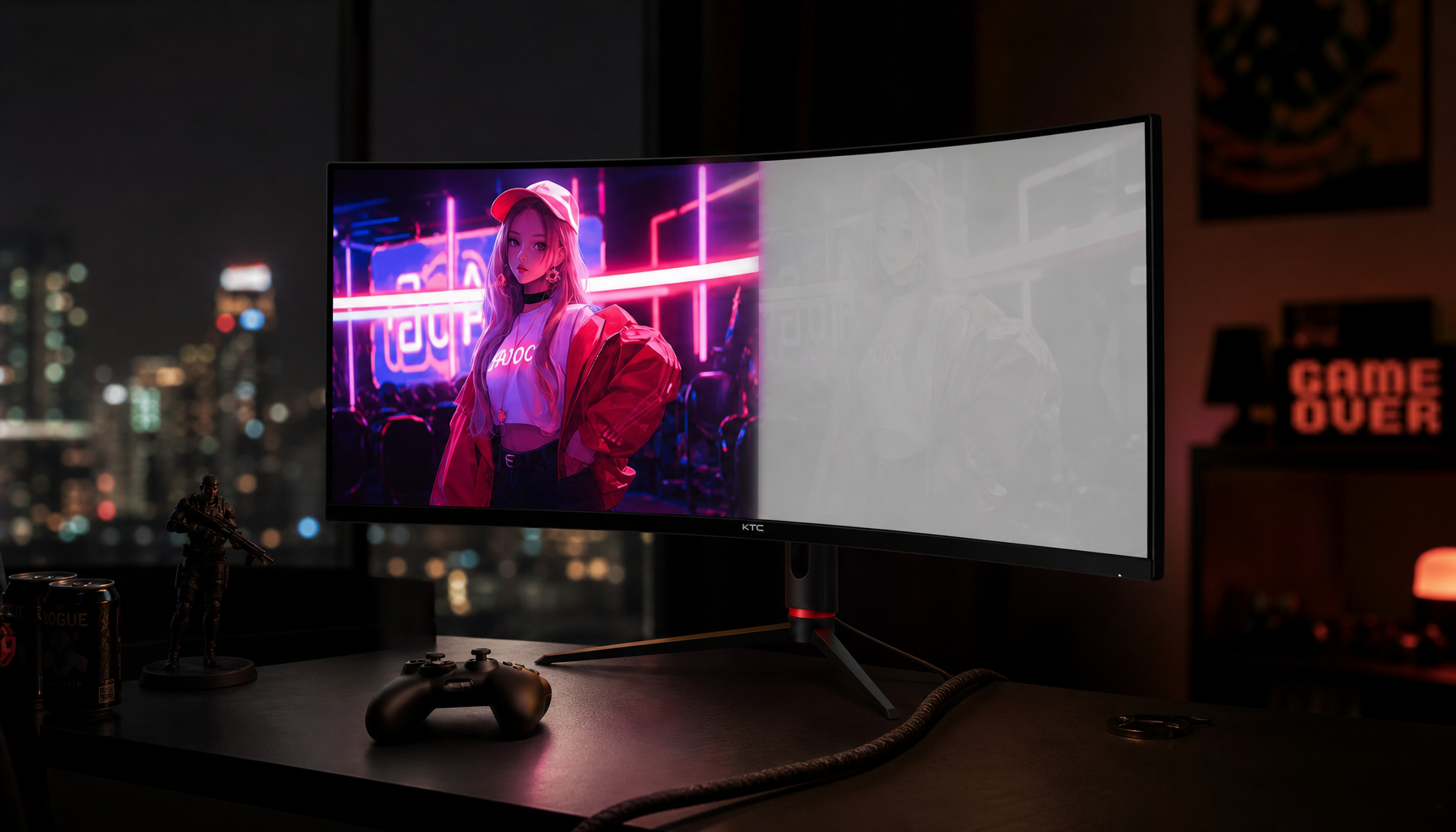
Real-world HDR gaming comparisons make the tradeoff obvious: HDR can improve sky definition and shadow separation, but it can also make clipped highlights and rough transitions more visible. On a strong HDR monitor, the image can look both more impressive and less forgiving at the same time.
Which Monitor Traits Matter Most
Bit depth is still the foundation. A higher-bit-depth HDR path gives the display far more code values to work with, which is why 10-bit output is so important for gaming monitors and ultrawides marketed for HDR. When the path falls back to a weaker mode, or when the panel processing is not clean enough to preserve those extra steps, gradients break apart.

Brightness and contrast make HDR more convincing, but they also raise the standard for gradient handling. Practical HDR monitor guidance puts 600 nits as a floor worth considering and 1,000+ nits as the range where HDR becomes compelling. If a monitor pushes bright highlights without equally solid tone mapping, the extra punch can exaggerate transition errors around clouds, fire, skin, and specular highlights.
Panel behavior and firmware matter more than spec sheets suggest. Recent ultrawide OLED reports on a brand’s ultrawide OLED monitor described visible HDR banding in skin-tone-like colors across multiple firmware versions, and the discussion pointed to broader near-black or gradient limits on some WOLED implementations. That does not mean every OLED bands badly, but it does mean two monitors with similar HDR badges can behave very differently in real use.
Factor |
Why it affects HDR banding |
Better choice for buyers |
Warning sign |
Bit depth |
HDR needs finer tonal steps than SDR |
True 10-bit or a well-implemented 8-bit+FRC path |
Clean SDR, but obvious HDR gradients |
Peak brightness |
Brighter highlights make transition errors easier to notice |
600+ nits minimum, 1,000+ nits preferred for real HDR |
“HDR” monitors that barely look brighter than SDR |
Contrast and dimming |
Deep blacks improve HDR, but weak control can expose steps or blooming |
OLED with good near-black handling or mini-LED with strong dimming |
Raised blacks, halos, or unstable near-black tones |
Firmware and tone mapping |
Bad processing can compress skin tones and highlight ramps |
Models with mature firmware and consistent owner reports |
Banding complaints across multiple firmware versions |
Bandwidth at target refresh |
High resolution plus high refresh can force signal compromises |
A modern high-bandwidth digital connection at your intended mode |
Banding that disappears when refresh rate drops |
Where the Banding Actually Comes From
The monitor is not always the main culprit. One operating-system HDR case showed severe banding on a brand’s OLED TV only at 144 Hz, while dropping to 120 Hz removed it entirely; the same setup reported 10-bit at 144 Hz and 12-bit at 120 Hz. That is exactly the kind of result that points to bandwidth, signal packing, or a display-processing path rather than a simple “HDR is bad” verdict.

Driver and output-state problems can also flatten gradients. In one brand HDR monitor troubleshooting thread, a bad startup left the system in the wrong output state until a power cycle restored the normal full-range options, and the user described the worst banding on dark backgrounds and red tones. Those are classic stress areas for poor gradient handling.
A wider set of user reports across games and GPUs reaches the same practical conclusion: banding is often a per-game, per-monitor, and per-output-format problem. That is why one gaming monitor can look fine in most titles but break apart in a single menu, or why switching between RGB Full, YCbCr, or a different refresh rate can change the result without changing the panel.
Source Content and Operating-System HDR Processing Matter Too
The source itself may already be compromised before it reaches the display. A detailed explanation of compression and posterization identifies reduced effective bit depth as a major cause of visible stepping, especially in compressed images and video. If the video stream, game asset, or color grade is already short on clean tonal data, HDR will often reveal the flaw more clearly instead of hiding it.
Desktop HDR behavior is another common pain point for monitor buyers who leave HDR enabled all day. In the same operating-system HDR example, SDR desktop colors looked washed out and darker on one OLED TV with HDR enabled, while another monitor from a brand preserved more normal-looking color. That difference matters because a monitor can be acceptable for HDR video or games but still handle SDR-in-HDR desktop content poorly.
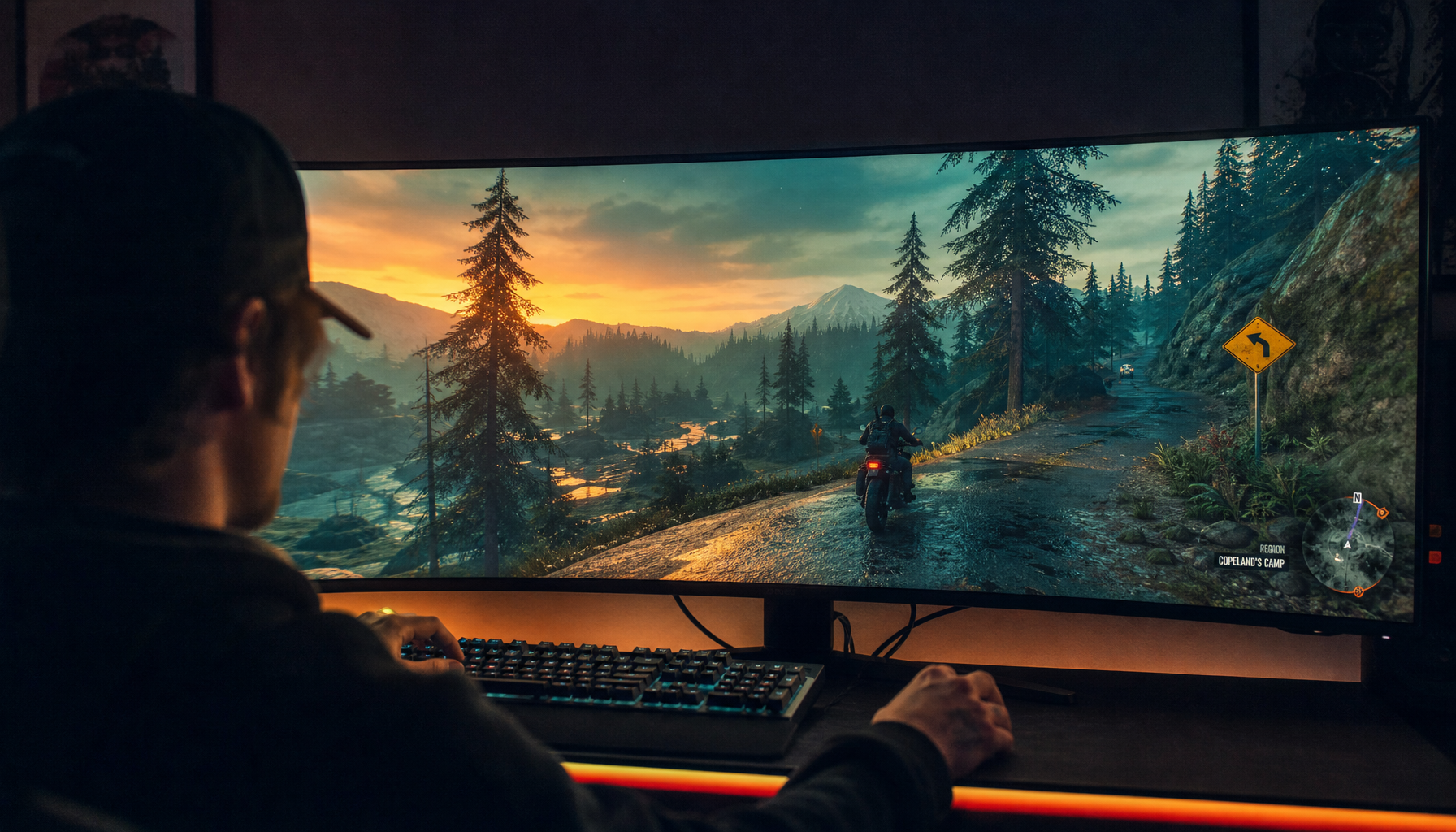
Game-level HDR grading is inconsistent, even on good hardware. A hands-on HDR versus SDR monitor test showed better color definition in the sky under HDR, but also more aggressive overexposed highlights in the sun. For buyers, that means banding and clipping are not always proof of a bad monitor; sometimes the game’s HDR implementation is simply uneven.
How to Test and Fix HDR Banding on Your Setup
A simple HDR toggle test is worth trying first. If turning HDR on and off clears the problem on your gaming monitor, that points to a driver handshake or output-state issue rather than permanent panel damage. Test the same dark gradient, sky scene, or skin-tone-heavy clip in both SDR and HDR before drawing conclusions.
The most useful troubleshooting method is to change one variable at a time. The clearest refresh-rate example is 144 Hz versus 120 Hz, but the same logic applies to cable swaps, one connection type versus another, output format, monitor factory reset, and firmware updates. On high-refresh ultrawide monitors, the headline mode is not always the cleanest HDR mode.

Power-cycling or resetting the display can also matter more than it should. One monitor troubleshooting case recovered normal output options after a restart, which is a reminder that the GPU and monitor do not always negotiate color depth cleanly. If screenshots look smooth but the monitor looks banded in person, the issue is more likely in the output path or the display processing than in the source file.
What to Buy if You Want Cleaner HDR
Buying for cleaner HDR is less about the logo on the box and more about whether the monitor can sustain the full chain. Strong HDR display guidance favors real brightness, solid contrast behavior, enough connection bandwidth, and trustworthy calibration or firmware support. That is a better shopping filter than chasing the cheapest “HDR compatible” badge.
For gaming monitors, prioritize the exact mode you plan to use. If you want 4K at 144 Hz or an ultrawide at 240 Hz, check whether owners report cleaner gradients at lower refresh modes, because the 144 Hz versus 120 Hz behavior is not a small edge case. Banding that vanishes at a lower refresh rate is a buying clue, not just a settings quirk.
For OLED ultrawides, pay extra attention to near-black ramps and skin tones. The brand monitor thread is a useful reminder that panel family and firmware quality still shape the result, even on premium hardware. If your use includes desktop work, web browsing, and media as much as gaming, a monitor with cleaner SDR behavior and predictable HDR tone mapping may be the better long-term choice than a more dramatic but less stable HDR implementation.
FAQ
Q: Does a 12-bit setting always remove HDR banding?
A: No. It can help, but only if the entire chain preserves that signal correctly. A compressed source, weak tone mapping, or an 8-bit panel path can still show banding even when the output menu says 12-bit.
Q: Why do dark scenes and skin tones reveal banding so quickly?
A: Those scenes rely on small, smooth tonal changes. Near-black fades, warm midtones, and subtle gradients have fewer visual distractions, so missing steps stand out immediately.
Q: Should you leave HDR on all the time in your operating system?
A: Only if your monitor handles SDR-in-HDR desktop content cleanly. If the desktop looks washed out, darker than expected, or unstable across apps, it is often better to use HDR for games and video only.
Final Takeaway
HDR does not create banding out of nowhere. It makes existing weaknesses easier to see because brighter highlights, deeper shadows, and finer gradients demand more from the monitor, the source, and the signal chain.
For buyers, the safest path is to prioritize real HDR hardware over marketing labels: strong brightness, solid contrast control, enough bandwidth at your target refresh rate, and owner reports that confirm clean gradients in actual use. If banding changes with refresh rate, cable path, or HDR toggles, treat that as a signal-chain issue first and a panel defect second.