A predictive maintenance dashboard works best when it is less like a control room and more like a shared household check-in. If you have multiple Matter-compatible systems, a rolling 4K display can make appliance, solar, and HVAC patterns easier to notice, but it should help you spot drift, not promise failure prevention.
Why a Rolling Dashboard Fits Home Health
A rolling display fits home health because it keeps status visible where people already pass through. That matters when your household data lives in separate apps and no one wants to open three phones just to see whether something looks off. A shared screen makes the predictive maintenance dashboard feel like a family habit instead of a solo task.
This is also why mobility matters. In the morning, the screen can live near the kitchen while you glance at overnight logs. In the evening, it can roll into the living room for a short review. That movement is not a gimmick; it helps the dashboard follow the moments when people actually make decisions.
As Matter’s energy-management approach explains, the standard is moving toward shared energy data that external systems can surface for household-level review. For broader operational context, the Connected Home over IP documentation shows how Matter devices can expose useful data that apps and dashboards can organize. That supports the idea of a shared view, but it does not guarantee every legacy device will participate cleanly.
Sharing a MEGAPAD Smart Screen Between Kitchen and Living Room is a useful follow-up if you want a room-sharing setup that stays practical in daily use.

The neutral rule is simple: choose this setup if the screen will be seen often enough to matter. If it only becomes visible once a week, the dashboard will drift into the background like another app no one opens.
What to Track at a Glance
For most households, the first dashboard screen should show only the signals that change a decision. That usually means appliance duty-cycle changes, solar battery direction, and HVAC runtime trends. If you try to show every raw metric, the display becomes harder to read and the family stops using it.

Appliance Duty Cycles
Appliance duty-cycle tracking is most useful when it shows change, not just activity. Look for longer-than-usual runtime, repeated restarts, or a schedule that has quietly drifted. Those are the kinds of patterns that make a smart home health monitoring dashboard 2026 feel useful without pretending to diagnose the appliance.
Solar and Battery Trends
For solar and battery views, keep the question simple: is the system charging, discharging, or holding steady in a normal pattern? That is more helpful than packing the screen with every telemetry field. The Matter energy-management model supports that kind of household-level consumption view, but the dashboard should still use plain language.
HVAC Runtime and Efficiency
HVAC visibility works best when runtime becomes a pattern, not a wall of numbers. A family member should be able to tell, at a glance, whether the system seems to be cycling more than usual. That is where a 4K canvas helps: not because it creates more data, but because it gives you room to separate alerts, trends, and detail.
Plain-Language Alerts
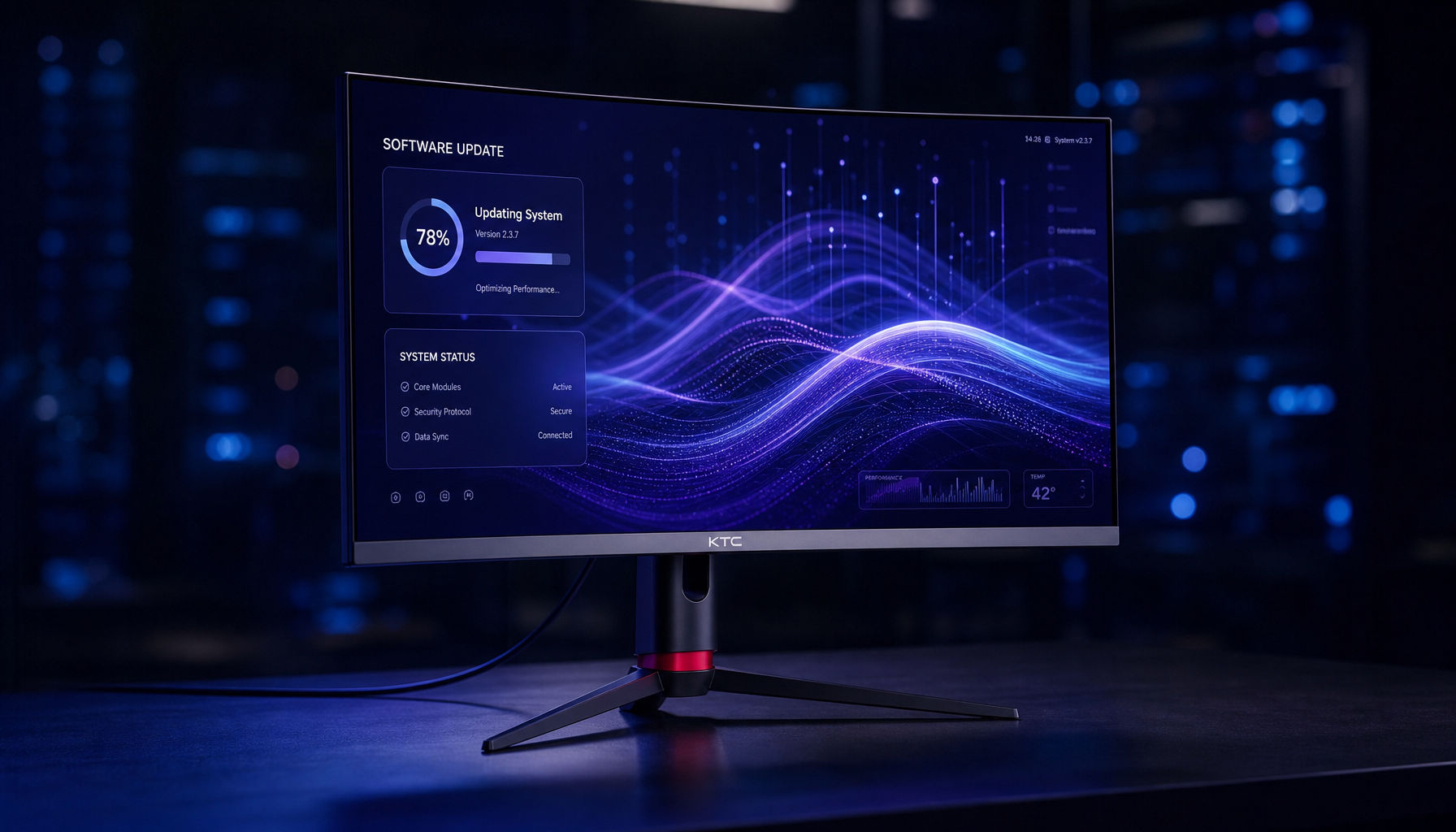
The first screen should use a layered hierarchy. Put alerts first, then trend lines, then detail views. On a 32-inch 4K screen, that hierarchy prevents clutter better than simply adding more cards.
A simple visual hierarchy on a shared rolling dashboard makes the anomaly cue easiest to notice first, while shared consumption context supports follow-up review. The table below shows why the visual order matters for non-technical viewers.
| Scenario | Shared consumption context | Clear 4K visual hierarchy | Rolling touch display |
|---|---|---|---|
| Fastest anomaly spotting | 1.0 | 2.0 | 2.0 |
| Supportive but secondary | 2.0 | 3.0 | 1.0 |
| Review routine | 2.0 | 2.0 | 3.0 |
How to Turn Telemetry Into a Family View
The main job is to turn scattered app data into one repeatable family view. Start by grouping each system by room or priority, then decide which status deserves the first card, the second card, and the drill-down view. If everyone has to guess what the colors mean, the dashboard has already become too complicated.
- Pick the few systems that matter most, such as HVAC, battery storage, and a handful of appliance groups。
- Give each system one plain-language card.
- Put exceptions above trends, and trends above raw detail.
- Anchor the view to morning coffee or evening wrap-up.
- Reserve alerts for unusual changes so the screen does not become notification noise.
That routine is the real difference between a dashboard and a display. A family will use it when it fits a rhythm they already keep. If it only appears when something is wrong, people stop trusting it as a daily reference.
A practical companion guide is How to Position a Monitor in a Multi-Purpose Room Without Compromising Living Space, which is useful when you need the display to live in a shared area without becoming visual clutter.
If you want a broader browsing path for movable screen options, the Mobile Touch Screen collection is the cleanest category starting point.
Why the Screen Choice Matters
A predictive maintenance dashboard is only as readable as the screen behind it. A 4K canvas helps because it lets you separate alert tiles, trend lines, and room-by-room summaries without crowding. That is the biggest reason a 31.5-inch mobile screen can make more sense than a small tablet-style setup.
A fixed monitor can work if the dashboard never leaves one room. But that breaks down when the household wants to check status in the kitchen at breakfast and the living room at night. Mobility matters more than people expect because family routines move around the house.
| Display Type | Best Use | What It Helps With | Where It Breaks Down |
|---|---|---|---|
| Mobile 4K touch display | Shared home health dashboard | Room-to-room visibility, touch acknowledgment, simple family reviews | Heavier setup and more charging planning |
| Fixed smart monitor | One-room status board | Always-available wall or desk view | Stays tied to one spot |
| Smaller portable monitor | Light occasional checking | Lower-cost visibility for one or two metrics | Can feel cramped for multi-system dashboards |
The Smart Monitor collection is a helpful category path if you want a simpler all-in-one screen instead of a mobile dashboard. If you are choosing among 4K options more broadly, the 4K Monitor collection gives a wider comparison starting point.
For a build that keeps the family review idea intact, the KTC MEGAPAD 32" 4K Android 14 Google EDLA Smart Touch Monitor with 8550mAh Battery is the most direct fit because it combines a 31.5-inch 4K panel, touch input, Android 14, and a built-in battery. The same section also makes clear that runtime still depends on brightness, usage, and settings, so plan around charging rather than assuming it will stay up indefinitely.
A lighter 27-inch alternative is the KTC MEGAPAD 27" FHD Android 14 Google EDLA Smart Touch Monitor with 9500mAh Battery, but that lower resolution is easier to outgrow once you start combining energy, HVAC, and appliance data on one screen. For this article’s use case, the 27-inch model is the compromise option, not the ideal one.
Setup Choices That Keep It Useful
The best setup is the one that stays easy to live with. Put the screen where people naturally pass, but not where it blocks cooking, doors, or traffic. If it has to be moved every time someone wants to check it, the habit will fade.
Mounting and Sightline
Line-of-sight matters more than people think. A good spot is one that lets someone glance at the screen during a routine stop, not one that demands a separate trip across the house. If you want the display to act like a house dashboard, it should be visible in the places where decisions already happen.
Power and Runtime Planning
Battery planning is part of the decision, not an afterthought. A rolling dashboard sounds convenient until it is off during the exact window when you wanted to review it. That is why the built-in battery on the 32-inch MEGAPAD is useful, but only if you still set a charging routine.
Input and App Organization
Keep the interface simple. Four to six primary cards are usually enough for a household dashboard. More than that, and the screen starts to feel like a technical wall of data instead of a shared health view. The right balance is enough detail to spot drift, but not so much that nobody knows where to look first.
Household Visibility Rules
The dashboard works best when the family agrees on when to check it. Morning and evening are the obvious anchors. A quick breakfast glance can catch unusual overnight patterns, and a two-minute evening review can assign follow-ups without turning maintenance into a project.
Can You Use a Portable Monitor While Standing at Kitchen Counters or High Tables? is a useful setup read if you are deciding where the rolling screen can sit without getting in the way.
The practical rule is this: if the dashboard cannot stay visible without creating friction, it is not ready for daily use. In that case, simplify the layout or move the screen before you add more data.
Daily Review and Maintenance Checks
Before you rely on the dashboard each day, check the basics first. Make sure the screen is charged or plugged in, the main cards loaded correctly, and the data is current. If the screen is showing stale information, the display is no longer helping you make decisions.
- Confirm the display is ready for the morning review window.
- Check for offline nodes or stale cards.
- Look only for unusual changes, not every number.
- Revisit the setup after adding a new device or entering a new HVAC season.
- Schedule real service follow-up if a pattern drifts for several days.
That last step matters. A dashboard can help you notice a change, but it does not replace professional service. If runtime trends keep moving in the wrong direction, treat the screen as an early signal and then verify the system through the normal service path.
For readers who want to compare display classes before choosing a path, the Mobile Touch Screen collection and Smart Monitor collection collections are the cleanest starting points.
A predictive maintenance dashboard is most valuable when it stays simple, visible, and repeatable. If you tie it to a morning and evening routine, it can improve household awareness without overwhelming anyone. If you need a screen that follows the family instead of staying fixed in one room, a rolling 4K touch display is the better fit.