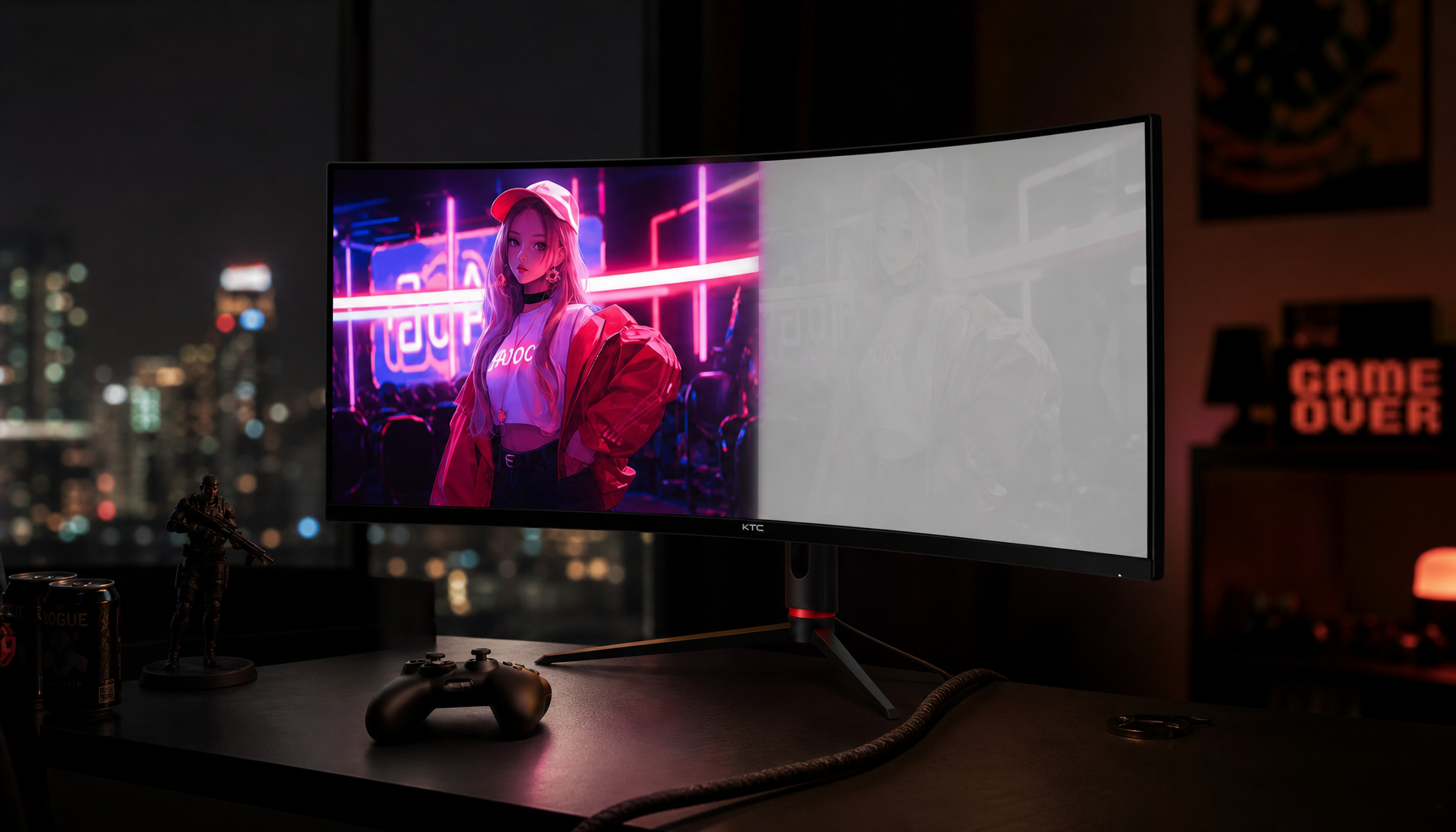
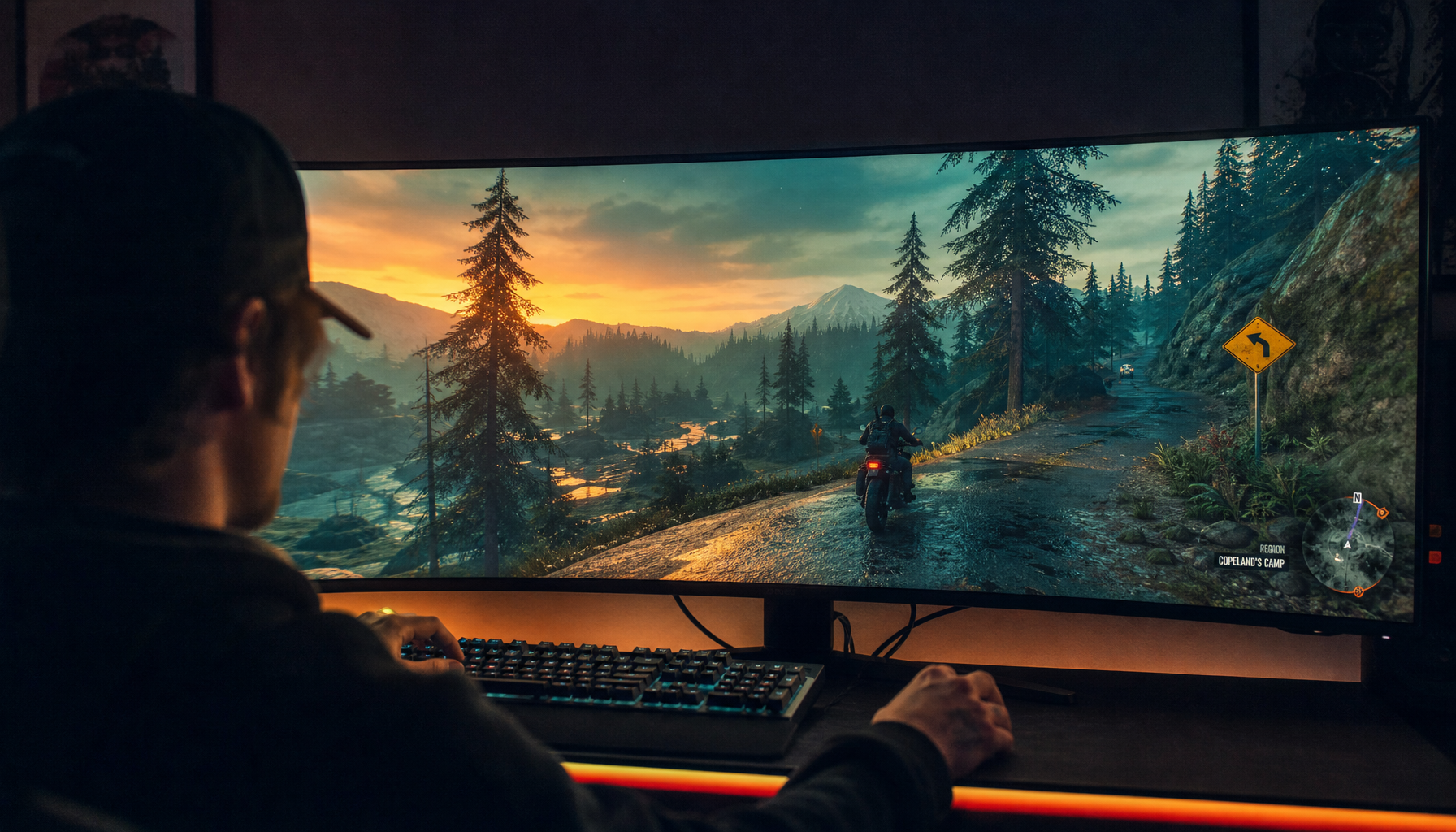
OLED manages heat at the pixel layer to protect organic emitters and limit burn-in risk, while Mini LED manages heat across a dense backlight system that must sustain high brightness without wasting power or dimming early.
Ever notice a bright HDR game looking stunning for the first few minutes, then subtly flatter after a long session? Understanding monitor heat helps you predict which display will hold brightness, protect its lifespan, and fit your room before you spend $700.00 or more. Here is how OLED and Mini LED cooling differ, and how to choose the better option for your setup.
Why Heat Matters in Gaming Monitors
Thermal management is not just about whether the rear shell feels warm. In a gaming monitor, heat affects sustained brightness, HDR impact, color stability, panel aging, and whether protective dimming starts during demanding play. A display can advertise a huge peak brightness number, but if its cooling system cannot move heat away quickly enough, that number may only describe short bursts.
The same principle PC gamers already understand applies here: when electronics get too hot, performance protection takes priority. Thermal throttling reduces output to lower heat, which in monitors usually appears as brightness limiting, dimming, flicker, or unstable image behavior rather than lower FPS. For a display, the goal is not to stay cold; it is to stay predictably warm without performance swings.
OLED Heat: Local, Pixel-Level, and Lifespan-Sensitive

OLED panels are self-emissive, meaning each pixel produces its own light instead of relying on a separate backlight. OLED stands for organic light-emitting diode, and a 4K OLED has 8,294,400 independently controlled pixels that can shut off for true black.
That pixel-level control is why OLED looks so clean in dark scenes. It is also why heat is tied directly to the image. A dark stealth game with small highlights puts limited stress on the panel. A bright snow map, full-screen white browser window, or all-day productivity layout pushes many pixels at once, raising power demand and thermal load.
OLED heat is especially important because its light-emitting materials are organic. Excessive heat can degrade OLED organic compounds, contributing to image retention, burn-in, accelerated aging, and shorter service life. Modern OLED gaming monitors reduce this risk with heat spreaders, pixel shifting, logo dimming, panel refresh cycles, and increasingly common burn-in warranties, but those protections do not change the underlying physics.
What OLED Cooling Prioritizes
OLED thermal design usually protects the emissive layer from uneven wear while preserving as much brightness as possible. Heat spreaders, graphite layers, metal internal plates, and firmware-controlled brightness limiting all work together. The monitor may dim large bright areas because driving the whole screen hard produces more heat than showing a small highlight.
That is why OLED often feels unbeatable in a dark room but less dominant in bright desktop work. OLED monitors have the advantage in dark rooms because they produce deep blacks without blooming, but they generally cannot sustain full-screen brightness as aggressively as Mini LED. In practical terms, an OLED may make a night mission look perfect, then feel more limited when you switch to a white spreadsheet, bright map editor, or static code window.
Mini LED Heat: Backlight-Dense, Brightness-Driven, and Efficiency-Limited
Mini LED is still an LCD technology. Instead of each pixel making its own light, the monitor uses a backlight made of many tiny LEDs divided into dimming zones. Mini LED monitors can get significantly brighter, especially across larger bright areas, which is why they are strong in sunny rooms, HDR games, and productivity-heavy setups.
The thermal challenge is different from OLED. Mini LED has to manage heat from thousands of LEDs, driver circuits, optical films, local dimming control, and the LCD layer itself. Mini LED TVs use thousands of tiny LED chips, and while monitor implementations vary, the same design pressure applies: dense light sources create concentrated heat that must be spread and vented.
A Mini LED display does not face OLED-style burn-in, but it can still lose efficiency when hot. Higher LED temperatures can reduce light output efficiency, which may require more power to maintain brightness. That creates a feedback loop where the backlight works harder, produces more heat, and depends even more on heat sinks, thermal pads, venting, and power regulation.
What Mini LED Cooling Prioritizes
Mini LED cooling is built around sustained brightness and backlight efficiency. The monitor must keep its LED array, driver ICs, and local dimming system within a stable range so HDR highlights stay bright and full-screen scenes do not sag.
This matters in real gaming. In a bright racing game, open-world desert, or daylight sci-fi city scene, Mini LED often has more thermal headroom for luminous full-screen output. Mini-LED gaming monitors can pair high refresh rates with stronger visibility in bright rooms, while OLED usually wins on motion feel and black-level precision.
OLED vs Mini LED Thermal Behavior at a Glance

Thermal factor |
OLED gaming monitor |
Mini LED gaming monitor |
Main heat source |
Self-lit pixels and panel-driving electronics |
LED backlight array, drivers, LCD stack, and power circuitry |
Heat pattern |
Changes heavily with image brightness and static content |
Concentrated around backlight zones and power delivery |
Main protection behavior |
Automatic brightness limiting, pixel care, logo dimming, panel refresh |
Local dimming control, brightness management, driver efficiency, chassis cooling |
Biggest long-term risk |
Uneven organic material wear and burn-in |
Backlight aging, efficiency loss, blooming variation by model |
Best thermal use case |
Dark-room gaming, cinematic HDR, esports motion clarity |
Bright rooms, long desktop sessions, sustained HDR brightness |
User setup priority |
Lower static brightness, hide taskbars, vary content |
Keep vents clear, allow rear airflow, manage brightness in hot rooms |
Brightness, HDR, and the Heat Tradeoff
HDR is where the thermal split becomes obvious. OLED gives pixel-perfect contrast, so a bright flame against a black background looks precise and clean. Mini LED gives more raw brightness across larger areas, so a sunlit battlefield, snowy landscape, or bright sci-fi interface can stay visually forceful for longer.
The difference is not just about peak brightness. High-end Mini-LED monitors are described as exceeding 1,500 nits, while premium OLEDs may reach strong highlight brightness but are more constrained by automatic brightness behavior. For a player, that means OLED often wins the black-space drama of a horror game, while Mini LED often holds up better for bright HDR worlds and mixed productivity.
There is an important nuance: Mini LED quality varies widely. More dimming zones can improve control, but more zones do not automatically guarantee better real-world performance because the LCD panel type, dimming algorithm, and thermal design all matter. A poorly tuned Mini LED monitor can bloom, crush shadow detail, or dim awkwardly even if the spec sheet looks impressive.
Burn-In, Static Work, and Long Sessions
If your monitor doubles as a work display, OLED thermal management deserves extra attention. Static HUDs, taskbars, spreadsheet grids, video timelines, browser tabs, and office dashboards create repeated wear patterns. Heat accelerates that problem because brighter static elements age faster than darker or varied content.

Burn-in is a key OLED risk when static elements remain on screen for long periods, while Mini LED does not have the same permanent image retention concern. That makes Mini LED the more reliable choice for an eight-hour workday followed by gaming, especially if you keep a bright desktop, fixed taskbar, or multiple static windows open.
OLED is still a serious gaming choice, especially for players who value response time and contrast above all else. OLED response times can be far below LCD-based displays, which is why fast shooters, racing games, and high-refresh competitive play feel so clean. The smart move is matching OLED to varied content, moderate desktop brightness, and panel-care features you will actually leave enabled.
Room Setup Matters More Than Monitor Thickness
A thin monitor can look premium, but thickness alone does not tell you whether it cools well. Heat needs a path out. A thin OLED may feel warm quickly because there is less material between the panel and the shell. A thicker Mini LED may still trap heat if the vents are blocked or the internal airflow path is weak.
For a desk setup, give the rear of the monitor room to breathe. In practice, keeping the display a few inches off the wall, avoiding direct sunlight, and not covering top or rear vents with a mount can help maintain stable brightness. If your room runs hot in summer, lowering brightness during marathon sessions is more effective than worrying about whether the shell feels slightly warm.
Which Should You Choose?
Choose OLED if your priority is fast motion, perfect blacks, dark-room immersion, cinematic contrast, and competitive responsiveness. It is the more compelling choice when the environment is controlled and the content changes often. For example, a 27-inch or 32-inch OLED used mainly for evening gaming, movies, and fast multiplayer is a strong match as long as you manage static UI exposure.
Choose Mini LED if you need sustained brightness, bright-room visibility, all-day productivity reliability, or lower burn-in anxiety. It is the more practical performance display for a mixed desk where you may edit documents at noon, keep chat windows open, play HDR games at night, and expect the panel to tolerate static content without special habits.

The value call is straightforward: OLED spends its thermal budget on pixel precision and speed, while Mini LED spends its thermal budget on backlight power and sustained luminance. The best monitor is the one whose heat behavior matches your real screen life, not just your favorite benchmark scene.
Quick FAQ
Does OLED run hotter than Mini LED?
Not always. OLED often generates moderate heat because it has no backlight, but high brightness and long static use increase thermal stress at the pixel level. Mini LED can consume more power in bright scenes because its backlight array, drivers, and cooling system are doing more work.
Is a Warm Monitor Dangerous?
Warm is normal. Warning signs include heat that keeps rising over hours, sudden dimming, flicker, shutdowns, or brightness that collapses quickly under normal use. Stable warmth after a long session usually means the cooling system is doing its job.
Should I Lower Brightness to Reduce Heat?
Yes, especially for OLED desktop use and Mini LED HDR marathons in warm rooms. A small brightness reduction can lower thermal load, reduce eye strain, and help the display hold consistent performance longer.
A high-performance screen should feel powerful after three hours, not just three minutes. Pick OLED when pixel-level contrast and response are worth careful ownership; pick Mini LED when sustained brightness, workday durability, and fewer thermal habits matter more.