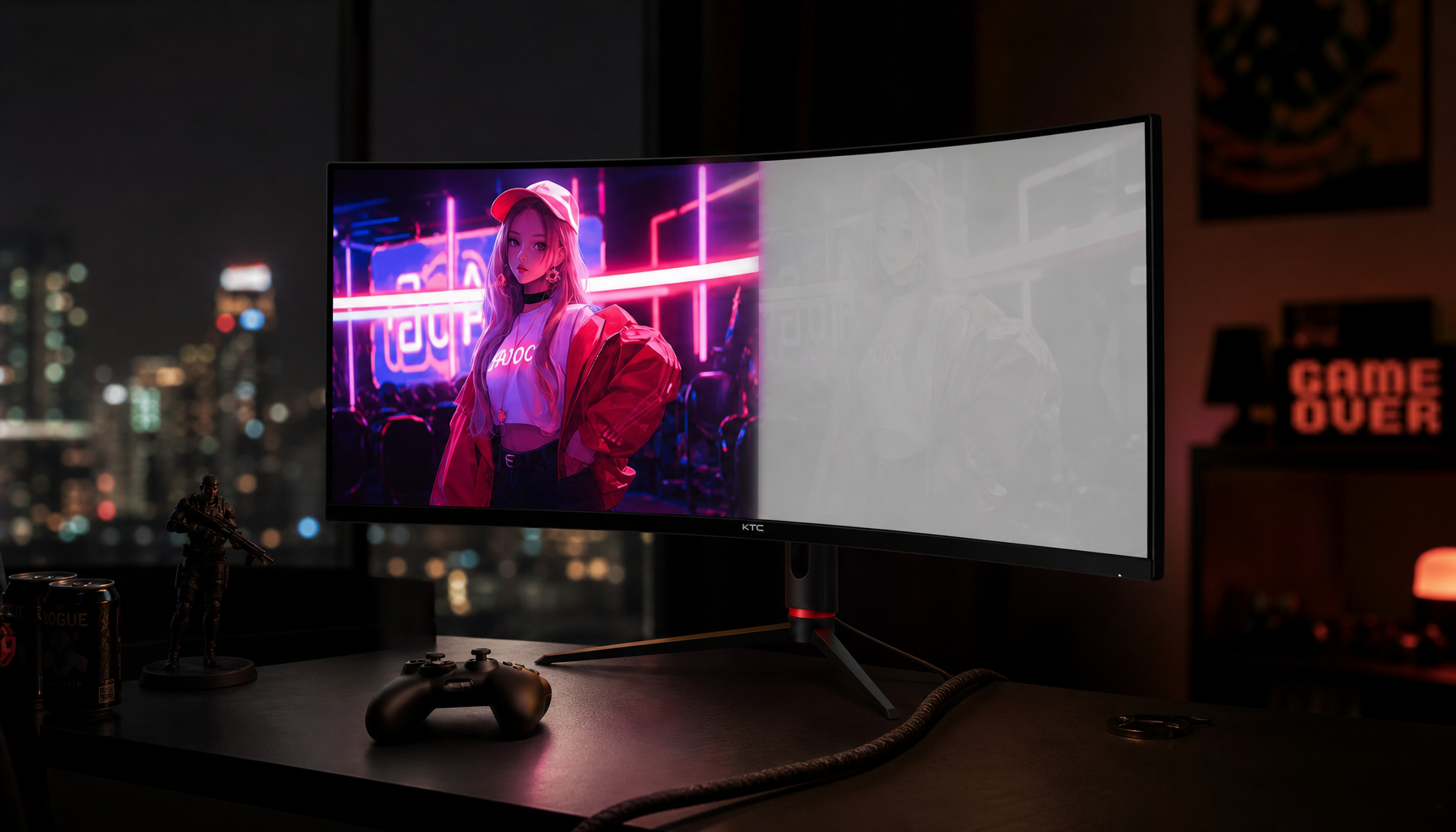
Yes, OLED monitors can suffer burn-in from static UI elements like taskbars, menu bars, bright app ribbons, and fixed game HUDs. The practical risk is much lower on modern OLED displays, but it is not zero, especially for all-day desktop productivity at high brightness.
Why Taskbars Are a Real OLED Stress Point
OLED burn-in is uneven pixel aging. Because OLED pixels emit their own light, areas that show the same bright shape for long periods can age faster and leave a faint permanent outline, a behavior commonly described as screen burn-in.
A taskbar is a classic example. It sits in the same strip, often with bright icons, badges, search fields, and contrasty edges. If your monitor shows that same bottom bar for 8 hours a day, five days a week, those pixels are doing more repetitive work than the rest of the panel.

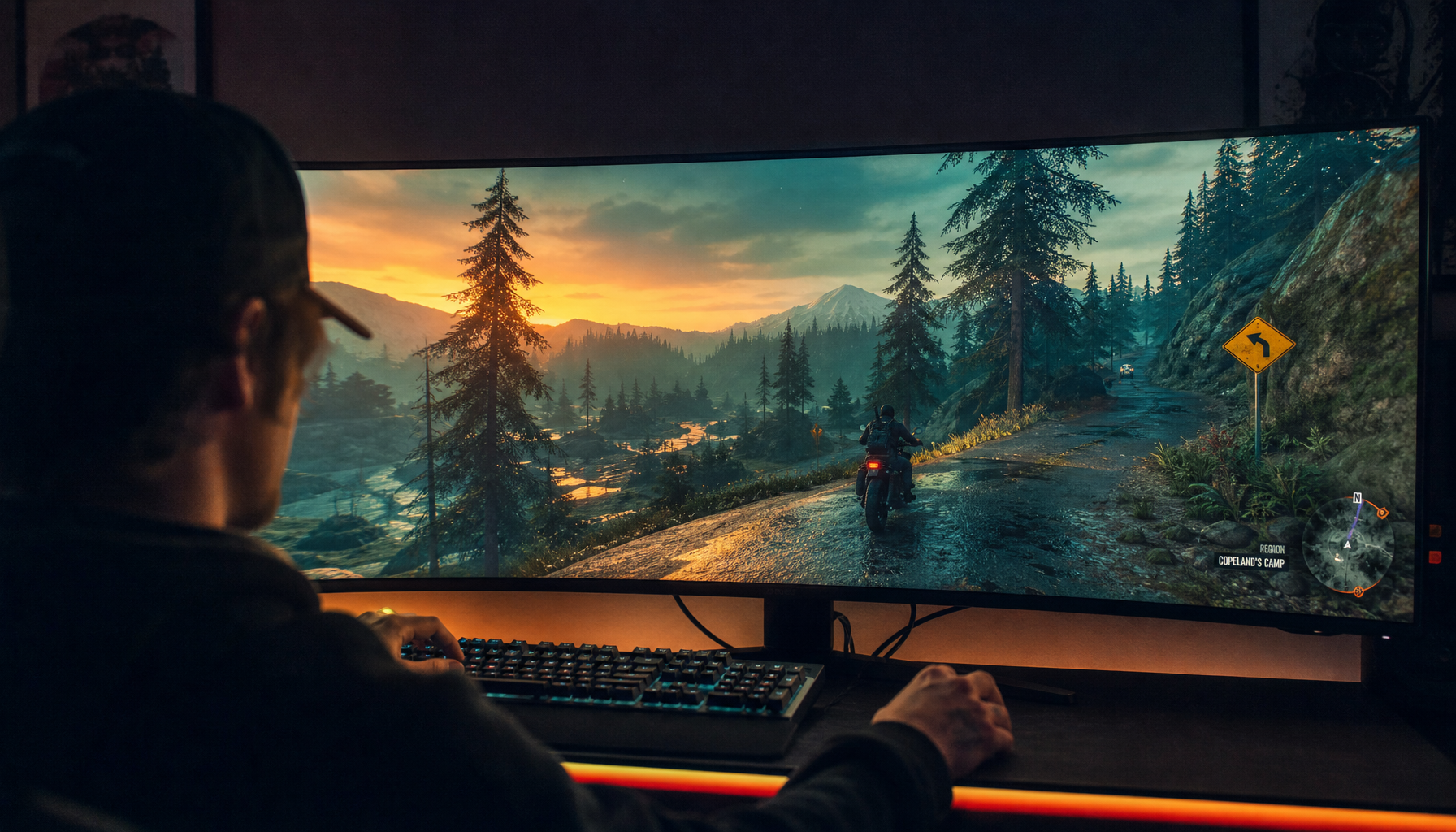
For gaming, the equivalent risk is a static HUD: health bars, minimaps, ammo counters, and scoreboards. For office work, it is the taskbar, browser chrome, spreadsheet gridlines, white document backgrounds, and pinned sidebars.

Modern OLED Is Better, Not Invincible
Today’s OLED gaming monitors are far more resilient than early OLED screens. Better materials, pixel shifting, logo dimming, compensation cycles, and panel refresh routines all reduce the odds of visible wear.
Still, OLED remains a self-emissive technology, and OLED burn-in is tied to long-term differential pixel degradation. That means the question is not “Can it happen?” but “How hard are you driving the same pixels every day?”
Real-world reports are encouraging. One long-term OLED monitor user logged 2,656 hours and saw little to no burn-in during normal use, though faint marks appeared under harsh gray-screen testing at high brightness during normal use.
That nuance matters: normal content may look flawless, while test patterns can reveal early uneven wear before it becomes annoying in daily work.
Best Settings for Productivity and Gaming
For a performance display, the goal is not babying the monitor. It is tuning it so OLED gives you deep contrast, instant pixel response, and HDR impact without letting static UI elements dominate the panel for months.
Start with these quick wins:
- Auto-hide the taskbar during long desktop sessions.
- Keep SDR brightness moderate, especially in office apps.
- Enable pixel shift, logo detection, and panel care features.
- Use a short screen timeout or moving screensaver.
- Let pixel refresh cycles run when the monitor requests them.
Monitor makers commonly call out static images, brightness, and temperature as key risk factors for OLED productivity, and recommend panel care features such as taskbar detection and pixel shift.
Dark mode can help too, but treat it as a support move, not a shield. OLED pixels use less power for darker content, especially at higher brightness, but Purdue researchers found dark mode’s savings are modest at typical indoor brightness and much larger at maximum brightness on OLED screens.

Should You Buy OLED for a Taskbar-Heavy Desk?
Buy OLED if you value immersion: true blacks, pixel-level contrast, fast response, clean motion, and HDR that makes games and media feel dramatically more alive. For hybrid use, it can be outstanding.
Choose LCD instead if your monitor will show the same bright dashboard, spreadsheet, trading layout, or static control panel all day with little variation. LCD is still the lower-maintenance workhorse for fixed UI.
For most gamers and mixed productivity users, a modern OLED monitor is a strong choice if you use sensible brightness, hide static UI when practical, and trust the built-in care tools. The taskbar is a risk, not a dealbreaker.