OLED burn-in office dashboard risk is highest when the same bright UI stays on screen for long stretches, day after day. If your setup is mostly static, Mini-LED is usually the safer long-term choice; if the content changes often and persistent elements are limited, OLED can still be reasonable.

What Drives Burn-In Risk at the Desk
For most office users, the biggest warning sign is not one long day on OLED. It is the same dashboard pattern repeating for months, with bright elements parked in the same place every workday.
Static UI Elements That Stay Visible All Day
The most common risk factors are taskbars, KPI tiles, status strips, logo blocks, and clock widgets. As RTINGS' OLED vs. Mini-LED comparison notes, the risk rises when fixed UI stays visible for extended periods rather than changing naturally.
That is why office dashboards behave differently from gaming or video use. A game menu may sit still for a minute; a finance board, warehouse tracker, or operations wall may sit in the same layout for eight hours.
A useful decision sentence is this: if the same bright interface stays parked in the same position most days, OLED burn-in office dashboard risk moves from theoretical to practical.
Usage Patterns That Raise Cumulative Wear
Long daily sessions matter more than occasional use because burn-in is about accumulated exposure, not a single unlucky afternoon. Brightness level, screen content, and how often the interface changes all affect how fast the risk builds.
That is also why there is no universal safe hour cutoff. Two people can both use OLED for eight hours, but the one with static white headers and dense widgets will usually face more risk than the one with constantly changing content.
If you want a plain-language rule, use this: the more identical pixels you keep lit for longer, the less forgiving OLED becomes for office dashboards.
Mini-LED vs. OLED for Long-Term Productivity is a useful follow-up if you want a broader long-use comparison before choosing a panel class.
Which Dashboard Elements Create the Most Risk
The worst offenders are the pieces of the interface that never move. Once those elements stay in the same pixel position every weekday, they become the main thing to control.
- Fixed navigation bars and toolbar strips
- Logo blocks and corner badges
- Clock widgets and always-on status panels
- Bright white headers
- Colored KPI tiles and alert boxes
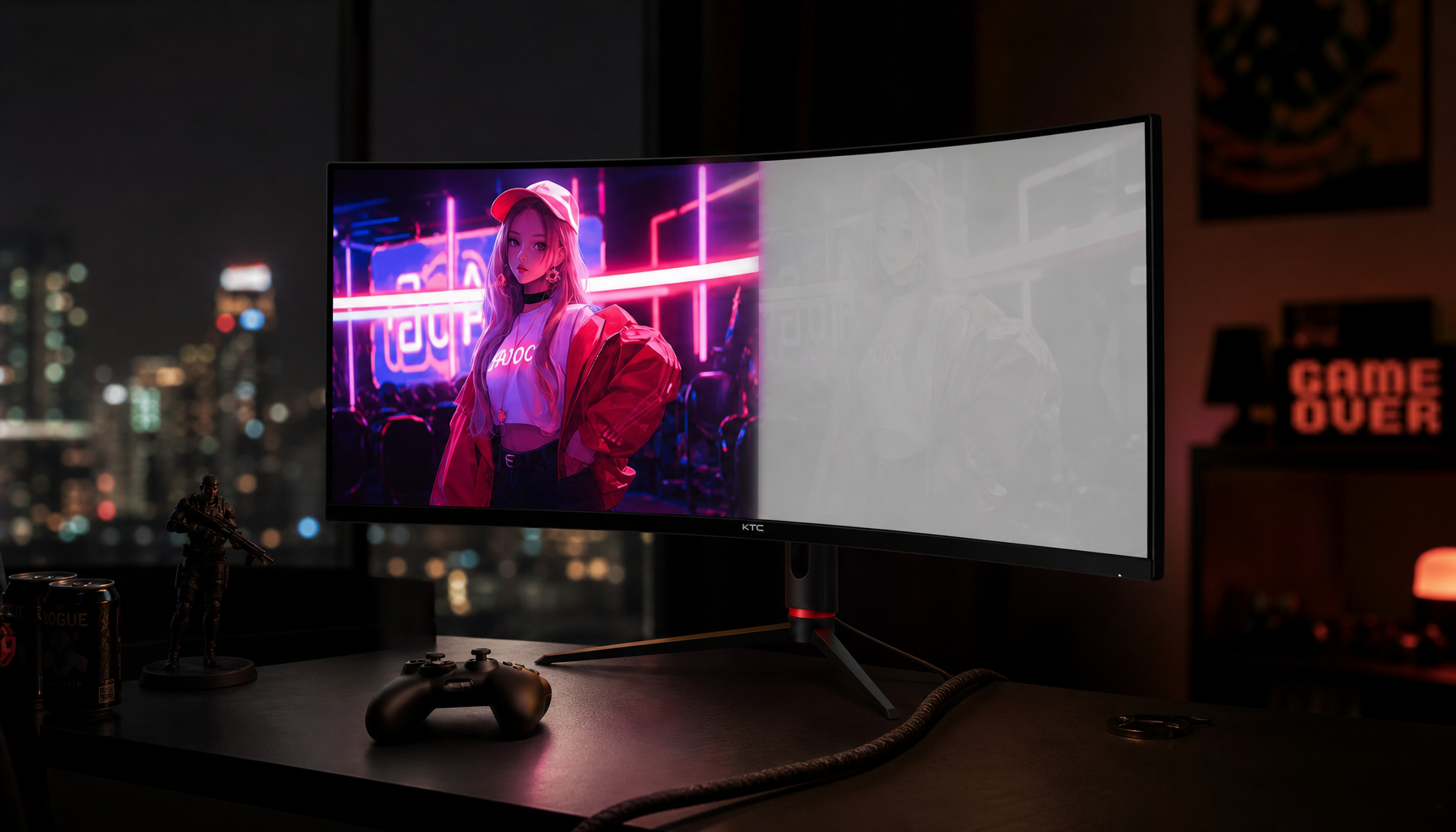
- Split-screen layouts where one side barely changes
Bright UI blocks matter because they keep the same pixels under the most stress. A white header or saturated KPI tile is not automatically a problem, but it becomes a bigger concern when it stays pinned in place across long office days.
Split-screen setups deserve special attention. If one side of the screen updates often but the other side stays static, the panel does not wear evenly. That uneven use pattern is exactly what makes a static UI OLED risk assessment useful.
For a deeper follow-up on sticky overlays and fixed logo zones, see Why Logo Watermarks and Stream Overlays Are High-Risk for Burn-In on Gaming and Streaming Monitors. It is written for gaming and streaming, but the same logic helps with dashboard elements that never move.
If you need a simple decision sentence, use this: when the dashboard contains fixed white or brightly colored blocks that stay in one place most of the day, OLED is a weaker fit than it first appears.

How to Judge Whether OLED Is Acceptable
Start with the simplest question: how much of the workday will the same interface stay on screen? That one check tells you more than spec shopping does.
Step 1: Count the Static Hours
Estimate how long the dashboard stays visually unchanged on a typical workday. If the interface is mostly fixed for most of the day, the OLED burn-in office dashboard case becomes harder to justify.
You do not need an exact number to make the call. What matters is whether the screen is mostly dynamic, partly static, or almost permanently static.
Step 2: Look for Movement and Rotation
Check whether the dashboard can rotate widgets, auto-hide toolbars, dim persistent elements, or cycle layouts. Movement does not eliminate risk, but it lowers the odds that the same pixels are always carrying the load.
This is where many teams overestimate their setup. A dashboard may look "interactive" because data changes during the day, but if the frame, sidebar, and status zone never move, it still behaves like a static screen.
Step 3: Check the Shared-Use Factor
Shared offices create another layer of risk because users may leave static screens untouched for long stretches. In a team space, a screen can sit on the same dashboard after hours, overnight, or between shifts without anyone noticing.
That makes OLED less forgiving in open-plan environments, call centers, and operations rooms. Mini-LED is usually the simpler option when no one can reliably babysit the display.
Step 4: Decide Based on Exposure, Not Hype
If the screen will mostly show fixed content for most of the day, Mini-LED is usually the cleaner choice. If the setup is mixed-use and the static elements are small or easy to hide, OLED is more defensible.
A practical rule is this: the more control you have over the dashboard layout, the more OLED becomes a preference choice instead of a risk choice.
Why Mini-LED Fits Static Dashboards Better
Mini-LED is the lower-risk choice for office dashboards because it does not share OLED's burn-in concern. KTC's All-Mini-LED Monitors collection is a straightforward place to compare that category when your screen will stay on with static UI for long stretches.
For a concrete model example, KTC Mini LED 27" 4K 160Hz HDR1400 Gaming Monitor | M27P6 shows how a Mini-LED display can fit a long-use desk without the same burn-in anxiety. Its product facts list Mini-LED backlighting and state that it is immune to burn-in compared with OLED, which is the key ownership difference for static dashboards.
That does not mean Mini-LED is magically better in every way. OLED still has strengths in contrast and deep blacks, and those can matter if your work includes dark creative content or mixed media use. But for office dashboards that sit open all day, long-term risk usually matters more than picture-style preference.
If you are choosing between All-OLED Monitor and Mini-LED for a fixed dashboard, the decision usually flips on one question: can the UI change enough to keep the same pixels from carrying the burden every day?
A useful decision sentence here is: when the screen's main job is to hold KPI tiles, tables, and status bars for hours at a time, Mini-LED is the safer default; when the screen is mixed-use and the static regions are limited, OLED can still be worth considering.
Office Setup Checklist Before You Buy
Use this checklist before you decide whether OLED burn-in office dashboard risk is low enough for your setup.
- Can the dashboard hide or rotate fixed widgets?
- Will the same interface stay on screen for most of an 8-hour shift?
- Is the display shared across users or shifts?
- Are the brightest elements parked in the same place every day?
- Does the room need a 27-inch class screen that fits a dual-monitor desk?
- Would a lower-risk panel reduce regret more than OLED's contrast would improve the view?
If most of those answers point toward fixed content and long uptime, Mini-LED is the cleaner fit. The Office Monitor collection is the broader browsing path if you want office-oriented screens rather than panel-specific browsing.
If you still want Mini-LED as the office-safe option, KTC Mini LED 27" 4K 160Hz HDR1400 Gaming Monitor | M27P6 is the most direct match for the lower-risk logic in this guide.
If you are still deciding whether to compare more office-friendly choices, Office Monitor is the best starting point, while KTC Mini LED 27" 200Hz 2K HDR1000 Gaming Monitor | M27T6S is another Mini-LED option to check when you want a different resolution and refresh-rate balance.
A practical closing sentence: if your desk is mostly static, favor Mini-LED; if your dashboard is genuinely mixed and mostly changing, OLED can stay in the running.
When OLED Still Makes Sense for Office Use
OLED is not automatically the wrong answer for every office. It can still make sense when the monitor is used for mixed content, the static parts are minimal, and the user can actively manage the interface.
That usually means a secondary monitor that shows documents, browser tabs, design work, or changing windows rather than a permanent operations board. In that kind of use, the burn-in concern is present but less central than it is for a wall-style dashboard.
The All-OLED Monitor collection is the natural place to browse only if you already know the dashboard is not mostly static. If the screen is going to hold fixed UI all day, the better move is to step back into Mini-LED instead of forcing OLED to do a job it is less suited for.
Related Resources
- visible grid pattern issues
- display uniformity
FAQs
Q1. How Many Hours of Static Content Is Too Much for OLED?
There is no universal cutoff, and that is the main reason this topic needs a decision framework instead of a hard number. In practical office use, risk becomes more concerning when the same dashboard stays visible for most of the workday across many months.
Q2. What Office Dashboard Elements Burn in Fastest?
The highest-risk zones are fixed taskbars, bright headers, KPI tiles, logo blocks, and always-on status strips. The common thread is not the label on the UI element, but the fact that it stays in the same place with similar brightness day after day.
Q3. Can OLED Work for a Secondary Monitor?
Yes, if the monitor mostly shows changing content and the static interface areas are small or easy to hide. That is a very different use case from a dashboard screen that stays open all day with the same widgets.
Q4. Why Is Mini-LED Easier to Live With for Dashboards?
Mini-LED removes the burn-in anxiety that comes with static office screens, so it is simpler for shared spaces and always-on setups. It is usually the better choice when the dashboard cannot be redesigned to move the persistent elements around.
Q5. How Can You Lower OLED Burn-In Risk at Work?
Lower the brightness of static widgets, hide toolbars when possible, rotate dashboard layouts, and use sleep timers so the screen does not sit unchanged after hours. These steps do not make OLED identical to Mini-LED, but they can make a mixed-use setup more reasonable.
The Safer Choice for Static Dashboards
If your office screen mostly holds the same dashboard all day, Mini-LED is the simpler long-term buy. OLED still belongs in the conversation when the interface changes often and the static regions are small, but the more fixed the screen is, the more the risk case favors Mini-LED. Review the checklist above and compare models in the Office Monitor collection before purchase.