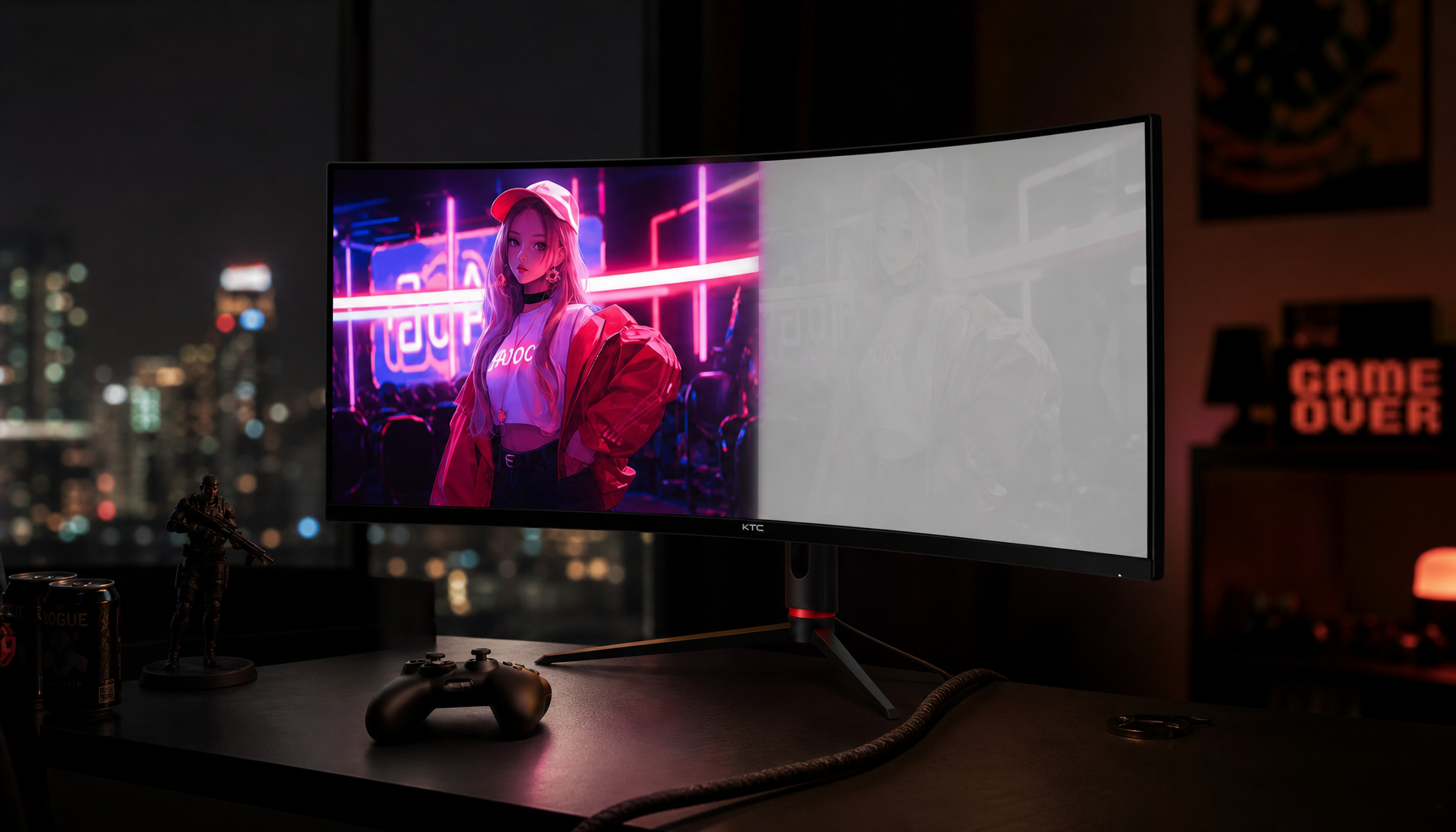
Native resolution usually preserves the cleanest image path, while scaled modes can change sharpness, frame rate, and how much blur or ghosting you notice. The panel itself does not usually get faster or slower, but the full experience can still look very different.
The core idea
A monitor’s response time is the time its pixels take to change color, and a monitor testing site treats that as separate from overshoot and input lag. That matters because native versus scaled resolution mostly changes the image path and the workload around the panel, not the liquid crystals or OLED pixels themselves.
Mode |
What usually stays the same |
What can change |
What you notice |
Native resolution |
The panel’s intended pixel grid |
Little to no scaling softening |
Cleanest text, most predictable motion |
Scaled resolution |
The panel hardware |
Sharpness, frame rate, perceived smoothness |
Softer edges, sometimes cleaner gameplay if FPS rises |
Why the difference shows up
Motion clarity is a stack, not a single number. A gaming monitor knowledge center separates GtG from MPRT and notes that MPRT is tied closely to refresh rate and frame rate. That is the first big reason scaled resolutions can feel different: if lowering resolution lets the GPU render more frames, the display can look smoother even though the panel’s own pixel transition speed has not changed.
A simple way to think about it is this: a 144 Hz monitor has a theoretical minimum MPRT of about 6.9 ms, so the refresh ceiling is already part of the motion story before resolution enters the picture. If a lower-resolution mode helps a game hold a steadier frame rate, the motion may look cleaner because each frame spends less time on screen. The panel did not become faster in a lab sense, but the whole experience can still improve.
Response time is also transition-dependent, not a single fixed number. A hardware forum notes that different color transitions measure differently, which is why one monitor can show fast black-to-white behavior and slower gray-to-gray behavior. In practice, scaled content can emphasize different kinds of edges, gradients, and scene detail, so the same panel may reveal more or less ghosting depending on what it is being asked to display.
Native resolution has another advantage: it usually avoids unnecessary softness. A monitor setup guide recommends using the native or recommended resolution because incorrect scaling can make text look less sharp. That matters for motion too, because a soft image makes blur easier to notice and makes the screen feel less precise even when the underlying response time is unchanged.

What this means for gaming and office work
For fast games, response time still matters, but it should never be judged alone. A gaming display maker describes 5 ms or lower as a good target while also stressing that response time should be balanced with resolution, refresh rate, panel type, and adaptive sync. The practical point is simple: a lower scaled resolution can help if it buys real frame-rate headroom, but it is not automatically a better motion mode than native.
For office and productivity use, the tradeoff is usually different. Lower response time helps with smooth scrolling and moving windows, but resolution often matters more for text clarity and workspace density. The same monitor setup guide also points out that wrong scaling can make the display look less sharp, which is a real cost if you spend the day in documents, spreadsheets, code, or dashboards.
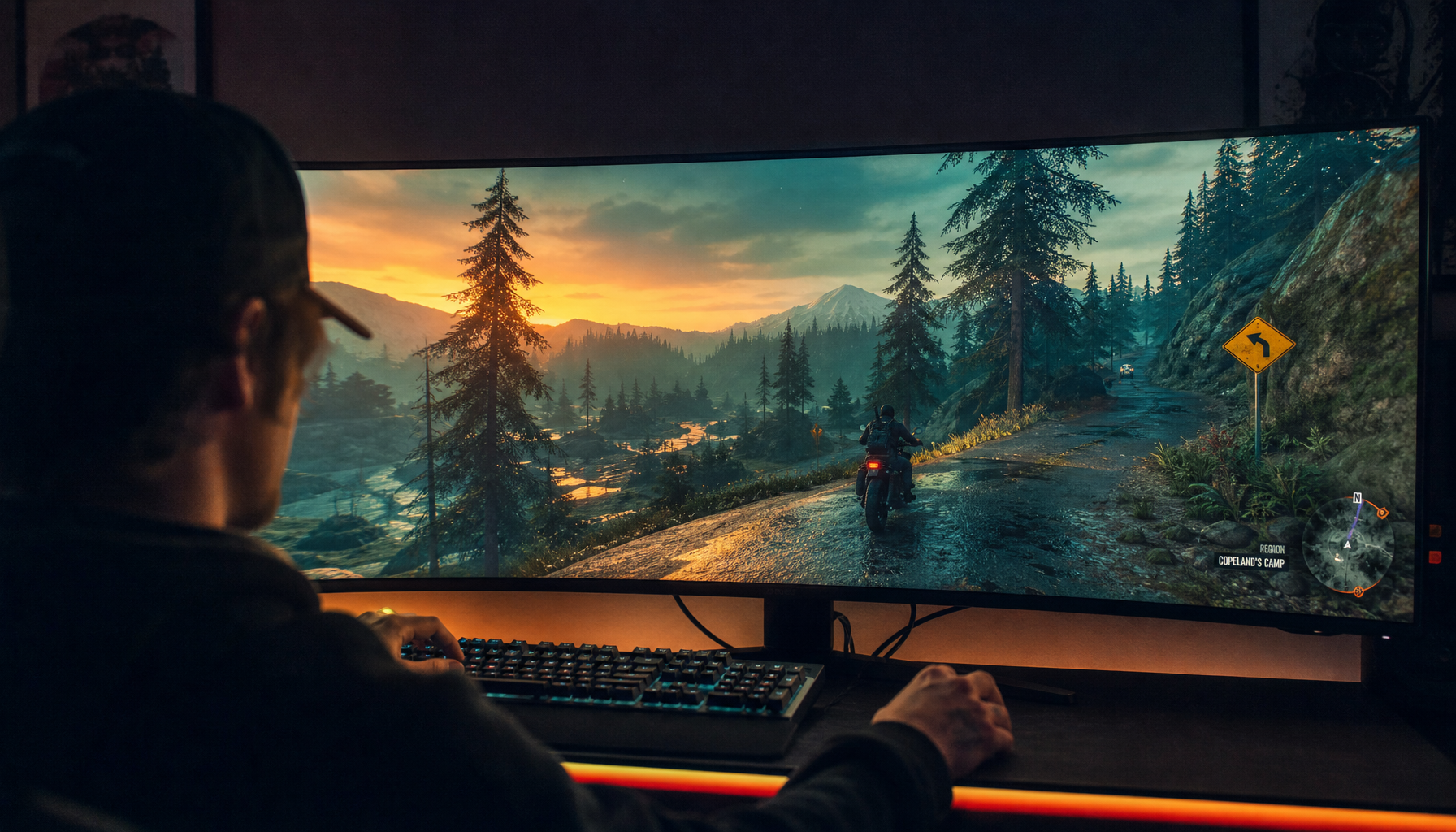
A useful real-world example is a 4K monitor used for mixed work and play. At full resolution, the desktop looks cleaner and text is easier to read. In a scaled game mode, the system may push higher frame rates and feel smoother, but the image can lose some crispness, so the best setting depends on whether you value sharpness or frame-rate headroom more in that moment.

How to judge the modes fairly
The fairest comparison is to keep everything else the same. Use the same refresh rate, the same game or app, and the same overdrive setting if the monitor allows it. A testing site notes that response testing depends on refresh rate and that aggressive overdrive can trade blur for inverse ghosting, so a mode that looks faster is not always the better-tuned mode.
You should also watch for the difference between actual pixel speed and perceived motion. A display manufacturer explains that response time is not the same as latency, and that distinction matters when people blame resolution for a problem that really comes from the broader signal chain. If the scaled mode reduces GPU load enough to keep frame pacing steadier, the screen can feel more responsive even though the pixel transitions are identical.
Practical takeaway
Start with native resolution unless you have a clear reason not to. It usually gives you the sharpest image, the cleanest scaling behavior, and the most trustworthy read on the panel itself. Switch to a scaled mode when you need more frame-rate headroom or a different gameplay balance, but judge it by the full experience, not by response time alone.
For a display that has to work across gaming, office work, and long sessions, the winning setup is the one that keeps motion clean, text sharp, and overdrive under control. Resolution helps, response time matters, and the best result comes from tuning them together rather than chasing one spec in isolation.