Yes. Motion blur reduction can make 24fps and sometimes 30fps video look more juddery because it sharpens each repeated frame instead of smoothing motion between frames.
Does your movie look crisp but strangely “steppy” after you enabled the monitor’s blur reduction mode? A simple A/B test on most strobe-backlight gaming monitors can reveal the tradeoff immediately: moving edges get clearer, but slow pans expose cadence errors faster. You’ll learn when to leave motion blur reduction off for video, when it can work, and which settings preserve both clarity and comfort.
The Short Answer: Sharper Frames Can Expose Rougher Motion
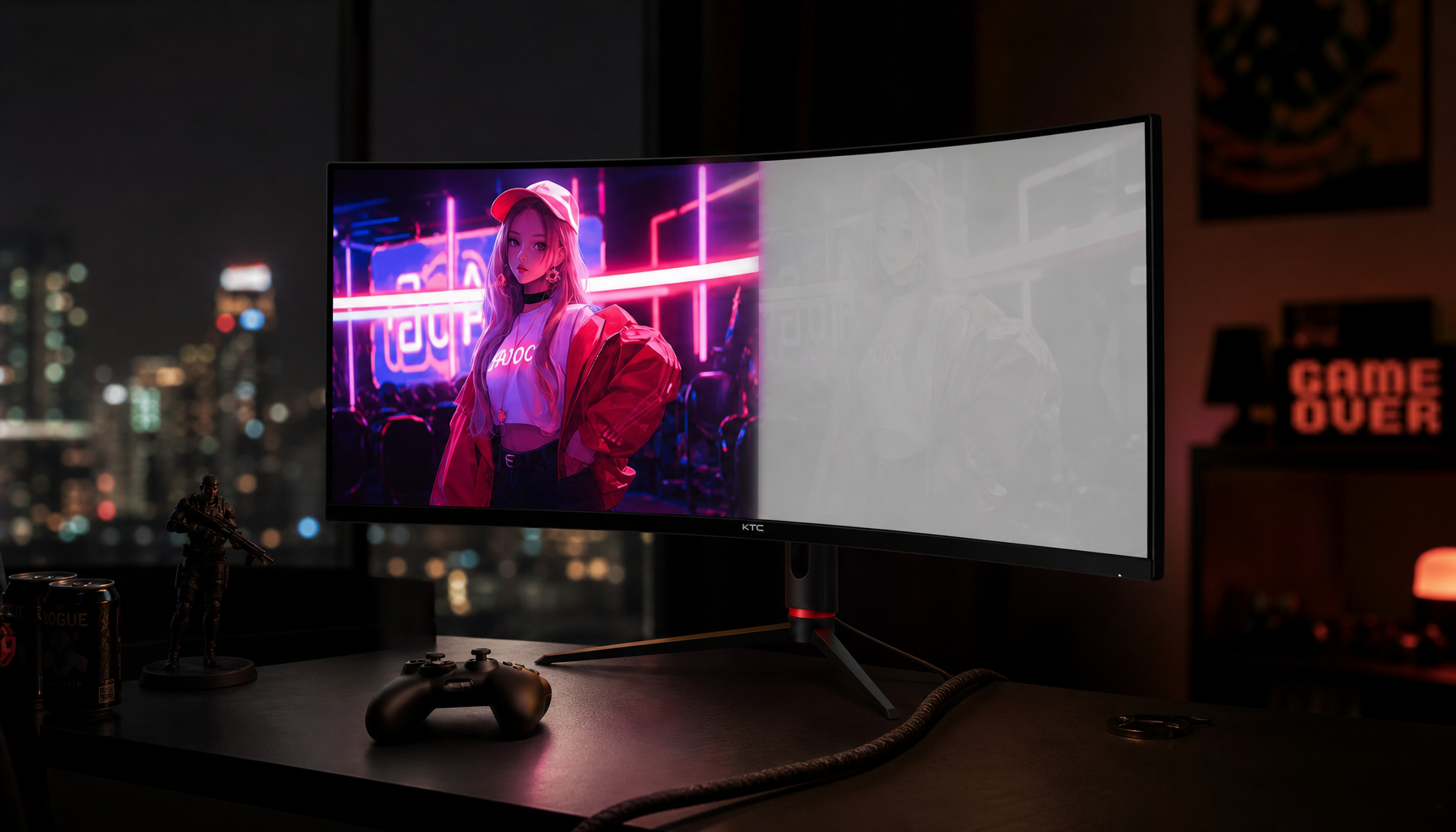
Motion blur reduction, often called backlight strobing, is built for high-refresh gaming where the GPU can feed the monitor a steady frame for every refresh. It reduces perceived blur by flashing the backlight only during clean parts of the refresh cycle, a technique commonly described in gaming-display explainers on motion blur reduction.
That precision is useful in competitive games, but 24fps and 30fps video work differently. Film and streaming content often depend on frame repetition, motion blur baked into the camera exposure, and predictable cadence to feel natural. When a display strobe makes each frame appear shorter and sharper, your eyes may notice the gaps between frames more clearly. The result is not always more blur-free motion. It can be more mechanical motion.
Motion Blur, Judder, and Stutter Are Not the Same Problem
Motion blur is the smear you see when a moving object loses edge detail. On LCDs, that blur often comes from sample-and-hold behavior, where each pixel stays lit for most of the frame interval while your eyes keep tracking motion. A Stanford LCD motion-blur analysis explains that LCD motion blur depends on both the display and the viewer’s eye motion, not just the panel’s pixel response.
Judder is different. It is uneven or shaky motion, usually tied to frame-rate mismatch, pulldown, or motion that does not land cleanly frame to frame. A practical video-editing definition describes judder as stutter or shaking in video motion, often caused by frame-rate mismatches.
Stutter is the basic choppiness of low frame rate itself. A 24fps movie shows only 24 unique moments per second. Even on a 240Hz monitor, the display cannot invent real camera-captured motion unless it uses interpolation. If the monitor simply repeats each movie frame many times, the original 24-step motion remains.
Why Motion Blur Reduction Can Amplify Judder
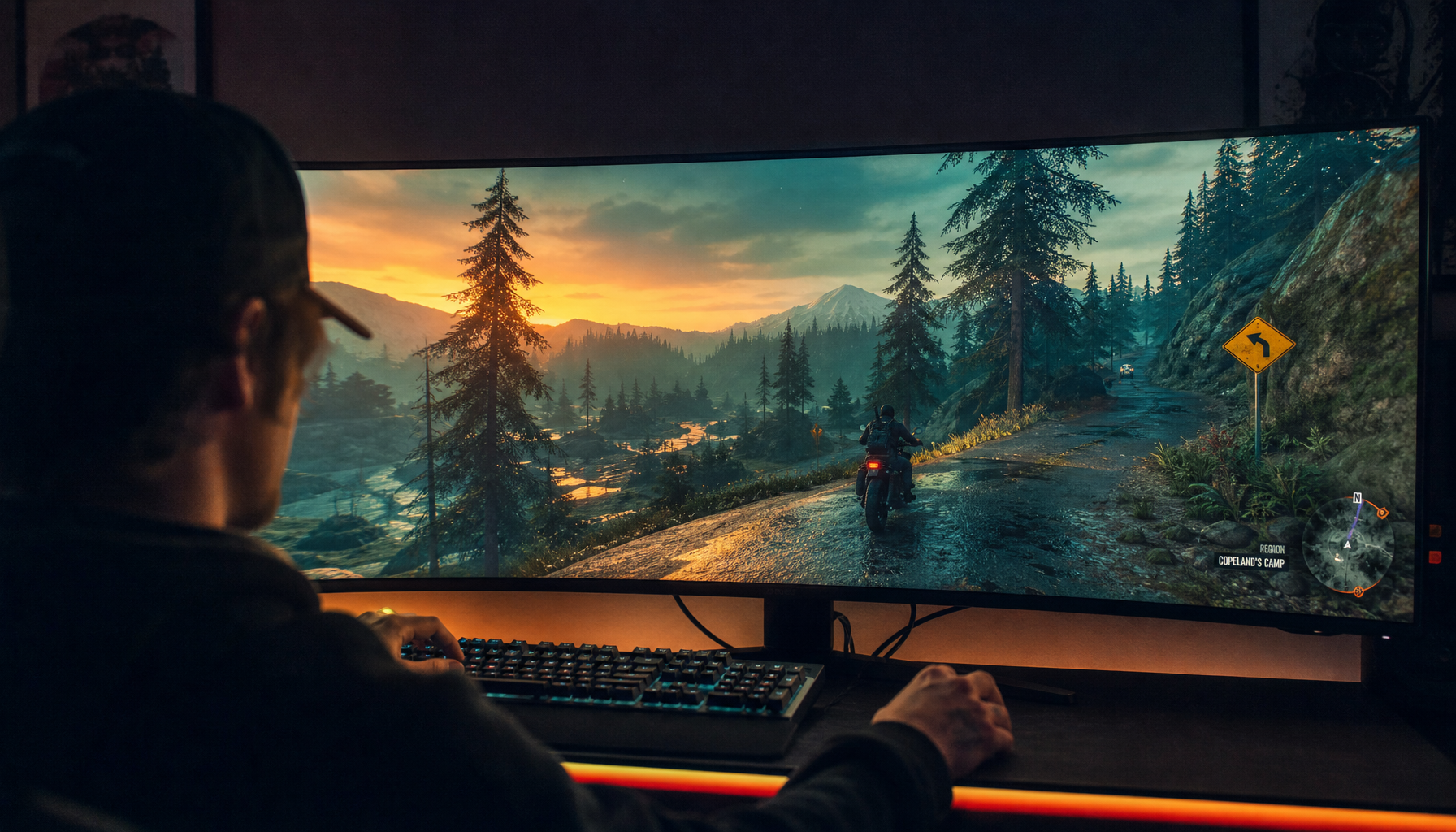
Motion blur reduction works by lowering motion persistence. That means a moving object is visible for less time per refresh, so your eye receives a cleaner snapshot. In a 144Hz shooter running at a locked 144fps, that can make a target easier to track. In a 24fps pan, it can make each frame jump feel more obvious.
The core tradeoff is persistence versus cadence masking. Natural camera motion blur and sample-and-hold blur can hide some of the harshness of low-frame-rate playback. When strobing removes that softness, the underlying cadence becomes more exposed. Motion-graphics guidance notes that judder can come from the relationship between frame rate and motion speed, especially at lower frame rates, where critical speeds can make motion appear uneven even when no frames are dropped.

Here is the practical example: a 24fps movie on a 120Hz display can repeat each frame five times evenly, which avoids the uneven 3:2 cadence problem associated with 24fps-to-60Hz playback. But the movie is still 24fps. If you enable a strobe mode, the five repeated flashes may look extremely crisp, yet the object still advances only 24 times per second. During a slow camera pan across window blinds, credits, or a dense city skyline, that clean edge can look more like stepping.
24fps Video Is the Highest-Risk Case
24fps content is where motion blur reduction is most likely to feel wrong. The frame interval is long, and cinema motion often relies on shutter blur to make pans tolerable. If the display reduces perceived blur too aggressively, it can reveal the spacing between frames.

This is why clarity and smoothness can fight each other. A strobe mode may make a horizontally moving subtitle, road sign, or game HUD element more readable in motion, yet make a movie pan feel less fluid. The Stanford discussion of hold-type blur shows that blur width scales with motion speed and frame duration, so longer frame durations naturally produce more visible motion artifacts when the eye tracks moving edges. Reducing blur does not change the content’s original frame timing.
For 24fps movies, the best monitor behavior is usually clean cadence first and blur reduction second. If your monitor or player can output 24Hz, 48Hz, 72Hz, 96Hz, or 120Hz with even frame repetition, that is better than forcing 24fps into 60Hz with uneven pulldown. Once cadence is correct, judge whether strobing improves or harms the scene. For most cinematic playback, it will be more comfortable off.
30fps Video Is Safer, But Not Immune
30fps content usually maps neatly to common 60Hz, 120Hz, and 240Hz refresh rates. That even division reduces classic judder from uneven frame repetition. A 30fps tutorial, webcam recording, or console clip displayed at 60Hz simply repeats each frame twice; at 120Hz, it repeats each frame four times.
Still, motion blur reduction can make 30fps look harsher if motion is fast, detail is fine, or the strobe timing is poor. Thin text, screen recordings, spreadsheets scrolling in a video, and camera pans across high-contrast edges are especially revealing. A 1-pixel line moving by a fractional amount per frame, for example, can flicker or disappear when motion does not align cleanly to frame sampling.
30fps is also vulnerable when the display’s strobe rate and content cadence do not cooperate. Some blur-reduction modes are designed around high refresh rates and game frame rates, not low-frame video. If the monitor strobes at 120Hz while the content updates at 30fps, the same video frame may be presented in multiple crisp pulses. That can look like duplicate-image stepping rather than smooth motion.
Content Type |
Typical Monitor Match |
Blur Reduction Risk |
Best Starting Setting |
24fps film |
120Hz with even repeats |
High, especially slow pans |
Off |
24fps at 60Hz |
Uneven 3:2-style cadence |
Very high |
Match refresh or disable strobing |
30fps video |
60Hz or 120Hz even repeats |
Medium |
Off for comfort, test on |
60fps video |
60Hz or 120Hz |
Lower |
Test based on brightness and flicker |

Pros and Cons for Real-World Viewing
Motion blur reduction has a real performance purpose. It can improve perceived motion clarity, reduce LCD persistence blur, and make fast-moving objects easier to follow. On a gaming monitor, that matters when you are tracking enemies, reading motion in a racing sim, or testing aim consistency.
The downside is that it often reduces brightness, can introduce flicker, and may reveal microstutter or cadence problems. Some implementations also create double images because LCD pixel transitions and strobe timing are not perfectly aligned. Display-enthusiast communities have long emphasized that blur reduction quality depends heavily on tuning, panel response, and synchronization, and broader display-enthusiast forum discussions reflect how implementation differences can matter as much as the feature name.
For video playback, the biggest con is perceptual: motion may look clearer but less cinematic. That is not a failure of the monitor. It is the monitor doing exactly what the mode was designed to do, then exposing the limitations of low-frame-rate content.
Recommended Settings for Gaming Monitors, Office Displays, and Portable Screens
For movies and TV, start with motion blur reduction disabled. Use the display’s standard, cinema, sRGB, or creator-oriented mode, then set the player or streaming device to match the content frame rate when possible. If your monitor supports 120Hz, use it for 24fps playback because it can repeat frames evenly. If you see a brief black screen when switching modes, that is usually the display renegotiating timing, not a defect.

For 30fps video, leave blur reduction off unless you are watching fast instructional footage where edge readability matters more than cinematic smoothness. A workout video, capture-card feed, or screen tutorial may benefit slightly from sharper motion, but a drama, travel vlog, or talking-head video usually looks more natural without strobing.
For office productivity displays, prioritize comfort over extreme motion clarity. A 24- to 27-inch monitor at arm’s length with flicker-free behavior, stable brightness, and good text rendering will usually serve document work better than a dim strobe mode. If you review video timelines or motion graphics, use blur reduction only as a diagnostic view, not as your default editing view.
For portable smart screens, be even more conservative. Smaller panels often run at fixed refresh rates, have limited brightness headroom, and are used closer to the eyes. If a portable display offers a motion-enhancement or blur-reduction mode, test it with a slow movie pan and scrolling text. If either looks jumpy or uncomfortable, turn it off.
A Fast Test You Can Do in Five Minutes
Use one 24fps movie scene with a slow horizontal pan, one 30fps video with scrolling text, and one high-refresh game or browser motion test. Watch each with motion blur reduction off, then on, without changing anything else. If the game becomes clearer but the movie becomes choppier, the monitor is behaving normally.
Pay attention to three symptoms. If brightness drops enough that highlights look flat, the mode is costing too much image quality. If edges become doubled, the strobe timing or frame cadence is not clean. If motion feels sharper but more tiring, your eyes may be reacting to flicker or reduced persistence.
FAQ
Should I Use Motion Blur Reduction for Streaming or Disc-Based Movies?
Usually no. For 24fps movies, matched refresh and stable cadence matter more than strobe-based clarity. Motion blur reduction can make cinematic pans look more uneven.
Can Motion Interpolation Fix the Problem?
It can smooth low-frame-rate motion by creating intermediate frames, but it changes the look of the content and may add artifacts. Use it only if you prefer smoother motion over original cinematic cadence.
Is Judder a Sign My Monitor Is Bad?
Not necessarily. Judder can come from frame-rate mismatch, pulldown, playback settings, or the content’s own motion speed. A premium monitor can still show judder when low-frame-rate video is displayed with the wrong cadence or overly aggressive blur reduction.
Final Verdict
Motion blur reduction is a precision tool, not a universal picture-quality upgrade. Use it for locked high-refresh gaming where clarity wins; leave it off for most 24fps and 30fps video where cadence, brightness, and viewing comfort matter more. The best display setup is not the sharpest single frame, but the one that makes motion feel intentional.