Panel lottery can affect input lag within the same product line, but it usually matters less than settings, firmware, processing modes, and the signal chain.
Ever bought two identical monitors and felt one was a touch snappier, even after matching the refresh rate? Standardized input-lag databases show that same-model displays are often close when tested under the same mode, but real desks and gaming rigs introduce settings that can expose small differences. Here is what panel lottery can change, what it usually cannot, and how to test your own unit before blaming your aim, mouse, or GPU.
What Panel Lottery Means for Input Lag
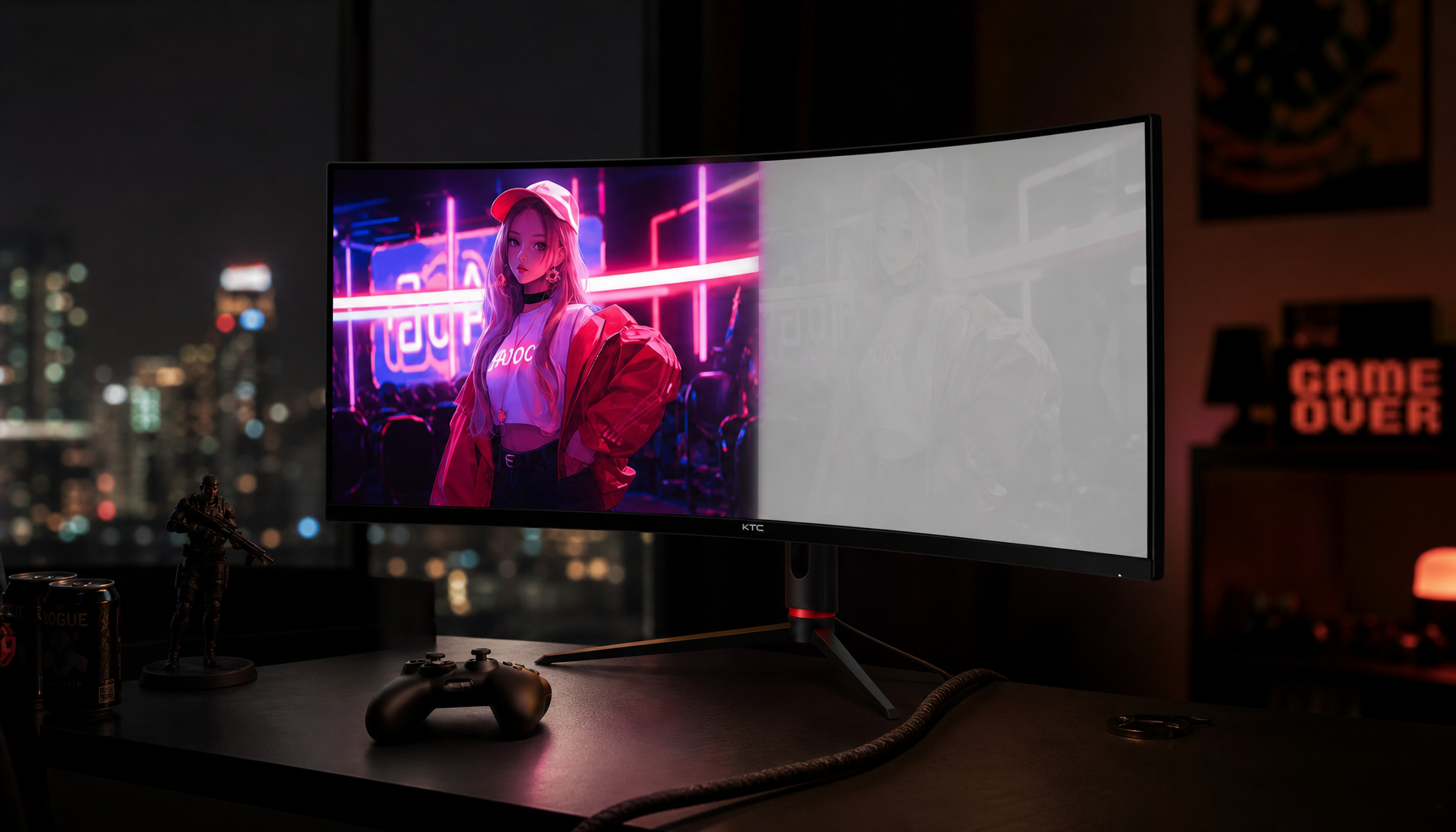
Panel lottery is the real-world variation between monitors sold under the same model name. Most buyers notice it through color temperature, gray uniformity, backlight bleed, corner tint, or one unit looking warmer than another. For input lag, the story is narrower: the LCD or OLED panel itself is only one part of the delay chain.
Input lag is the delay between your input and the visible result on screen, and a public input lag database frames it around how quickly a display processes gaming input. That means a monitor’s scaler, firmware, image processing, adaptive-sync behavior, refresh rate handling, and selected picture mode can matter as much as the physical panel batch.

In practice, two units from the same product line can feel different if one ships with a different firmware revision, internal panel supplier, or default overdrive table. But if both monitors use the same electronics, firmware, refresh rate, and low-latency mode, the input-lag gap is usually small enough that most players will not perceive it directly.
Panel Variance vs. Processing Variance
The phrase “panel lottery” can be misleading because the panel is not always the source of lag variance. A monitor can win the color-uniformity lottery and still have the same input lag as a weaker-looking unit. Conversely, a unit with acceptable color can feel slower if it is running through extra image processing.
Variable |
Can vary inside same product line? |
Likely input-lag impact |
White point and tint |
Yes |
Usually none |
Brightness uniformity |
Yes |
Usually none |
Pixel response behavior |
Yes |
Can affect perceived responsiveness |
Sometimes |
Can affect motion feel and artifacts |
|
Firmware revision |
Sometimes |
Can affect real input lag |
Picture mode or Game Mode |
Yes |
Often significant |
Yes |
Can add processing delay |
|
Refresh rate and VRR state |
Yes |
Can change latency behavior |
The key distinction is input lag versus pixel response. Input lag is the processing delay before the image begins to reflect your action. Pixel response is how fast the pixels transition once the monitor has decided what to show. A slow dark-to-light transition on a VA panel can make motion look smeared even if the monitor’s measured input lag is low.
That is why two monitors can have the same measured lag but different feel. In a fast shooter, a darker VA transition may leave trailing behind a target, while an IPS unit may look cleaner during the same flick. The click-to-photon delay may be similar, yet the visual confirmation can feel less decisive.
Why Same-Model Monitors Usually Stay Close
Standardized testing suggests that same-model displays usually stay close when tested under the same conditions, especially when they share electronics and firmware. That does not prove every production batch is identical, but it does suggest product-line input lag is usually governed more by shared processing hardware and software than by panel cosmetics.
From a buying perspective, this is good news. If a reputable review measures a monitor as low-lag, your retail unit is unlikely to become a completely different class of display just because of panel lottery. The larger danger is buying a model with no independent testing, then discovering that its “1 ms” marketing claim describes pixel response rather than total input delay.
For example, a 144 Hz monitor refreshes about every 6.94 ms. If one unit has a small processing difference of 1 ms or 2 ms, competitive players may care, but many office users and casual gamers will not isolate it from mouse latency, frame pacing, game engine delay, or wireless controller delay. If Game Mode is off, however, the added processing can be much larger than typical batch variation.
Where Panel Lottery Can Create Real Feel Differences
Panel lottery matters most when physical panel variation interacts with the monitor’s tuning. Overdrive is the clearest example. Voltage behavior is tuned so pixels change faster, but different panel batches may not respond exactly the same way. One unit may look clean on the “Fast” setting, while another shows inverse ghosting around bright objects.
That is not always input lag in the strict measurement sense. It is perceived responsiveness. A monitor that overshoots aggressively can make targets look outlined or unstable, while a unit with slower transitions can look softer during tracking. Either issue can reduce confidence even if a lag tester reports similar results.

HDR and local dimming are another edge case. Newer monitor categories, including OLED and Mini LED models, often add more display intelligence than older esports TN panels. Local dimming, tone mapping, dynamic contrast, and HDR processing can improve immersion, but they also create more opportunities for mode-specific latency behavior.
For office productivity, that same variation may be irrelevant. A spreadsheet, coding window, or browser tab does not expose 1 ms to 3 ms differences the way a 240 Hz aim trainer does. What office users usually feel first is mismatched brightness, eye fatigue, or different white points across a dual-monitor setup.
How to Test Whether Your Unit Is Actually Slower
Start by making the comparison fair. Put both monitors on the same refresh rate, resolution, cable type, GPU output class, and picture mode. Disable HDR, dynamic contrast, noise reduction, motion smoothing, local dimming, blue-light filters, and any enhancement setting unless you specifically use it every day. Then enable Game Mode or the monitor’s lowest-latency preset.
Warm both displays up for about 30 minutes before judging. LCD behavior, brightness, and tone can shift slightly during early operation, and a cold comparison can make one panel look or feel worse than it is. Use the same mouse, USB polling rate, game frame cap, and full-screen or borderless mode.
A practical home check is to clone the display output and drag a high-contrast window, cursor, or timer across both screens. This is not laboratory-grade measurement, but a visible lead or delay can reveal a configuration issue. If the slow behavior follows a cable, dock, adapter, GPU port, or HDR setting, you have not found a bad panel; you have found a signal-chain problem.

For stronger evidence, use a high-frame-rate camera or a dedicated lag tester. The goal is not to chase a perfect number, but to separate real delay from motion blur, overdrive artifacts, or inconsistent frame pacing.
Should You Exchange a Monitor for Input Lag Variance?
Exchange the unit if the difference is visible in normal use after you have matched settings and ruled out the signal chain. That is especially reasonable when the issue appears alongside other unit-specific defects such as severe uniformity problems, stuck pixels, heavy backlight bleed, or obvious overdrive artifacts at usable settings.
Do not exchange solely because two units have slightly different color temperature or corner glow and you assume the faster-looking one must have lower lag. Color variation is common; input-lag variation large enough to change the product’s class is less common when the model, firmware, and mode are the same.
For competitive buyers, the smarter move is to choose a monitor line with independent latency testing, strong Game Mode behavior, and predictable overdrive across refresh ranges. For productivity buyers, prioritize ergonomic consistency, text clarity, brightness range, and multi-monitor matching. For portable smart screens, pay extra attention to docks, USB-C alt mode, power state, and scaling, because the connection path can matter more than the panel batch.

Pros and Cons of Worrying About Panel Lottery
The upside of checking panel lottery is control. You catch real defects early, avoid keeping a weak unit, and tune the monitor for the lowest-latency mode you actually use. It also helps separate color mismatch from responsiveness problems, which prevents wasting time on the wrong fix.
The downside is over-testing. If you stare at two panels long enough, you will find differences. Some are normal manufacturing tolerance, not performance failures. The performance-driven approach is to test the exact workflow that matters: ranked gaming at your target refresh rate, editing on calibrated profiles, office work across matched brightness, or travel use over USB-C.
Final Verdict
Panel lottery can influence input lag variance, but it is rarely the first suspect. In the same product line, firmware, scaler behavior, Game Mode, refresh rate, HDR, local dimming, overdrive, and the signal chain usually explain more than the panel batch alone.
Buy based on independently tested low-lag models, test your unit during the return window, and judge the monitor in the mode you will actually use. A reliable display should feel immediate, look stable in motion, and stay comfortable across the hours you spend winning matches, building spreadsheets, or turning a portable screen into a real workspace.