AI research labs should treat monitor firmware as a support and workflow question, not a shortcut to hidden features. The useful test is whether a display can be configured predictably, documented clearly, and kept stable without relying on unsupported changes.

Why OSD Control Became a Bottleneck
In 2026, standard OSD control can feel like friction when a research desk keeps switching between training, review, and debugging. The issue is not that menus are impossible to use, but that repeated changes add interruption when the screen should stay secondary to the work.
Telemetry is most useful when it is easy to reach and does not pull attention away from the main task. Manual color-space changes create the same kind of friction when a long run moves from model supervision to visualization or content review.
For this reason, the strongest question is not whether a monitor sounds customizable. It is whether the current firmware actually supports the behavior you want, without depending on assumptions that are not documented.
A cautious baseline helps here. KTC’s own support material shows that current models use multi-step joystick or button navigation for input, picture, or KVM access, which is normal for consumer monitors but not especially fast for repeated lab work. The input lag troubleshooting guide is also useful as a reminder that settings changes can affect perceived responsiveness if a monitor is not restored correctly after updates.
Decision sentence: if a lab needs a display to stay stable across many users and many sessions, standard OSD behavior is usually acceptable; if the plan depends on frequent live switching, the menu layer becomes part of the workflow cost.
What Custom OSD Profiles Should Actually Do
A useful custom OSD profile should reduce clicks, reduce mistakes, and keep the screen state obvious at a glance. It should not exist just to feel advanced.

For research teams, the best profile names are the ones that map to actual lab states. Training, validation, render review, and idle monitoring are more useful labels than abstract names that nobody remembers under pressure.
Live metrics matter most when they reduce context switching. If a profile makes it easier to see a training state without leaving the main screen, that can be a real workflow gain. If it merely adds decoration, it does not change the buying decision.
Color-space switching is the same story. It can be a useful convenience when the same desk handles logs, plots, and review, but it should stay framed as a workflow helper unless the vendor explicitly documents automated behavior. No current KTC model should be treated as shipping with open OSD firmware, telemetry overlays, or automated scripting unless that is proven in model-specific documentation.
If you want a broader refresher on how monitor presets can be organized around applications, see the guide on creating automatic display presets.
Decision sentence: if the team already has external dashboards and software-based alerts, custom OSD profiles are optional; if the monitor itself is expected to carry the monitoring workflow, the feature must be documented, repeatable, and easy to revert.
Live Metrics at a Glance
In real use, live metrics help most when they keep the primary display useful without constant window switching. That matters more for long training supervision than for casual desk work. The metric layer should lower attention cost, not raise it.
Color-Space Switching Without Manual Steps
Color-space changes are worth caring about when the same display is used for different visual tasks, especially review and content capture. But the benefit is practical, not magical. If a monitor does not document that behavior, treat it as a manual preset issue rather than an automation feature.
Input and Preset Separation for Lab Contexts
Researchers often regret profiles that mix too many tasks together. A better approach is to keep input choice, brightness, and picture mode separate enough that a nontechnical user can recover quickly if something looks wrong.
Profile Naming That Matches Experiment States
Good profile names are operational labels, not branding. If a label does not tell someone what state the screen should be in, it is probably too vague for shared lab use.
Which Display Traits Matter Most
| Display trait | Why it matters in AI monitoring | What to check first | When it matters less |
|---|---|---|---|
| Panel type | Stable text rendering and viewing angles help when a monitor stays on logs or dashboards for hours. | Look for IPS-style behavior if multiple people will view the screen. | It matters less if the screen is only a secondary display for occasional checks. |
| Refresh rate | Higher refresh rates can make window movement and cursor motion feel smoother. | Decide whether desk feel or dashboard readability is the priority. | It matters less if the screen is mostly static content. |
| Color coverage | Useful when the same display handles visualization, review, or creator work. | Check whether the lab actually uses color-sensitive tasks. | It matters less for plain log monitoring. |
| Brightness behavior | A stable image is easier to read across changing room light. | Verify whether the monitor has a usable brightness range and a predictable preset. | It matters less in fixed-light rooms. |
| Ergonomics | Long sessions reward height, tilt, swivel, and pivot more than gaming branding. | Check whether the stand or arm supports the desk posture you need. | It matters less if the display position never changes. |
| Input flexibility | Lab desks often need quick source switching between machines. | Confirm the exact ports and whether source selection is simple. | It matters less on single-source desks. |
| Operational risk | Unsupported firmware changes can create instability even when the workflow sounds appealing. | Ask whether changes are reversible and documented. | It matters less if no customization is planned. |
For teams comparing browsing paths rather than specific SKUs, the 4K Monitor collection is a cleaner starting point than a general search, because the resolution filter narrows the field quickly. The broader Gaming Monitor collection is useful when refresh rate and panel type matter more than workstation branding. The Office Monitor collection fits readers who want a calmer, productivity-first filter set.
If the setup is mostly text, dashboards, and long sessions, an office-oriented panel often makes more sense than a gaming-first display. If the same desk also runs fast interaction-heavy work, the balance flips toward higher refresh or stronger ergonomics.
Decision sentence: choose the monitor class that matches the dominant task, not the most impressive spec line; if your screen is mostly a control surface for logs, clarity and ergonomics usually matter more than headline refresh rate.
Where KTC Fits in the Workflow
The most relevant KTC options are the ones that match the desk, not the fantasy of a fully open firmware stack. Product pages can help with browsing, but they should not be read as proof that any model supports telemetry overlays or automated OSD scripting.
-
The KTC 27" 4K 160Hz/320Hz 90W Gaming Monitor | H27P6 fits a desk that wants 4K sharpness with a dual-mode path for mixed work and faster interaction. Its published specs include 4K at 160Hz, 1080p at 320Hz, Fast IPS, 90W USB-C, KVM switching, and full stand adjustment, which makes it a plausible mixed-use candidate rather than a firmware claim.
-
The KTC Mini LED 27" 4K 160Hz HDR1400 Gaming Monitor | M27P6 fits readers who care about a brighter, contrast-rich environment. The published fact pack lists Mini-LED backlighting, 1,152 local dimming zones, HDR1400 peak brightness, dual-mode 4K/160Hz and 1080p/320Hz, and full ergonomics, so it suits a more premium monitoring desk where image behavior matters.
-
The KTC 32" 4K 60Hz Smart Monitor with Google TV in Netflix Audio Licensed serves as a mixed-use browsing option when the desk is shared with entertainment or casual review tasks.
For a separate guide on choosing a monitor based on desk behavior rather than marketing labels, the spec comparison article is a useful background read. For teams that care more about text density and log panes, the dual 5K arrays guide explains why some workflows prefer more vertical space over a single wide display. If room lighting changes are part of the problem, the note on brightness adjustment lag is relevant because it shows how firmware behavior can affect perceived responsiveness.
Adoption Checks Before You Modify Anything
-
Confirm that the firmware is actually user-modifiable before building a workflow around customization. If the model has no documented path, treat the idea as unverified.
-
Check warranty and support consequences before changing monitor-level behavior. Even a useful tweak can become a procurement problem if service coverage becomes unclear.
-
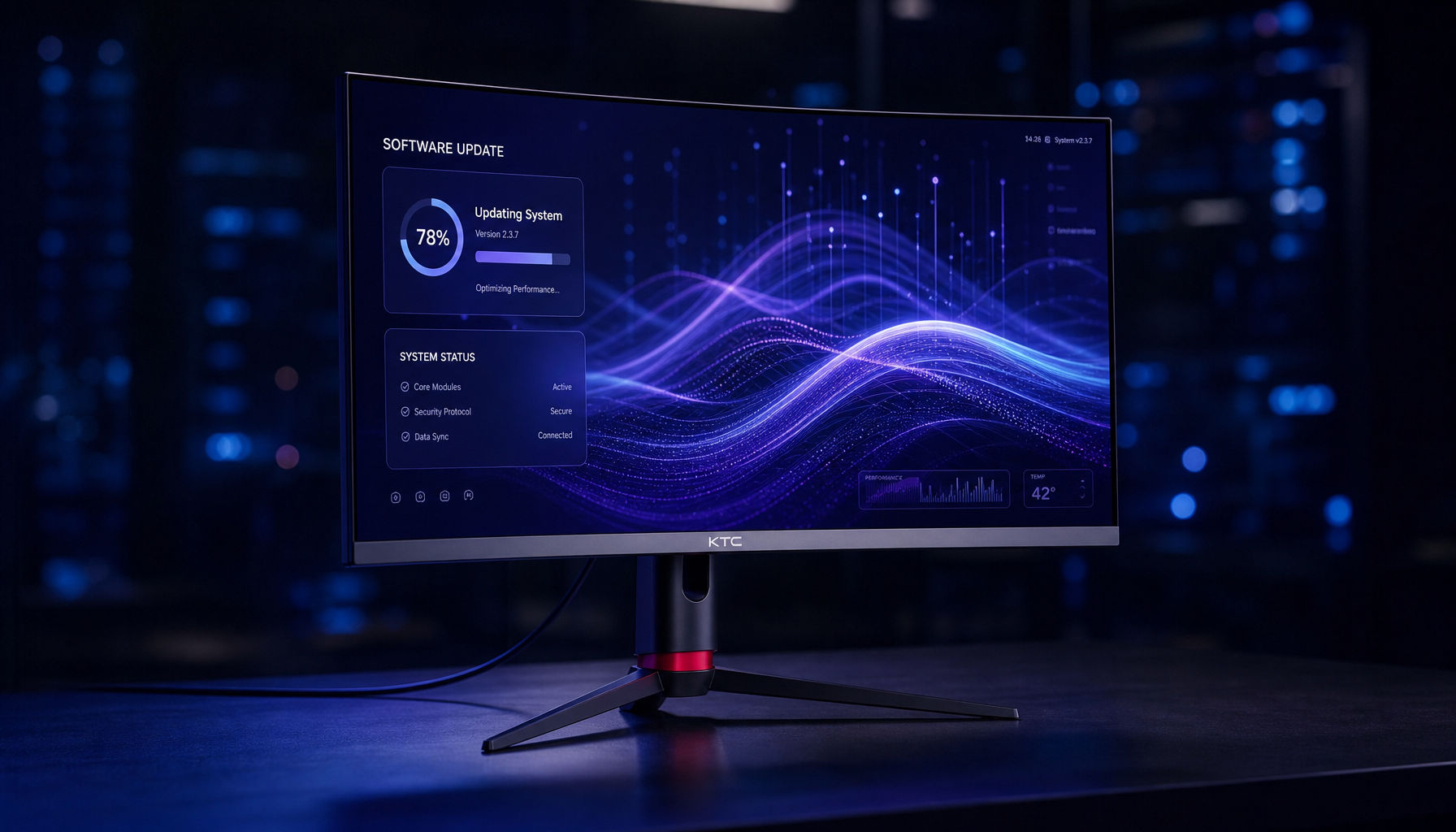
Test signal stability after any update. A monitor that seems fine on first boot can still change input behavior, preset state, or perceived lag once settings are reset.
-
Keep a rollback path ready. Labs need a way to return to a stable baseline quickly, especially if the same display is shared across people or tasks.
-
Treat compatibility claims as model-specific until verified on the exact unit and firmware build. A claim that sounds plausible is not the same as a documented deployment path.
This is where the home testing guide for real input lag becomes useful again. It does not solve firmware risk, but it gives teams a practical way to see whether a change has altered the experience enough to matter.
Decision sentence: if you cannot document the before-and-after state, the change is probably too fragile for a shared research desk; if you can document it, rollback and support planning should come first.
Decision Checklist for AI Labs
- Choose firmware customization only when the workflow gain is larger than the operational risk.
- Prefer models and settings that already solve most of the lab’s pain points without fragile modification.
- Prioritize stability, readability, and repeatability over novelty when the display is part of a long training workflow.
- Use a custom OSD plan only if the lab can document settings, revert changes, and support the setup internally.
- Keep shared profiles simple enough for nontechnical users to switch safely.
If your team wants a browsing shortcut after that decision, the Gaming Monitor collection and the 4K Monitor collection are the cleanest next stops. If the lab is not actually modifying firmware, a standard monitor with reliable presets is often the better answer than a more complicated setup.
What a Safe Default Looks Like
A safe default is a display with predictable factory controls, good ergonomics, and no reliance on unsupported firmware changes. That combination will not sound exciting, but it usually travels better across desks, users, and replacement cycles. In practice, this means verifying that presets restore cleanly after power cycles, that KVM or input switching remains consistent for multiple machines, and that any brightness or color adjustments do not drift outside documented tolerances during long sessions.
For shared AI research stations, that matters more than a flashy customization story. If a feature cannot be verified, documented, and reversed, keep it out of the standard build.
FAQs
Q1. What Is an OEM Firmware Audit for a Monitor?
It is a review of what the monitor’s firmware and OSD actually support, how the settings behave, and whether any customization is documented and supportable. It should not be treated as proof that open firmware or scripting exists.
Q2. Can Custom OSD Profiles Help During LLM Training Runs?
Yes, if they reduce menu friction, make the current state easy to read, and stay stable across sessions. They are less useful if the same result can already be achieved with simple presets or external dashboards.
Q3. Why Does Color-Space Switching Matter in a Research Station?
Because one desk may need different display behavior for logs, visualization, review, or creator-adjacent work. Quick switching can reduce interruptions, but only when the monitor documents the feature clearly enough to trust.
Q4. How Do I Tell If a Monitor Firmware Update Is Safe?
Check official notes, confirm whether settings can be restored, and make sure you understand warranty and support impact first. If rollback is unclear or the update changes source behavior, treat the result as a risky change.
Q5. Can a Standard Monitor Be Enough for AI Development Without Custom Firmware?
Yes. Many teams are better served by a stable monitor plus software dashboards and simple presets. Custom firmware only becomes worthwhile when it solves a recurring, documented bottleneck that normal controls cannot handle.
The Practical 2026 Verdict
For AI research labs, monitor firmware is worth auditing, but not worth romanticizing. The best setup is usually the one that keeps logs readable, switching simple, and support risk low. Choose models whose documented behavior already matches the dominant workflow, verify that presets restore cleanly, and avoid any modification whose outcome cannot be rolled back or supported. If customization is not clearly documented, use a standard configuration and keep the workflow boring on purpose.