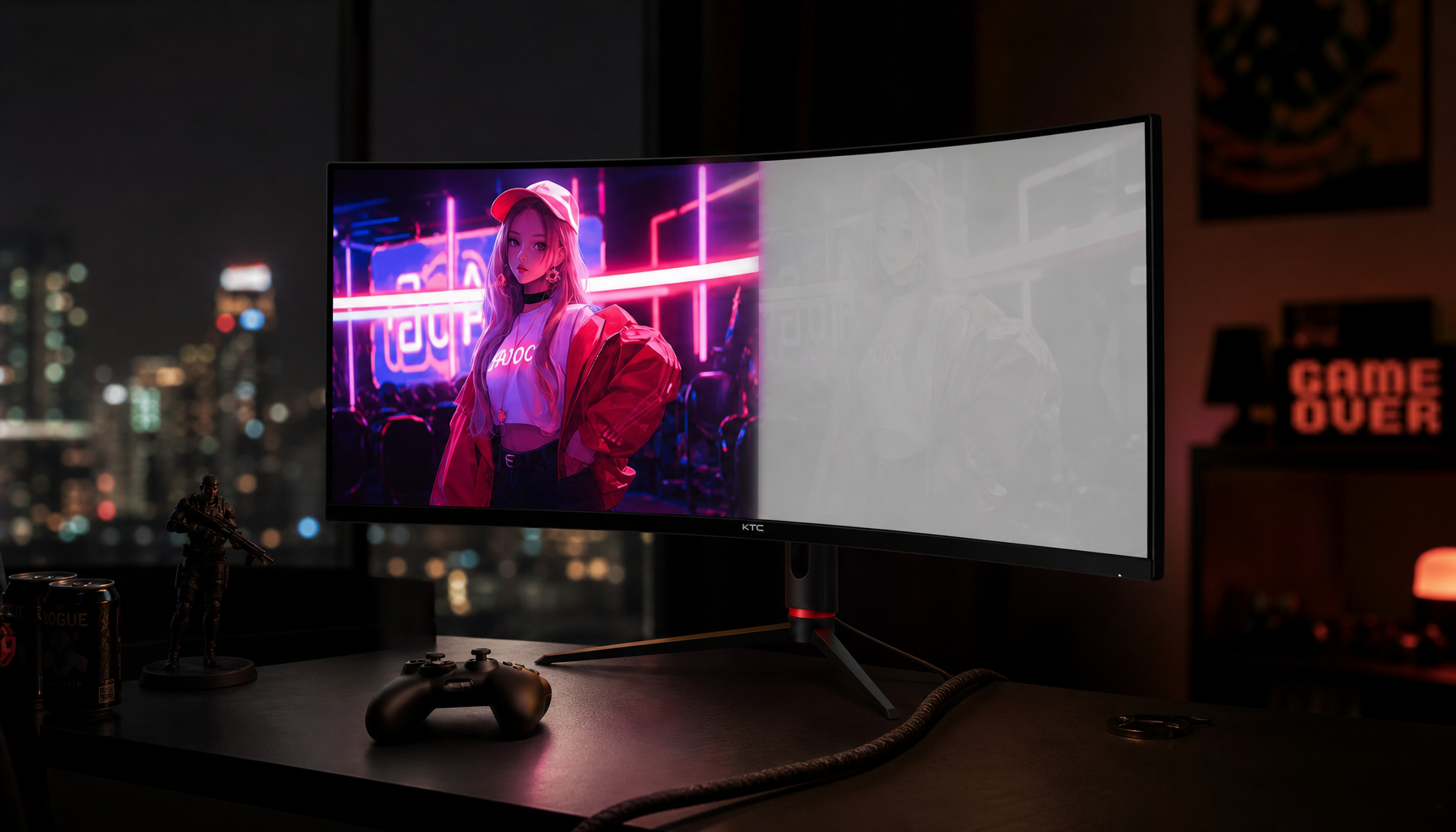
Double images happen when the LCD pixel layer and the backlight zone layer do not finish changing at the same time. One layer shows the new object while the other still carries brightness from the old position, so your eye sees a faint duplicate, halo, or shadow trail.
The Two Clocks Behind One Moving Image
A modern LCD gaming monitor uses two timing systems at once. Pixel response time controls how fast each pixel changes shade, while zone transition speed controls how fast local-dimming backlight zones brighten or dim behind that image.
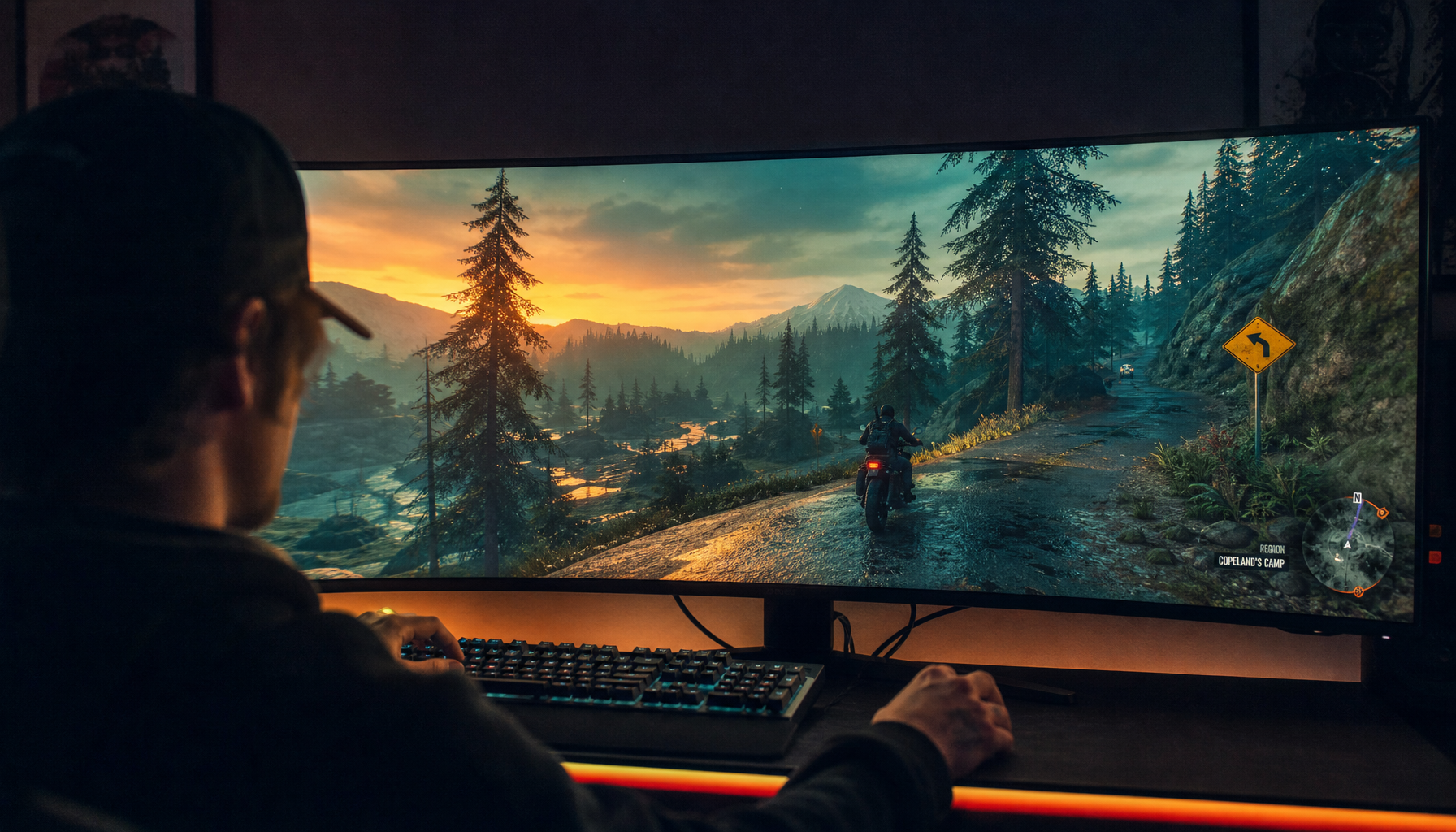
Slow pixel response is a known cause of ghosting: moving objects can leave a trail of pixels, especially in action games, sports titles, and fast scrolling. Local dimming adds another timing layer because the backlight must chase a moving highlight or dark object across larger zones.

If the pixel changes first but the zone stays bright, you may see a pale afterimage. If the zone changes first but pixels lag, the object can look like it has a darker smear or second edge.
Why High Refresh Rates Make the Mismatch Easier to See
At 60 Hz, each frame lasts about 16.7 ms. At 144 Hz, each frame lasts about 6.9 ms. At 240 Hz, it is only about 4.2 ms.
That shrinking frame window is why response time and zone speed must be judged together. A 5 ms pixel transition can look acceptable at 60 Hz, but at 144 Hz it leaves little timing margin, and slow pixel transitions become easier to spot.
Local dimming can make the effect more visible. If a bright HUD marker moves from one dimming zone to the next, the old zone may fade down while the new zone ramps up. During that overlap, the monitor can briefly display both the departing brightness and the arriving object.
That is the double-image effect: not two rendered frames from the GPU, but two display systems resolving motion at different speeds.
The Most Common Artifact Patterns
You can usually identify the weak link by the shape of the duplicate.
Pixel-limited ghosting looks like a soft color trail attached to the object. It often gets worse in dark gray transitions, which is why some VA panels show heavy smearing in shadow-heavy games.

Zone-limited duplication looks more like a brightness echo. A white cursor, neon sign, muzzle flash, or subtitle may appear with a blocky glow that lingers one zone behind the motion.

Overdrive can help pixels catch up, but too much can create inverse ghosting. That is when the monitor overshoots the target shade and produces a bright or dark edge instead of a normal trail; excessive overdrive is a known cause of new motion artifacts.
Manufacturer response-time numbers are often best-case figures. Real transitions vary by shade, refresh rate, overdrive level, and local-dimming behavior.
How to Reduce Double Images Without Hurting Image Quality
Start with the monitor’s response-time or overdrive setting. The best mode is usually the middle option, not the most aggressive one.
Then test local dimming. For competitive gaming, lower local dimming or disable it if bright objects leave zone-shaped echoes. For HDR movies or cinematic games, a moderate local-dimming mode may be worth the tradeoff because contrast matters more than twitch tracking.
Quick tuning order:
- Set the display to its maximum refresh rate.
- Use medium overdrive before trying extreme modes.
- Compare local dimming off, low, and medium.
- Disable in-game motion blur for clearer testing.
- Use a motion test or fast side-scrolling scene.
The goal is synchronization, not raw speed. A reliable gaming display should make pixels, refresh cycles, and dimming zones land close enough together that motion feels clean, readable, and under your control.