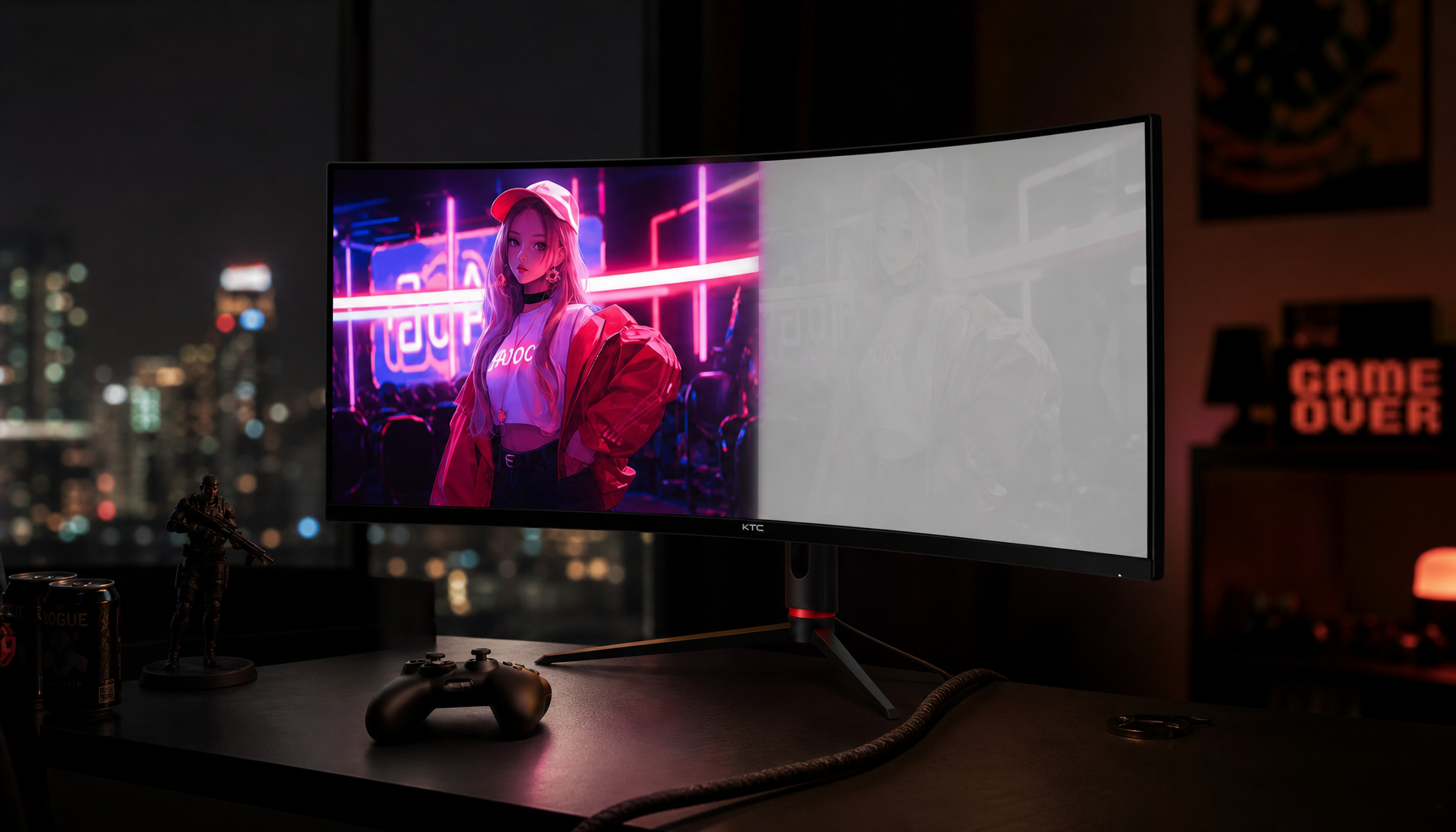
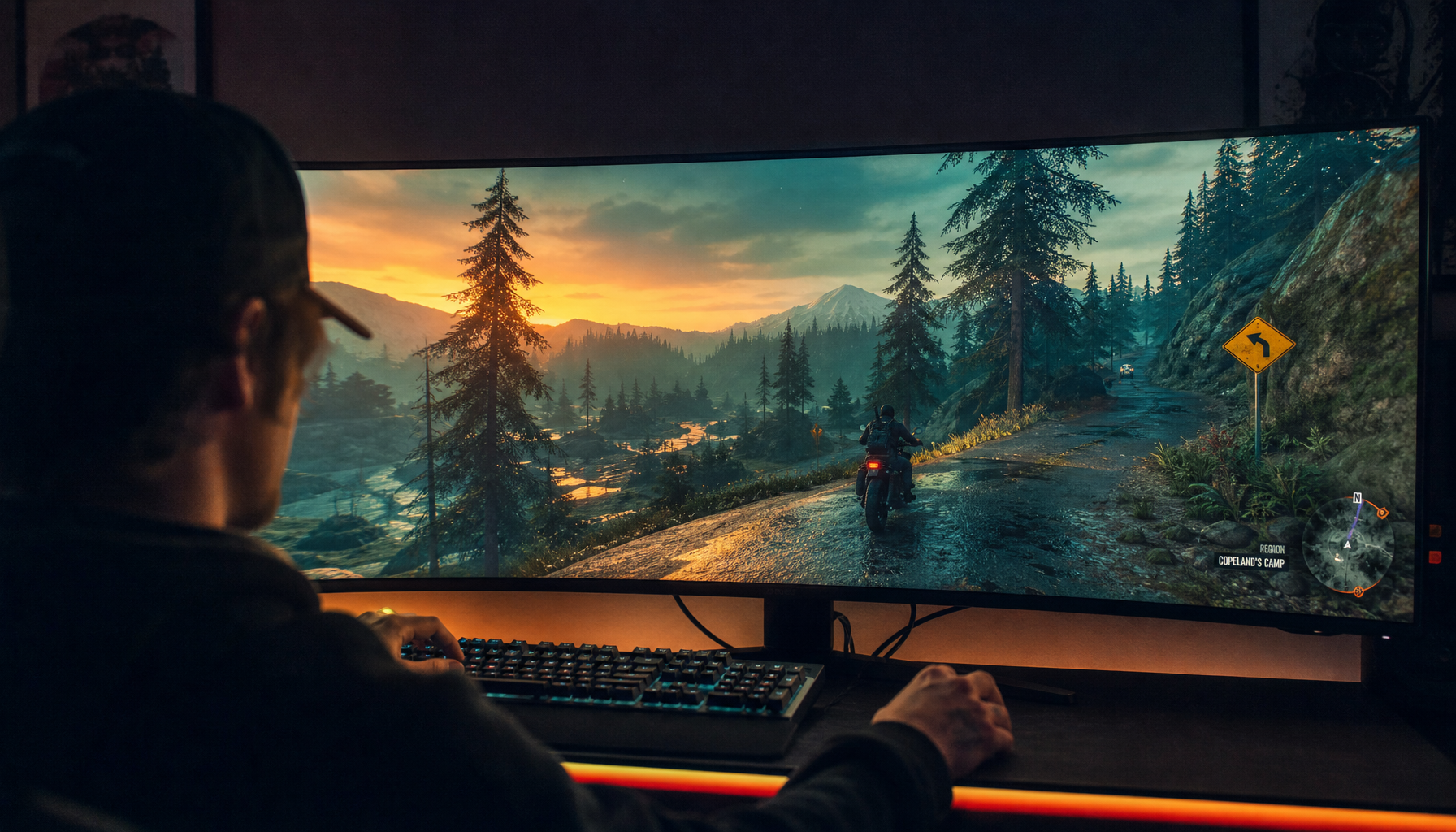
A top-to-bottom color shift usually comes from panel uniformity limits, viewing-angle behavior, backlight variation, or color settings that make small differences more visible. If the tint stays fixed when you move your head, suspect the panel or backlight; if it changes with your viewing position, suspect angle-related gamma and color shift.
The Core Cause: Uniformity Is Not the Same as Color Accuracy
A monitor can look accurate in the center and still drift at the top, bottom, or corners. Color accuracy is often measured from one central point, while uniformity asks whether the whole screen keeps the same white, gray, brightness, and tint.
This is why a display may advertise strong color coverage yet show a warmer lower half or cooler upper half. Backlight uniformity is a separate quality factor from gamut, contrast, and peak refresh rate.
For gaming, the issue may be subtle in motion but obvious on snow maps, gray menus, web pages, spreadsheets, or creative timelines. For office work, a top-to-bottom tint can make white backgrounds feel uneven and fatiguing over long sessions.

Panel Type and Viewing Angle Matter
TN and some VA panels can shift more strongly when viewed from above or below because their gamma and color response changes with angle. IPS-type LCD and OLED panels usually hold color more consistently, but they are not immune to uneven panels or backlight variation.
Large screens make this easier to notice. On a 32-inch desktop monitor viewed from about 2 ft away, your eyes see the top and bottom at meaningfully different angles. A curved or properly height-adjusted display can reduce perceived shift, but it cannot fix a physically uneven panel.
Quick test: sit centered, open a full-screen neutral gray image, then raise and lower your head. If the affected half changes or improves, viewing angle is driving the effect.

Settings Can Amplify the Problem
Wide-gamut and vivid modes often make panel non-uniformity more obvious. A slight green or pink cast that looks mild in standard color mode can become distracting when saturation is boosted.
For SDR games, web browsing, and most office work, standard color mode remains the practical target. Display testing also depends on correct standards because mismatching Display P3, DCI-P3, gamma, or white point can make a screen look worse than it really is; monitor reviewers often stress using the correct standards.
Try this baseline:

- Use standard, custom, or user mode instead of vivid or dynamic mode.
- Set color temperature near 6500K if available.
- Disable local contrast, dynamic color, and auto brightness.
- Use Gamma 2.2 for general SDR use.
- Test again after 30 minutes of warm-up.
Calibration Helps, But It Has Limits
Calibration improves white point, gamma, grayscale, and color response, especially with a colorimeter. It will not fully repair a screen where the top backlight zone is physically cooler or the bottom half is dimmer.

A single ICC profile mostly describes the display’s overall behavior. It cannot independently correct every inch of the panel unless the monitor has hardware uniformity compensation. In professional workflows, visible differences are often judged with measured color error; a Delta E gap can be small numerically but still annoying when it affects gray or skin tones across a wide screen.
Uniformity compensation can reduce tint differences, but it may lower contrast or peak brightness because the monitor has to pull stronger areas down to match weaker ones.
When to Keep, Tune, or Return It
Keep the monitor if the shift is only visible on test patterns and does not affect your actual games, documents, or creative work. Tune it if settings make the problem worse.
Consider a return or warranty claim if the split is visible on neutral gray, white, and skin tones during normal use, especially on a new display. For productivity and content work, strong uniformity is worth more than a bigger spec-sheet gamut.
Before deciding, test with one known-good cable, another input, a factory reset, and a second device. If the same top-to-bottom shift remains in the monitor menu itself, the panel is the likely source.