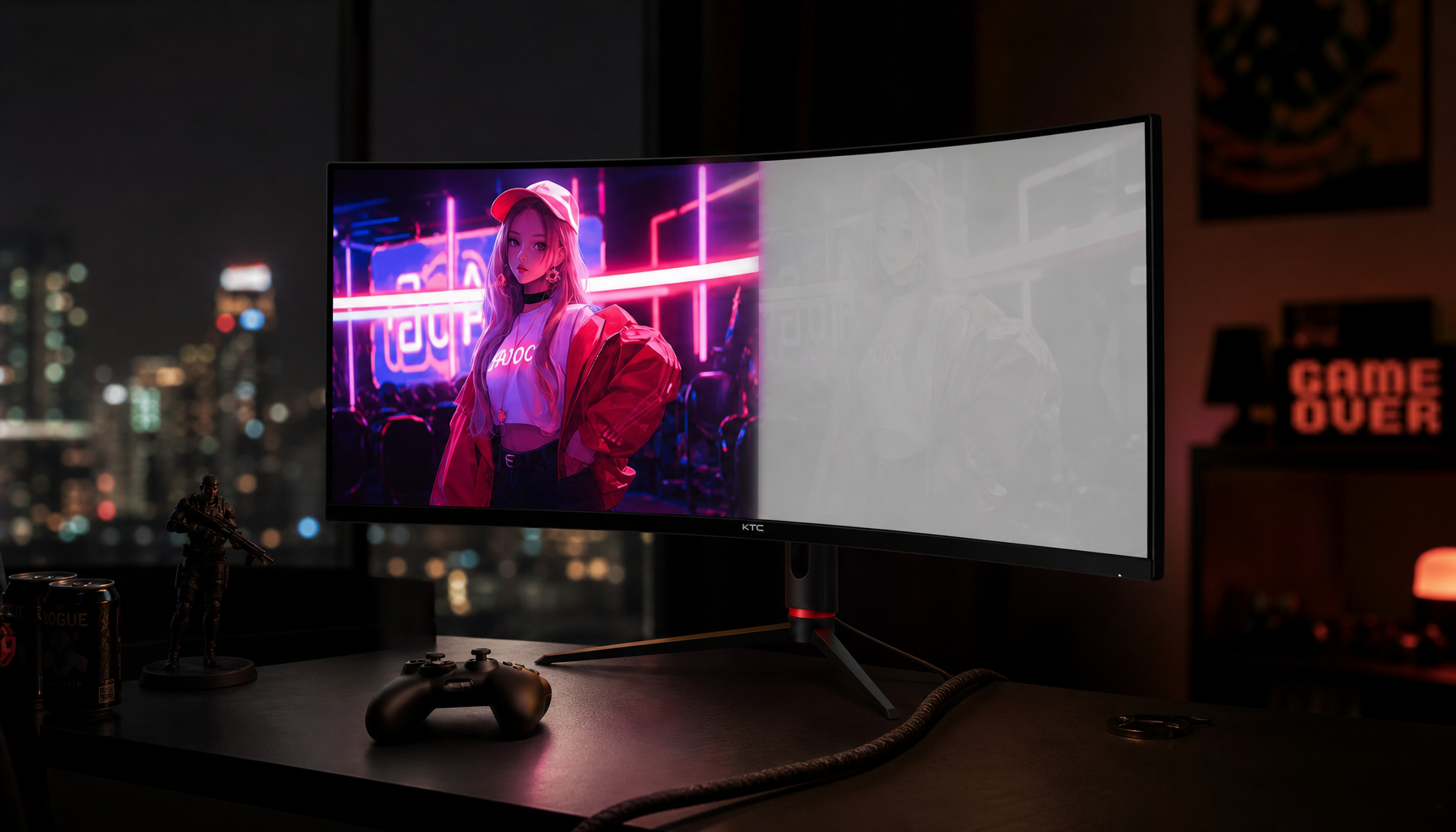
Poor display color accuracy can make color-coded puzzle games harder by blurring subtle hue differences, crushing shadow detail, or making the same tile look different across the screen. A well-set gaming monitor does not solve the puzzle for you, but it can remove avoidable visual confusion.
Ever matched the wrong tile because two colors looked almost identical, then noticed they were clearly different on another screen? A 15-minute setup pass can often fix the most common issues: brightness that hides near-black detail, contrast that clips highlights, and color modes that oversaturate puzzle cues. This guide explains which monitor traits actually matter for color-coded puzzle games and how to set up a display for more consistent visual decisions.
Why Color Accuracy Matters in Color-Coded Puzzle Games
Color-coded puzzle games depend on fast, reliable visual sorting. When a game uses red, orange, teal, blue, purple, or near-black variants as logic signals, the monitor becomes part of the puzzle interface. If the display shifts hues, washes out dark tones, or exaggerates saturation, the player may spend extra time verifying colors instead of solving patterns.
A monitor’s color performance is not one single spec. Color gamut describes the range of colors it can reproduce, while color accuracy describes how closely those colors match the intended reference. That distinction matters because a wide-gamut gaming monitor can still show the wrong shade if its color mode is poorly tuned, while a basic sRGB display can be accurate inside its narrower range.
The Practical Puzzle-Solving Problem
Imagine a puzzle board with four gem types: red, magenta, violet, and blue. On a well-tuned display, those colors separate cleanly enough that you can scan the board without hesitation. On a monitor with an oversaturated “vivid” mode, magenta and violet may become exaggerated; on a low-contrast display, darker blue and purple pieces may merge in shadowed areas.

The mistake is not always obvious. A player may blame the game art, fatigue, or eyesight when the actual issue is that the monitor is making adjacent hues less stable. In puzzle games where one wrong move resets a sequence, that visual uncertainty can affect both speed and accuracy.
The Display Specs That Matter Most
For color-coded puzzle games, the most useful specs are not always the flashiest ones on the box. Refresh rate and response time still matter for smoothness, especially in timed puzzle games, but color separation depends more on sRGB coverage, gamma behavior, contrast, viewing angle stability, and whether the monitor has a usable sRGB mode.
A sensible baseline is a monitor with strong sRGB coverage. For general gaming and creative use, at least 95% sRGB is a practical minimum, while displays under 90% sRGB may look pale compared with current gaming monitors. For players who also want richer modern visuals, around 90% or more DCI-P3 coverage can be useful, but only when the monitor handles SDR and sRGB content correctly.
Color Gamut, Accuracy, and Bit Depth
Gamut tells you how many colors a display can potentially show. Accuracy tells you whether it shows the right ones. Bit depth affects tonal steps; an 8-bit signal provides 256 levels per red, green, and blue channel, which is usually enough for many SDR puzzle games when the monitor is well behaved.
Contrast is separate again. A higher contrast panel does not increase true bit depth or color gamut, but higher contrast can make colors appear more separated because dark tones sit on a deeper black base. In puzzle games with shadowed tiles, dark outlines, or color-coded hazards, weak black levels can make the whole board look flatter.
Comparison of Key Monitor Factors

Factor |
Why It Affects Puzzle Solving |
What to Look For |
Common Mistake |
sRGB coverage |
Determines whether standard game colors can be reproduced fully |
95% sRGB or better for general gaming |
Buying a high-refresh monitor with weak color coverage |
sRGB mode |
Keeps SDR game colors from looking oversaturated on wide-gamut displays |
A mode that looks natural and does not lock brightness too aggressively |
Leaving the monitor in “vivid” or showroom mode |
Contrast ratio |
Helps separate dark tiles, outlines, and shadowed UI elements |
Strong native contrast or OLED-level blacks, depending on budget |
Raising contrast until highlights clip |
Gamma |
Controls midtone and shadow visibility |
Around 2.2 for most SDR desktop gaming |
Using a setting that makes midtones too dark |
Viewing angle |
Keeps colors consistent from center to edge |
IPS or OLED for stronger off-angle stability |
Sitting too close to a large VA or TN panel |
Brightness |
Affects eye comfort and black detail |
Set for the room, not maximum output |
Running high backlight in a dark room |
Improves white point, tone, and balance |
Use built-in calibration tools or a colorimeter review profile |
Expecting calibration to fix hardware limits |
Panel Type and Screen Size Can Change Color Consistency
Panel type affects how stable colors remain as your eyes move across the screen. IPS panels usually offer wide-angle color consistency, VA panels often provide stronger contrast with more visible angle-related shifts, OLED panels combine deep blacks with excellent off-angle stability, and TN panels prioritize speed over color quality. For puzzle games, that means the best choice depends on whether you value consistent tile color, shadow separation, motion clarity, or price.
Screen size also changes the problem. On a 32-inch monitor, ultrawide monitor, or close portable monitor setup, your eyes view the edges at a more noticeable angle than the center. Off-center viewing can cause hue shifts, brightness falloff, and contrast collapse, which makes subtle puzzle colors less consistent across the board.
IPS, VA, OLED, and TN for Puzzle Games
IPS is often the safest general recommendation for color-coded puzzle games because it keeps colors more stable when you shift in your chair or scan from one side of the board to the other. That matters on 27-inch and 32-inch displays where edge consistency becomes easier to notice.
VA can be appealing if the game uses many dark backgrounds because stronger contrast helps dark shapes and saturated colors stand out. The tradeoff is that some VA monitors show more color and gamma shift toward the sides. OLED is excellent for black depth and viewing angles, but buyers should consider brightness behavior, price, and long-term static UI habits. TN is the least attractive for color-reliant puzzle gaming unless speed and cost are the only priorities.
Ultrawide and Portable Monitor Considerations
Ultrawide monitors can make puzzle layouts more immersive, but they also increase the distance between center and edge cues. If a game places color-coded objectives or inventory pieces at the far sides, a weak viewing-angle panel may make those elements look different from center-screen tiles.
Portable monitors add another variable: viewing height and ambient glare. If the display sits below eye level on a small stand, the vertical viewing angle may exaggerate color shift. A practical setup is to sit roughly 20 to 30 inches from the screen and keep the top of the monitor at or slightly below eye level.
Calibration and Settings: What to Adjust First

Many monitors ship with showroom-oriented settings: high brightness, exaggerated contrast, sharpness that adds halos, or a cool color temperature designed to look punchy under store lighting. For puzzle games, those settings can be counterproductive because they make color cues less faithful to the game’s intended palette.
A basic calibration pass does not need to be complicated. Desktop LCD adjustments usually focus on brightness, contrast, and RGB color balance, and a simple setup can be done in about 15 minutes. The goal is not laboratory perfection; it is to preserve near-black detail, keep whites from blowing out, and make neutral grays look neutral.
Start With These Settings
Use the monitor’s factory reset as a clean starting point, then choose Custom, Standard, or sRGB mode. If the monitor is wide-gamut, sRGB mode is often the better choice for SDR puzzle games because many game assets and UI colors are designed around sRGB. If sRGB mode locks brightness too low or too high, Custom mode with restrained saturation may be more usable.
For SDR gaming, gamma near 2.2 is a practical baseline. Gamma controls mid-tones, so lowering it can brighten midtones while raising it can darken them. In a puzzle game, too-low gamma may wash out depth cues, while too-high gamma can hide dark pieces or make near-black colors collapse into each other.
Avoid Overcorrecting
Do not raise contrast until the image “pops” if it causes bright details to disappear. Clipped highlights can remove texture from pale puzzle tiles, white symbols, or glowing UI elements. Likewise, do not set the backlight to maximum in a dark room; excessive backlight can make blacks look gray and reduce perceived separation between dark colors.
Sharpness should be moderate. Too little may soften text and icons, but too much creates halos around tile edges and symbols. If a puzzle game uses fine outlines to distinguish objects, artificial edge enhancement can make the board look busier without making the information clearer.
Wide Gamut and HDR Are Not Always Better for Puzzle Cues
Wide-gamut monitors can show richer reds, greens, and blues, which can help when a game is designed for that expanded range. The issue is that many SDR games and desktop interfaces are built around sRGB. If a wide-gamut display stretches sRGB content without proper color management, puzzle colors may become oversaturated and less faithful to the developer’s intended cues.
The same caution applies to HDR. HDR can improve brightness range and perceived depth when the game, operating system, and monitor tone mapping work well together. But in SDR puzzle games, forced HDR modes can change saturation, midtone brightness, or black levels in ways that make familiar color cues look different.
When Wide Gamut Helps
Wide gamut is useful when you play visually rich games, stream, create content, or want a monitor that handles both gaming and creative work. Wide-gamut displays can reveal finer tonal differences, including dark shade distinctions that narrower displays may blur together.
For color-coded puzzle games, the most important phrase is “controlled color.” A wide gamut is helpful only if the monitor also has accurate modes, clean hue separation, and good grayscale tracking. Otherwise, it may produce a more vivid image that is less reliable for puzzle decisions.
When sRGB Is the Safer Choice
If a puzzle game does not advertise HDR or wide-color support, start in SDR with sRGB or a neutral Custom mode. This keeps standard UI colors closer to their intended appearance and reduces the chance that red, orange, pink, and purple cues drift into each other.
For competitive puzzle games or speed-solving sessions, consistency matters more than spectacle. Use one monitor mode and keep it stable across practice sessions. Changing between competitive, racing, cinema, simulated HDR, and vivid modes can subtly change the puzzle language each time you play.
Buying Guidance for Color-Coded Puzzle Game Players
A good puzzle-game monitor should make color decisions boringly reliable. That means you should prioritize stable color, usable contrast, and comfortable setup before chasing only maximum refresh rate. A 144 Hz or higher refresh-rate display can make cursor movement, animations, and timed boards feel smoother, but color-coded recognition depends on the panel and tuning as much as speed.
For most players, a strong 27-inch IPS gaming monitor with at least 95% sRGB coverage, a usable sRGB mode, good brightness control, and reviewed color accuracy is a sensible target. For darker puzzle games, a quality VA or OLED model may improve black depth, but check reviews for viewing-angle behavior and near-black handling. For ultrawide or 32-inch screens, edge consistency becomes more important because your eyes cover a wider field.

What to Check Before Buying
Look for colorimeter-based reviews that report Delta E, grayscale tracking, gamma, gamut coverage, contrast, and brightness uniformity. Calibration improves tone, but it cannot overcome hardware limits such as narrow gamut, poor contrast, or visible banding.
Also check whether the monitor’s sRGB mode is practical. Some displays clamp the gamut accurately but lock brightness or disable useful controls. For puzzle games, a slightly less perfect Custom mode may be better than an sRGB mode that is too dim for your room.
Action Checklist
- Set the monitor to its native resolution and use a digital connection such as a digital video cable or compatible video-over-USB connection.
- Reset picture settings, then choose sRGB, Standard, or Custom instead of Vivid, Dynamic, or Store Demo modes.
- Adjust backlight for the room so whites are comfortable and blacks do not look gray.
- Use test gradients to set contrast so bright details remain visible and shadows are not crushed.
- Set gamma near 2.2 for most SDR puzzle games, then adjust only if midtones are clearly too dark or washed out.
- Sit about 20 to 30 inches from the display and align the top of the screen at or slightly below eye level.
- Test one familiar color-coded puzzle level before and after changes, watching for fewer second guesses between similar tiles.
FAQ
Q: Can poor monitor color accuracy really make me worse at puzzle games?
A: Yes, especially in games where color is part of the logic system. If two colors are supposed to be distinct but your monitor shifts hue, clips shadows, or oversaturates SDR content, you may hesitate or choose the wrong tile. The effect is usually most noticeable with similar colors such as blue versus purple, red versus magenta, or dark green versus gray.
Q: Is a wide-gamut gaming monitor better for color-coded puzzles?
A: Sometimes, but not automatically. A wide-gamut monitor can show richer colors and finer tonal differences, but SDR puzzle games often expect sRGB behavior. A wide-gamut monitor with a good sRGB mode is usually better than a vivid wide-gamut mode that makes standard game colors look exaggerated.
Q: Should I use colorblind modes even if I am not colorblind?
A: It can be worth trying if a game offers them. Some colorblind modes add symbols, change palettes, or increase contrast between puzzle elements. Even for players without color vision deficiencies, those options can improve readability on a weak display, a portable monitor, or a bright room setup.
Key Takeaways
Color-coded puzzle games reward reliable visual information. A monitor with stable sRGB coverage, sensible gamma, usable contrast, and consistent viewing angles can reduce avoidable mistakes caused by confusing colors or hidden details. The best setup is not always the most vivid one; it is the one that makes the game’s color language predictable.
For most players, start with sRGB or a neutral Custom mode, set brightness and contrast with simple test patterns, keep gamma near 2.2, and avoid aggressive HDR or Vivid presets for SDR puzzle games. If you are buying a new gaming monitor, prioritize reviewed color accuracy, panel consistency, and an adjustable setup before treating refresh rate as the only performance spec.