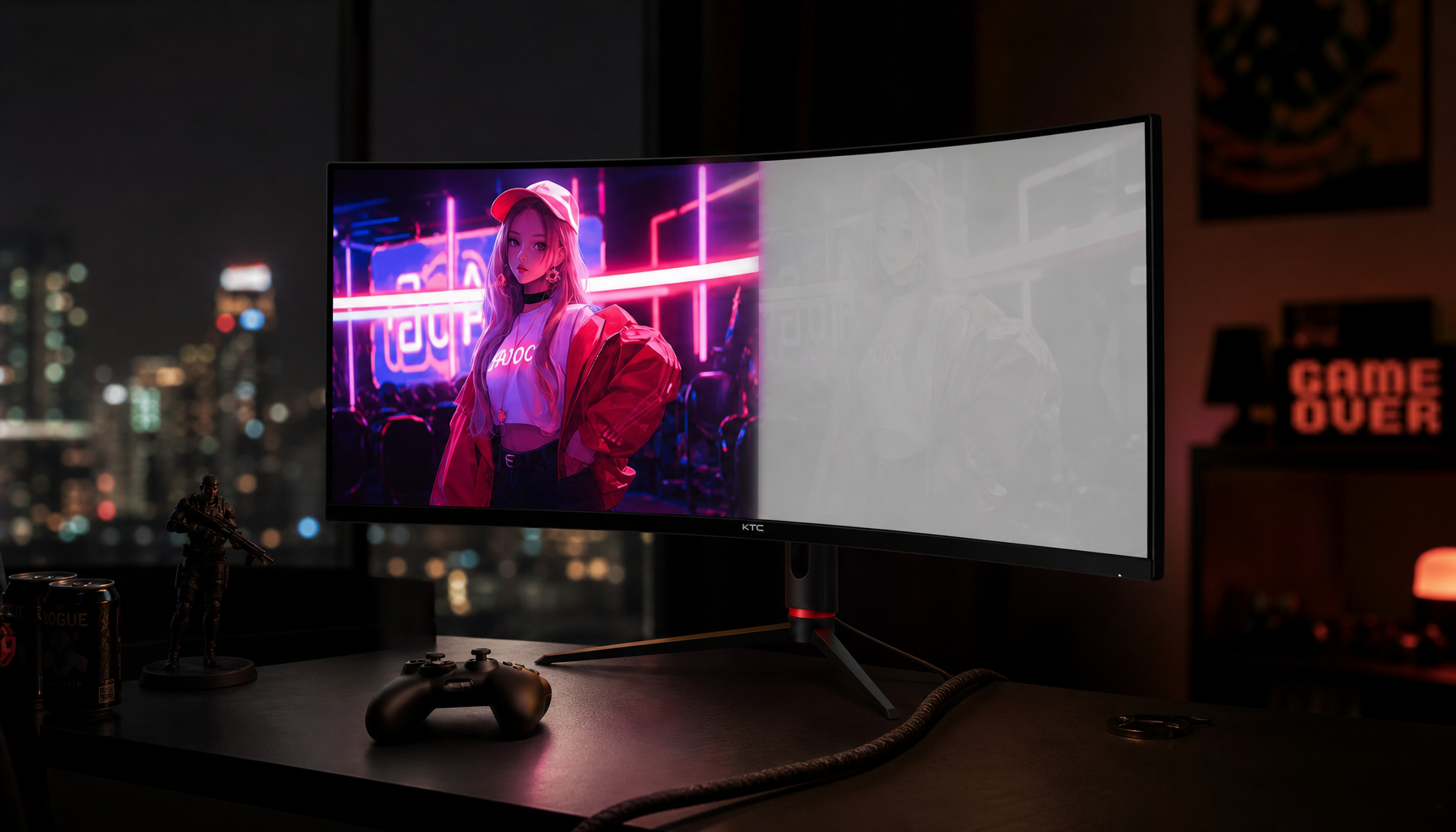
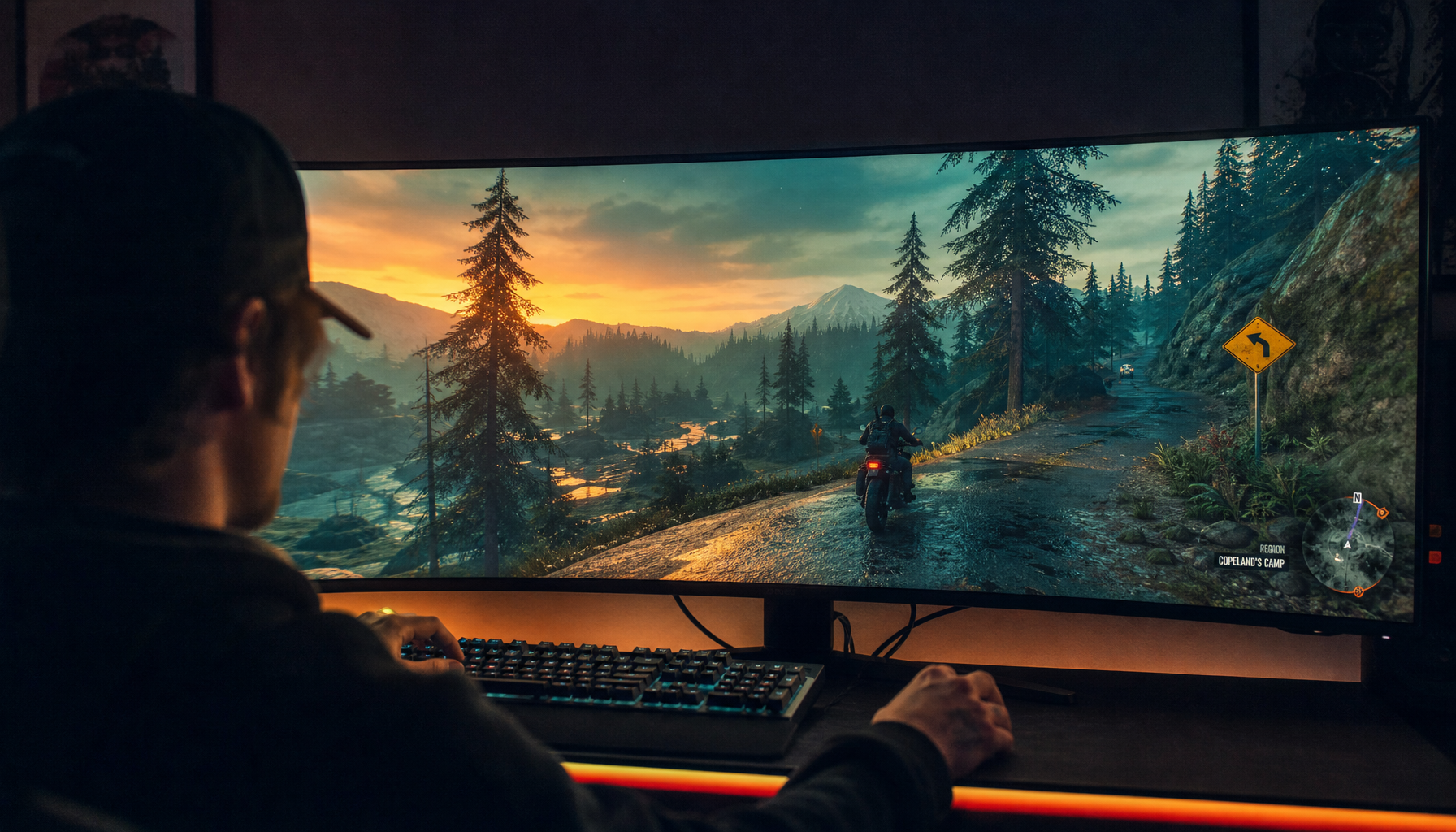
A mini led monitor for bright room use is often the safer choice when daylight, glare, and static creative tools all hit the same desk. The key advantage is not just brightness. It is the combination of higher HDR headroom, local dimming, and fewer burn-in worries in rooms that are hard to control.
Why Bright Rooms Expose Monitor Weaknesses
Bright ambient light lowers perceived contrast, so shadows, text, and UI details can look flatter even when the panel itself is good. That is why a monitor next to a south- or west-facing window can feel less usable than the spec sheet suggests. The practical question is not only how bright the panel gets, but how well it keeps contrast visible while the room stays bright. How Display Brightness Affects Perception of Design Hierarchy and Contrast is a useful follow-up if you want the visual side of that problem.
For most bright-room workspaces, the first check is glare control, then brightness headroom, then how the screen behaves in mixed light. If reflections are the main issue, a better backlight alone will not fully solve the problem. If the desk gets daylight for most of the workday, the better fit is usually the display that keeps readable contrast without forcing you to darken the room.
How Mini-LED Handles Bright Light Better
Mini-LED helps because it uses many small backlight zones instead of one broad backlight. In plain terms, that gives the screen more control over bright and dark parts of the image at the same time. Backlight zoning is what lets LCD-based displays improve contrast in HDR scenes.

That matters in bright rooms because higher peak brightness can keep highlights and interface elements visible when daylight pushes down perceived contrast. Mini-LED also avoids OLED-style burn-in concerns, which makes it easier to leave toolbars, timelines, and spreadsheets open for long sessions. The trade-off is that local dimming helps most in mixed scenes, not in every full-white screen.
If you mostly edit photos, design layouts, or work in documents with static panels, this is where a mini LED monitor for bright room setups starts to make sense. If your use is mostly movie watching in a dark room, the advantage is smaller and OLED may still feel more dramatic.
Mini-LED Versus OLED for Photo Editing
For bright-room photo editing, Mini-LED is usually the safer default when the desk gets direct or reflected daylight. OLED can still look excellent in a controlled room, but glare and automatic brightness behavior can feel less forgiving when the workspace changes throughout the day. That is especially true when you spend hours looking at toolbars, palettes, and white interfaces.
| Factor | Mini-LED | OLED | What It Means For Bright-Room Editing |
|---|---|---|---|
| Daytime visibility | Stronger when the room is bright | Often more sensitive to glare | Mini-LED usually needs less light control |
| HDR highlight pop | Very good in mixed scenes | Very strong in dark rooms | Both can look good, but room light changes the result |
| Static UI comfort | Better fit for long sessions | More caution with static elements | Mini-LED is easier for menus and timelines |
| Full-white screens | Can be less intense than peak HDR suggests | Can also dim depending on behavior | Neither should be judged by peak numbers alone |
| Best fit | Bright, mixed-use creative desks | Darker, more controlled viewing | The room decides more than the panel label |
A useful rule is this: if you edit in a room with uncontrolled daylight, pick Mini-LED first and treat OLED as the better choice only when you can keep reflections low and the room dark enough to take advantage of its contrast. If your work is mostly in the evening, OLED becomes more competitive. If the desk is bright most of the day, Mini-LED is usually the more forgiving choice.
Which Monitor Specs Matter Most at a Creative Desk
A mini led monitor for bright room work should be judged by a small set of specs that actually change daily use.
- Peak brightness matters first. It gives the display enough headroom to stay readable when daylight washes over the desk.
- Local dimming matters next. It helps preserve shadow detail and HDR highlights instead of flattening the whole image.
- Color coverage and calibration still matter. Brightness alone does not help if the panel makes editing decisions harder.
- Ergonomics matter more than many buyers expect. Height, tilt, and swivel can reduce reflections just as much as raw brightness can.
- Screen size changes glare exposure. A 27-inch panel is often easier to position in a windowed room than a larger screen that fills more of the reflected light path.
A simple self-check helps: if you only care about brightness, you may end up with a screen that still feels wrong. If you care about brightness plus color plus positioning, the decision becomes easier. For shoppers who want to browse a broader category, All-Mini-LED Monitors is the cleanest starting point.
A Bright-Room Creative Setup Needs the Right Size
A 27-inch 4K Mini-LED screen is often the easier fit when desk depth is limited and you want sharper text at normal viewing distance. A larger 32-inch screen can be better for timelines, side-by-side windows, and full creative layouts, but it also takes more effort to angle away from glare. That is why size is not just a preference question. It changes how much of the screen sits inside the window light.
The KTC Mini LED 27" 4K 160Hz HDR1400 Gaming Monitor | M27P6 fits this use case well when you want a brighter, more controllable 27-inch screen with 1,152 local dimming zones, HDR1400 peak brightness, and a fully adjustable stand. It is not a universal answer, but it is a strong fit for mixed work and play when the desk faces daylight.

The main reason to choose a mini LED monitor for bright room work here is not gaming speed. It is that the screen can stay useful across more hours of the day without demanding a perfectly controlled room. If you need more browsing options in the same category, 4K Monitor is the next reasonable stop.
Room Setup Questions Before You Buy
Before you buy, check the room instead of starting with the spec sheet.
- How much daylight hits the desk at the hours you actually work?
- Is the monitor across from a window, beside one, or under overhead lights?
- Do you need a 27-inch screen, or would a larger panel create more glare than it solves?
- Will a fully adjustable stand help you angle reflections away from your eyes?
- Do you plan to keep toolbars, timelines, or spreadsheets open for hours?
- Is a matte or anti-glare surface important for your room?
If the answer to the first two questions is "a lot," Mini-LED moves up the list quickly. If the room is easy to darken, the gap between Mini-LED and OLED gets smaller. If you want to keep shopping after those checks, the M27P6 is the featured model to compare against other Mini-LED choices.
| Scenario | Mini-LED | OLED | Standard LCD |
|---|---|---|---|
| Bright-room fit | Strong | Weak | Moderate |
| Mixed scenes | Moderate | Weak | Moderate |
| Static UI | Strong | Weak | Moderate |
| High peak brightness | Strong | Weak | Weak |
| Sustained full-white brightness | Moderate | Strong | Strong |
| Burn-in concern in static UI | Strong | Weak | Moderate |
Which Bright-Room Users Should Skip Mini-LED
Mini-LED is not the best answer if you work mostly in a dark room and care most about perfect black levels for movies. It is also less compelling if your desk is already controlled well enough that glare is not a daily problem. In those cases, the price premium can buy less visible value.
Skip Mini-LED if your workspace already has soft indirect light, your monitor stays far from windows, and you rarely leave static tools on screen for long stretches. In that setup, you may be paying for brightness headroom you do not need. If you sit in changing daylight for much of the day, that same headroom is exactly what you want. Consider RGB OLED vs. WOLED in Monitors when your room stays dark most of the workday.
Answers to Common Bright-Room Buying Questions
FAQs
Q1. How Does Mini-LED Help in a Room With Windows?
Mini-LED gives you more brightness headroom and zone control, so the image is easier to read when daylight lowers perceived contrast. It is most helpful when the room light changes during the day, not just when you are chasing HDR pop at night.
Q2. What Is the Main Trade-Off Between Mini-LED and OLED for Creative Work?
Mini-LED usually gives you a more forgiving bright-room experience and less burn-in anxiety for static UI. OLED can still look better in a dark, controlled room, but that does not automatically make it the better creator display for daytime desks.
Q3. Can a 27-Inch Mini-LED Monitor Replace a 32-Inch Monitor in a Bright Room?
Often yes, if your desk is shallow or reflections are hard to control. A 32-inch screen gives more workspace, but it also increases the area that can catch light from windows and overhead fixtures.
Q4. Why Does HDR Matter More in Daylight Than at Night?
In daylight, the room itself compresses perceived contrast, so HDR needs more brightness headroom to stay visible. At night, you notice dark-level detail more easily, so the same HDR boost can feel more dramatic even on a lower-brightness screen.
Q5. Can Mini-LED Reduce the Risk of Burn-In for Static Toolbars?
Yes, because Mini-LED does not have OLED-style burn-in behavior. That makes it a practical choice for users who leave menus, timelines, or spreadsheets open for long sessions.
The Best Bright-Room Choice Depends on Your Desk, Not Just the Panel
If your workspace gets real daylight, a mini LED monitor is usually the more dependable choice because it combines brightness headroom, local dimming, and less worry about static content. OLED still has a place in darker, more controlled rooms. For most bright-room creative desks, though, Mini-LED is the easier screen to live with day after day.