In 2026, a Matter 2.0 compatible smart monitor can turn your desk into a practical smart home command center for monitoring security feeds, energy usage, and device status, provided you already have a dedicated Matter hub or Thread border router. The monitor serves as a high-resolution interface rather than a standalone replacement for a hub, making it especially useful for home office users who want persistent camera views and detailed dashboards without reaching for a phone.

What Matter 1.5.1 Actually Enables for Your Desk Setup
Matter 1.5.1, released in March 2026, adds native support for advanced PTZ (pan-tilt-zoom) camera controls and enhanced energy management, which makes it practical to monitor doorbells, nursery cameras, or workstation power draw directly from a large monitor screen (https://csa-iot.org/newsroom/matter-1-5-1-enhancing-camera-performance-and-expanding-device-flexibility/). These features build on the earlier Matter 1.5 foundation for cameras, closures, and energy reporting that first made complex home automation viable at the desk (https://csa-iot.org/newsroom/matter-1-5-introduces-cameras-closures-and-enhanced-energy-management-capabilities/).
For most desk users, this means the monitor excels at high-bandwidth, persistent monitoring tasks. You can keep a 4K security stream or real-time solar offset chart visible while working, rather than relying on small phone notifications. Quick on/off toggles for lights remain possible but usually require app switching or OSD navigation, so the real value appears in “set and monitor” scenarios rather than frequent manual adjustments.
Models such as the KTC 32" 4K 60Hz Smart Monitor with Google TV are among those that can surface these controls through their built-in smart platform. If your current setup already includes Matter-compatible cameras or energy monitors, check whether the end devices support the 1.5.1 profiles before expecting full PTZ or detailed metering.
Hardware and Software Requirements for 2026
A smart monitor provides the control interface, but a dedicated Matter hub or Thread border router remains necessary to manage the network and enable reliable communication (https://support.google.com/chromecast/answer/13127223?hl=en). The monitor itself does not replace the hub; expecting it to do so is a common setup trap that leads to devices not appearing or remote access failing.
Thread 1.4 certified border routers help prevent interference in crowded home offices where Wi-Fi, Bluetooth, and multiple mesh networks overlap (https://matter-smarthome.de/en/development/the-matter-standard-in-2026-a-status-review/). Legacy Zigbee or Z-Wave devices still need a bridge to become visible to the monitor’s Matter interface. Multi-Admin support lets the same devices appear in Apple Home, Alexa, and your monitor dashboard simultaneously without brand lock-in.
In early 2026, very few monitors integrate a full Thread border router. Verify your existing hub (Nest, HomePod, or compatible router) before purchase. The KTC MEGAPAD 32" 4K Android 14 Google EDLA Smart Touch Monitor with 8550mAh Battery and similar EDLA models work well once the hub is present, but they rely on that external network layer.
How to Use Your Monitor as a Smart Home Dashboard
Smart monitors running Google TV, such as the KTC A32Q8, surface controls through a native Home Panel that lets you toggle lights, adjust thermostats, view camera feeds, and activate scenes using the remote or touchscreen (https://support.google.com/googletv/answer/15158065?hl=en). Access typically involves switching from your PC input or using the OSD menu, which introduces a small “toggle tax” compared with always-on dedicated displays.
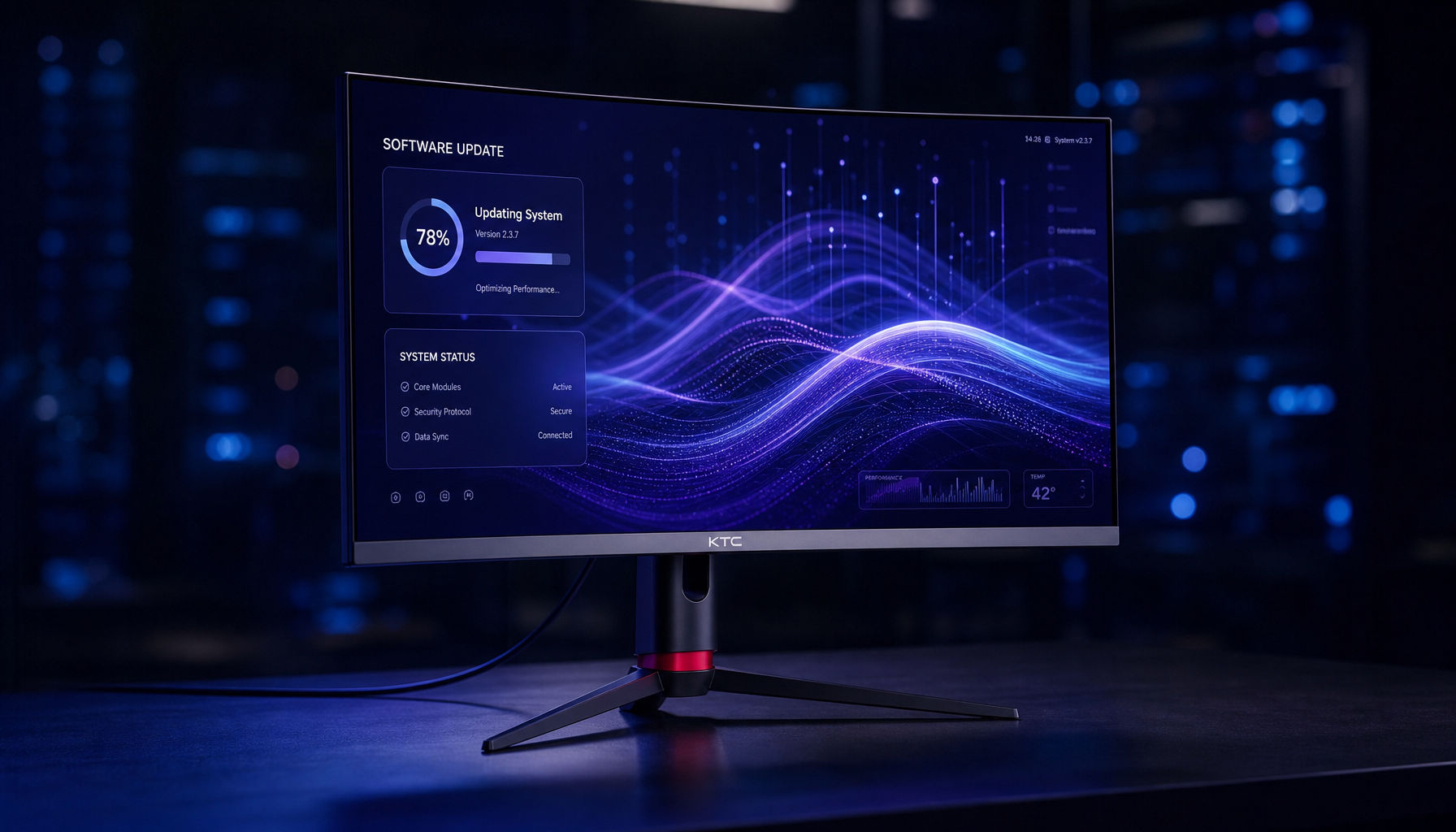
This interface works best for passive monitoring. Keep a PTZ doorbell feed or energy consumption graph on one side of the 32-inch screen while your main workspace stays on the PC side. For active changes during focused work, many users still prefer a phone or voice command. Firmware updates are important; keep the monitor’s Google TV or Android EDLA software current to ensure the latest Home Panel features and security patches are available.
Smart Monitor vs. Dedicated Smart Display: Which Controls What?
Monitor vs Smart Display by Smart Home Task Fit
Use this as a task-fit guide: monitors tend to work better for persistent monitoring and richer visuals, while dedicated smart displays are usually better for quick voice-driven actions and lower-interruption use.
View chart data
| Category | Monitor | Dedicated Smart Display |
|---|---|---|
| Control Latency | 2.0 | 3.0 |
| Visual Real Estate | 3.0 | 2.0 |
| Interruption Level | 2.0 | 3.0 |
| Media Integration | 3.0 | 2.0 |
The chart above uses tiered scores (higher is better) to illustrate typical trade-offs. Dedicated smart displays such as a Nest Hub generally deliver lower latency and always-on glanceable controls, making them preferable for quick voice commands or frequent light adjustments. Smart monitors provide superior visual real estate and media integration, which favors detailed 4K camera streams, energy charts, or multi-window dashboards that benefit from the larger screen.
Many setups work best as a complementary pair: use the dedicated display for context and quick actions, and the monitor for focused monitoring. This avoids the higher interruption level that comes with switching inputs or apps on your primary workspace display. If your desk is already crowded or you mainly need instant toggles, a standalone smart display may be the simpler first step.

Troubleshooting Your Desk-Based Matter Setup
Start by confirming that the monitor and your Matter hub share the same local network; Wi-Fi congestion or Thread interference often causes devices to disappear. Update the monitor’s firmware and the hub’s software so the Home Panel reflects the latest Matter 1.5.1 features. If a camera feed fails to load, verify that the device itself supports the required profile and that the hub has line-of-sight or strong mesh coverage.
HDMI CEC commands (power, input switching) operate separately from Matter controls and may need their own troubleshooting when volume or scene automation does not respond; see our guide to HDMI CEC Device Control on Monitors: Why Some Commands Work and Others Don’t for common fixes. Restarting the entire Thread mesh or temporarily removing and re-adding a device in the Google Home app frequently resolves stubborn visibility problems.
If you continue to experience gaps with legacy Zigbee or Z-Wave gear, a dedicated bridge is usually required before the monitor can see those devices through Multi-Admin.
Next Steps: Building a Reliable Desk-Based Smart Home Hub in 2026
Begin with an audit of your existing Matter-compatible devices and confirm you have a working Thread border router or approved hub. Choose a smart monitor that matches your primary use—larger 32-inch Google TV models for rich camera and energy dashboards, or portable touch variants if you need to move the control surface around the house. Test one or two high-value automations (doorbell PTZ preset and energy alerts) before expanding the network.
For most home office users, the monitor-plus-hub combination delivers noticeable convenience once the initial network is stable. If your needs center on voice-first or zero-friction daily toggles, keep a dedicated smart display as the primary quick-control layer. With these boundaries in mind, a Matter 2.0 monitor integration can meaningfully reduce the steps between your desk and the rest of your home.
Frequently Asked Questions
Can any monitor control Matter devices natively?
No. Only specific smart monitors with Google TV or Android EDLA firmware expose the Home Panel or equivalent dashboard. Standard gaming or office monitors without a smart OS require an external controller or app on another device.
Does a Matter 2.0 monitor replace my existing smart home hub?
It does not. The monitor acts as a control interface and display; a dedicated Matter hub or Thread border router is still required to manage the mesh network and enable reliable local and remote access.
How much latency should I expect when adjusting lights from the monitor?
Expect a noticeable toggle delay compared with a phone or dedicated display because of the need to switch inputs or navigate the OSD. Persistent monitoring tasks such as viewing camera feeds usually feel more responsive than frequent on/off commands.
Which KTC models currently support the best smart home dashboard experience?
The 32-inch Google TV model and the MEGAPAD series with Android 14 EDLA currently offer the most direct access to the Home Panel and large-screen camera/energy views. Check the latest firmware for full Matter 1.5.1 feature support.
What should I do if my cameras or energy devices do not appear in the monitor dashboard?
First confirm the hub is online and the devices are Matter-certified with the latest profiles. Restart the Thread network, update all firmware, and verify the monitor and hub are on the same subnet. Legacy non-Matter devices typically need a bridge.
Is Matter 2.0 monitor control secure for daily use?
When kept on the local network and paired with regular firmware updates, Matter’s encryption and Multi-Admin design provide strong security. Avoid exposing the hub to the internet unless you enable two-factor authentication and use official cloud services.
When does a dedicated smart display remain the better choice over a monitor?
If your workflow involves frequent voice commands, always-on widgets, or zero-interruption quick toggles during deep work, a compact dedicated display usually creates less friction than switching to a large monitor dashboard.