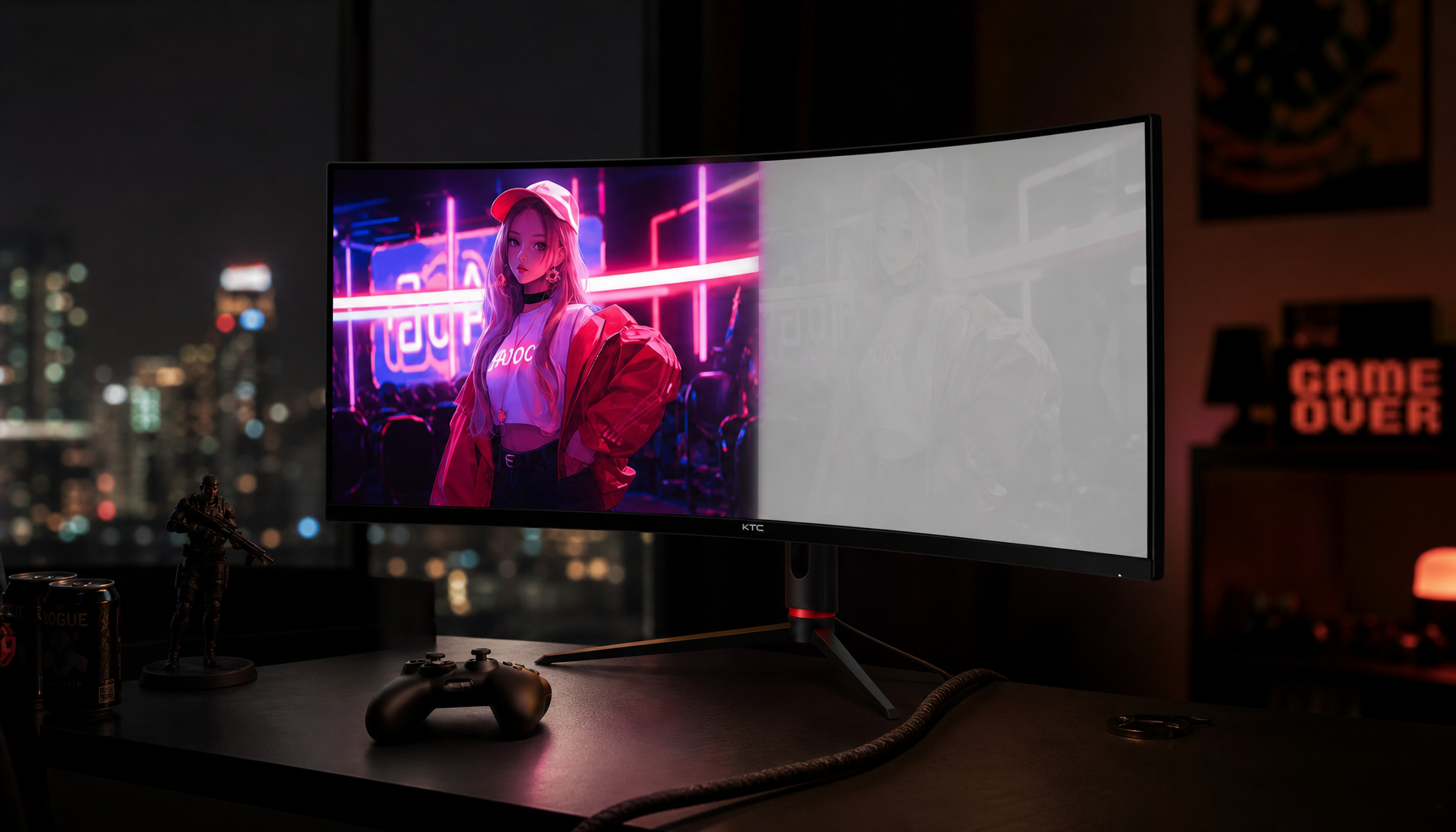
Global tone mapping applies one brightness and contrast curve to the whole HDR image, while local tone mapping adapts the curve by region or pixel neighborhood. Global mapping is faster and more stable; local mapping can reveal more detail, but it needs careful control to avoid halos, artificial sharpness, and inconsistent image intent.
Load an HDR game, movie, or creator preview and you may notice that a bright sky looks rich while a player’s face, dashboard, or shadowed room becomes hard to read. A simple global curve can preserve speed and consistency, while a well-tuned local method can recover scene detail that would otherwise disappear. Understanding the difference helps you choose the right approach for gaming, creative review, office displays, and portable smart screens.
HDR Tone Mapping in Plain English
HDR rendering lets a game engine, camera pipeline, or image processor work with brightness values beyond the normal display range. The problem is that real screens still have limits: peak brightness, black level, color volume, local dimming behavior, and power budget all affect what can actually be shown.
Tone mapping is the conversion step that maps HDR luminance or color values into a range the display can reproduce while trying to keep the image believable. In practical monitor terms, it decides whether sunlight keeps texture, whether a white UI panel clips into a flat block, whether dark fabric keeps detail, and whether midtones such as skin, documents, and game characters remain readable.
A rendering engine may hold bright values above 1.0 internally, then compress them before final output. HDR rendering pipelines commonly use floating-point buffers so bright light sources do not immediately clamp to white, then apply tone mapping near the end of the frame. That final step is where global and local methods split.
Global Tone Mapping
Global tone mapping uses one mapping function for the entire image. If a pixel has a certain HDR brightness value, it gets mapped the same way no matter where it appears on the screen. A common example is a Reinhard-style curve, which smoothly compresses bright values so they fit into a displayable range.

The strength of global tone mapping is predictability. It is fast, simple to tune, and less likely to create edge artifacts because it does not change its behavior around every object boundary. That is why it remains important in real-time rendering, embedded camera pipelines, and displays where latency and consistency matter.
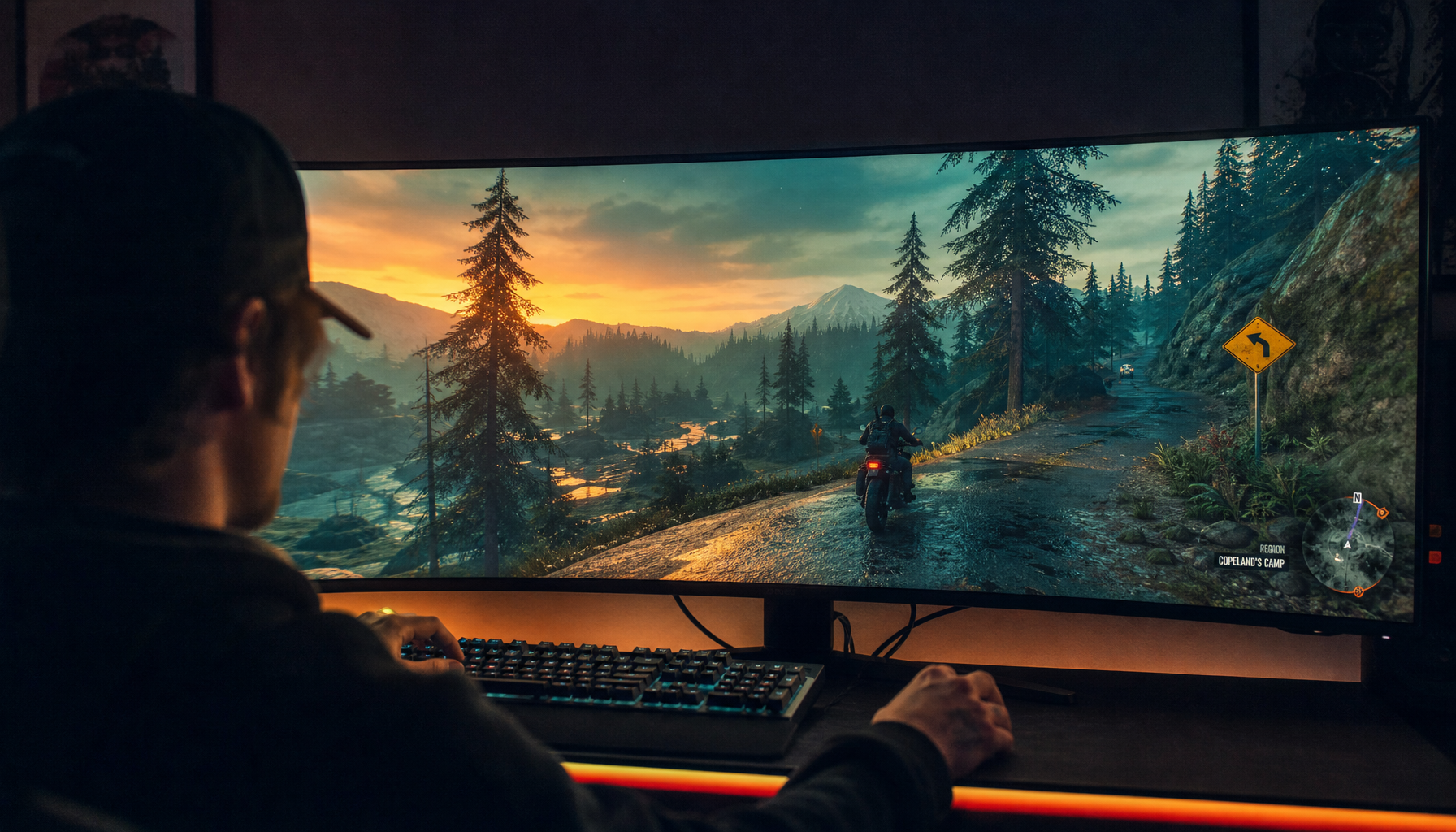
The tradeoff is that one curve cannot understand every region of a complex image. Imagine a racing game scene with a bright desert sky, a dark cockpit, and a glossy instrument panel. A global curve that protects the sky may leave the cockpit too dim. A curve that lifts the cockpit may flatten the sky and make highlights look less intense.
Research on TinyML global tone mapping for HDR sensors shows why global methods still matter. A lightweight global approach can predict parameters for an analytical tone curve from image histograms rather than processing every pixel with a large neural network. The research reports about 9,000 FLOPS per RGB image regardless of resolution, which is a strong example of why global tone mapping is attractive when power, latency, and implementation safety matter.
Local Tone Mapping
Local tone mapping changes the mapping based on surrounding image content. Instead of asking only “How bright is this pixel?” it also asks, “What is happening near this pixel?” That lets the system preserve local contrast in dark corners, bright windows, textured clouds, reflective metal, and UI overlays.
The advantage is detail recovery. In a dim RPG cave with a torch, local tone mapping can keep the torch from blowing out while still lifting stone texture in the shadows. In a productivity display previewing HDR product photography, it can preserve the highlight rolloff on a glossy device while keeping labels, buttons, or hands visible.

The risk is that local methods can overreact. If the algorithm boosts contrast around edges too aggressively, bright outlines may appear around dark objects, a common halo artifact. If it stretches local contrast too much, the image can take on a crunchy HDR effect that looks impressive for a moment but unreliable for judging real content.
The difference matters even more on displays with limited HDR headroom. A 400-nit display cannot faithfully reproduce 1,000-nit highlights, so tone mapping has to compress the signal. Local tone mapping may help preserve more usable detail, but it cannot create brightness, black depth, or color volume the panel does not physically have.

Global vs. Local Tone Mapping at a Glance
Factor |
Global Tone Mapping |
Local Tone Mapping |
Core behavior |
One curve for the whole image |
Curve adapts by region or neighborhood |
Best strength |
Speed, stability, low artifact risk |
Better shadow and highlight detail recovery |
Main weakness |
Can flatten local contrast |
Can create halos, ringing, or artificial texture |
Gaming fit |
Strong for competitive clarity and low latency |
Strong for cinematic scenes if tuned subtly |
Creator fit |
Useful for consistent previews |
Useful for difficult HDR scenes, but must be checked for artifacts |
Portable screen fit |
Efficient and predictable |
Helpful, but limited by brightness and power constraints |
Which One Looks Better on a Real Monitor?
The better-looking method depends on the screen and the job. On a high-contrast HDR monitor with strong contrast control, local tone mapping can feel more immersive because the display has enough hardware range to make regional adjustments believable. On an entry-level HDR screen, especially a portable model with modest peak brightness, aggressive local mapping can reveal detail but also make the image look unstable or overprocessed.
For games, global tone mapping often feels cleaner when the priority is stable visibility, low latency, and predictable input response. Competitive players may prefer a consistent SDR or restrained HDR setup because fluctuating brightness can hurt target recognition. For cinematic single-player games, local or dynamic methods can be worth it when they preserve mood without burying key interaction areas.
For office productivity, HDR should be treated selectively. Documents, spreadsheets, dashboards, and browser tabs usually live in midtones, not spectacular highlights. If HDR mode makes white windows harsh, gray text uneven, or SDR apps dim, a calibrated SDR mode is often more reliable for all-day work. Reserve HDR for video review, game sessions, image grading, or source material that actually benefits from expanded range.
For creators, the practical test is not whether local tone mapping looks punchier. The test is whether it preserves intent across displays. HDR images may need adaptation for viewers using SDR or lower-headroom HDR screens, which is why controlled adaptation such as gain maps can be preferable to leaving every conversion to automatic tone mapping.
Pros and Cons in Real Workflows
Global tone mapping is the reliability choice. It is easier to reproduce, easier to debug, and easier to compare across monitors. If a renderer, capture card, or display firmware uses a global curve, the image may not extract every ounce of local detail, but it tends to avoid distracting artifacts near high-contrast edges.
Local tone mapping is the immersion choice when the implementation is mature. It can make a night city scene, bright snow map, HDR desktop wallpaper, or product shot feel closer to what your eyes expect. The cost is that it becomes harder to know whether you are seeing the creator’s intended contrast or the display’s interpretation of it.
Projectors show the problem clearly because their brightness depends heavily on screen size, room light, and reflective output. HDR tone mapping is especially important there because the display must reshape high-brightness content into a much more limited physical range. The same logic applies, in smaller form, to portable smart screens running from limited power.
How to Choose and Tune Tone Mapping
Start by matching the mode to the task. For competitive gaming, prioritize stable visibility, low input lag, and a display mode that does not pump brightness scene by scene. For story-driven gaming and movies, use the most accurate HDR or cinema-style mode, then adjust console, PC, or in-game HDR calibration so peak brightness matches what your monitor can realistically show.
For creative review, do not judge HDR only by the most dramatic scene. Use a small test set that includes bright UI, dark shadows, saturated colors, skin tones, and neutral gray areas. If local tone mapping makes highlights look exciting but shifts skin tones or lifts blacks into fog, it is not a trustworthy review mode.

For portable HDR screens, be skeptical of the badge. HDR10 compatibility means the screen can accept an HDR signal; it does not prove it has the brightness, black level, or local dimming control to display it convincingly. A compact screen with limited peak brightness may benefit more from accurate SDR, clean color, and predictable tone mapping than from an aggressive HDR mode that crushes or clips important detail.
Common Misunderstandings
Local tone mapping is not automatically more accurate. It can reveal more detail, but detail is not the same as intent. If a filmmaker, game artist, or photographer wanted a silhouette to stay dark, a local algorithm that opens every shadow may make the image less faithful.
Global tone mapping is not outdated. It is still valuable in performance-sensitive systems, real-time renderers, and embedded imaging because it can be bounded, efficient, and easier to validate. The TinyML global tone mapping research is a useful reminder that a well-designed global operator can be highly practical when the goal is robust HDR conversion under tight compute limits.
Dynamic tone mapping is also not the same thing as local tone mapping. Dynamic methods can adjust over time, scene by scene or frame by frame, while local methods adjust across space within the image. A system can be global and dynamic, local and static, or both local and dynamic depending on its design.
FAQ
Is local tone mapping better for HDR gaming?
It can be better for cinematic HDR gaming when tuned well, especially in scenes with deep shadows and bright highlights. For esports or fast competitive play, a stable global curve or even calibrated SDR may feel more reliable because visibility does not shift as much.
Does a brighter monitor need less tone mapping?
Usually, yes. A 1,000-nit-class HDR monitor has more room to preserve highlights than a 400-nit screen, so it can rely on less aggressive compression. It still needs tone mapping because HDR content and mastering targets can exceed what consumer displays reproduce.
Can tone mapping fix a weak HDR monitor?
It can improve usability, but it cannot override hardware limits. If the panel has weak black levels, low peak brightness, poor local dimming, or limited color volume, tone mapping can only choose the least damaging compromise.
Closing Thought
Global tone mapping gives you speed, stability, and control; local tone mapping gives you detail, depth, and scene-aware impact when the display and algorithm are strong enough. For a gaming monitor, office display, or portable smart screen, the winning setup is the one that protects midtones, rolls off highlights cleanly, keeps shadows intentional, and stays predictable across the content you actually use.